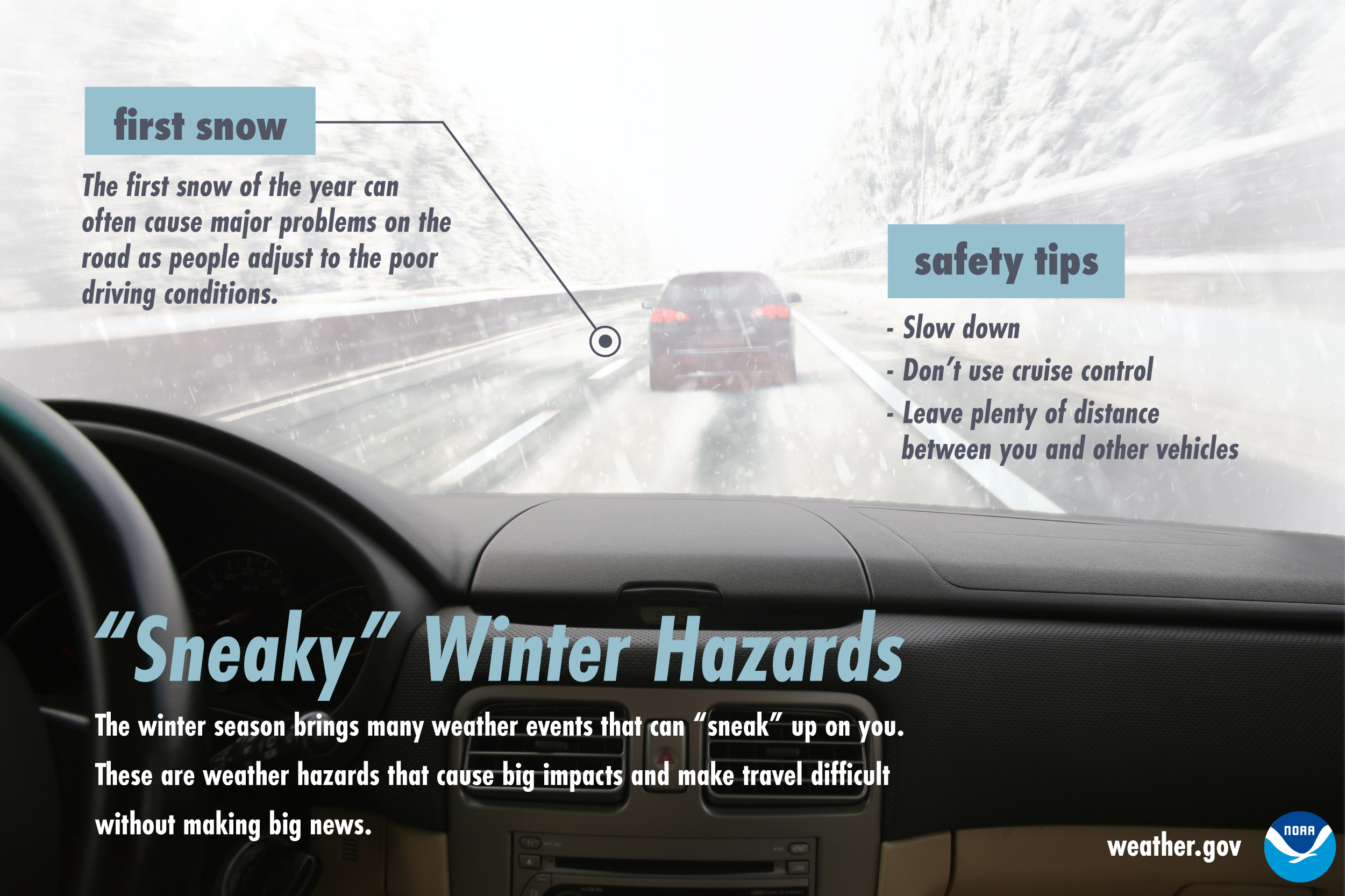
First Snow
While lots of snow in the middle of winter can certainly cause dangerous travel conditions, many times it’s the first snow of the season that can cause accidents. Be extra careful as you and other drivers adjust to driving in poor conditions. Slow down, don’t use cruise control, and keep your distance from other vehicles. Don’t let the first snow sneak up on you!
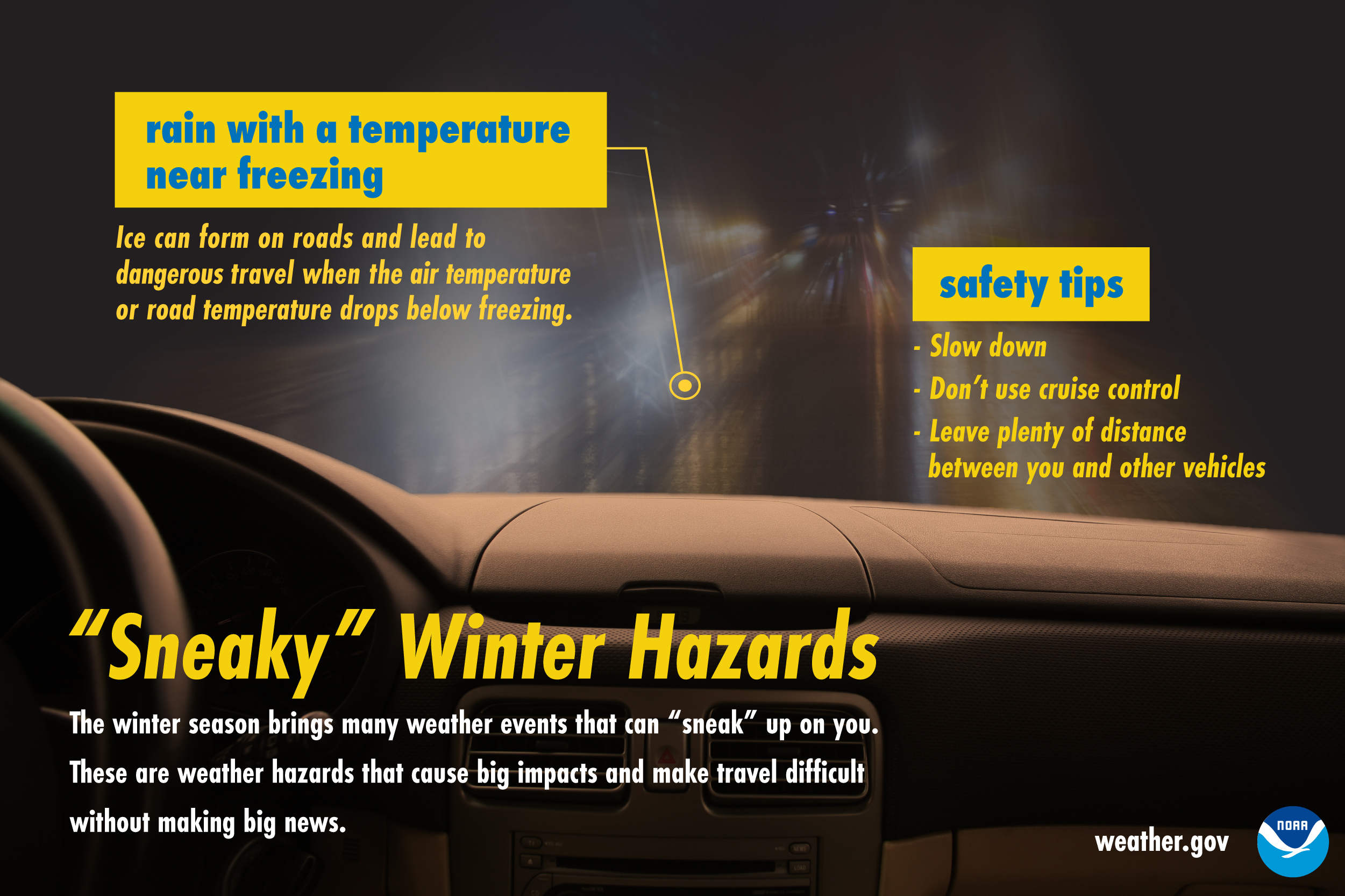
Freezing Rain
Rain may seem like less of a winter driving hazard than snow, but when temperatures are near freezing, that’s not the case. Ice can form quickly and make roads slick. In these conditions, slow down, don’t use cruise control, and keep plenty of distance between you and other vehicles. Don’t let this winter hazard sneak up on you!
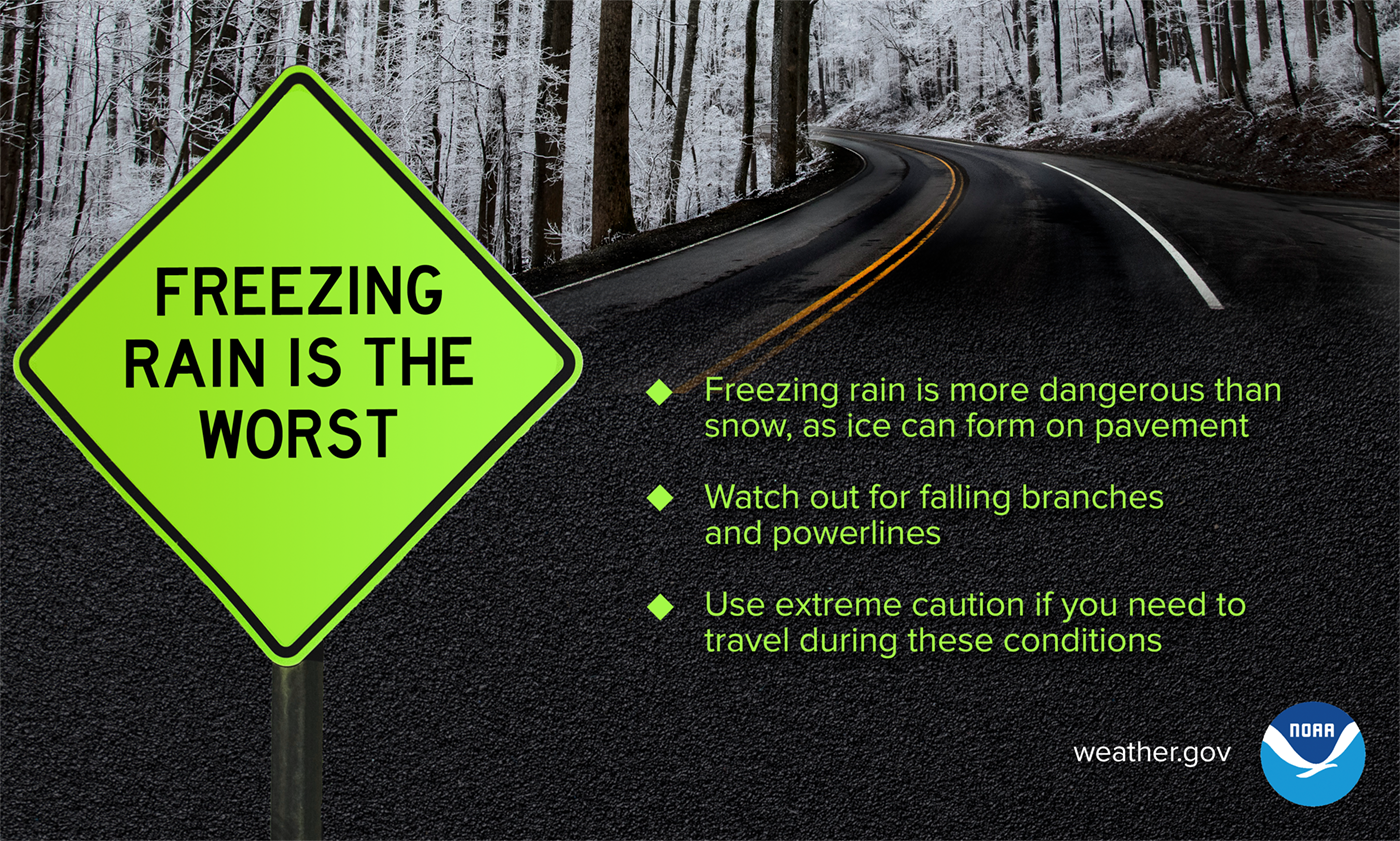
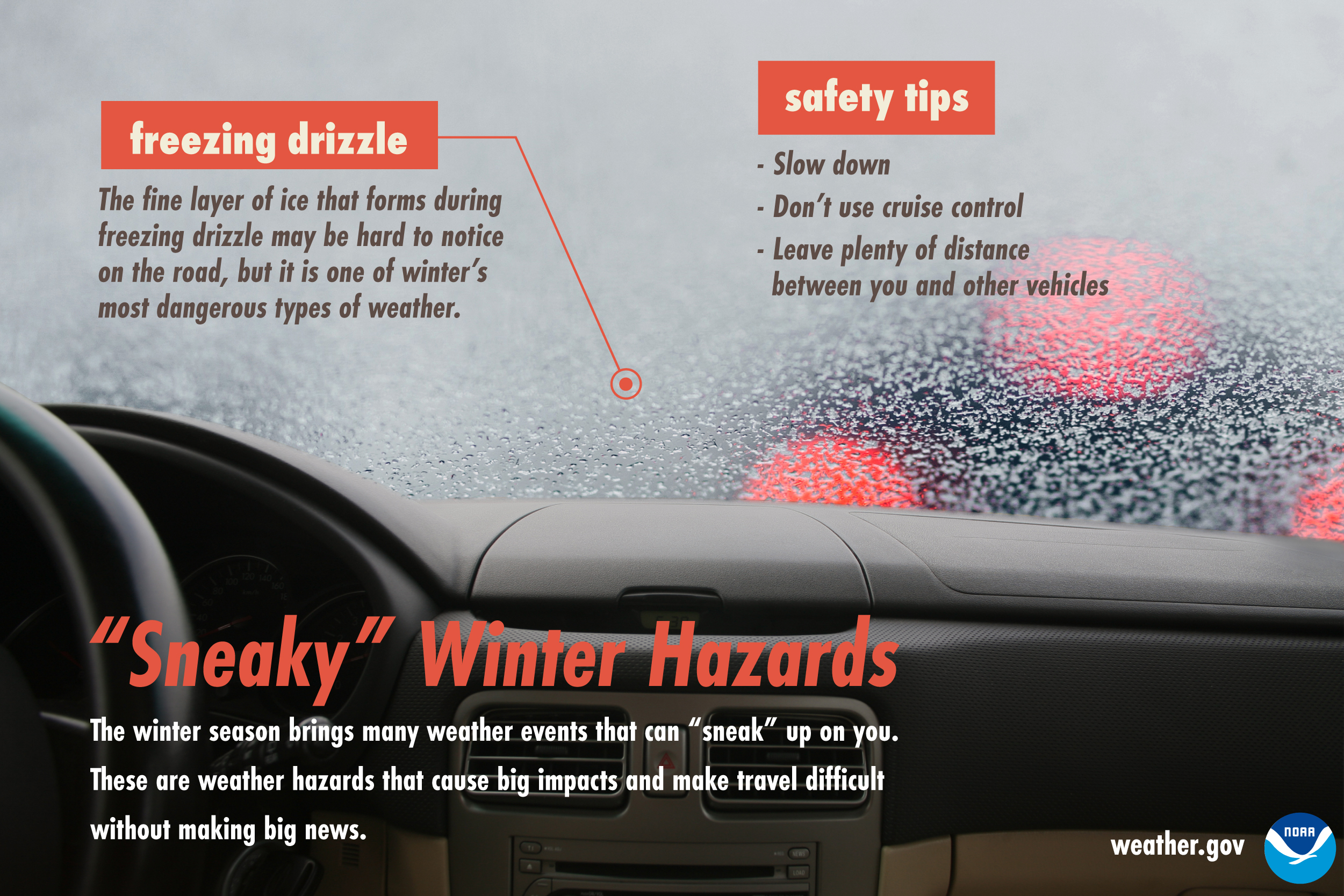
Freezing Drizzle
When surface temperatures are below freezing, drizzle will form a thin layer of ice on the roads. This difficult-to-see ice can cause very dangerous travel conditions. When it’s drizzling in the winter, slow down, don’t use cruise control, and keep your distance from other vehicles. Don’t let freezing drizzle sneak up on you!
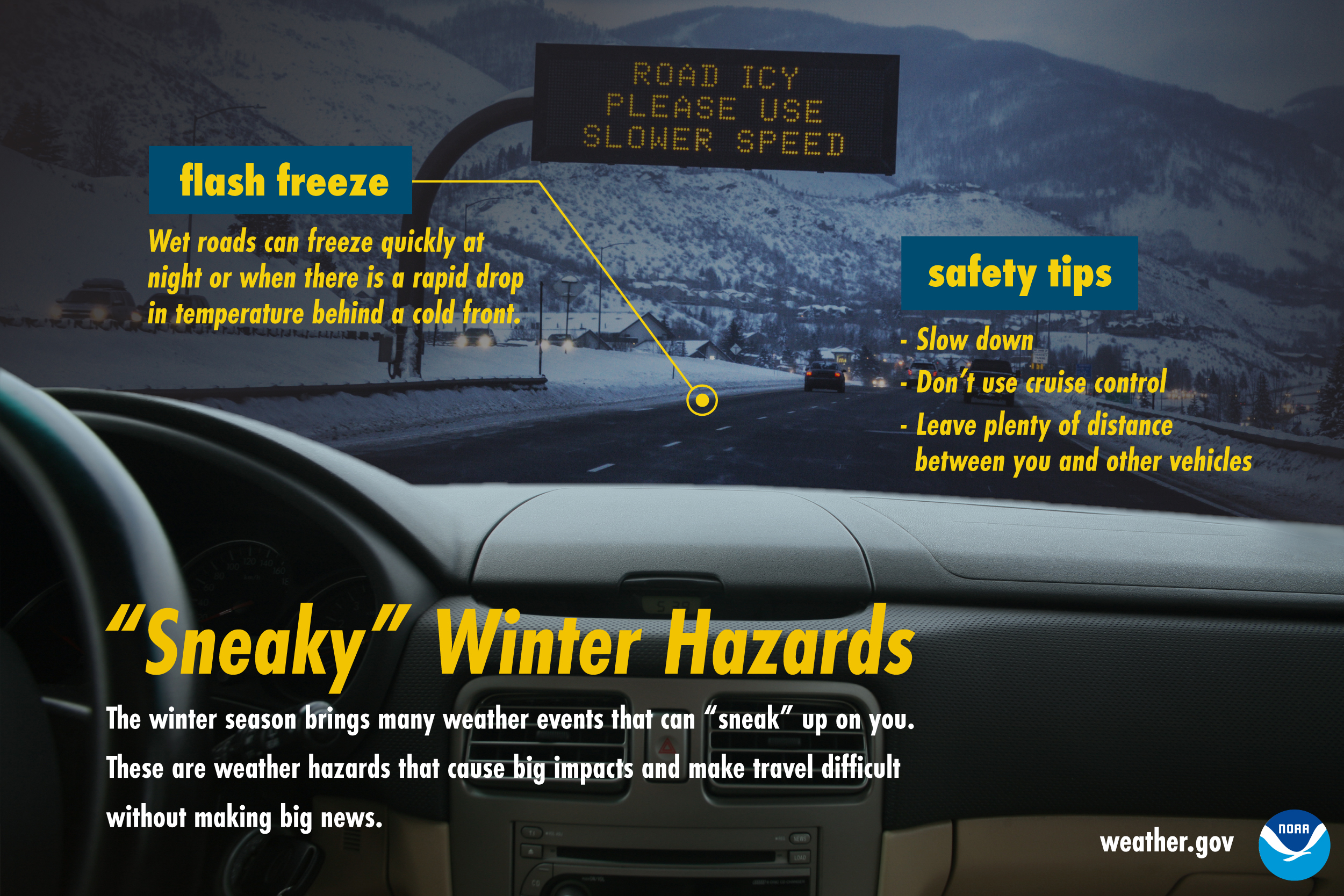
Flash Freeze
Even when it’s not precipitating, wet roads can quickly turn icy as temperatures dip below freezing. These unexpected slippery conditions can make driving hazardous. When roads look wet in the winter, stay cautious, slow down, and don’t use cruise control. Don’t let flash freezes sneak up on you!
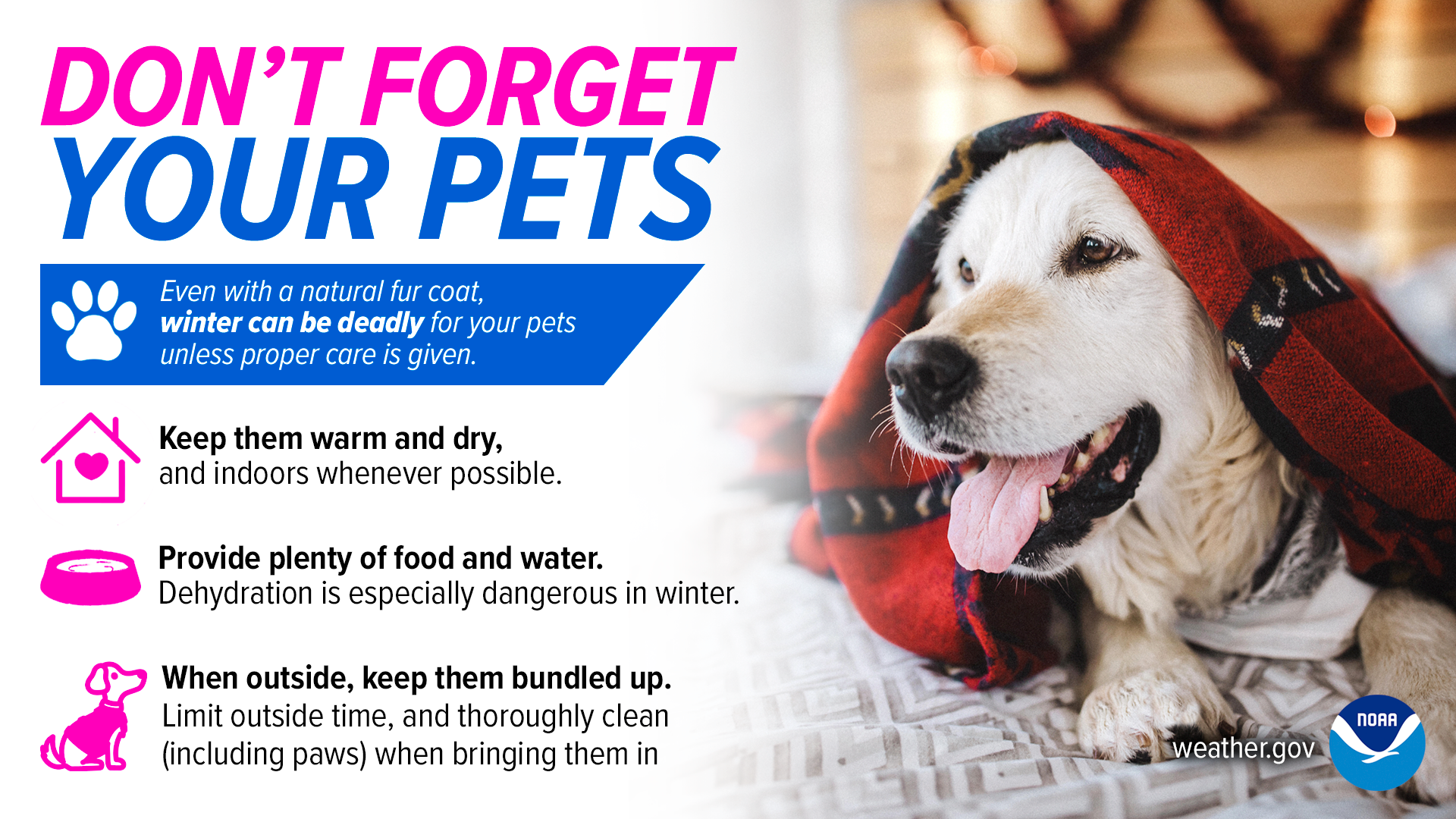
Pet Safety
Don't forget about your pets this winter! Make sure they have a warm, dry place to rest with plenty of food and water.
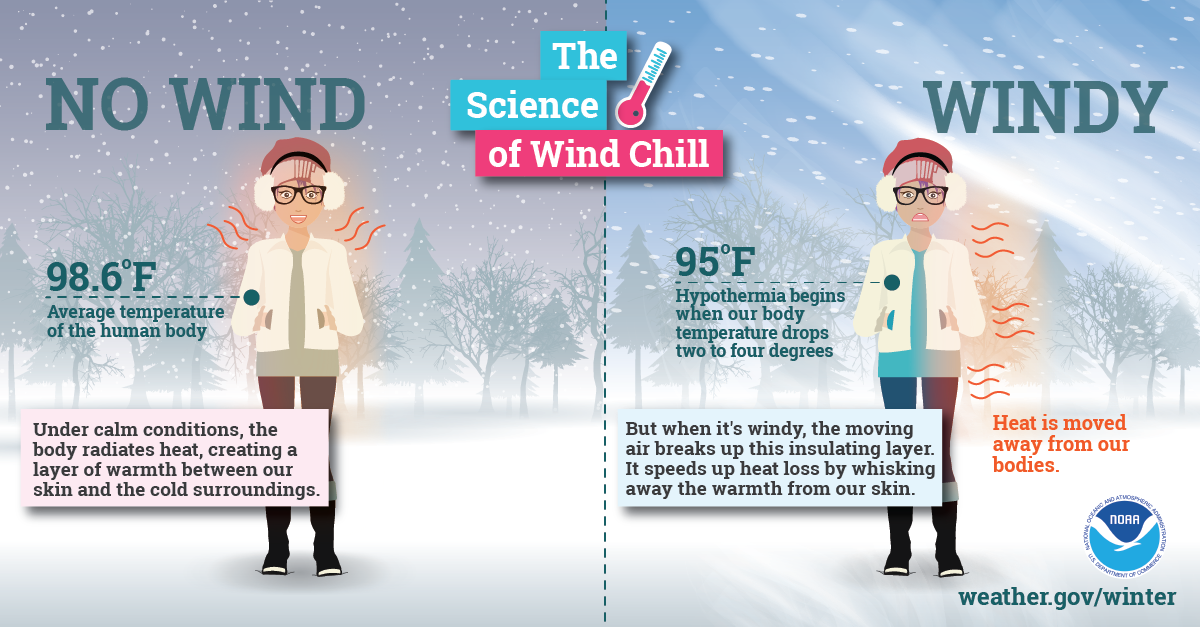
Science of Wind Chill
Extremely cold air affects millions of people across the United States every winter and even into parts of the spring. This Arctic air, together with brisk winds, can lead to dangerously cold wind chill values, which can cause your body to lose heat quickly.
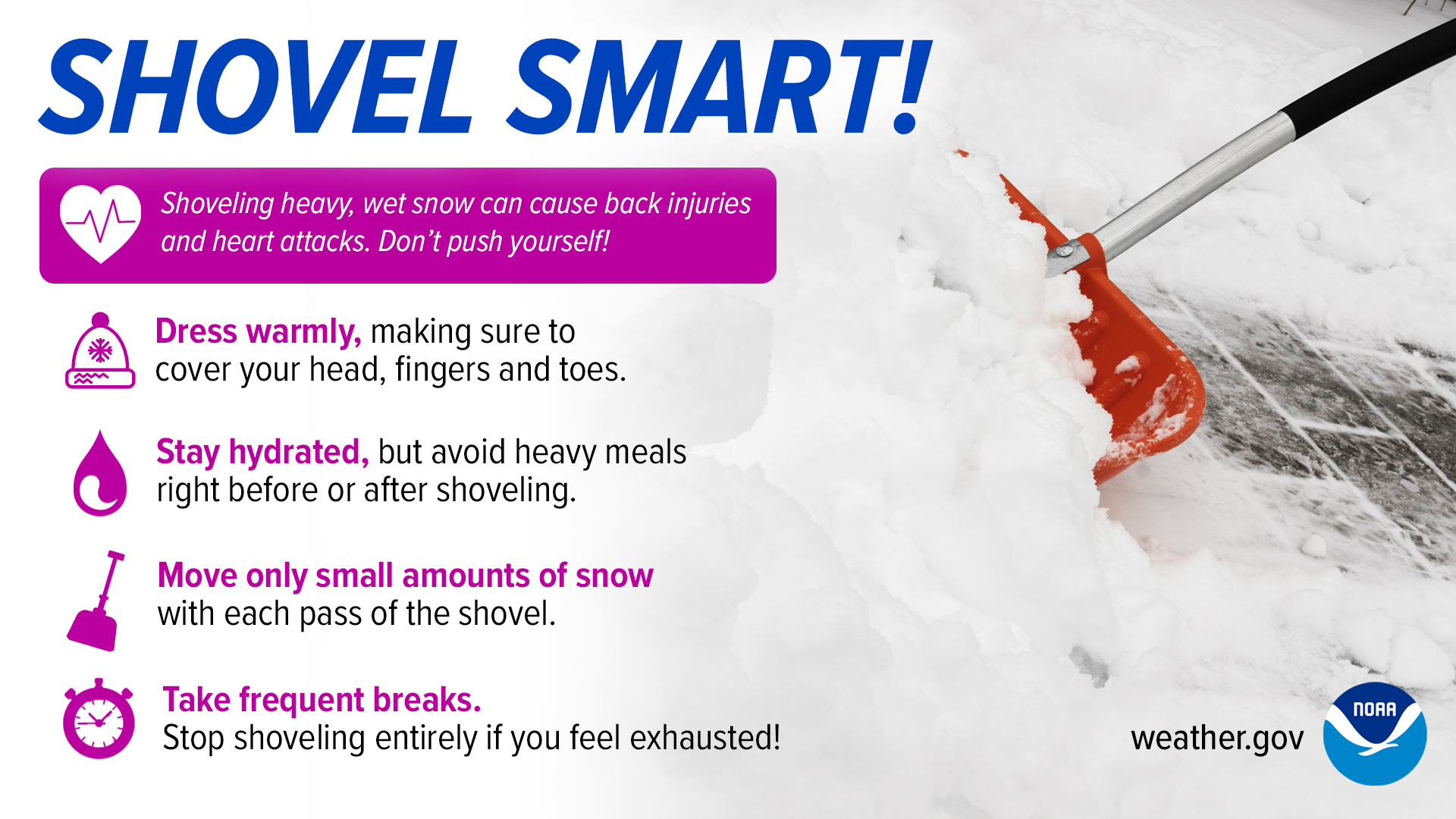
Smart Shoveling
Slippery sidewalks and roads aren’t the only things to look out for in late winter and early spring snow storms--shoveling snow can be a health risk as well. Remember to stay hydrated, take frequent breaks, and move only small amounts with each shovel pass. Learn more at weather.gov/winter
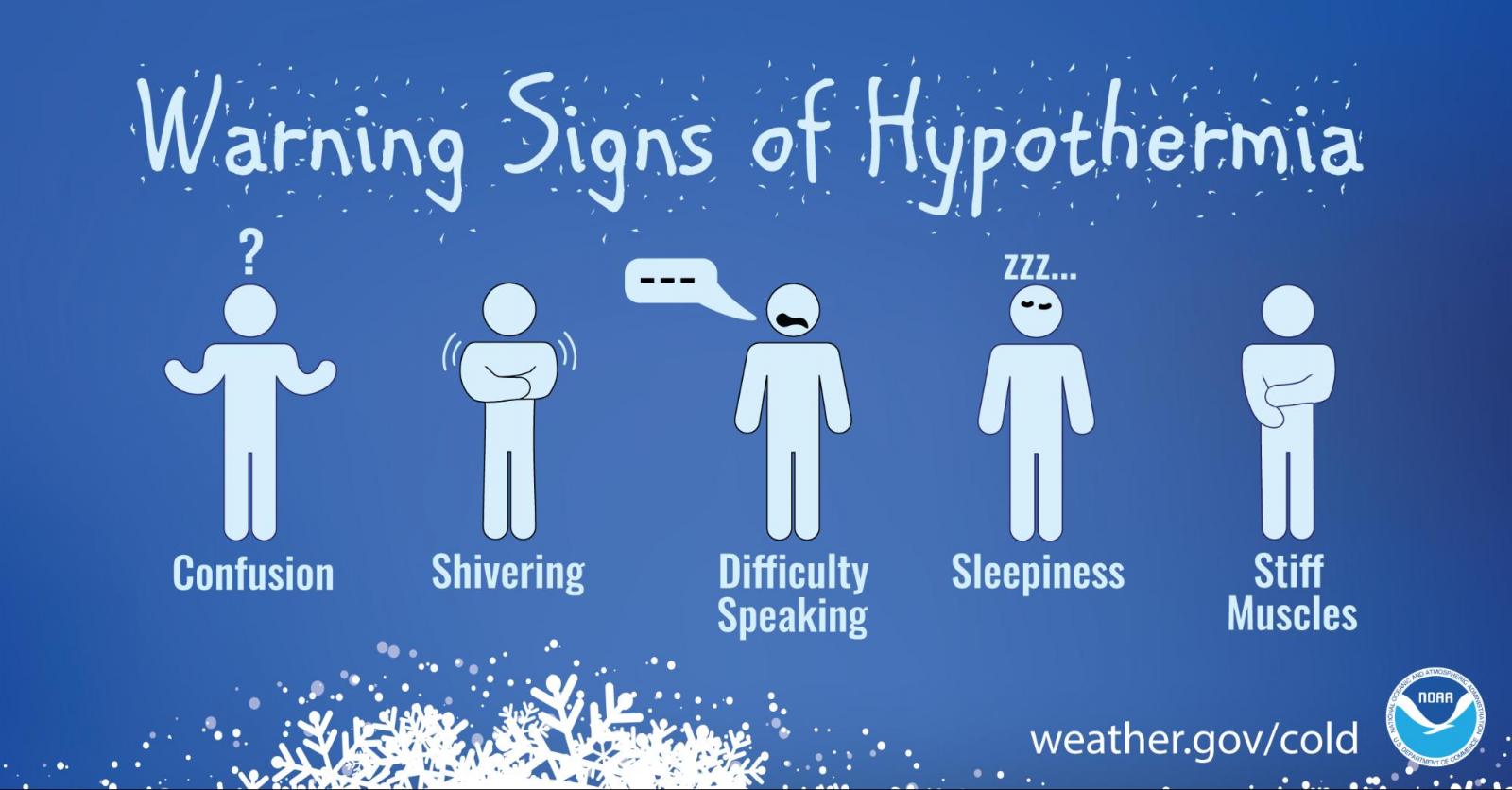
Warning Signs of Hypothermia
If you notice someone exhibiting warning signs of hypothermia, get them to a warm place right away. Learn more about how to protect yourself from the cold at weather.gov/safety/cold
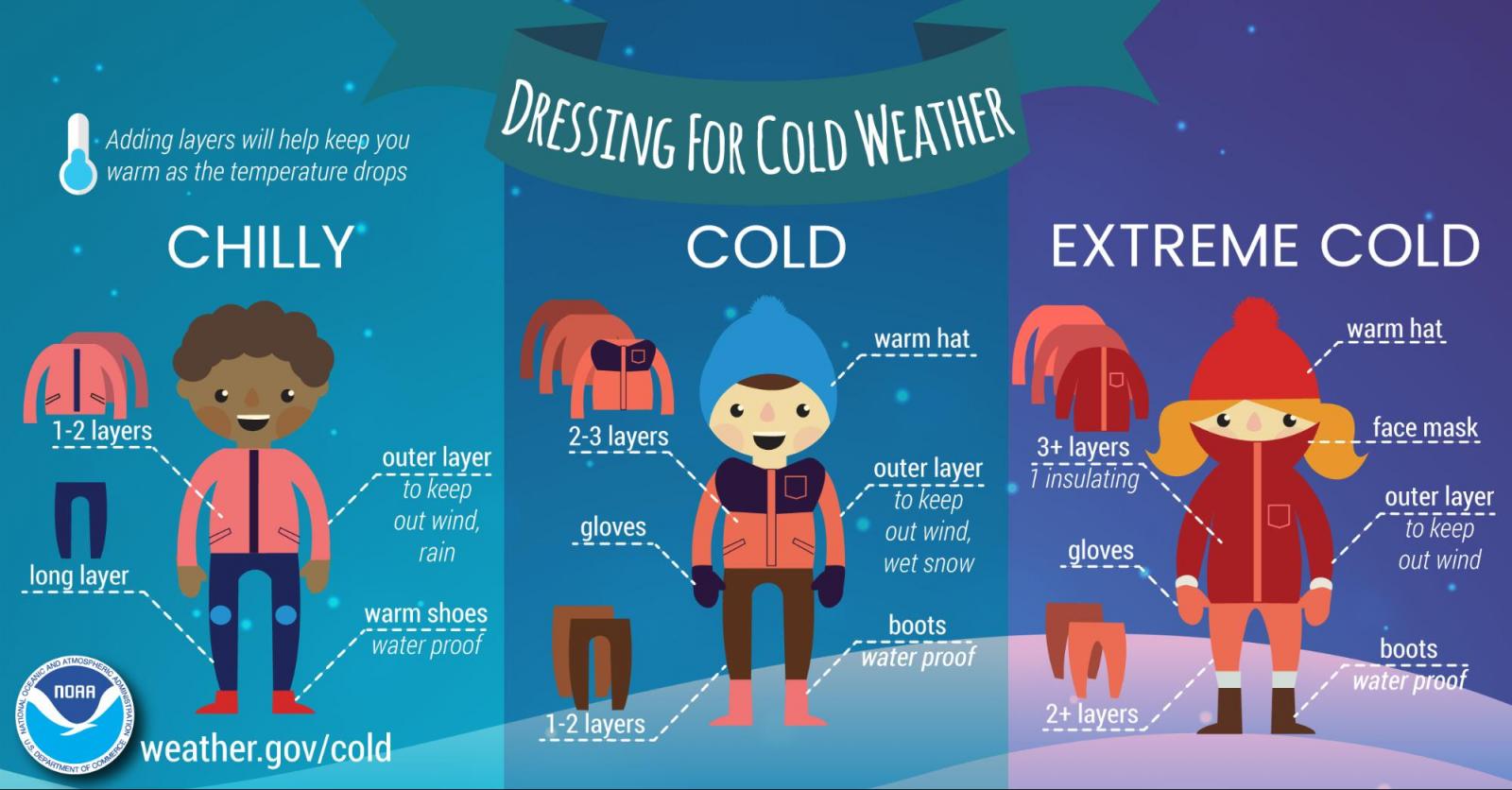
Dressing for the Cold
Bundling up and staying dry are two of the best things you can do to stay safe from cold temperatures this fall and winter. Learn to protect yourself from the cold at weather.gov/safety/cold
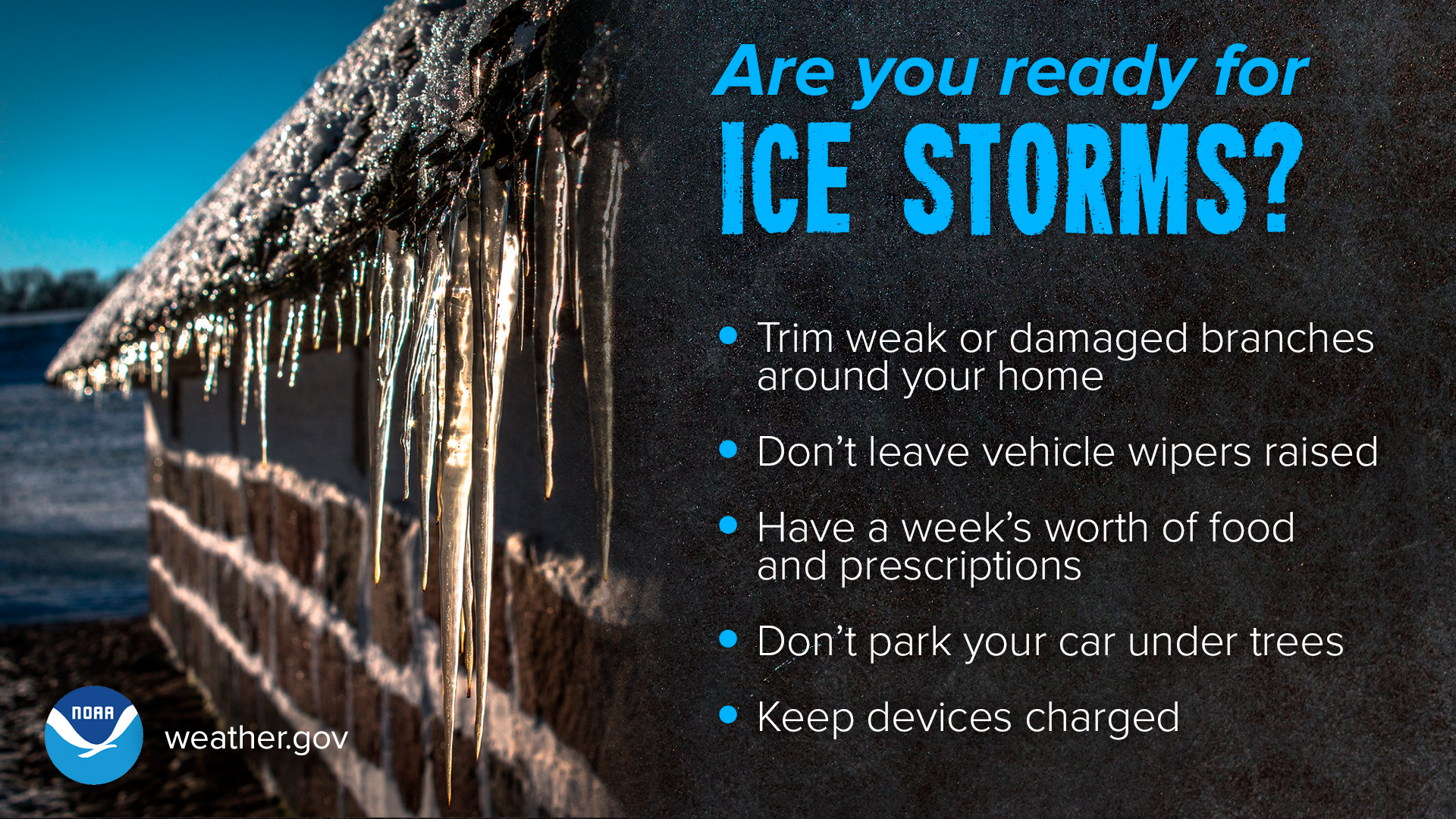
Ice Storms
Is your home ready for an ice storm? Ice storms can cause power outages that can last up to several days, affecting both you and the surrounding area — that’s why it’s important to have a week’s supply of food and prescriptions. What else would you need? Ice storms can easily break tree branches, so trim weak or damaged branches around your home, and don’t park your car under trees. After you’ve parked, don’t leave your wipers raised...contrary to popular belief, doing so increases the chance of wiper damage. Learn more about ice storm safety: weather.gov/safety/winter-ice-frost



 Follow us on X
 Follow us on Facebook
 Follow us on YouTube
 OHX RSS Feed