
A Nor'easter will bring significant coastal impacts to the Mid-Atlantic and New England through the weekend. Moderate to major coastal flooding, heavy rain, strong winds and high surf expected. Tropical Storm Nolo will continue to strengthen as it moves north toward the Big Island of Hawaii. Heavy rainfall may bring life-threatening, catastrophic flooding and mudslides through the weekend. Read More >
On Monday, December 28, 2015, low pressure tracked north through the western Great Lakes, producing a significant winter storm for much of the region. Lower Michigan received a combination of snow, sleet, and freezing rain. The freezing rain was mainly confined to far Southern Lower Michigan, where up to a quarter inch of ice accumulated. Much of Southwest Lower Michigan reported 1-4 inches of sleet (see reports HERE), while heavier snow fell across Northern Lower Michigan.
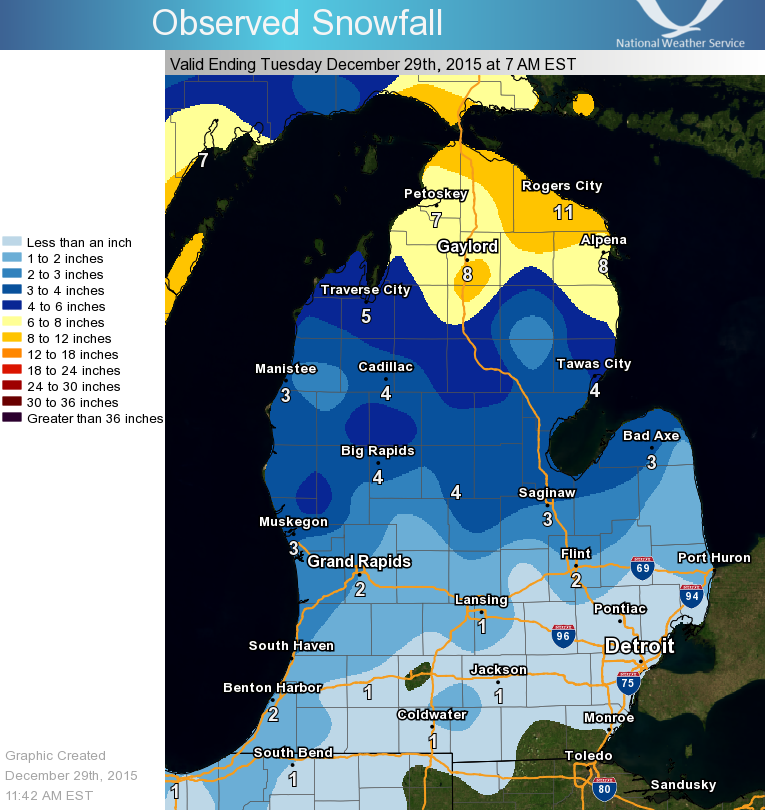
Here is a radar loop of the event between 11 AM to 11 PM Monday
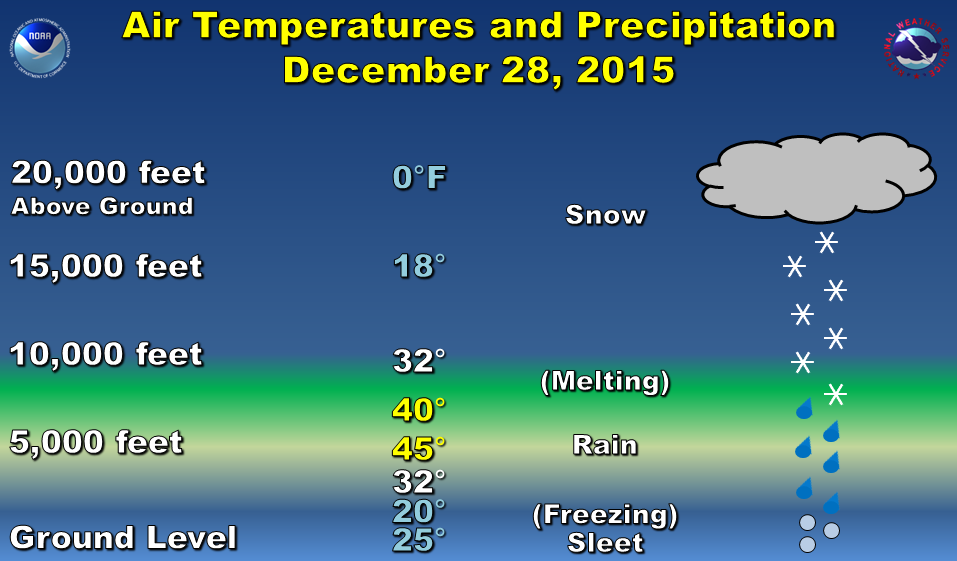
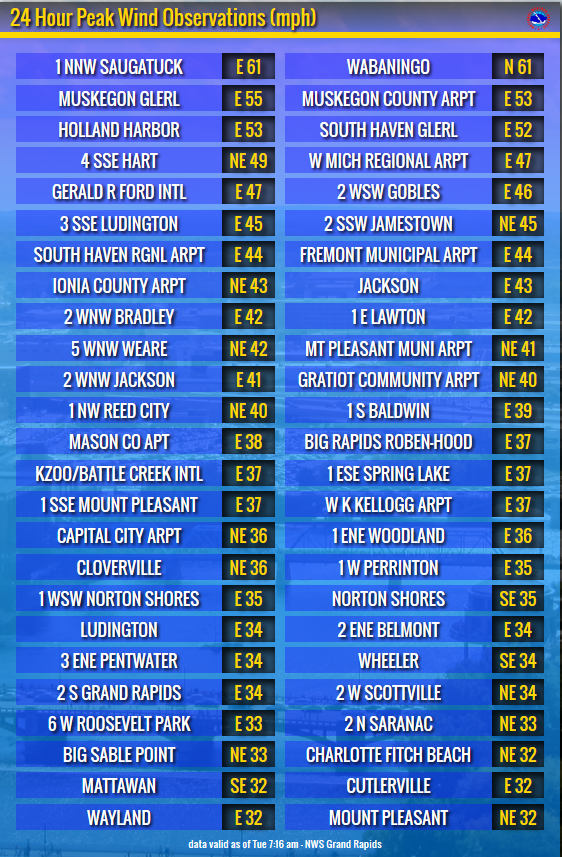
The accumulations as far north as Ludington were mainly in the form of sleet, while the heavier amounts up toward Gaylord were in the form of wet snow. It is unusual to have sleet falling for several hours. A layer of air warmer than freezing was located about 6,000 feet above the ground. This caused snow to melt into rain as it fell through this layer. Below this, air well below freezing from the ground up to about 2,500 feet caused the rain to freeze into sleet. Very strong, cold winds blowing in from the east helped keep cold temperatures in place near the ground, which allowed the sleet to persist well into the evening. Below is a graphic illustrating this process.



 Follow us on X
 Follow us on Facebook
 Follow us on YouTube
 GRR RSS Feed