
Dry and breezy conditions will bring elevated to critical fire weather conditions across portions of the northern and central High Plains through this weekend, where fuels remain largely receptive. Severe thunderstorms and heavy rainfall are possible from the Plains into the Upper Midwest, as well as in the Ohio Valley and portions of the Mid-Atlantic through this weekend. Read More >
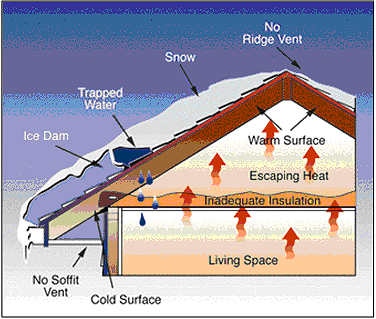
Ice dams are most common in northern climates. They occur when heavy snow buildup melts during the day and then refreezes when temperatures drop overnight.
After several days of melting-freezing cycles, it's common for the melted water and ice to work up under the shingles until water enters the attic and eventually does damage to the ceilings, wall and contents. In cases where the ice dam goes unnoticed for an extended period of time, it can do significant damage to the building and its contents.
There's no way to guarantee an ice dam won't damage your home, but you can take steps to cut the chances of an ice dam forming in the first place:



 Follow us on X
 Follow us on Facebook
 Follow us on YouTube
 GRR RSS Feed