National Weather Service United States Department of Commerce


Join the NWS and
Illinois Emergency Management Agency during
Winter Weather Preparedness Week. 

Monday November 9th to Friday November 13th, 2026

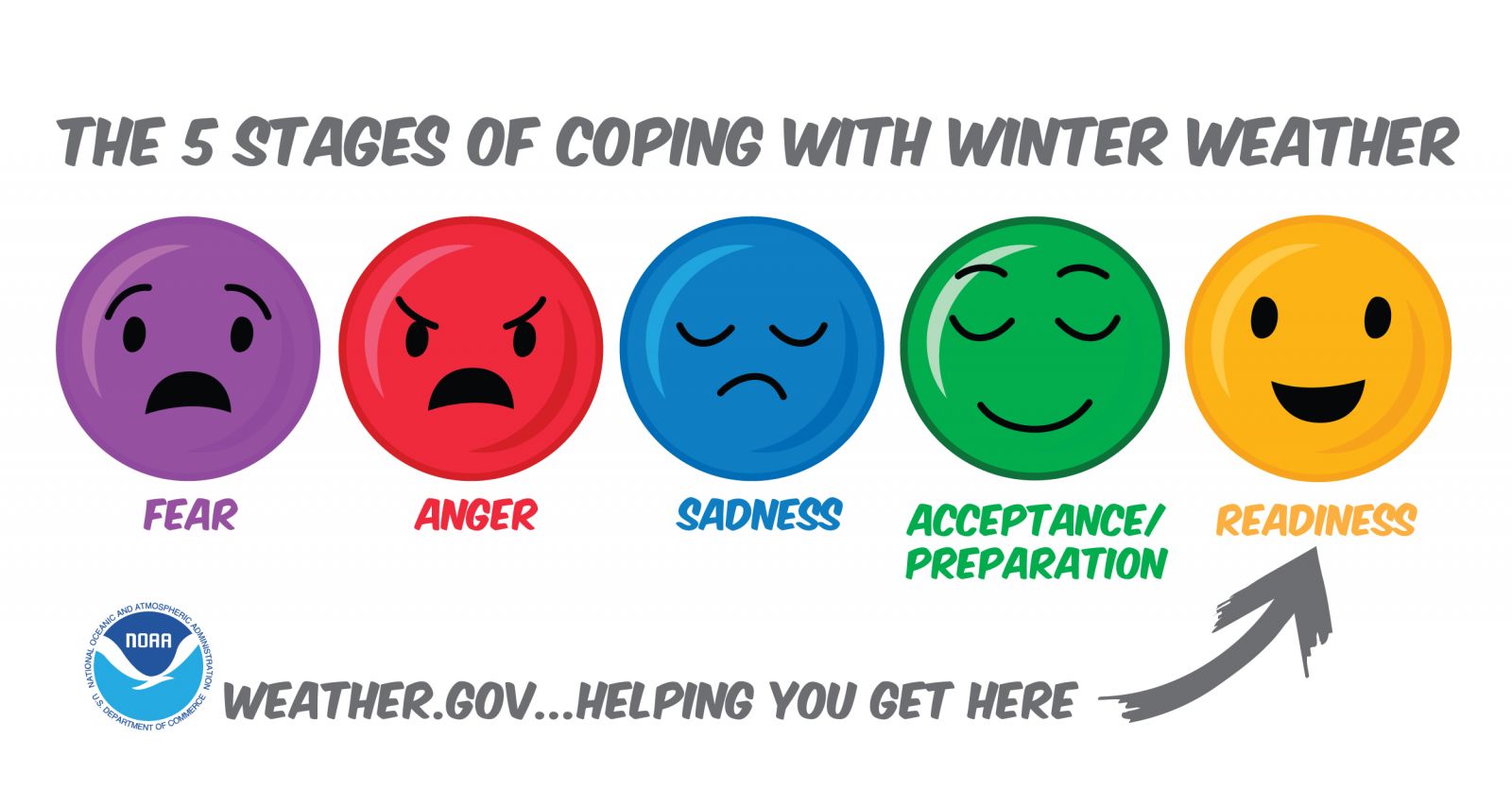
5 stages of coping with winter weather: Fear, anger, sadness, acceptance, and readiness.

Forecast Terminology


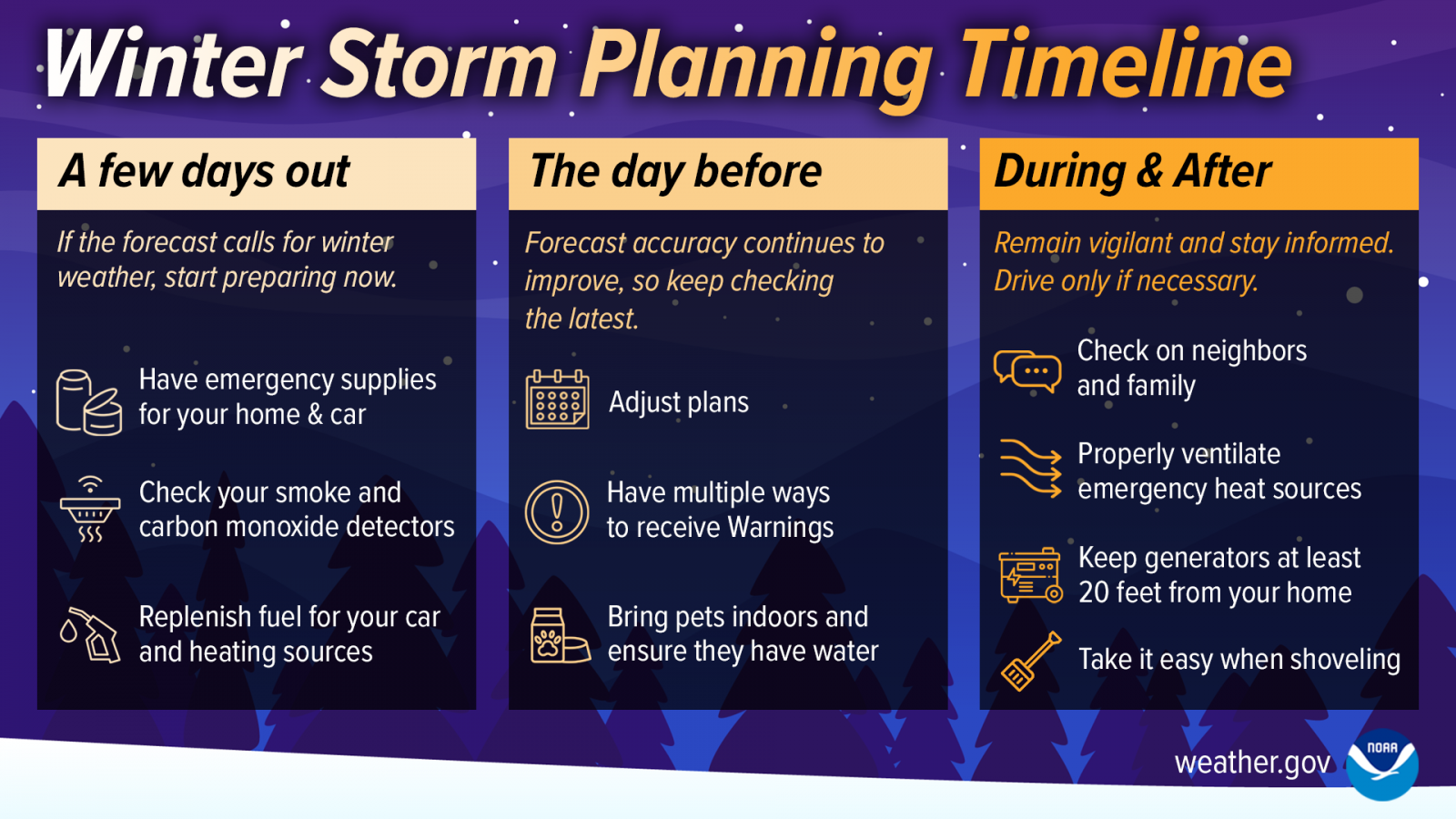
Winter storm planning. A few days out, start preparing for the upcoming storm. The day before, make any adjustments. During and after the storm, remain vigilant and stay informed.

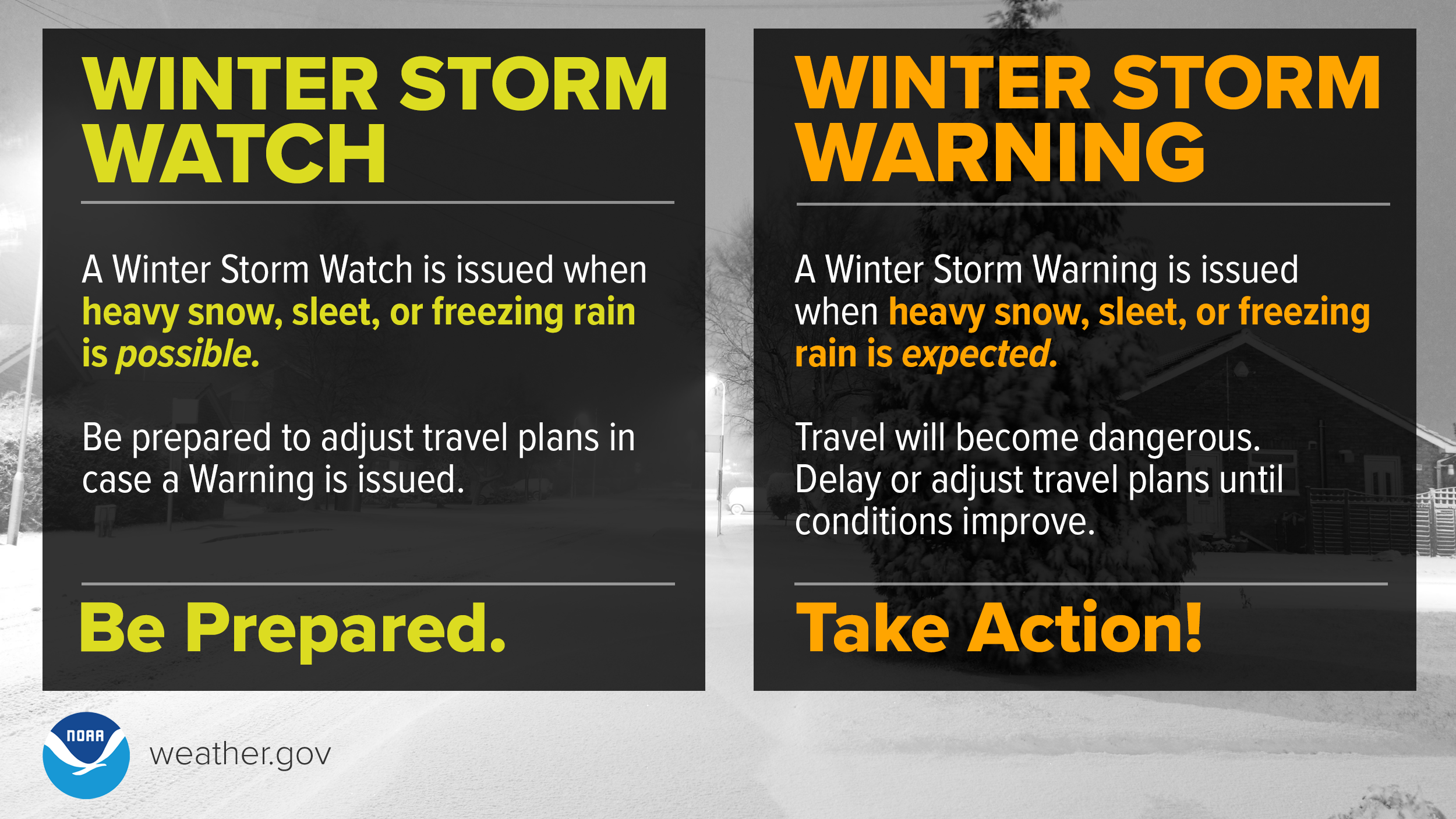
Winter Storm Watch means be prepared. A Winter Storm Watch is issued when heavy snow, sleet, or freezing rain is possible. Be prepared to adjust travel plans in case a Warning is issued. Winter Storm Warning means take action! A Winter Storm Warning is issued when heavy snow, sleet, or freezing rain is expected. Travel will become dangerous. Delay or adjust travel plans until conditions improve.

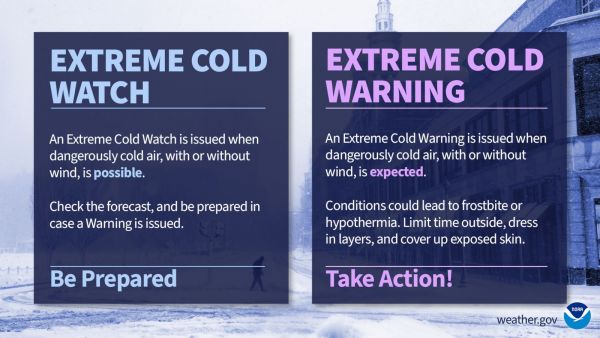
An Extreme Cold Watch means Be Prepared. An Extreme Cold Watch is issued when dangerously cold air, with or without wind, is possible. Check the forecast, and be prepared in case a Warning is issued. An Extreme Cold Warning means take action! An Extreme Cold Warning is issued when dangerously cold air, with or without wind, is expected. Conditions could lead to frostbite or hypothermia. Limit time outside, dress in layers, and cover up exposed skin.

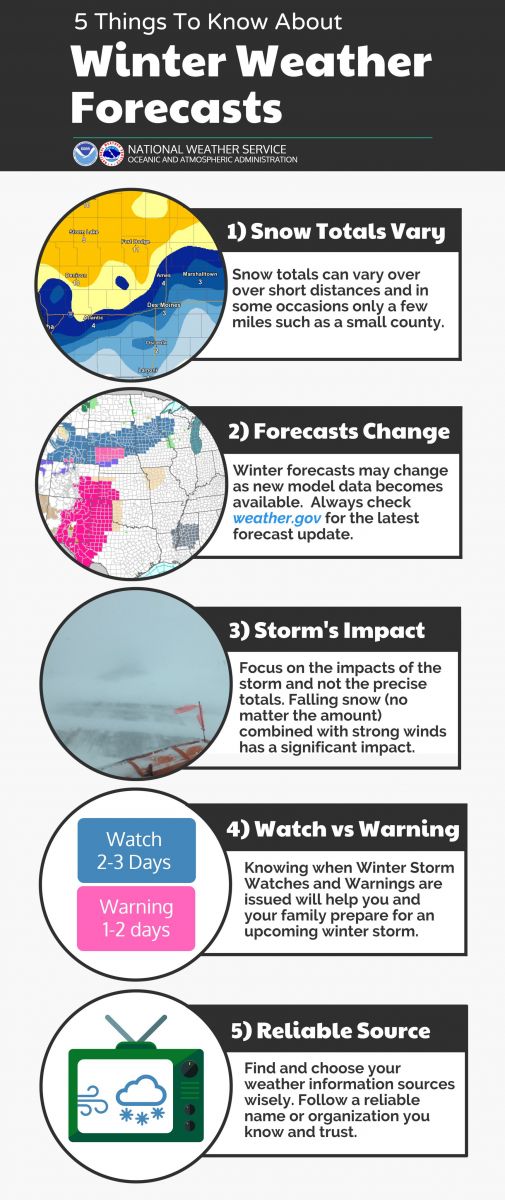
5 things to know about winter weather forecasts:  1) Snow totals can vary over short distances. 2) Forecasts may change as new model data arrives. 3) Focus on a storm's impacts, and not the precise totals. 4) Know the difference between a watch and warning. 5) Find and use reliable weather sources for updates.


Winter Travel Tips

  • Make sure your car is in good operating condition before using it in extreme cold.

  • Keep condensation (water) out of your gas tank by keeping the tank as full as possible.

  • Maintain a storm kit in your car with such items as a cell phone and charger; blankets; extra clothing; jumper cables; a flashlight; extra batteries; high-calorie, non-perishable food; and matches or a lighter.

  • Plan your trip carefully. If cold, snowy, or icy conditions exceed your ability or your car's ability, don't travel. If you must travel, be cautious.

  • Tell someone about your travel plans.

  • Never leave the motor running in a vehicle parked in an enclosed or partially enclosed space, such as a garage.

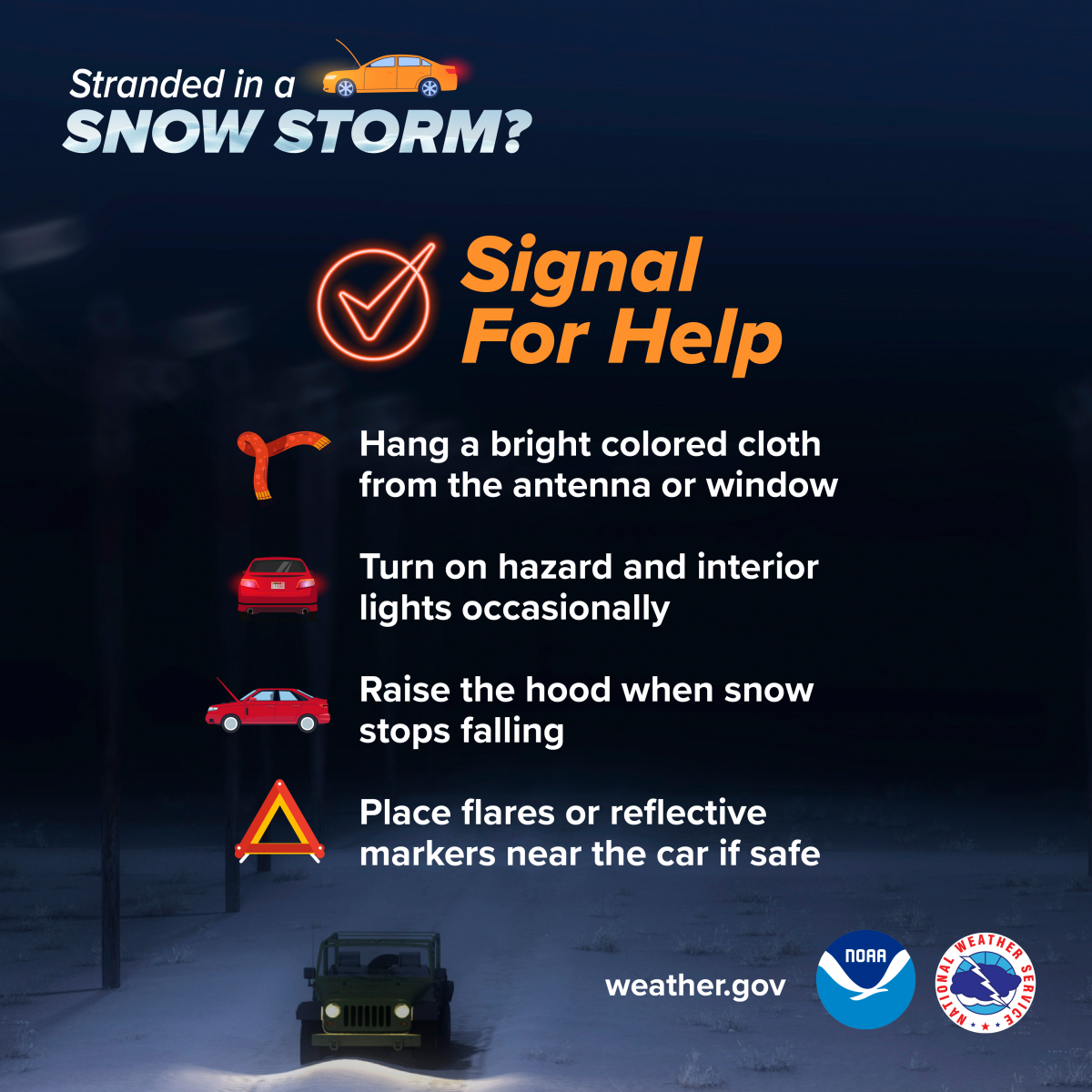
An infographic providing safety tips on how to signal for help if you are Stranded in a Snow Storm?  The graphic is set against a dark, snowy background with an illustration of a car stuck in the snow at the top. The main title is "Signal For Help" with a large orange checkmark icon.  The four instructions are:  Hang a bright colored cloth from the antenna or window (accompanied by an icon of an orange scarf). Turn on hazard and interior lights occasionally (accompanied by an icon of a red car with its lights on). Raise the hood when snow stops falling (accompanied by an icon of a red car with its hood up). Place flares or reflective markers near the car if safe (accompanied by an icon of an orange warning triangle).
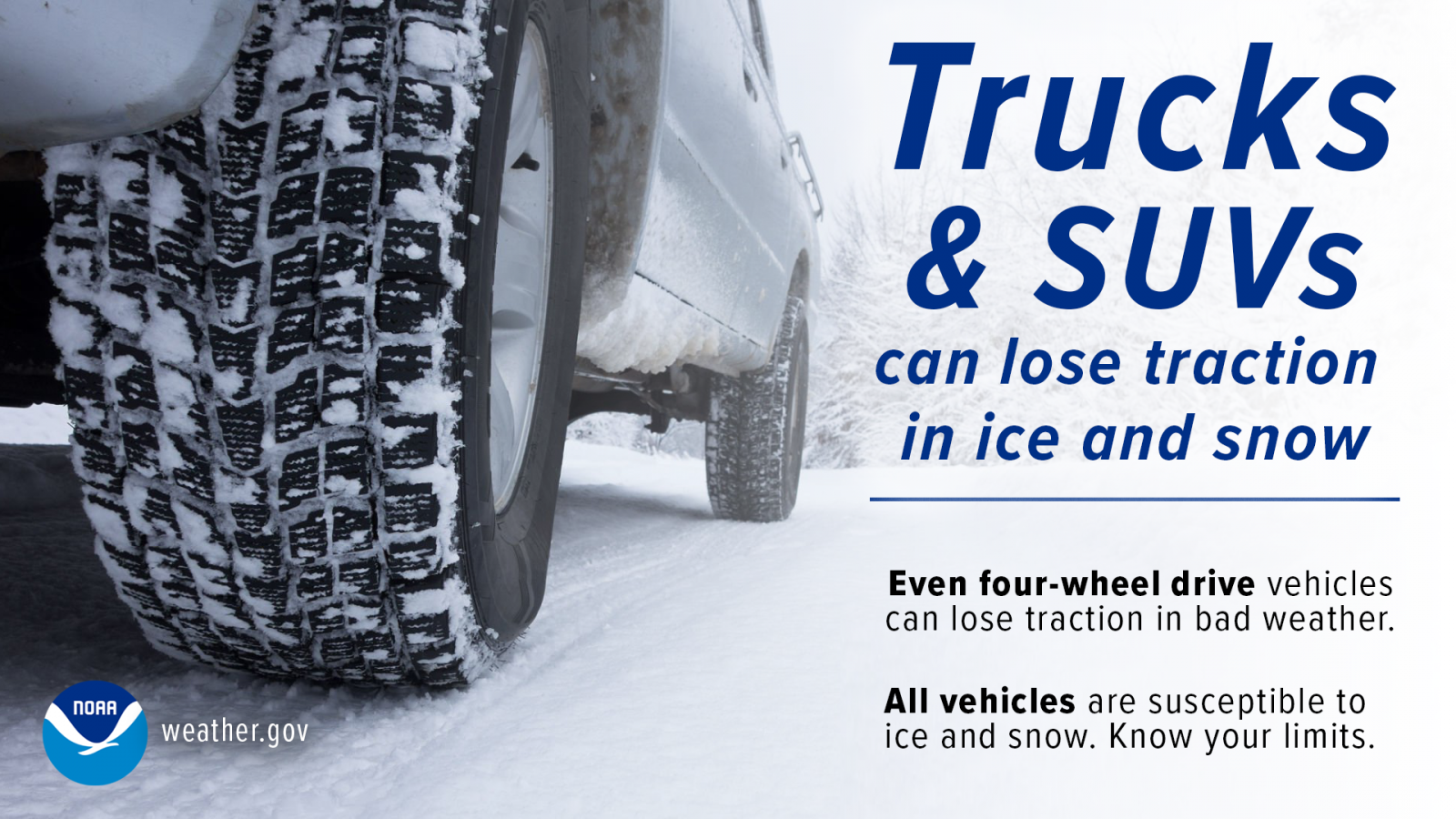
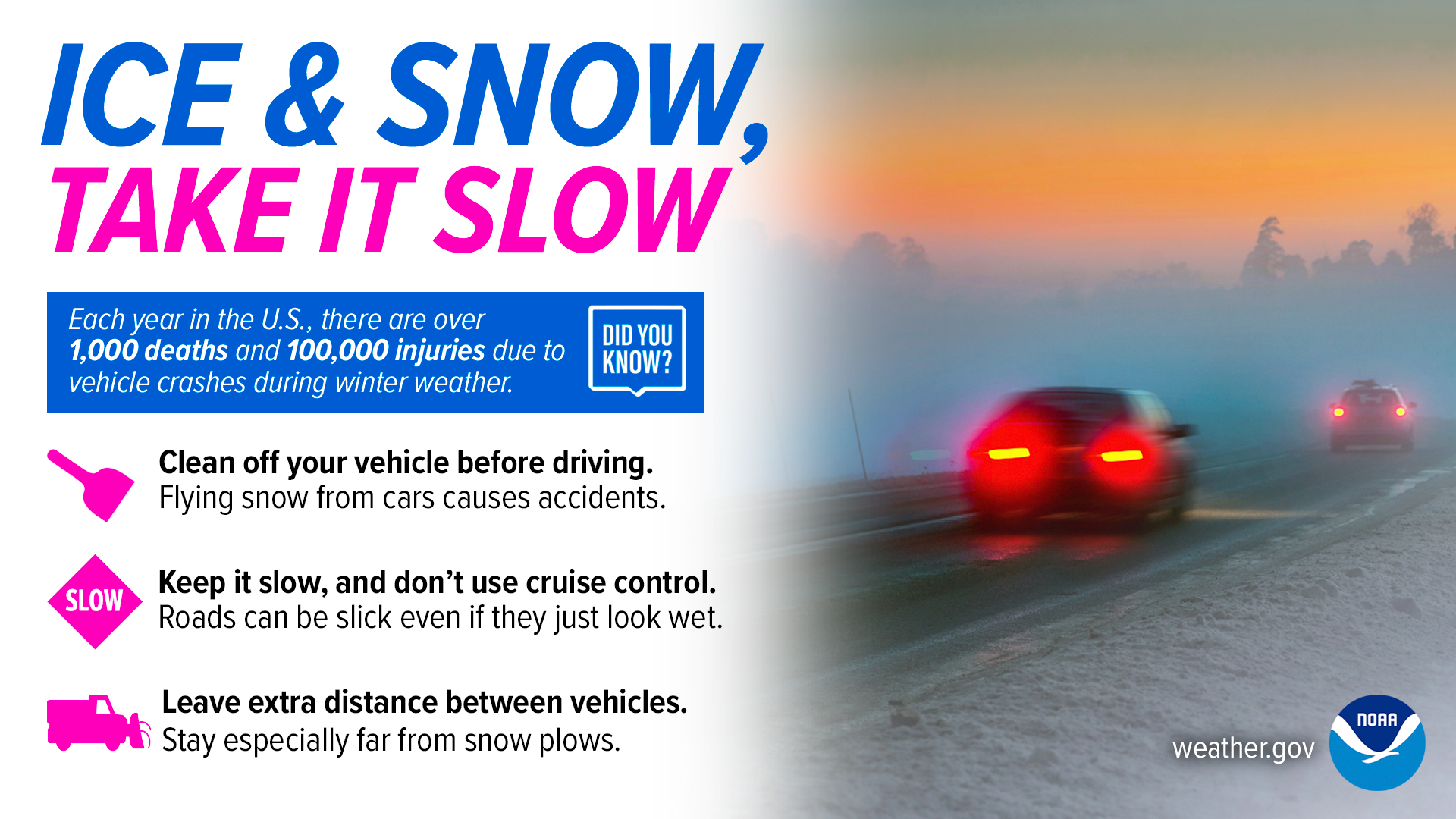
Pictured: A truck tire with snow between the treads. Text: Trucks & SUVs can lose traction in ice and snow. Even four-wheel drive vehicles can lose traction in bad weather. All vehicles are susceptible to ice and snow. Know your limits. Did you know? Each year in the United States, there are over 1,000 deaths and 100,000 injuries due to vehicle crashes during winter weather. Clean off your vehicle before driving. Flying snow from cars causes accidents. Keep it slow, and don’t use cruise control. Roads can be slick even if they just look wet. Leave extra distance between vehicles. Stay especially far from snow plows.
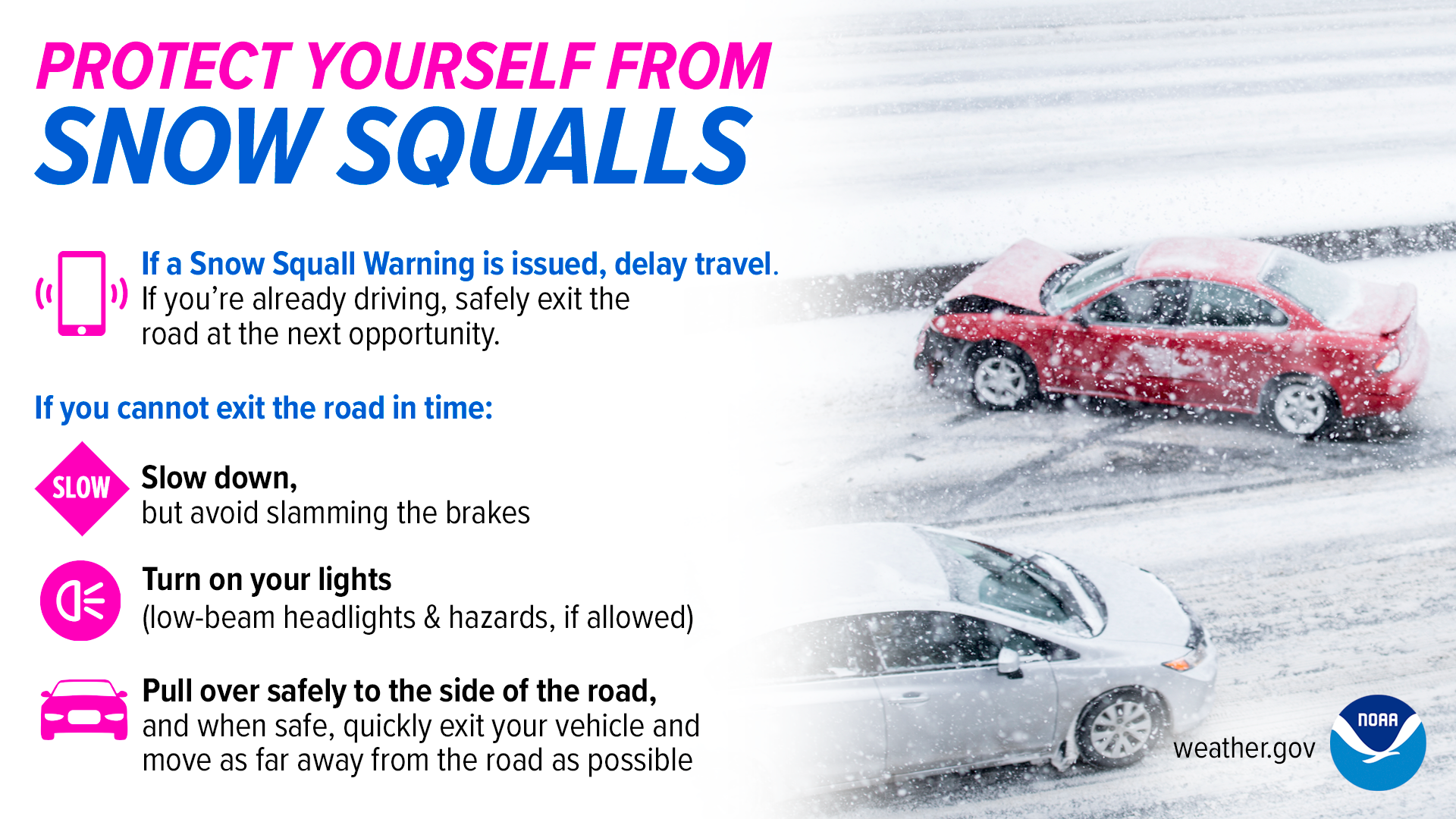
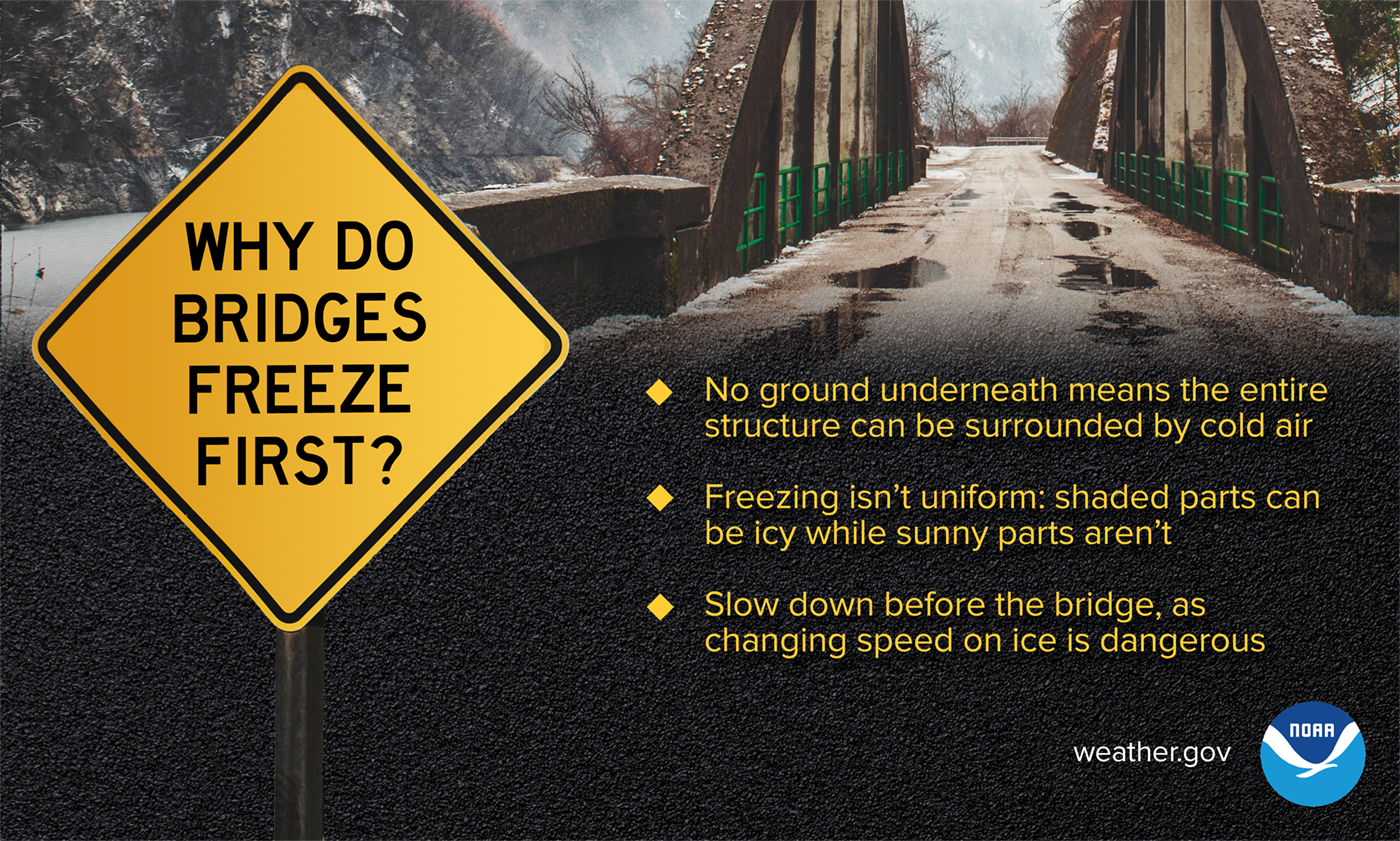
Protect yourself from snow squalls. If a Snow Squall Warning is issued, delay travel. If you’re already driving, safely exit the road at the next opportunity. If you cannot exit the road in time: Slow down, but avoid slamming the brakes. Turn on your low-beam headlights and hazard lights. Pull over safely to the side of the road, and when safe, quickly exit your vehicle and move as far away from the road as possible. Why Do Bridges Freeze First? No ground underneath means the entire structure can be surrounded by cold air. Freezing isn't uniform, shaded parts can be icy while sunny parts aren't. Slow down before the bridge, as changing speed on ice is dangerous.


Cold Weather Safety

  • Frostbite is a severe reaction to cold exposure of the skin that can permanently damage your extremities. Slowly warm the affected areas and seek medical help as soon as possible.          

  • Hypothermia (low body temperature less than 95 degrees) is a life-threatening condition! Seek medical attention immediately! Get into dry clothing, warm the body core first and give the victim warm fluids - not hot beverages or alcohol.

  • Avoid overexertion, such as shoveling heavy snow or walking in deep snow. The strain from the cold could cause a heart attack at any age.

  • Loose fitting, warm clothing worn in layers will insulate better and keep you warmer.

  • Keep your feet and hands as dry as possible, and wear a hat.

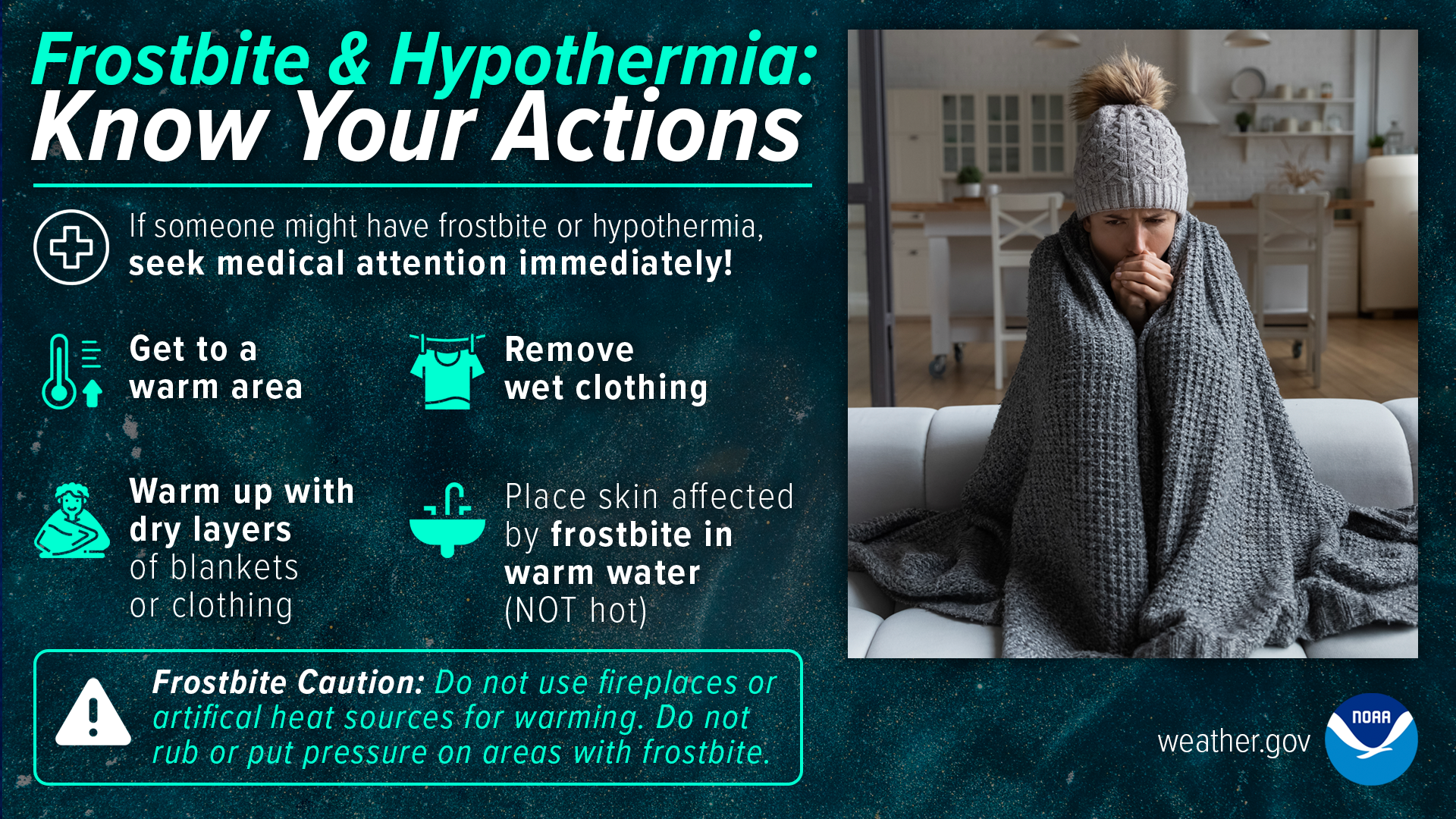
If someone might have frostbite or hypothermia, seek medical attention immediately! Get to a warm area. Remove wet clothing. Warm up with dry layers of blankets or clothing. Place skin affected by frostbite in warm water (not hot). Frostbite caution: do not use fireplaces or artificial heat sources for warming. Do not rub or put pressure on areas with frostbite.

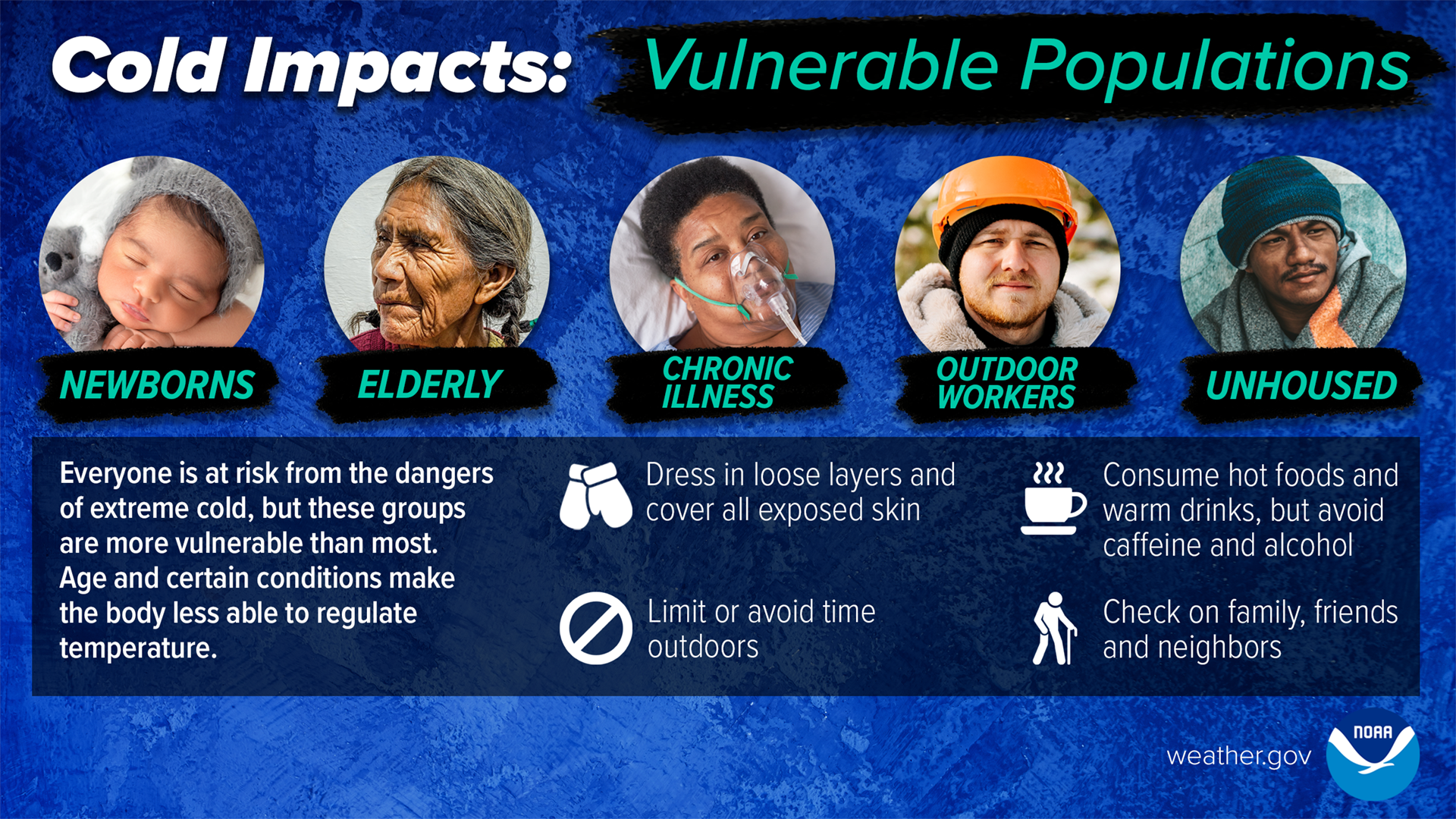
Cold Impacts: Vulnerable Populations: Everyone is at risk from the dangers of extreme cold, but these groups are more vulnerable than most: newborns, the elderly, people with chronic illness, outdoor workers, and the unhoused. Age and certain conditions make the body less able to regulate temperature. Dress in loose layers and cover all exposed skin. Consume hot foods and warm drinks, but avoid caffeine and alcohol. Limit or avoid time outdoors. Check on family, friends and neighbors.

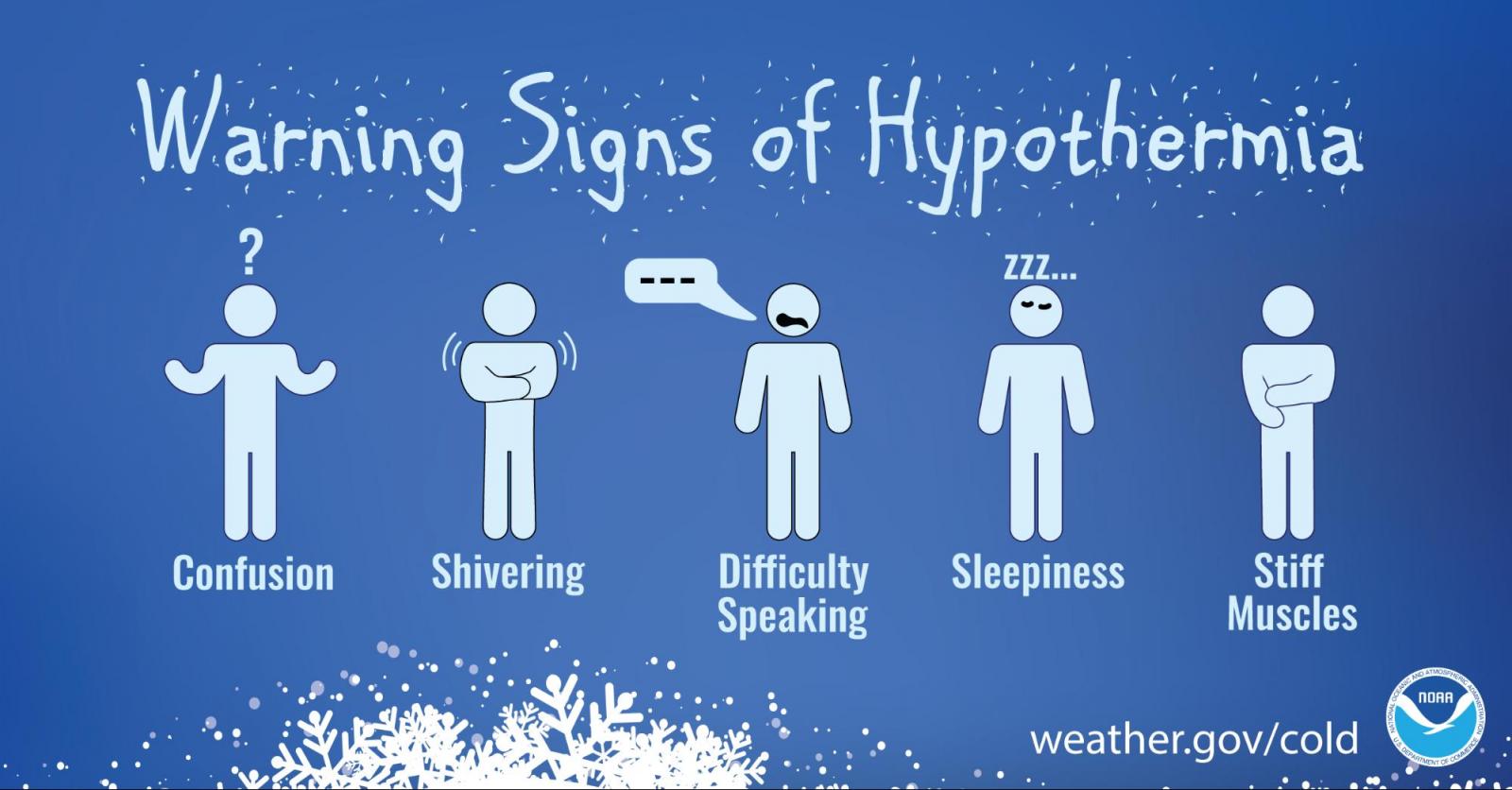
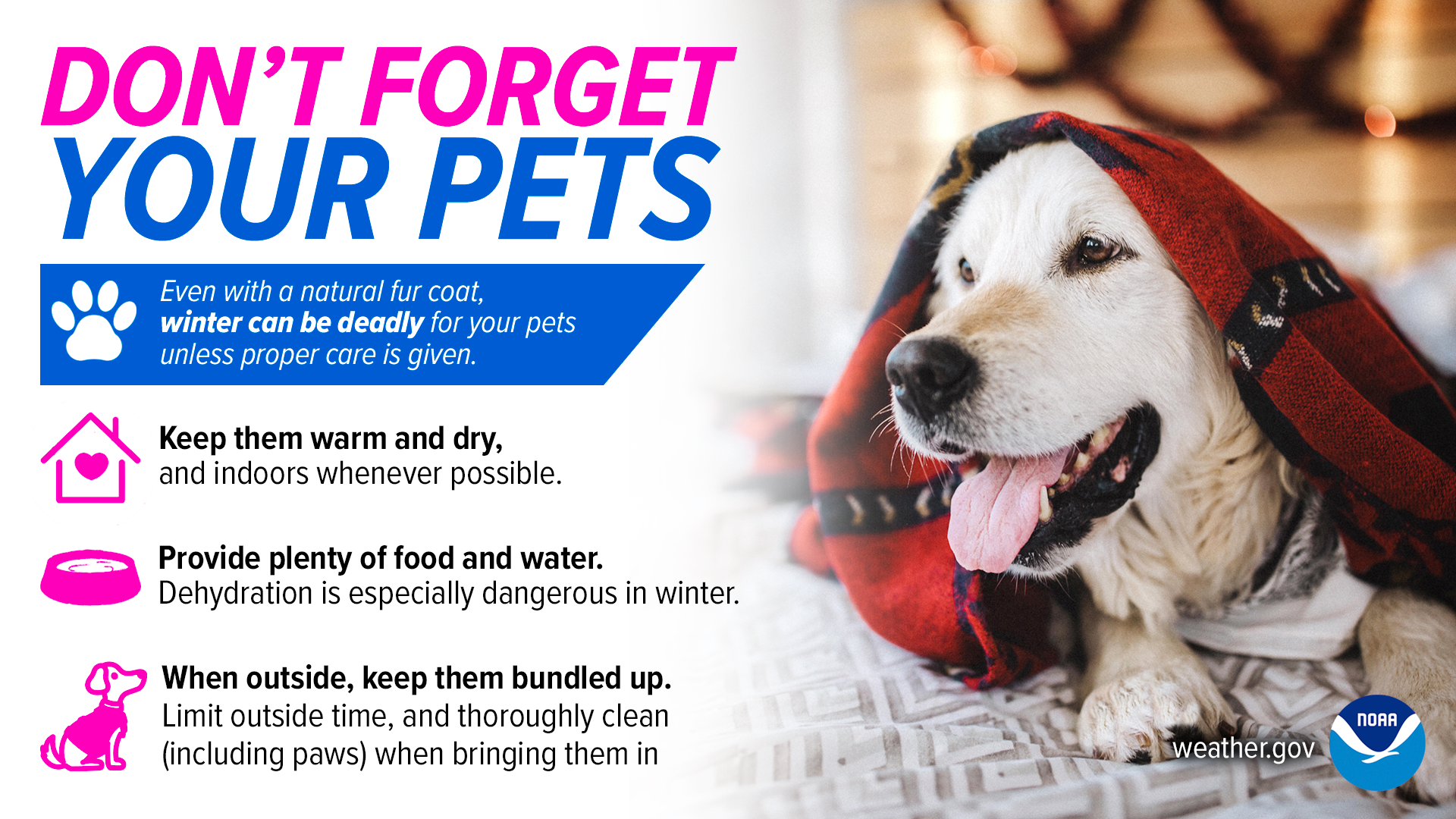
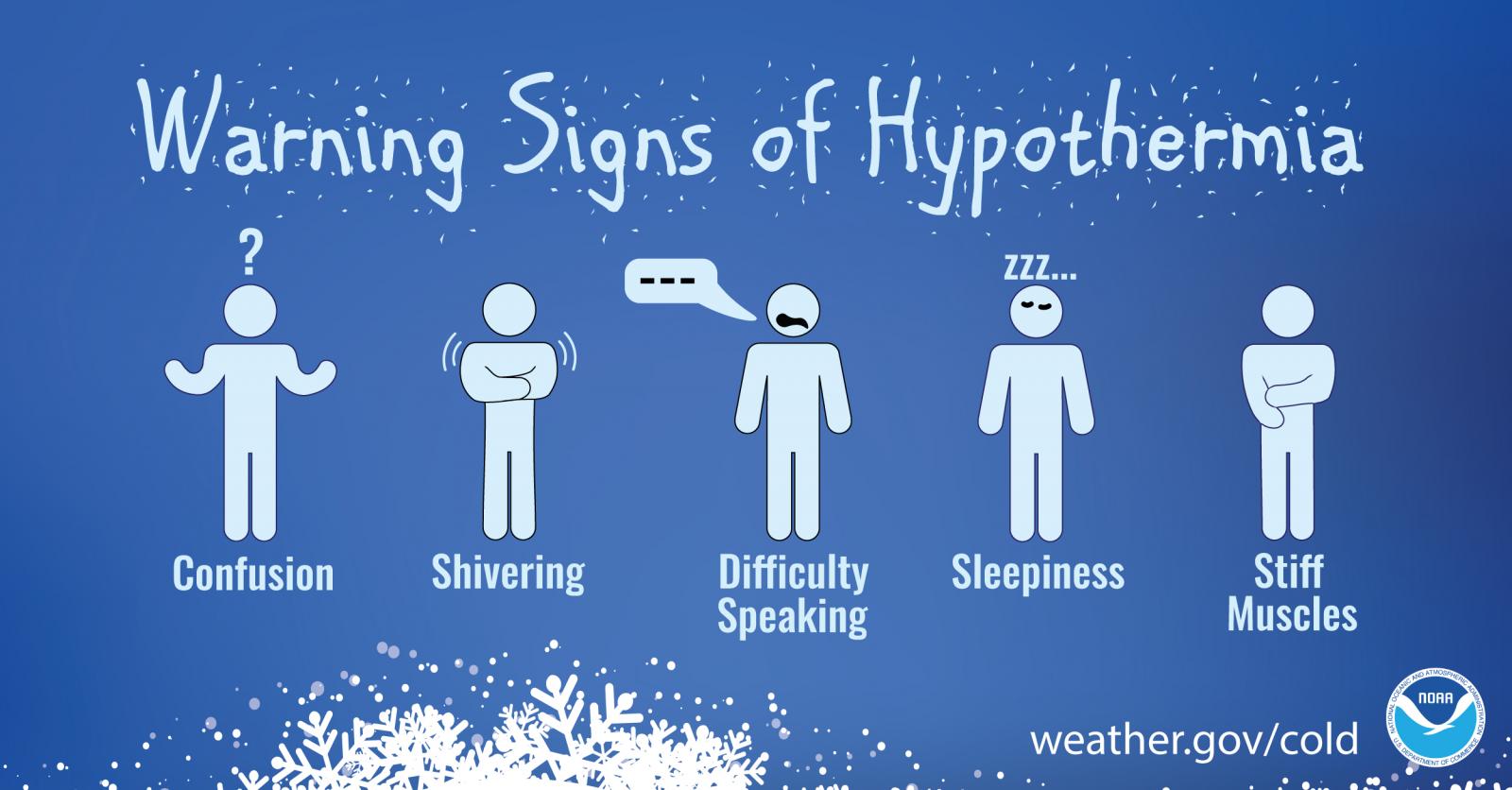
Warning signs of hypothermia: confusion, shivering, difficulty speaking, sleepiness, stiff muscles. Don’t forget your pets! Even with a natural fur coat, winter can be deadly for your pets unless proper care is given. Keep them warm and dry, and indoors whenever possible. Provide plenty of food and water. Dehydration is especially dangerous in winter. When outside, keep them bundled up. Limit outside time, and thoroughly clean, including paws, when bringing them in.
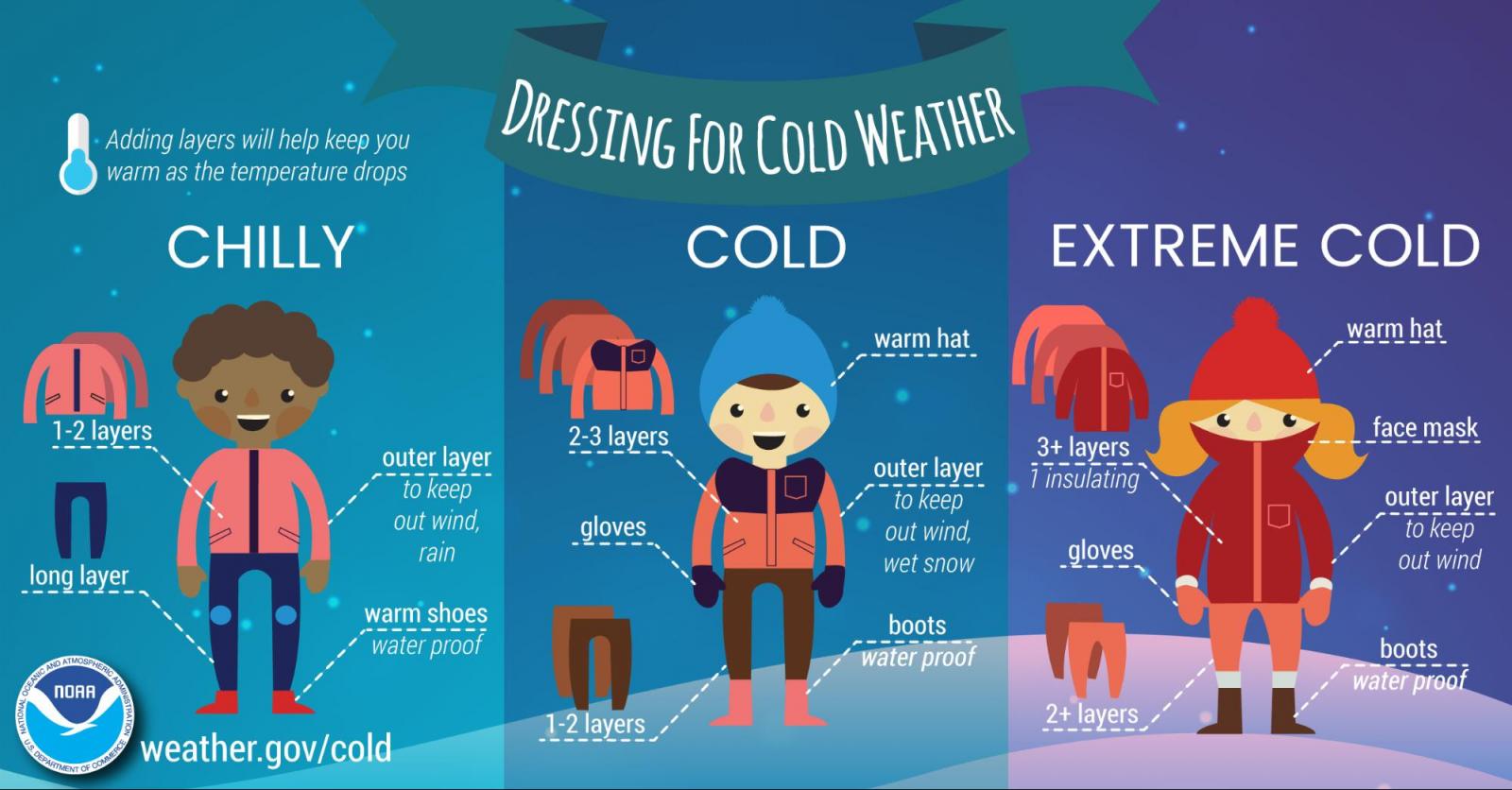
Dressing for the Cold - Infographic. Adding layers will help keep you warm as the temperature drops. Chilly: 1-2 layers; outer layer to keep out wind, rain; long layer on legs; warm shoes (water proof). Cold: 2-3 layers; warm hat; gloves; outer layer to keep out wind, wet snow; 1-2 long layers on legs; boots (water-proof). Extreme cold: 3+ layers (1 insulating); warm hat; gloves; outer layer to keep out wind; 2+ long layers on legs; boots (water proof).


Winter Safety at Home


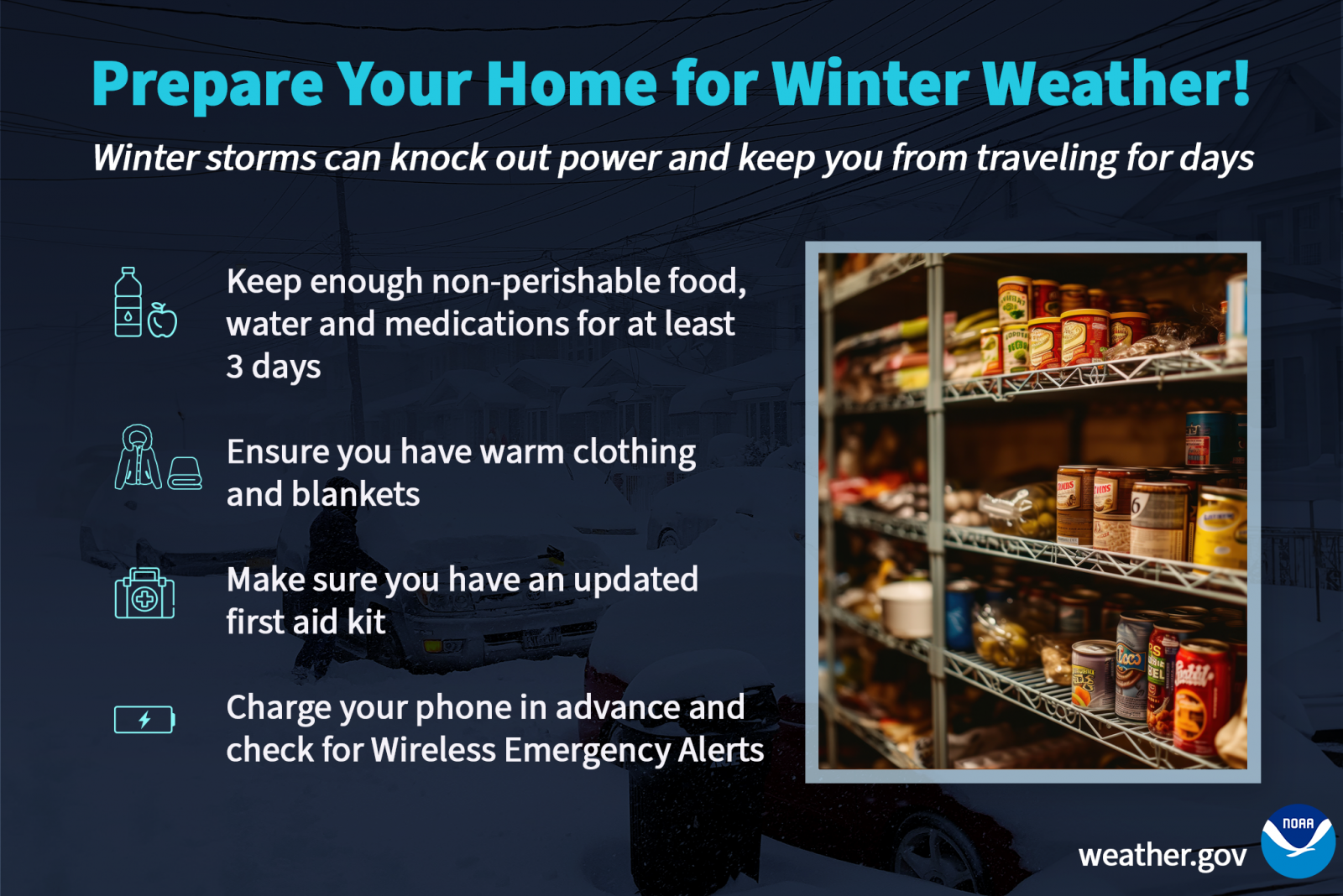
Prepare your home for winter weather emergencies! Winter storms can knock out power and keep you from traveling for days. Keep enough non-perishable food, water and medications for at least 3 days. Ensure you have warm clothing and blankets. Make sure you have an updated first aid kit. Charge your phone in advance and check for wireless emergency alerts. weather.gov

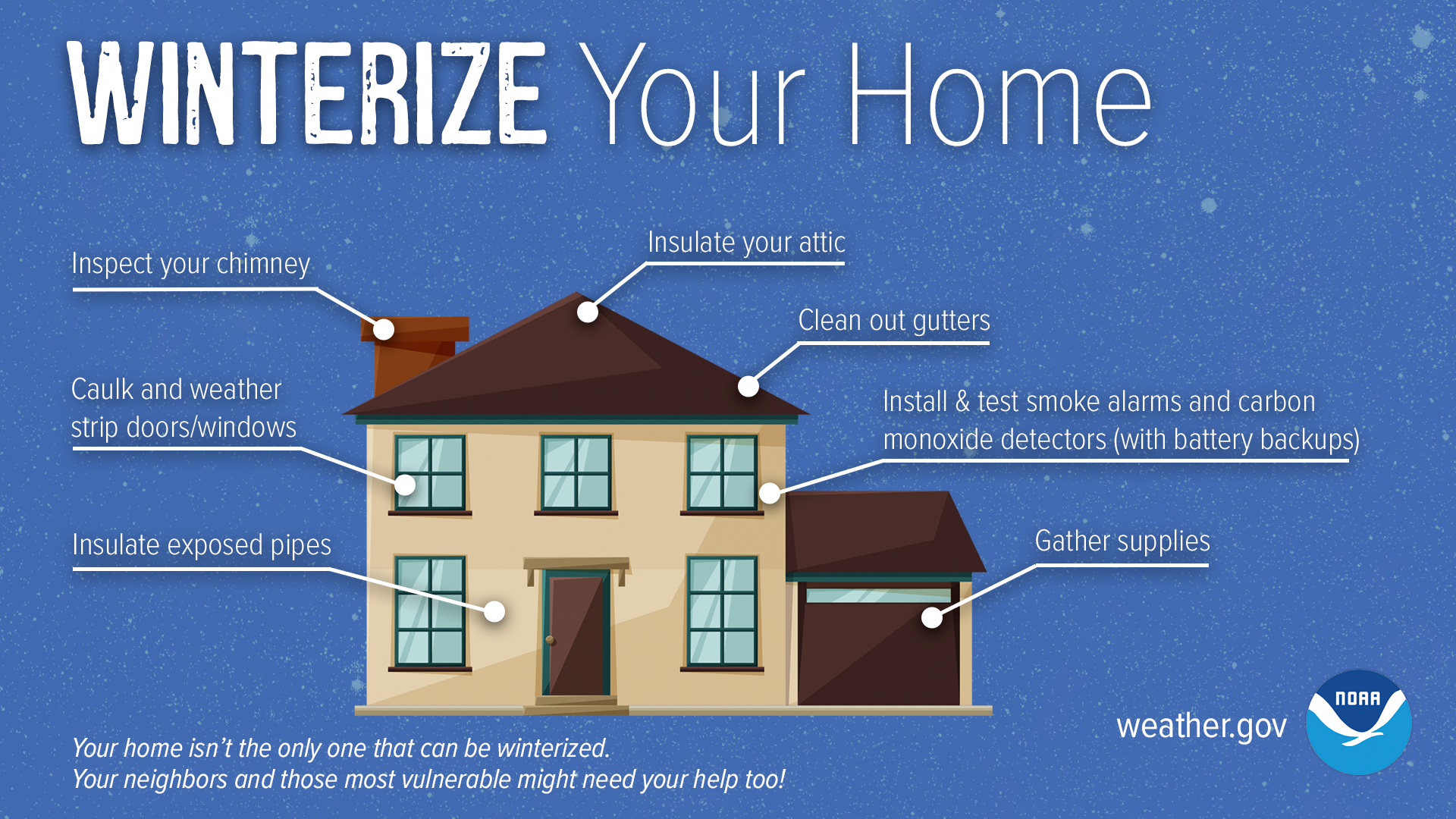
Winterize your home. Inspect your chimney. Caulk and weather strip doors/windows. Insulate exposed pipes. Insulate your attic. Clean out gutters. Install and test smoke alarms and carbon monoxide detectors (with battery backups). Gather supplies.

  • Make sure your home Emergency Kit is stocked and winter storm ready.

  • Use sand to improve traction and apply products that melt ice on walkways.

  • Make sure you have sufficient heating fuel. Regular fuel sources may be cut off.

  • Keep emergency heating equipment and fuel so you can keep at least one room of your house warm enough to be livable.

  • Keep fire extinguishers on hand, and make sure your family knows how to use them.

  • Winterize your home to extend the life of your fuel supply. Insulate walls, attics, doors, and windows.

  • Install storm windows or cover windows with plastic.

  • Do not overexert yourself or work outside for extended periods of time.
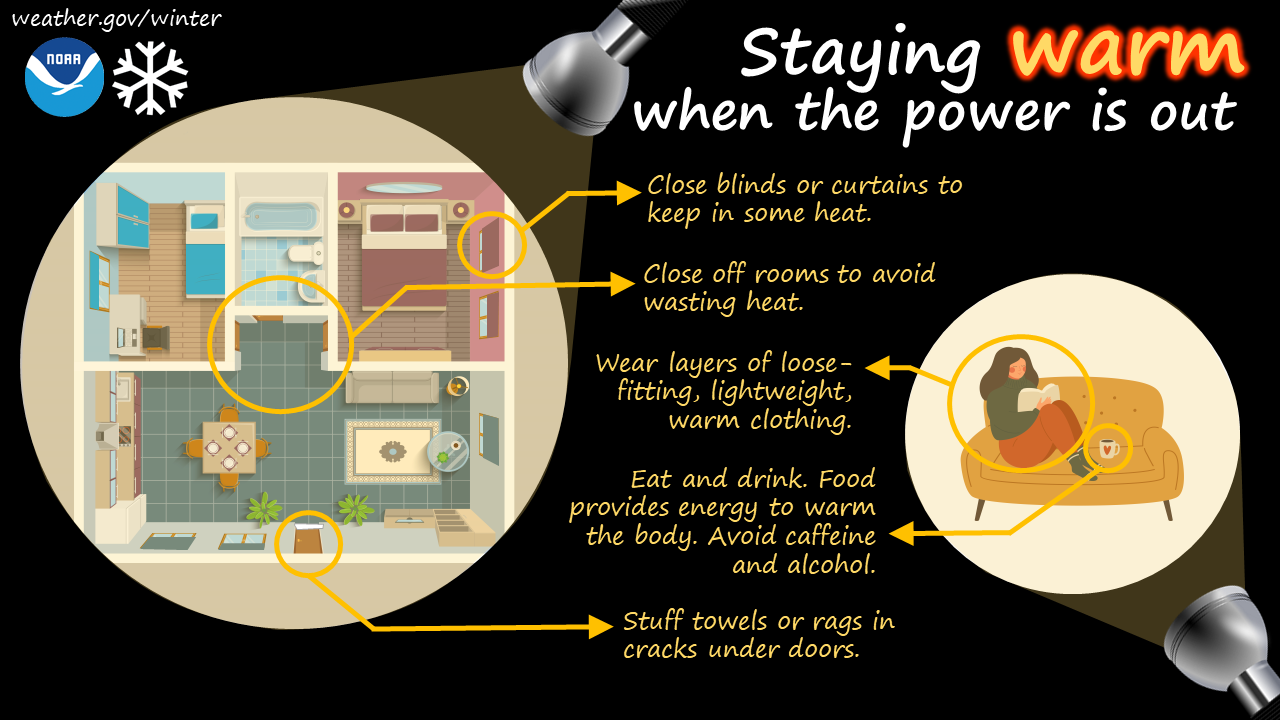
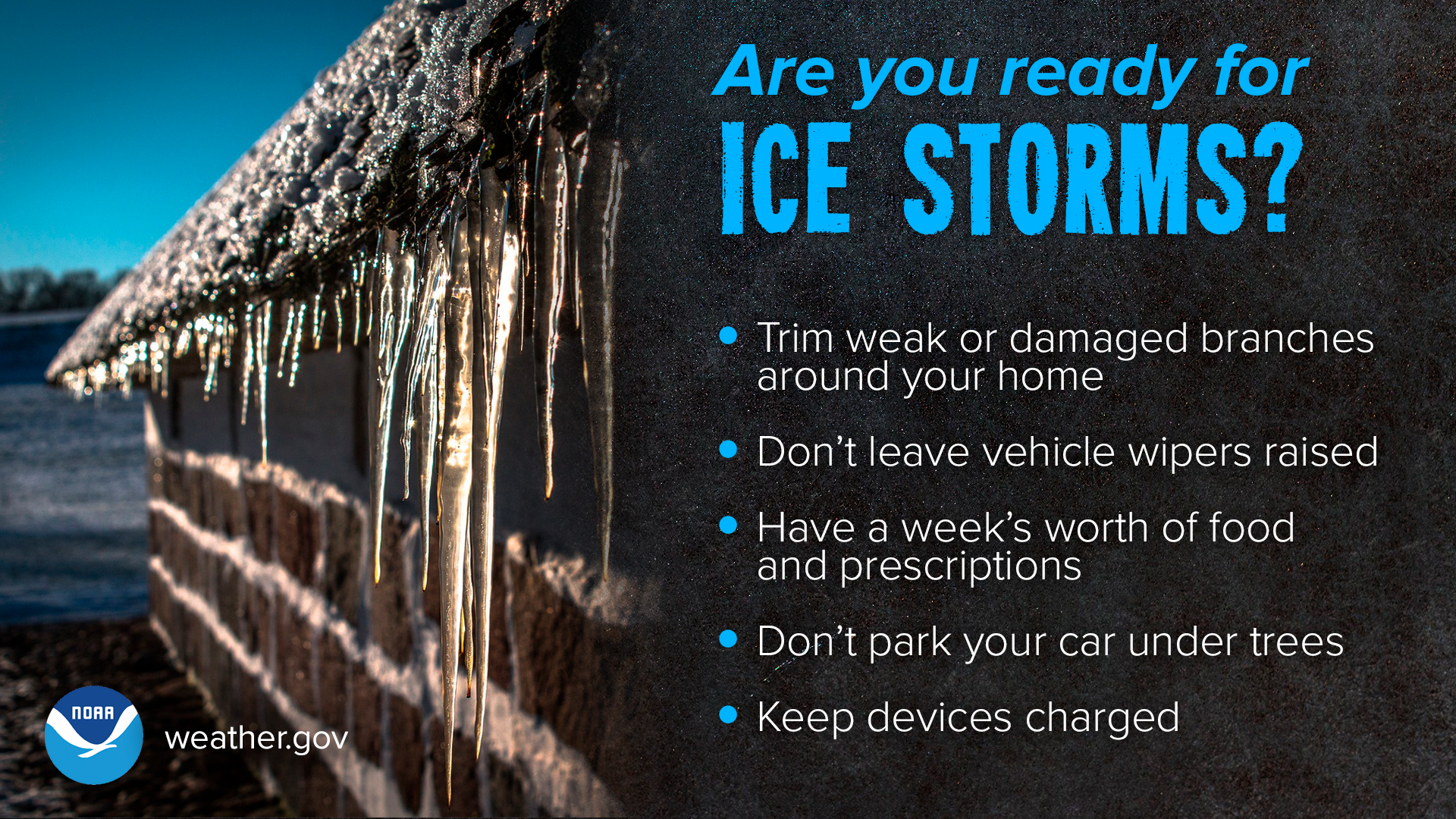
Staying warm when the power is out. Close blinds or curtains to keep in some heat. Close off rooms to avoid wasting heat. Wear layers of loose-fitting, lightweight, warm clothing. Eat and drink; food provides energy to warm the body; avoid caffeine and alcohol. Stuff towels or rags in cracks under doors. Are you ready for ice storms? Trim weak or damaged branches around your home. Don't leave vehicle wipers raised. Have a week's worth of food and prescriptions. Don't park your car under trees. Keep devices charged.
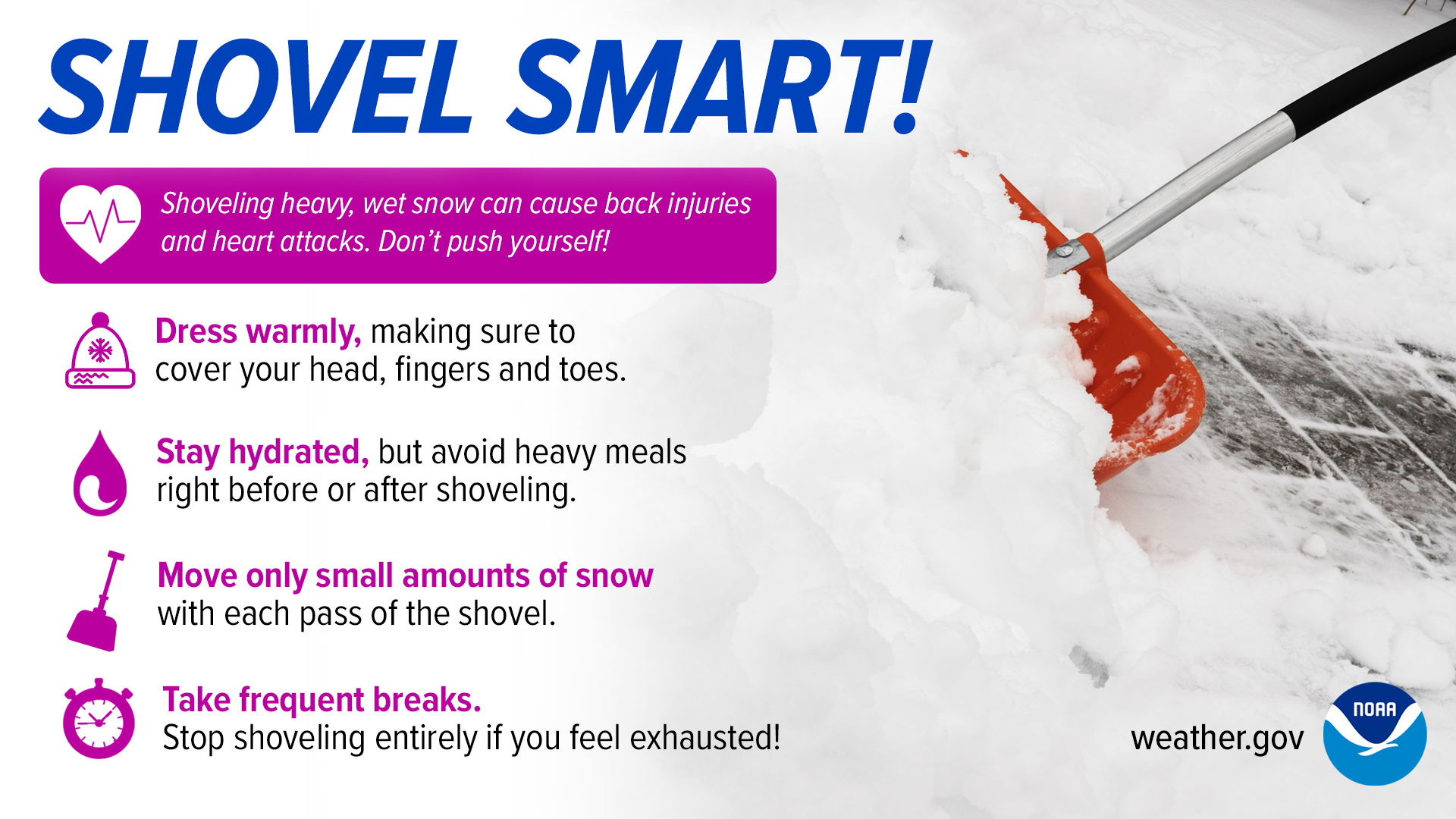
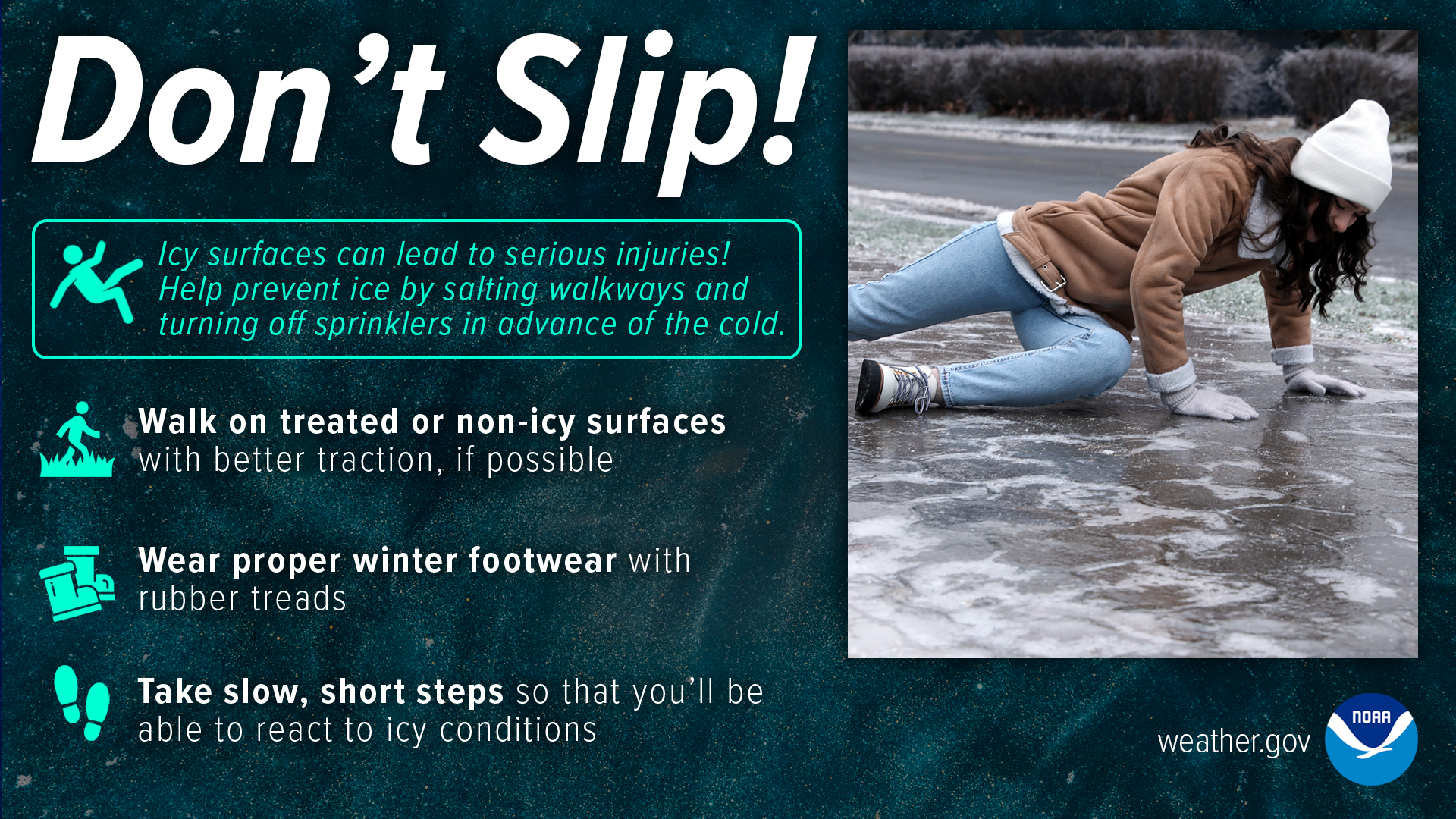
Shovel smart! Shoveling heavy, wet snow can cause back injuries and heart attacks. Don’t push yourself! Dress warmly, making sure to cover your head, fingers and toes. Stay hydrated, but avoid heavy meals right before or after shoveling. Move only small amounts of snow with each pass of the shovel. Take frequent breaks. Stop shoveling entirely if you feel exhausted! Don’t slip! Icy surfaces can lead to serious injuries! Help prevent ice by salting walkways and turning off sprinklers in advance of the cold. Walk on treated or non-icy surfaces with better traction, if possible. Wear proper winter footwear with rubber treads. Take slow, short steps so that you’ll be able to react to icy conditions.
Check smoke and carbon monoxide detector. The danger of CO is greatest during the winter, when doors and windows stay closed, and fireplaces and gas heaters are in use. Heat your home safely. Keep anything that can burn, 3 feet away from a fireplace, wood stove, or space heater.