
Remnant moisture from Tropical Storm Rachel will persist over portions of the Great Basin and Southwest on Monday, bringing a potential heavy to excessive rainfall risk. Well above average and potentially record breaking temperatures will develop across the Plains and Midwest early this week, spreading into the Lower Mississippi Valley and Southeast midweek. Read More >
The Winter Storm of January 25th and 26th
A wintry mix of freezing rain, sleet and snow fell across North Central, Northeast and East Central Kansas on January 25th and 26th. The precipitation fell as mainly snow across North Central Kansas with reports of 4 to 6 inches common

Figure 1 Snow depth reports through 7 am 1/27/2004
Freezing rain occurred across much of the area on January 25th. Ice accumulations of 1/4 to 1/2 of an inch were reported (Figure 2) across Northeast and parts of East Central Kansas. The ice built up on trees and power lines and caused numerous power outages and downed limbs across North Central and Northeast Kansas. Slick roads also led to numerous accidents across the area.
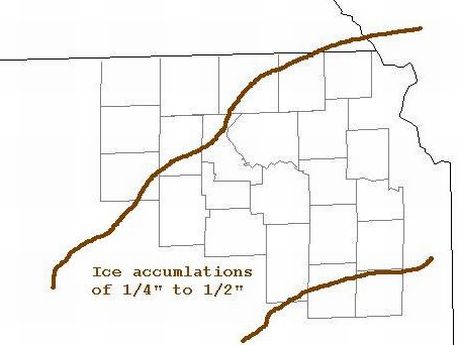
Figure 2 Ice Accumulations reported on 1/27/2004
The freezing rain occurred as a layer of warm air (located about 3000 to 6000 feet above the ground) spread over a layer of below freezing air at the surface (Figure 3). This allowed the precipitation to fall as rain instead of snow. When the rain struck the cold ground, trees and cars, it froze causing the widespread glazing exposed objects.
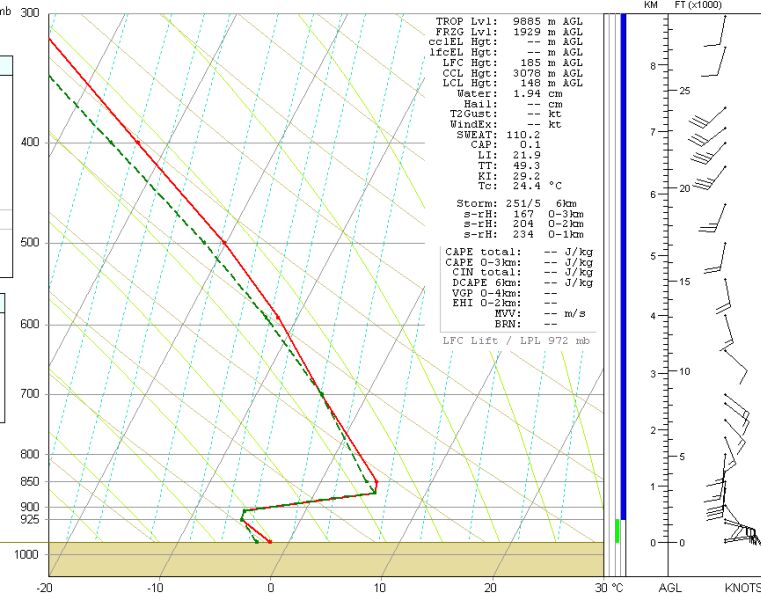
Figure 3 The Topeka sounding from 7 am 1/25/2004



 Follow us on X
 Follow us on Facebook
 Follow us on YouTube
 TOP RSS Feed