
Dangerous heat will expand from the Gulf Coast into the Southern Plains and Desert Southwest through week's end. Additional extreme heat impacting the Pacific Northwest will shift to the northern Plains by the weekend. Tropical Storm Bertha is expected to continue to impact portions of the northern Gulf Coast from the western Florida Panhandle to southeastern Louisiana through tonight. Read More >
Information about the last time there was a white Christmas and other bits of Christmas climatological information for the observing sites at Tulsa, Fayetteville, and Fort Smith can be found on our Christmas climatology webpages.
On any given year, what is the historical probability of seeing a White Christmas? The following graphics from the National Centers for Environmental Information show these probabilities for the entire country. Additional information is available here. For this year, check out the latest NWS Tulsa forecast for your location at www.weather.gov/tsa
A White Christmas, defined as at least 1" of snow depth on Christmas morning, just doesn't happen that often in eastern Oklahoma and northwest Arkansas, generally around 5 percent of the time, except for locations near the Kansas and Missouri borders. Tulsa and Fayetteville have a 7% chance of having a white Christmas each year, while Fort Smith has a 2% chance. The last White Christmas occurred in 2012 in Fort Smith and 2009 in Tulsa and Fayetteville.
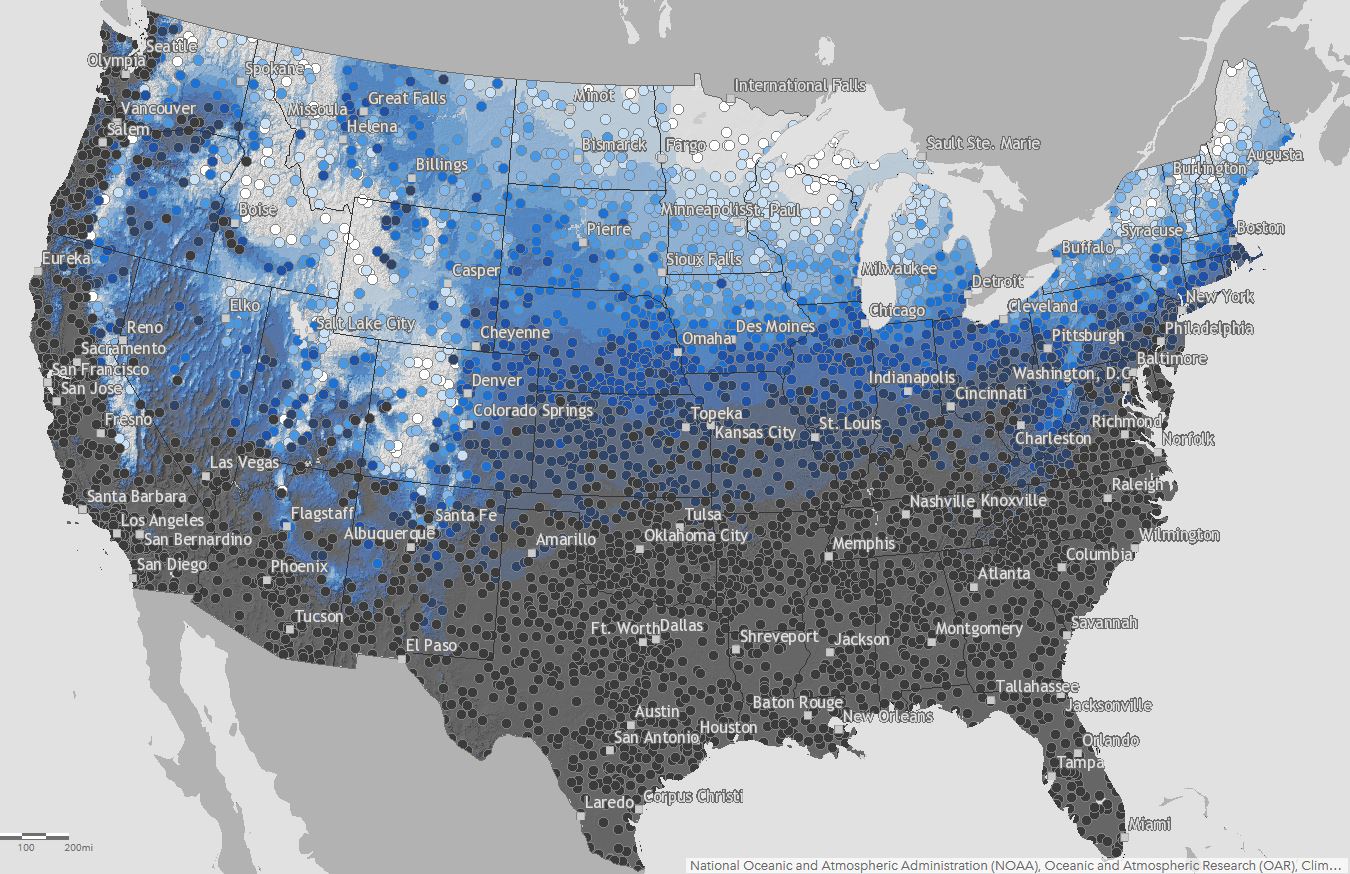
Click the image above for an interactive map.

Last updated: January 26, 2026



 Follow us on X
 Follow us on Facebook
 Follow us on YouTube
 TSA RSS Feed