Flood Outlook Mid March 2026
Key Points
What Has Changed
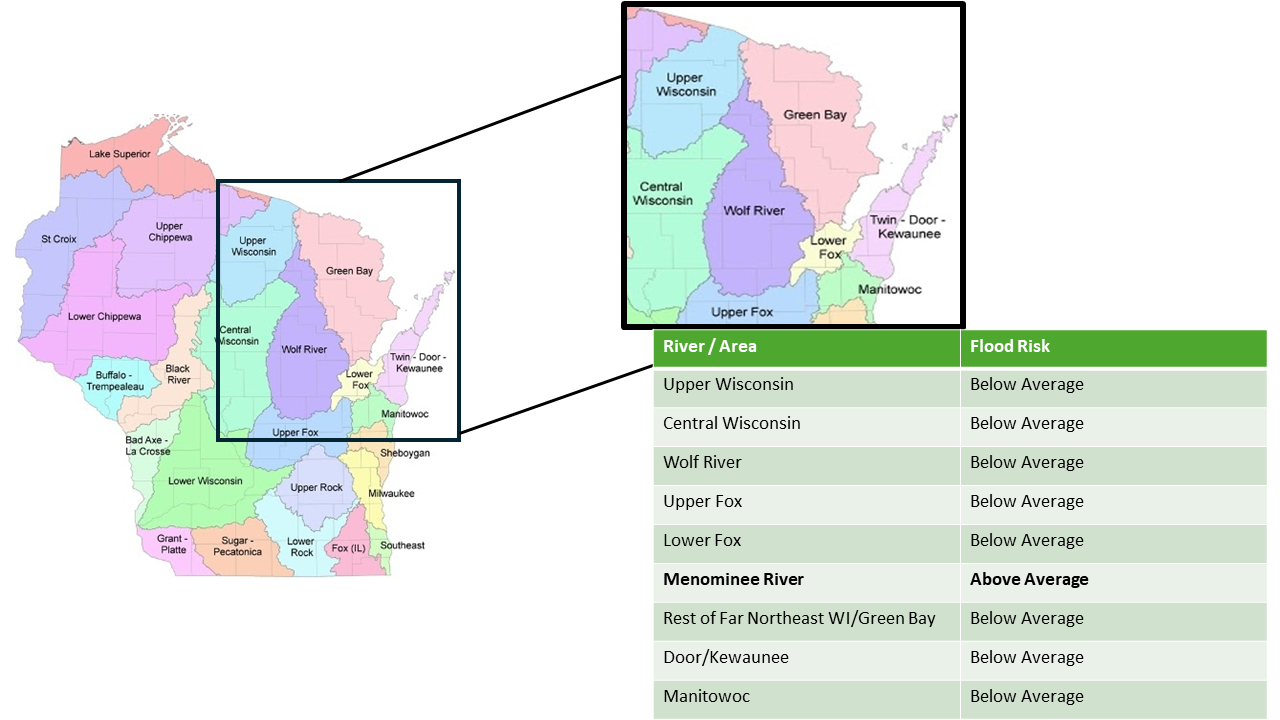
Seasonal Flood Outlook Probability Table for Wisconsin and Yellow River Forecast Locations (select latest option)
Seasonal Flood Outlook Probability Table for Menominee River Forecast Locations (select latest option)
Seasonal Flood Outlook Probability Table for Eastern Wisconsin Rivers Forecast Locations (select latest option)
Seasonal Flood Outlook Graphics (select site on map, select 'Full Gauge Page' on top of hydrograph, then scroll down)
Hydrographs with the Official River Forecast. (if one is in effect at current time) These forecasts use 48 hours of precipitation April 1 to Sep 30 and 24 hours of precipitation from Oct 1 to March 31.
If you have any questions or comments about this spring flood outlook this flood outlook website please contact:
Jason Alumbaugh
Hydrology Program Manager
National Weather Service Green Bay
jason.alumbaugh@noaa.gov
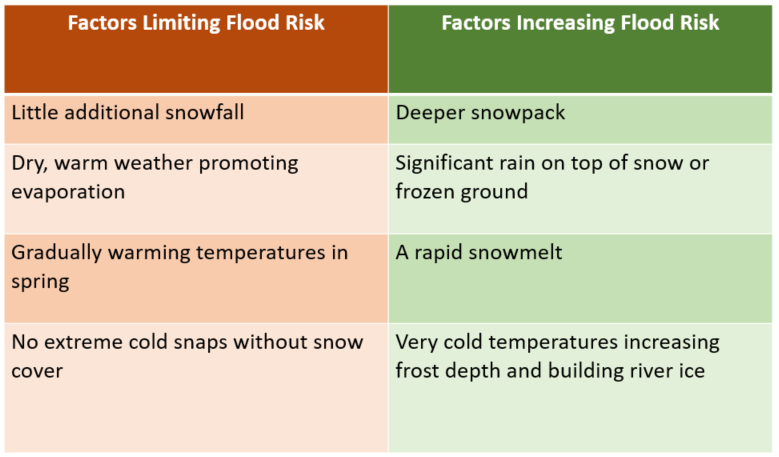
Flood Risk Factors
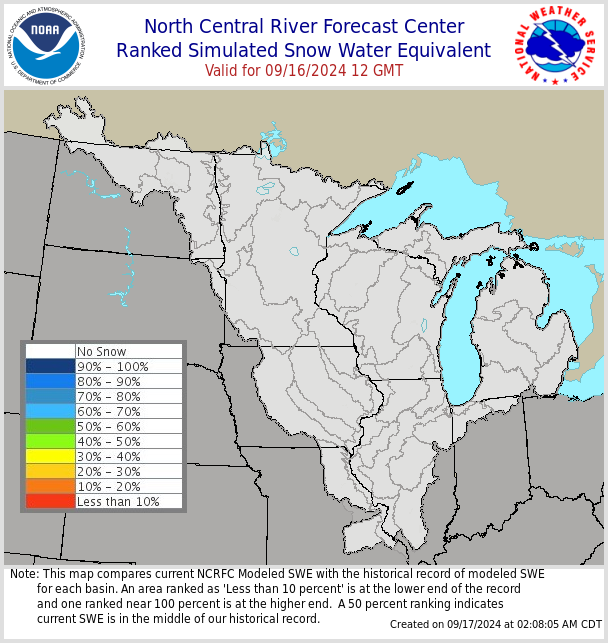
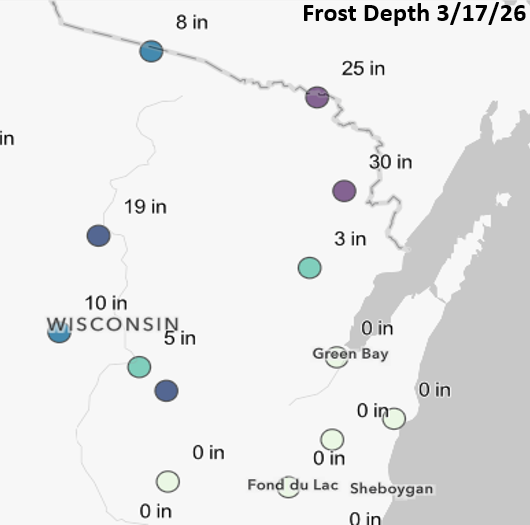
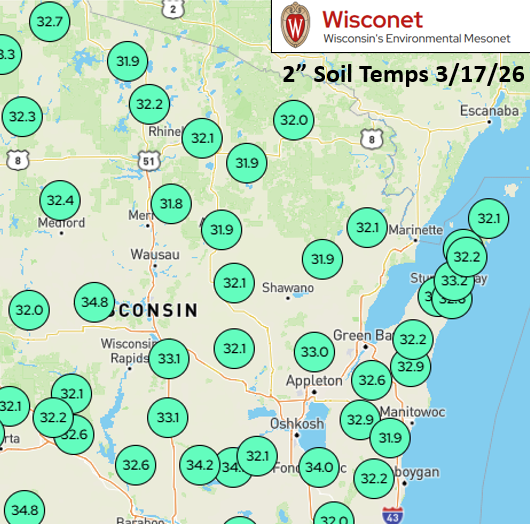
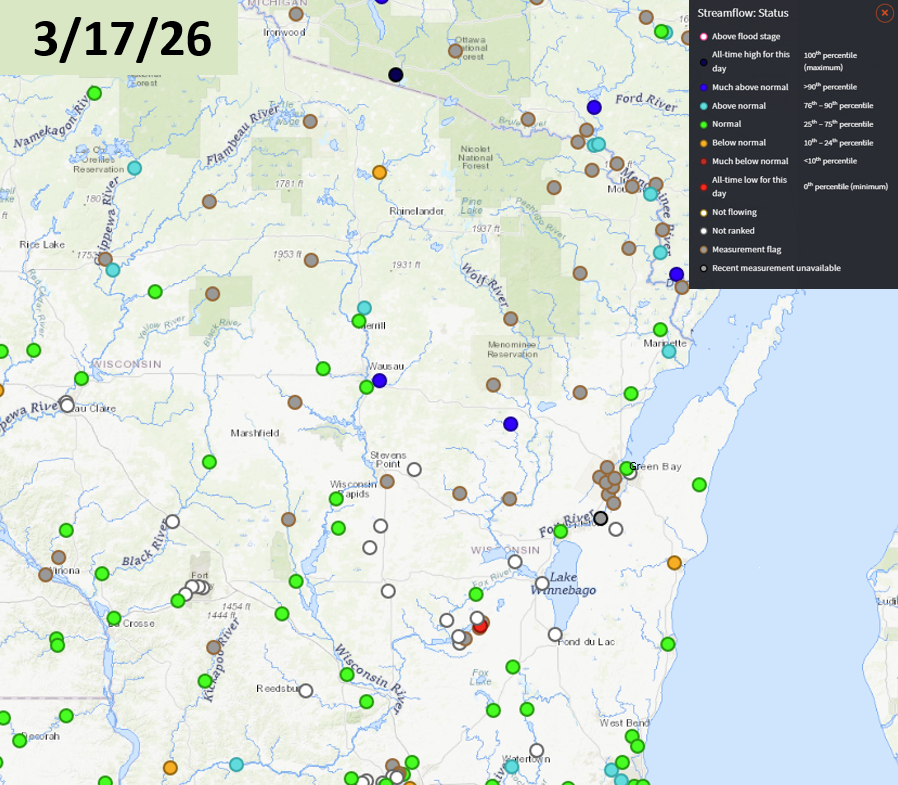
Current Conditions (some images auto update and conditions may differ from when the spring flood outlook was issued)
| Snow Water Equivalent (inches) | Ranked Snow Water Equivalent | Frost Depth (inches) |
 |
 |
|
| Soil Temperature | USGS Streamflow Status | Soil Moisture Percentile - Climate Prediction Center |
 |
|
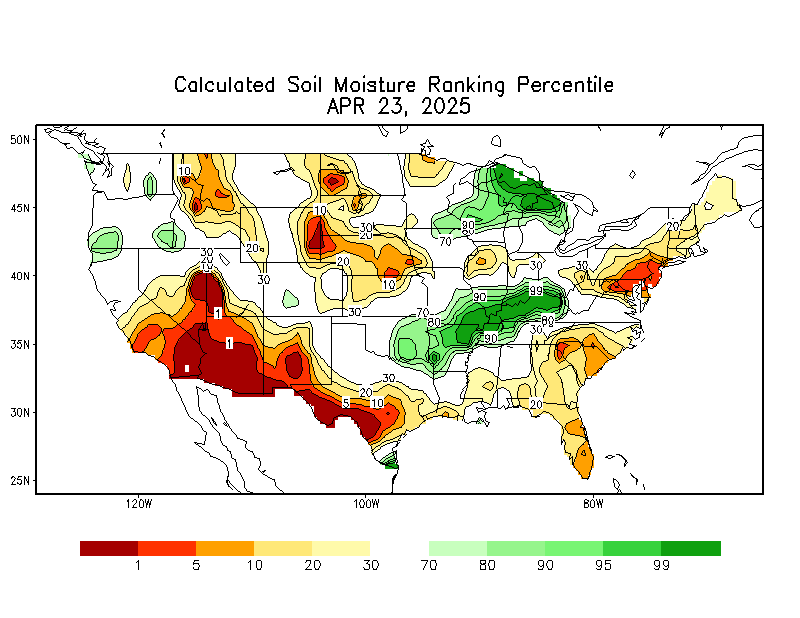 |
| 30 Day Precipitation Departure From Normal | 4 Month Precipitation Departure from Normal | U.S. Drought Monitor |
 |
 |
 |
Looking Ahead (images auto update)
| 7 Day Precipitation Forecast |
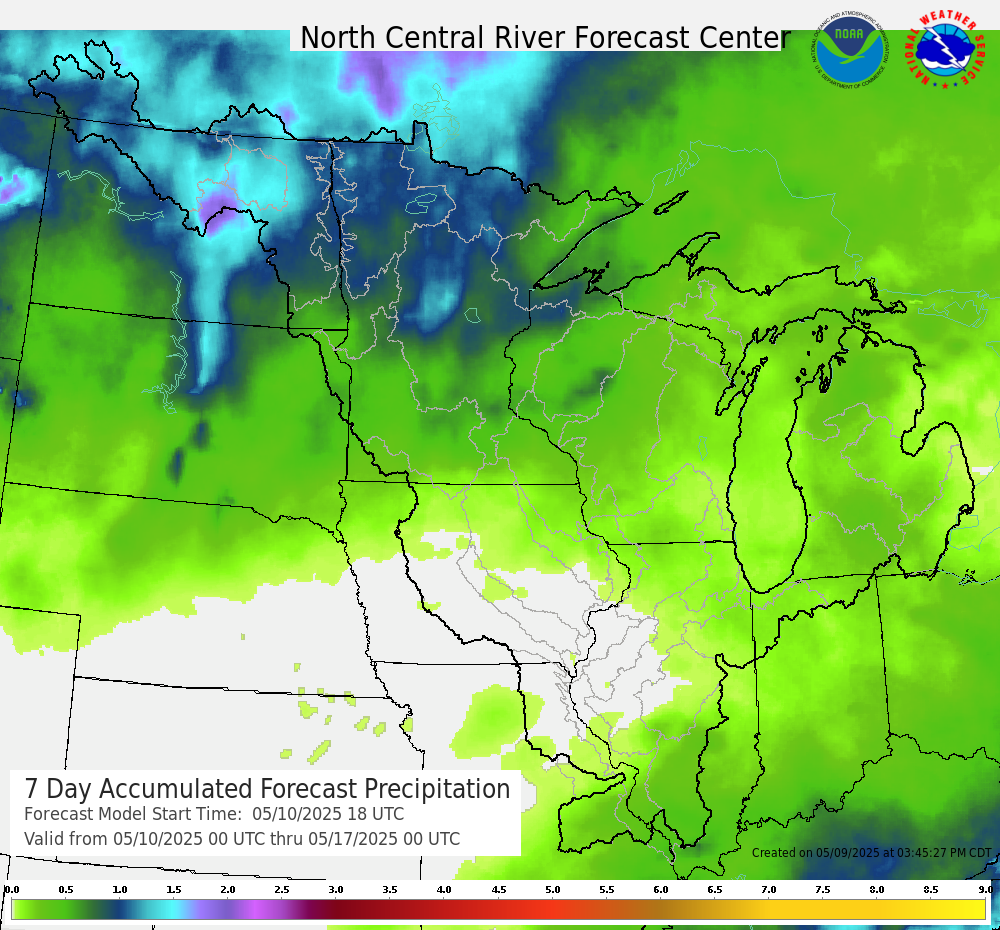 |
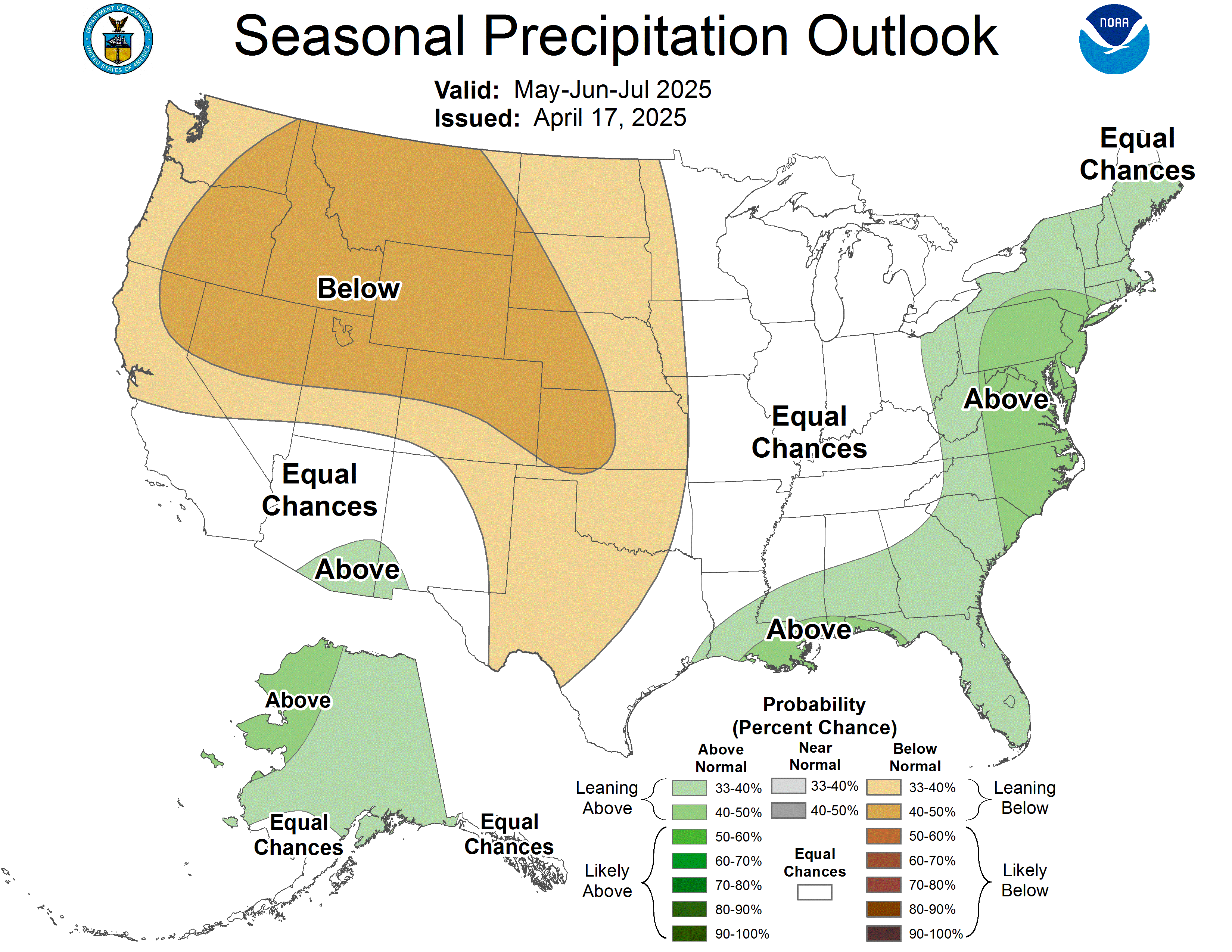
Extended outlooks from the Climate Prediction Center:
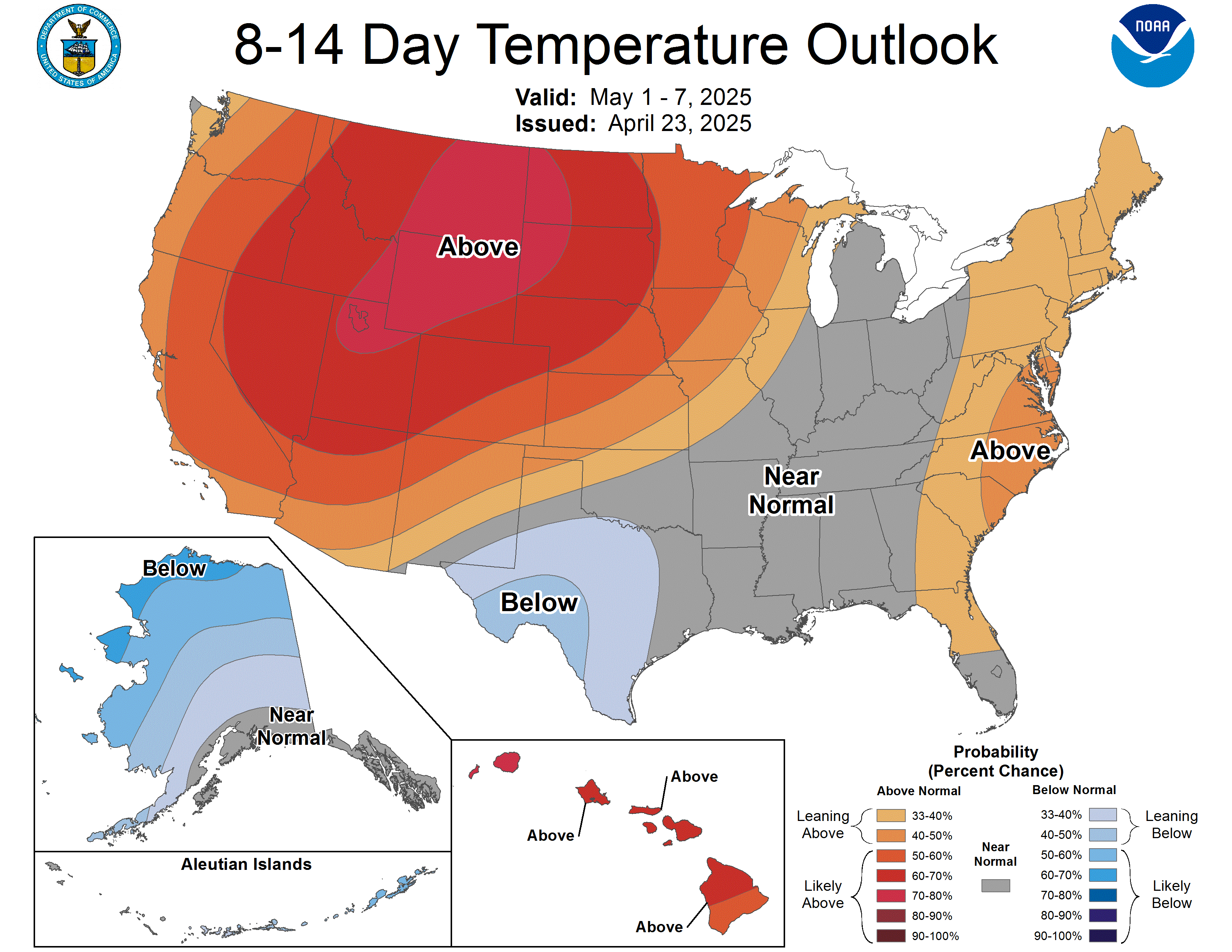 |
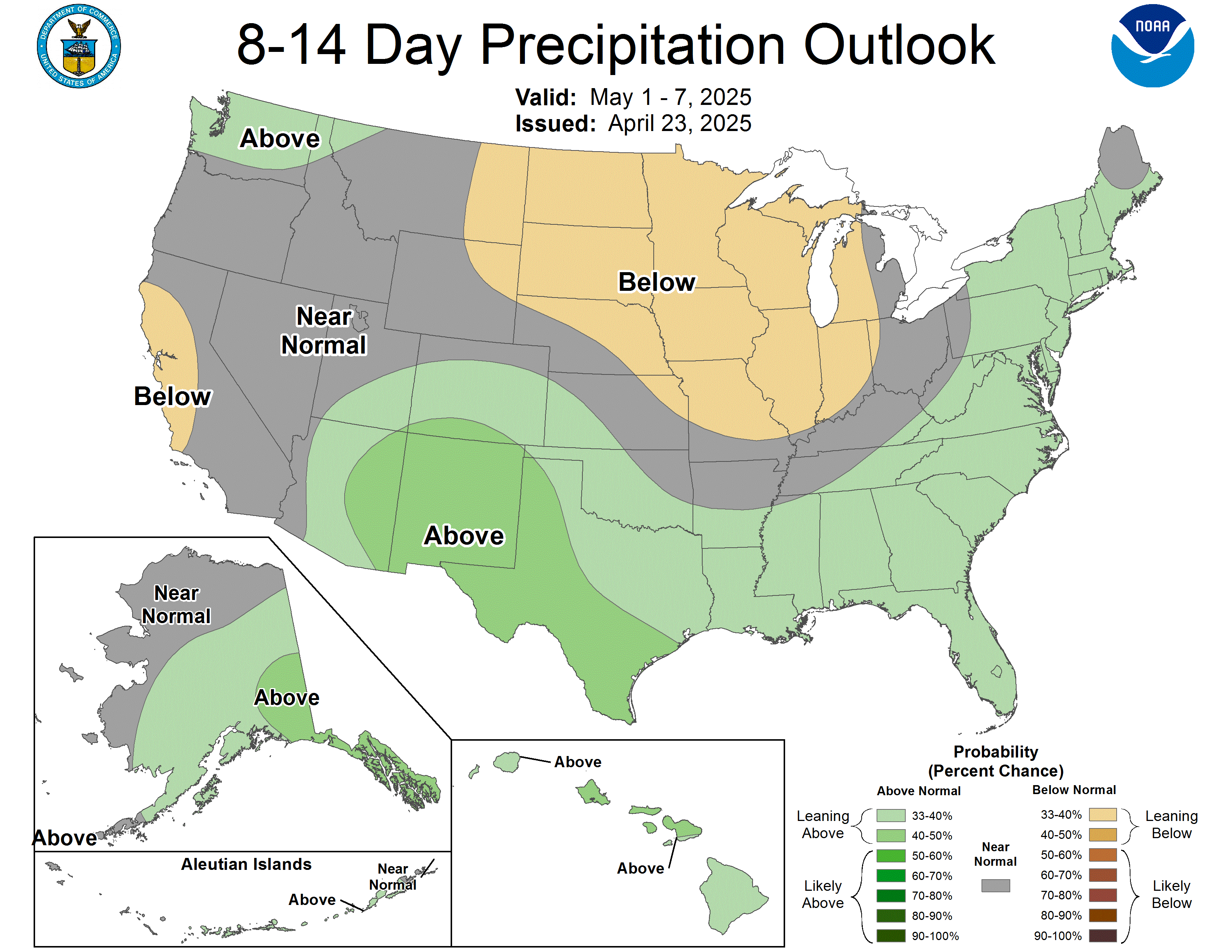 |
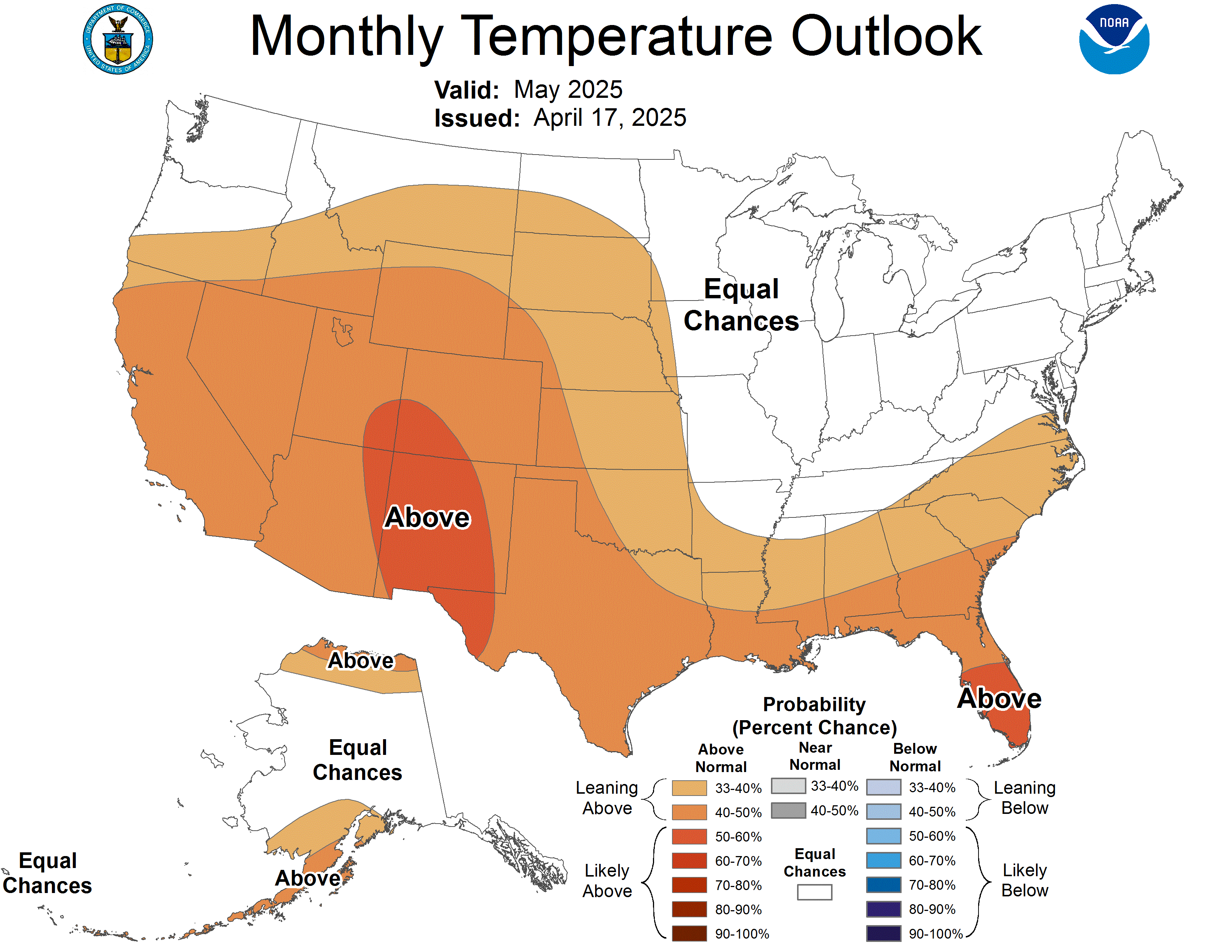 |
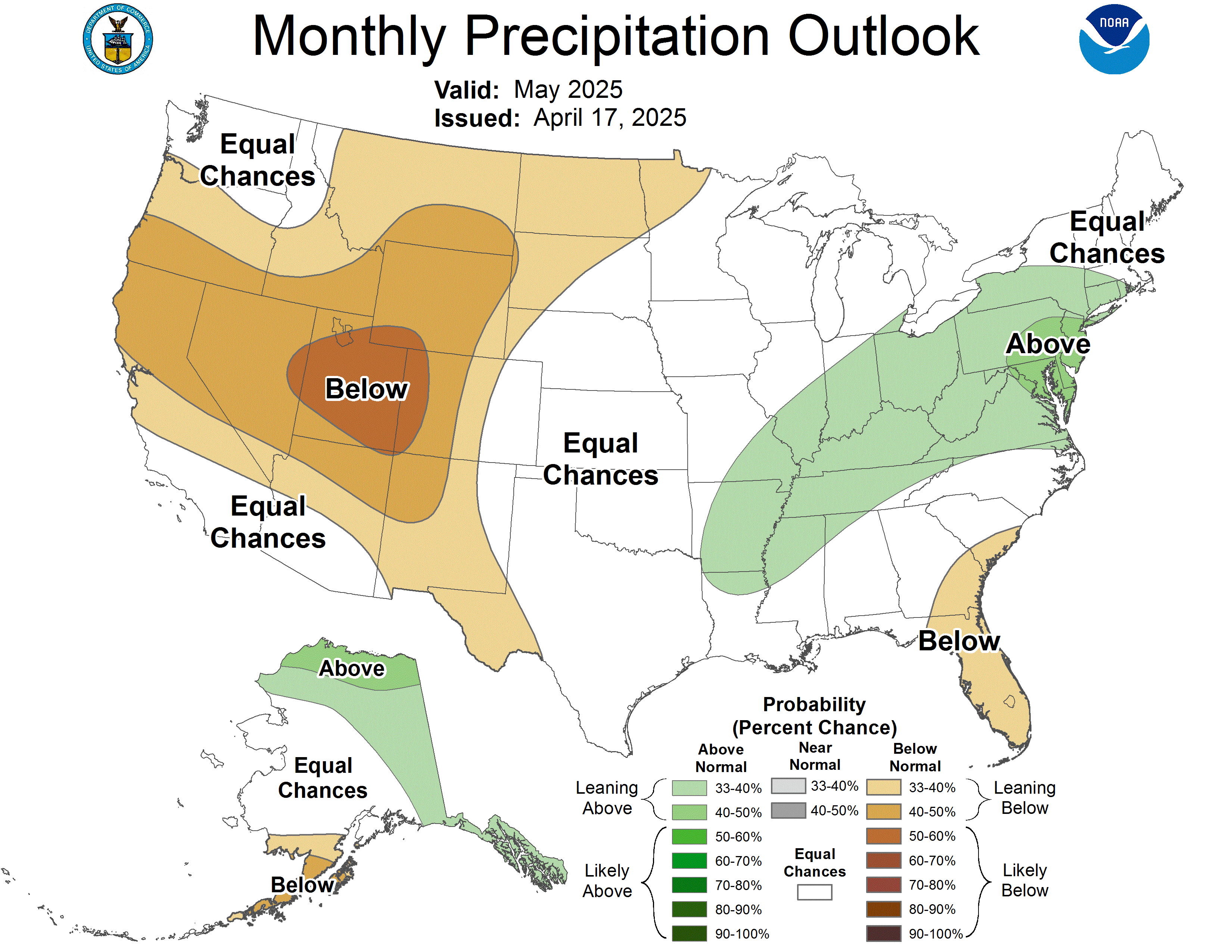 |
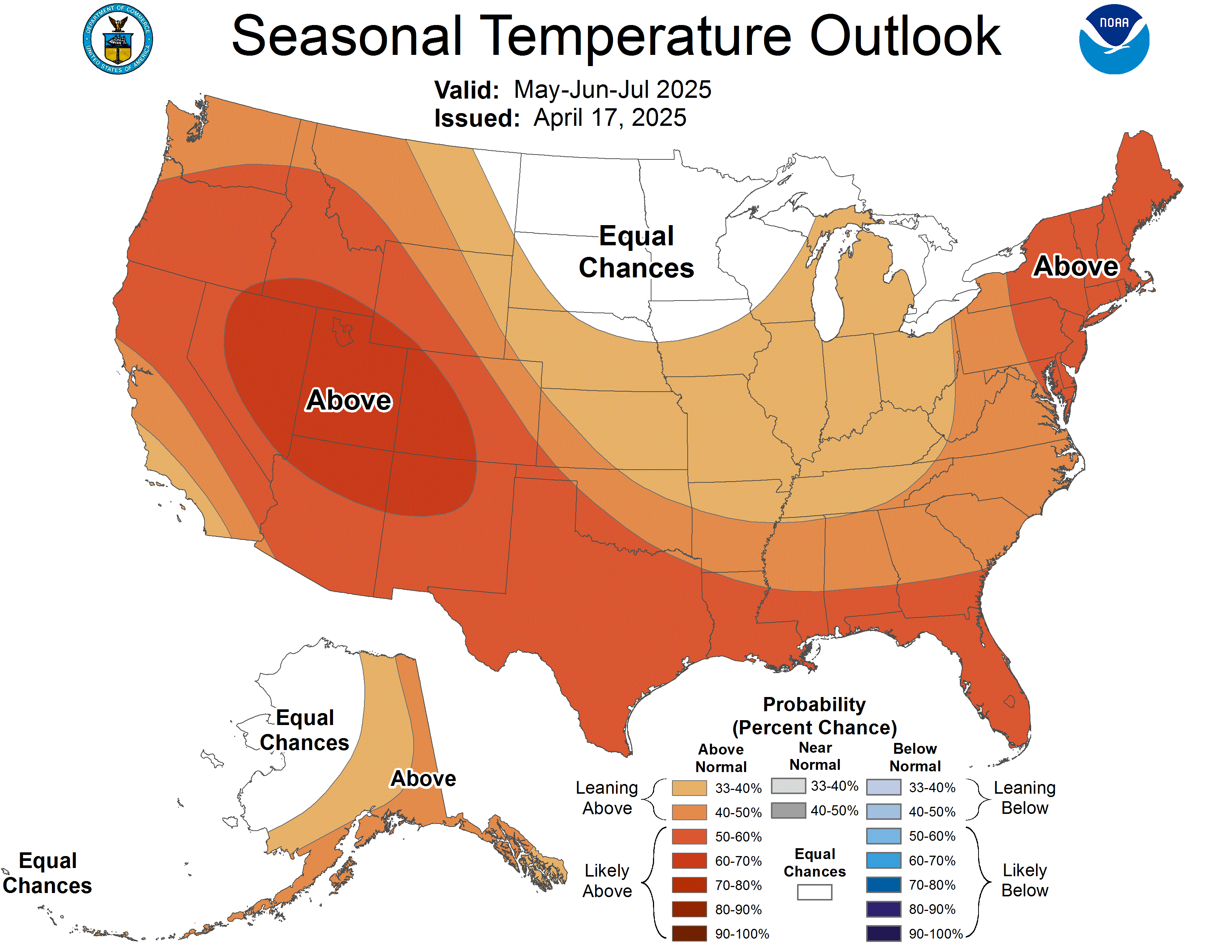 |
 |
Flood Risk and River Outlooks
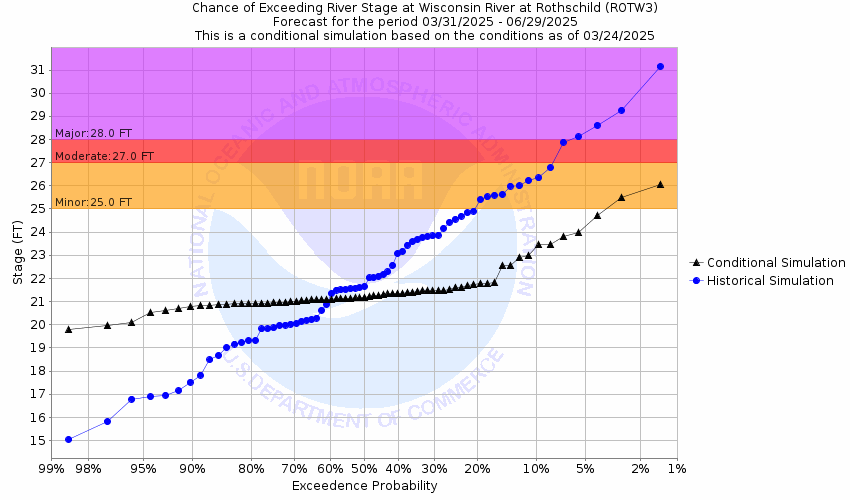
Chance of exceeding minor, moderate and major flood stages by location. More information is here.
 |
 |
 |
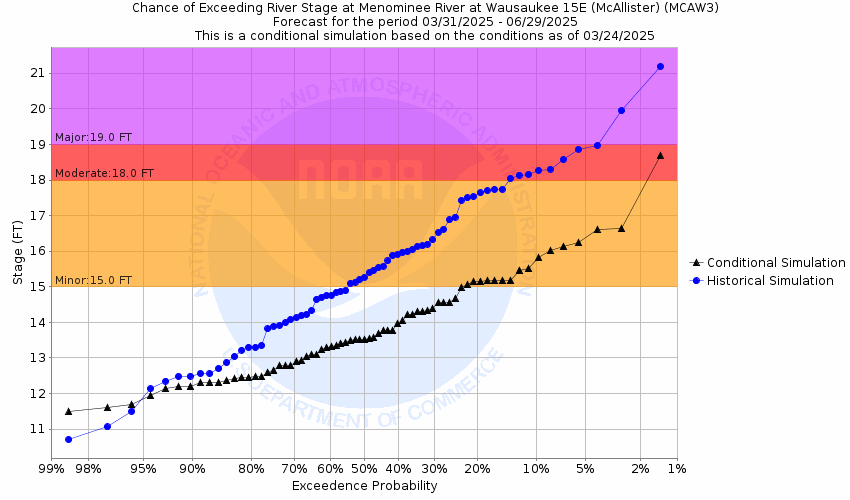 |
| Menominee River near Florence | Menominee River at Niagara | Menominee River at Vulcan | Menominee River near McAllister |
 |
 |
 |
 |
| Wolf River (WI) at Langlade | Wisconsin River at Rothschild | Oconto River near Oconto | Yellow River (WI) at Babcock |
 |
 |
 |
 |
| Wisconsin River at Wisconsin Rapids | Waupaca River near Waupaca | Little Wolf River at Royalton | Wolf River (WI) at Shiocton |
 |
 |
||
| Wolf River (WI) at New London | Fox River (North) at Appleton |
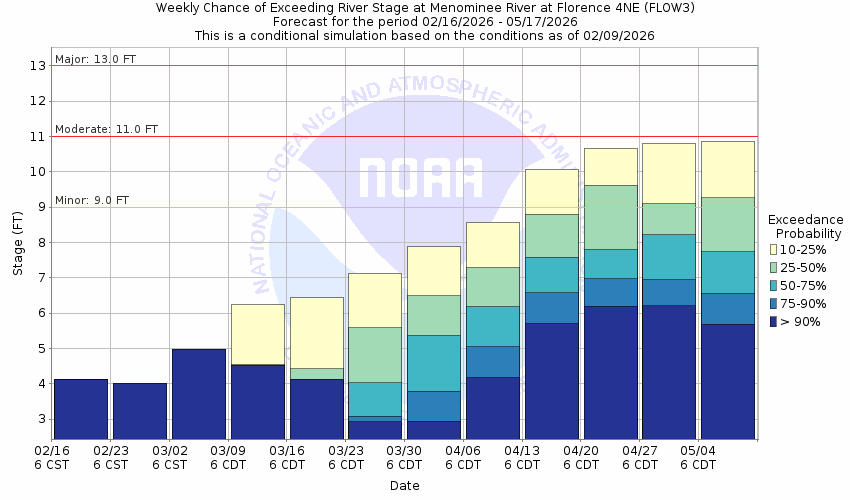
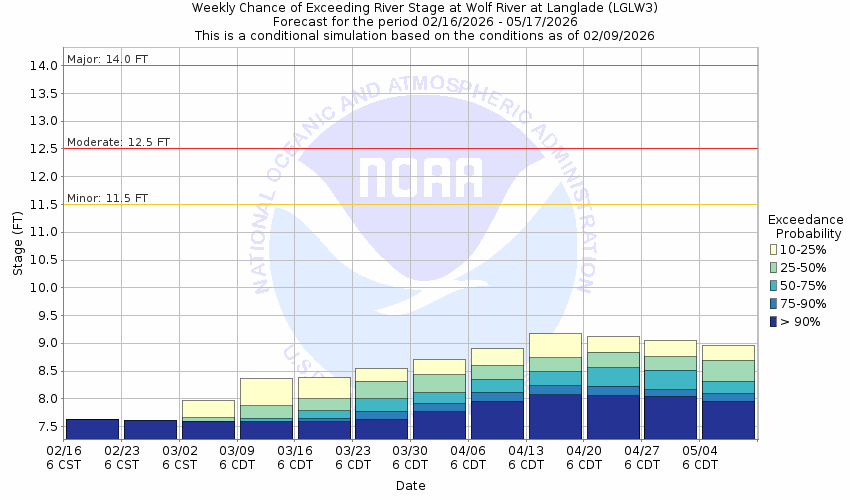
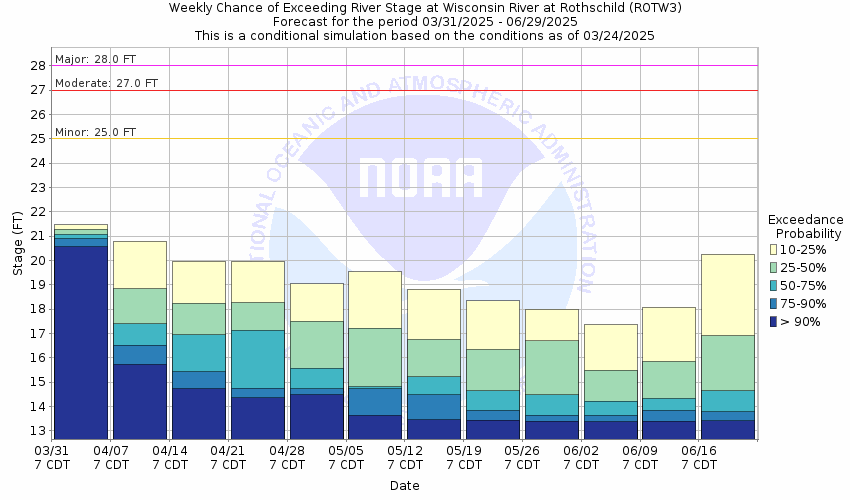
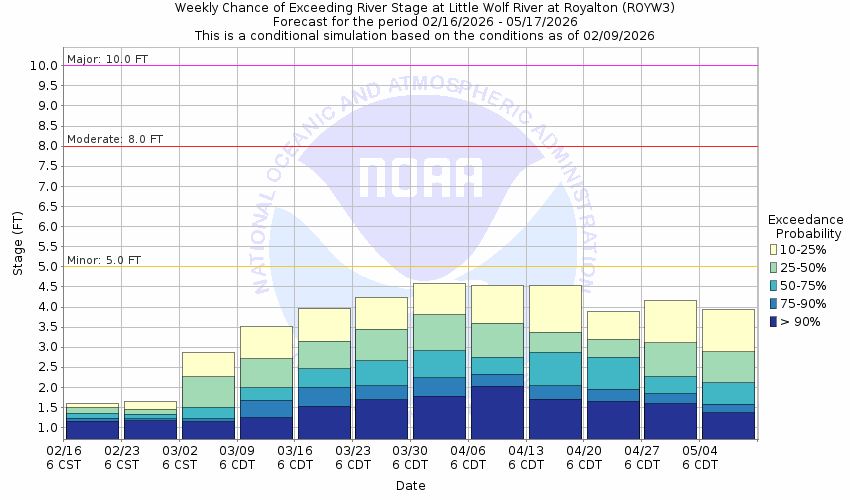
Weekly Probability of Exceeding Flood Stage by Location. More information is here.
 |
 |
 |
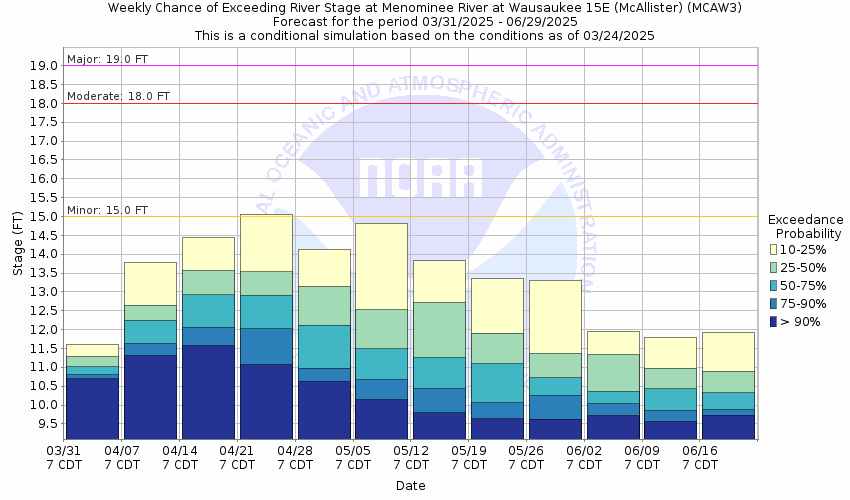 |
| Menominee River near Florence | Menominee River at Niagara | Menominee River at Vulcan | Menominee River near McAllister |
 |
 |
 |
 |
| Wolf River (WI) at Langlade | Wisconsin River at Rothschild | Oconto River near Oconto | Yellow River (WI) at Babcock |
 |
 |
 |
 |
| Wisconsin River at Wisconsin Rapids | Waupaca River near Waupaca | Little Wolf River at Royalton | Wolf River (WI) at Shiocton |
 |
 |
||
| Wolf River (WI) at New London | Fox River (North) at Appleton |
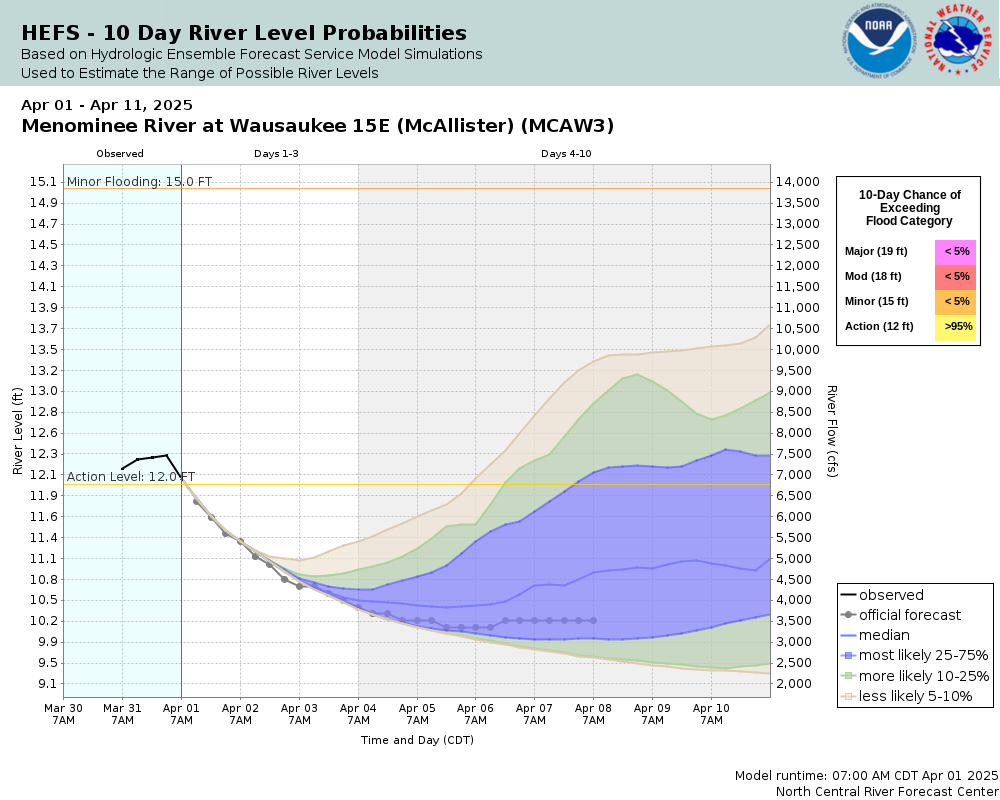
Includes 10 days of precipitation, snowmelt, and temperature. These are automated forecasts with no human forecaster intervention that update twice per day. More information is here.
 |
 |
 |
 |
| Menominee River near Florence | Menominee River at Niagara | Menominee River at Vulcan | Menominee River near McAllister |
 |
 |
 |
 |
| Wolf River (WI) at Langlade | Wisconsin River at Rothschild | Oconto River near Oconto | Yellow River (WI) at Babcock |
 |
 |
 |
 |
| Wisconsin River at Wisconsin Rapids | Waupaca River near Waupaca | Little Wolf River at Royalton | Wolf River (WI) at Shiocton |
 |
 |
||
| Wolf River (WI) at New London | Fox River (North) at Appleton |
How To Prepare & Safety
Preparedness/Early Actions:
How To Stay Safe During a Flood:
 |
Media use of NWS Web News Stories is encouraged! Please acknowledge the NWS as the source of any news information accessed from this site. |
|



 Follow us on X
 Follow us on Facebook
 Follow us on YouTube
 GRB RSS Feed