Unprecedented Coverage of Exceptional Drought Across the Area
|
 |
|
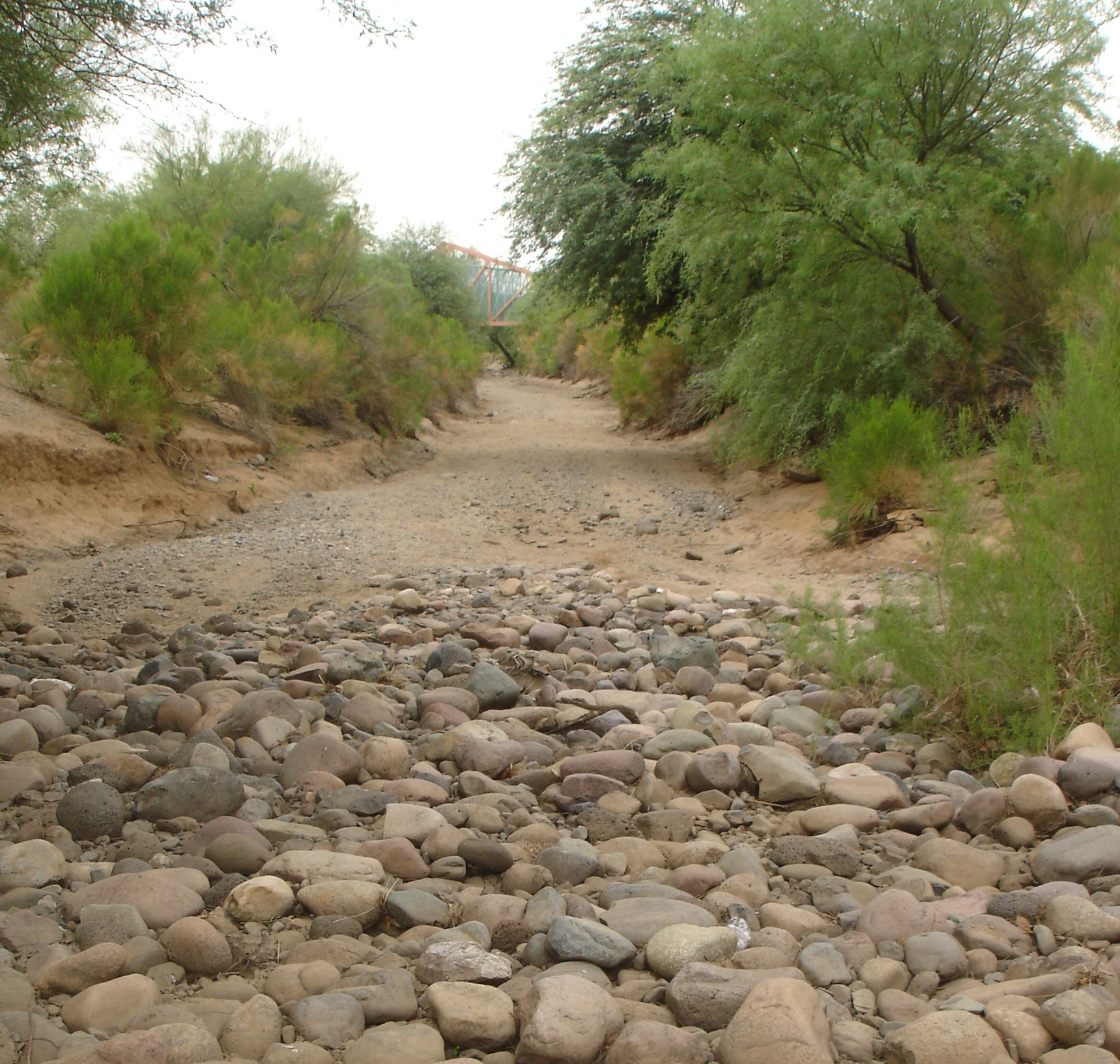
Summary: After the driest and hottest monsoon on record for the region, autumn precipitation has been just as lackluster. In fact, autumn totals have also been the driest in recorded history for the area; and for some locations, it`s been since the middle of April when measurable rainfall was last recorded. This prolonged period of unusually dry weather has tipped drought measures into the rarest exceptional category. With such an accumulation of warm, dry months, precipitation events this winter will need to be more frequent and heavier to begin to alleviate the building drought impacts. Much of the drought impacts have been focused in short term influences such as forage for ranchers, water availability for land based wildlife, and small stream flow for aquatic wildlife. Recent wetness during the past couple winter seasons has resulted in adequate long term hydrologic stability.
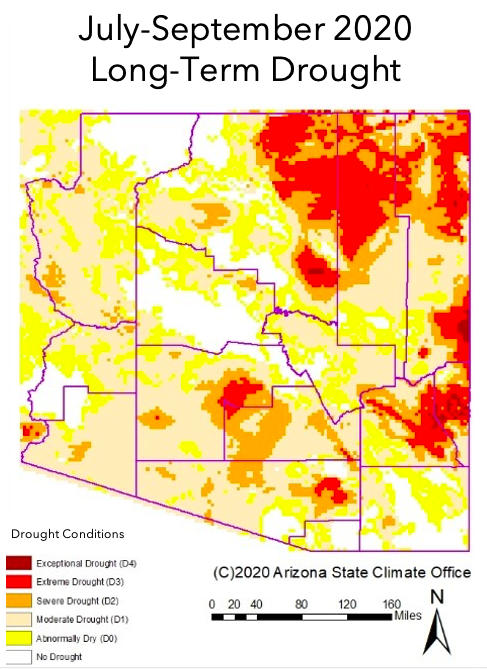
Local Area Affected: The National Drought Monitor depicts mostly persistence of Extreme and Exceptional drought in much of Arizona the past couple months, and further degradation in SE California. Severe and Moderate drought conditions only still exist in portions of SE California where winter and spring 2020 precipitation was abundant and impacts have been limited. Exceptional Drought (D4) - parts of south-central Arizona In Arizona: far eastern Maricopa, southern Gila, and eastern Pinal counties Extreme Drought (D3) - across much of central, southern, and eastern Arizona and SE California In Arizona: central and western Maricopa, western Pinal, much of La Paz, and northeast Yuma counties In SE California: far northeast Riverside County Severe Drought (D2) - parts of southwest Arizona and SE California In Arizona: much of Yuma County In SE California: most of Imperial and central Riverside counties Moderate Drought (D1) - small part of SE California In SE California: far southwest Imperial County
Local Climatology: Below are precipitation totals since the beginning of 2020 from selected locations across Arizona and southeast California:
Aside from limited precipitation, drought conditions have worsened and expanded more rapidly as a result of extreme temperatures. The majority of Arizona and the entire Southwest is experiencing an abnormally warm year. The past 6 months have been record breaking in all possible respects, and now the persistent warmth is showing up as all-time heat records even in the annual statistics.
|
The U.S. Drought Monitor is a weekly collaborative effort between a number of federal agencies including NOAA/NWS, U.S. Department of Agriculture and the National Drought Mitigation Center. Details and explanations of the Drought Monitor can found at the web site: http://droughtmonitor.unl.edu/ The categories of drought are defined as follows: Moderate Drought (D1) - Some damage to crops, pastures; fire risk high; streams, reservoirs, or wells low, some water shortages developing or imminent, voluntary water use restrictions requested. Severe Drought (D2) - Crop or pasture losses likely; fire risk very high; water shortages common; water restrictions imposed. Extreme Drought (D3) - Major crop/pasture losses; extreme fire danger; widespread water shortages or restrictions. Exceptional Drought (D4) - Exceptional and widespread crop/pasture losses; exceptional fire risk; shortages of water in reservoirs, streams, and wells, creating water emergencies. |
|
State and Local Actions: A Drought Emergency Declaration remains in effect for the state of Arizona as signed by the governor in accordance with the Arizona Drought Preparedness Plan. The continuation of this Drought Emergency has been recommended by the Drought Interagency Coordinating Group in their bi-annual meeting on November 10, 2020. This recommendation is based on long term precipitation deficits, along with ongoing negative impacts across the state.
|
Additional information concerning the drought in Arizona can be obtained via the Arizona Department of Water Resources web site at: https://new.azwater.gov/drought Additional information concerning the drought in California can be obtained via the California Department of Water Resources web site at: |
|
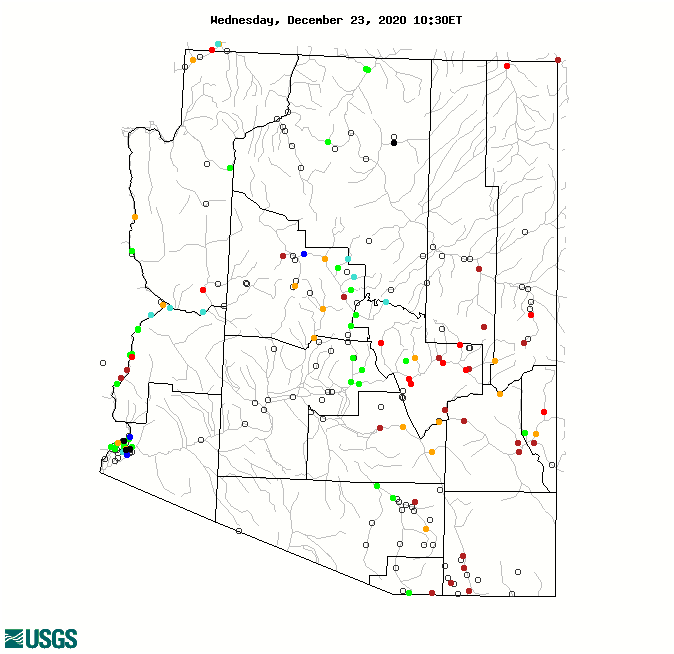
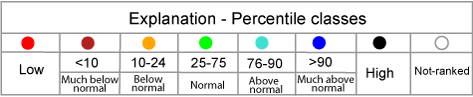
River, Stream Flow, and Reservoir Conditions: Smaller streams throughout Arizona have been suffering as a result of the lack of rainfall the past 6-9 months. Many of these small streams are flowing at or near record low levels for this time of year, especially in the eastern parts of the state. The more highly regulated larger rivers remain in a near normal flow rates due to ongoing management efforts.
Consecutive beneficial winter seasons in both 2018-19 and 2019-20 helped nearly fill the Salt/Verde reservoir system. The recent dry weather has been a minor detriment on the system, however most recharge occurs in the late winter and spring. Minimal precipitation already this winter may threaten spring runoff with the snow pack falling behind average. In addition, the recent lack of precipitation has lessened soil moisture and eventually could negatively affect spring runoff (even with future beneficial mountain snows).
|
Hourly and forecast river stages out to 90 days can be found at the National Weather Service's (NWS) Advanced Hydrologic Prediction Service (AHPS) web page: http://water.weather.gov/ahps2/index.php?wfo=psr Additional Current stream and river stages may be viewed at the following USGS Web Site: |
|
Agriculture Impacts: Rangeland and pasture conditions continue to deteriorate with the lack of rain and unusually warm temperatures. Forage area has deteriorated and reports indicate many stock ponds are dry requiring extensive water hauling. Thus far, ranchers have experienced the worst impacts from this extreme and exceptional drought. The percentage of pasture and range land rated as poor to very poor stands around 87%. |
For additional information on agriculture impacts may be viewed at the United States Department of Agriculture (USDA) National Agricultural Statistics Service NASS Web Site: |
|
Fire Danger Hazards: The National Fire Danger Rating: Moderate category for most of the entire area The current KDBI: Southwest Arizona and southeast California: Ranging from Extreme in SE California and much of Arizona to High in some of the higher elevations of northern and eastern Arizona
Ample precipitation at the beginning of the year spurred growth of fine 1 and 10-hour fuels along with some 100-hour fuels in lower elevations. Wildfires have been a tremendous problem in Arizona this year with 959,000 acres burned in the state - almost double the past 2 years combined. The combination of abundant fine fuels from successive wet winters along with excessive heat and lack of rain has resulted in a very dangerous situation. Recent cooler fall and winter weather has relaxed the fire danger, however the underlying dry fuels and lack of moisture still exists. 100-hour dead fuel moisture has increased back to above 6% while 10-hour fuels are a mixture of 3-6% - both measures drier than typical for late fall. If better precipitation does not occur through the winter, the fire threat will rapidly increase again with the warmer temperatures and low humidity values of spring.
|
The Keetch-Byram Drought Index (KBDI) is a drought index that is specifically related to fire potential. The KDBI is broken into four categories which indicate the susceptibility of ground fuels to fire danger. Below are the four categories and a brief description of each.
KBDI and Dead Fuel Moisture data can be found on the Wildland Fire Assessment System (WFAS) web site at: |
||||||||||||
|
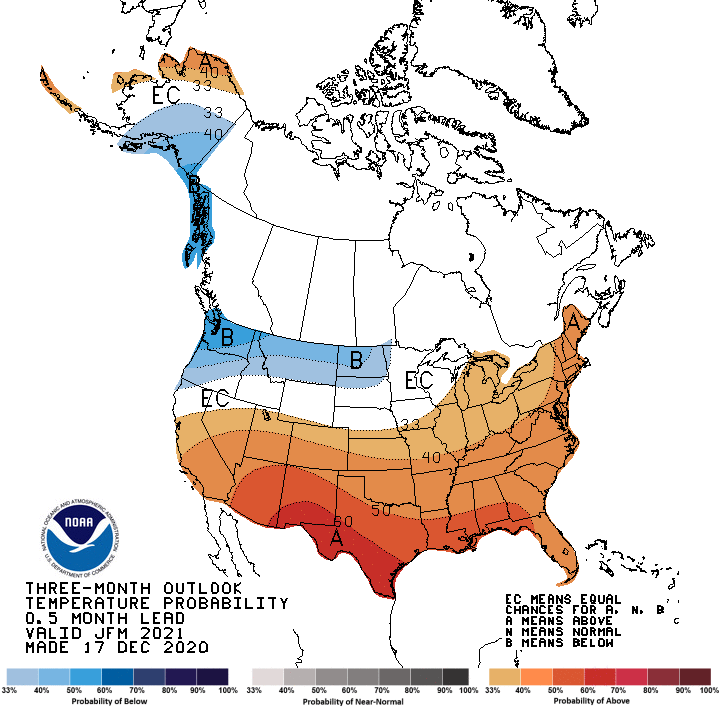
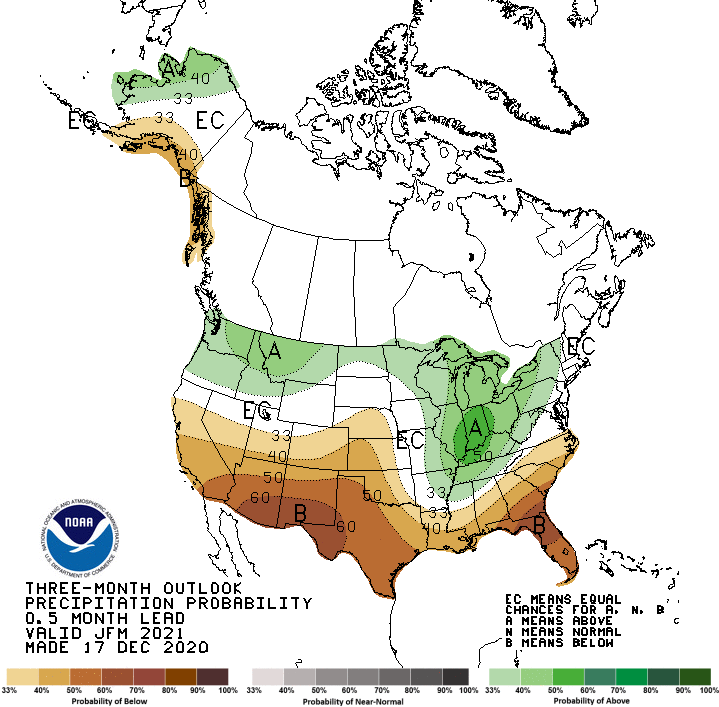
Precipitation/Temperature Outlooks: The 8-14 day temperature outlook for Dec 30-Jan 5 period calls for better chances of below average temperatures and elevated odds for below normal rainfall. The 90 day outlook for the period January through March 2021 indicates better chances for above average temperatures and enhanced odds for below normal precipitation.
The tropical Pacific has settled into a La Nina state, which will mature in the next month. While other factors contribute to the atmospheric pattern, this La Nina year has been unusually dry thus far, and all indications suggest the current pattern will prevail much of the remainder of the winter. The current forecast suggests better than a 60% chance this winter as a whole will end up in the drier than normal category, while the chance of a wetter than normal winter is less than 10%.
|
For updated temperature and precipitation probabilities consult the following Climate Prediction Center (CPC) Web Sites: 8 to 14 Day Outlook: http://www.cpc.ncep.noaa.gov/ 30 Day Outlook: http://www.cpc.ncep.noaa.gov 90 Day Outlook: |
|
Questions or Comments: If you have any questions or comments about this information |
Other Contacts: For state climate impacts: http://www.stateclimate.org |
|
Acknowledgements: The Drought Monitor is a multi-agency effort involving NOAA’s National |
Related Websites : NWS - http://www.weather.gov/phoenix CPC - http://www.cpc.ncep.noaa.gov Drought Monitor - http://droughtmonitor.unl.edu/ |








 Follow us on X
 Follow us on Facebook
 Follow us on YouTube
 PSR RSS Feed