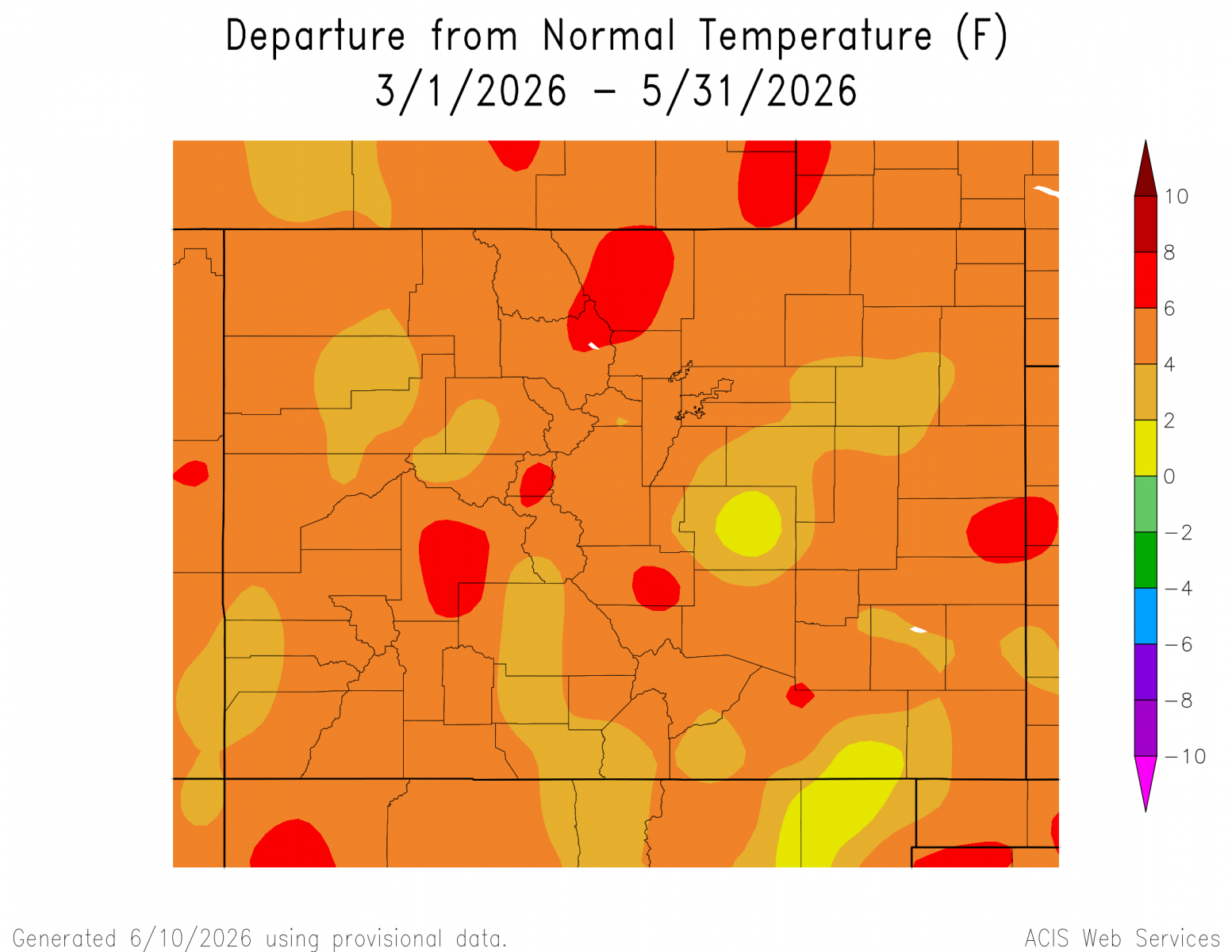
Meteorological Spring started out unsettled, with a few passing weather systems bringing some precipitation to the state, especially across areas over and near the higher terrain. However, a strong upper level high pressure system moved into the region for the middle to end of March, bringing record shattering heat which quickly depleted the already record low snowpack across the state. Many if not all weather reporting sites across south central and southeast Colorado set daily and monthly heat records, including the preliminary high temperature of 99 degrees in Campo, Colorado setting a new state record high temperature for the month of March.
April started out stormy across the higher terrain, with over of foot of snow being observed across the southwest mountains on the 1st, no joke. A few other passing storm systems brought much needed precipitation to the higher terrain through the middle and end of the month, however, it was not enough to overcome the record lowest snowpack across the state. The passing systems continued to bring high fire danger to the high mountain valleys and the southeast plains through much of the month, with one last passing weather system on the last few days of the month bringing some beneficial precipitation to southeast Colorado
May started out cool and wet, with a passing system bringing well below seasonal temperatures. along with showers across the plains and higher terrain snowfall in the May 5th-6th timeframe. Ridging into the middle of the month brought warm and dry dry conditions, with a few passing systems bringing periods of unsettled weather and cooler temperatures through the end of the month.
The following graphics depict seasonal temperature and precipitation departures from normal across the state for the Spring of 2026.
 |
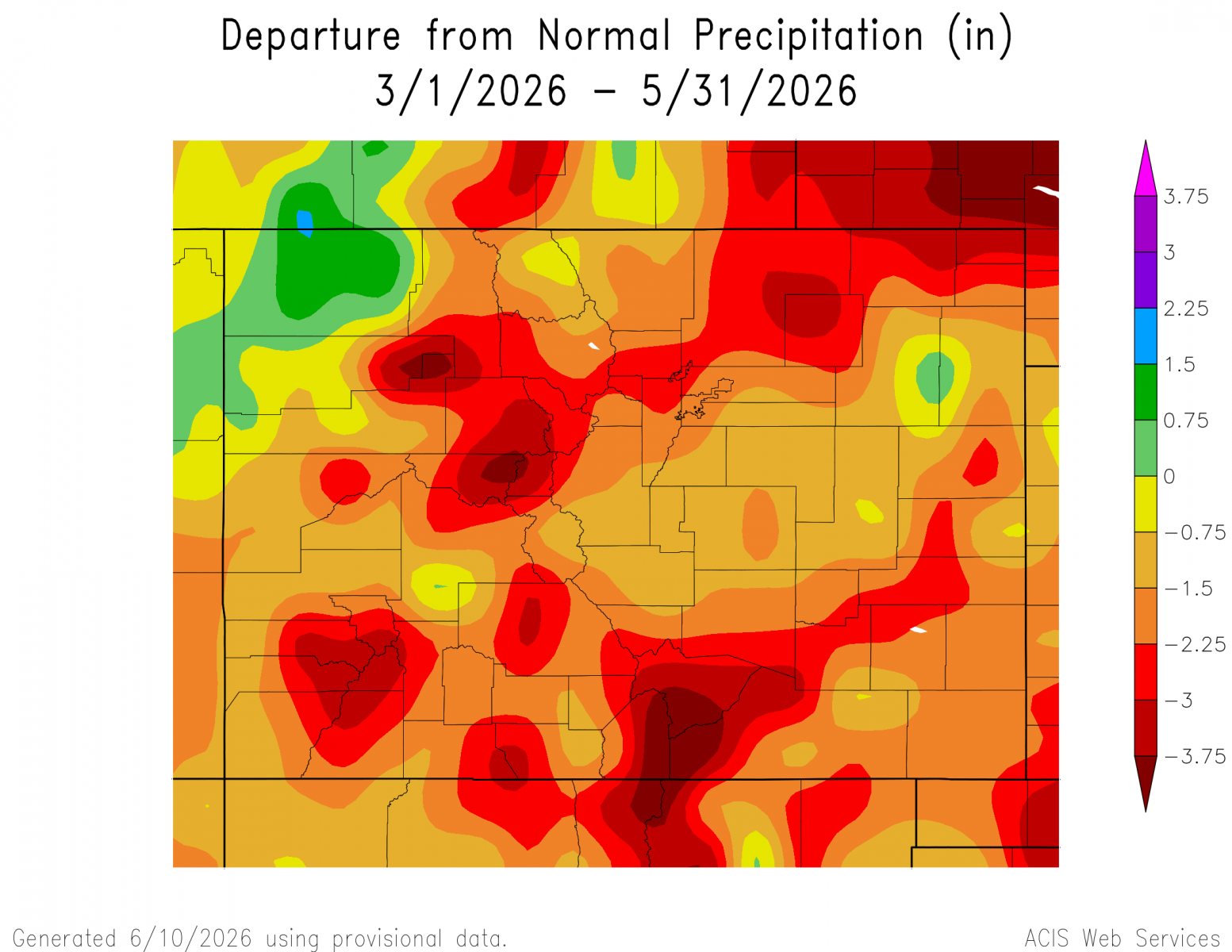 |
The preliminary average temperature for the Spring of 2026 in Alamosa was 46.6 degrees. This is 3.5 degrees above normal and makes the Spring of 2026 tied with the Spring of 2020 as the warmest Spring on record in Alamosa. Alamosa recorded 0.37 inches of precipitation throughout the Spring. This is 1.34 inches below normal and makes the Spring of 2026 the 6th driest on record in Alamosa. Alamosa recorded a trace of snow throughout the Spring. This is 8.6 inches below normal, and makes the Spring of 2026 tied with the Spring of 1934 as the least snowiest on record in Alamosa.
(click here for a more detailed Spring of 2026 Climate Summary in Alamosa)
The preliminary average temperature for the Spring of 2026 in Colorado Springs was 52.4F. This is 3.8 degrees above normal and makes the Spring of 2026 the 2nd warmest Spring on record in Colorado Springs, just behind the warmest Spring 2012, when the average Spring temperature was 53.4 degrees. Colorado Springs recorded 2.91 inches of precipitation throughout the Spring. This is 1.32 inches below normal and makes the Spring of 2026 the 42nd driest on record. Colorado Springs recorded 4.7 inches of snow throughout the Spring, which is 7.1 inches below normal.
(click here for a more detailed Spring of 2026 Climate Summary in Colorado Springs)
The preliminary average temperature for the Springs 2026 in Pueblo was 56.3F. This is 4.1 degrees above normal and makes the Spring of 2026 the warmest Spring on record in Pueblo, surpassing the previous warmest Spring of 1981, when the average temperature was 55.8 degrees. Pueblo recorded 2.61 inches of precipitation throughout the Spring. This is 1.35 inches below normal and makes the Spring of 2026 the 48th driest on record in Pueblo. Pueblo recorded 0.5 inches of snow throughout the Spring, which is 7.4 inches below normal.
(click here for a more detailed Spring of 2026 Climate Summary in Pueblo)
Below is the Climate Prediction Center's (CPC) temperature and precipitation outlook for the Summer of 2026 (June, July, August) which leans to above normal temperatures and precipitation across most of south central and southeast Colorado, save for equal chances of above, below and near normal precipitation across the far southeast plains.
 |
 |



 Follow us on X
 Follow us on Facebook
 Follow us on YouTube
 PUB RSS Feed