Tropical moisture from Isaias and Rachel will impact portions of the Southeast and Southwest this weekend. Flash flooding, strong winds and even a threat for severe thunderstorms and tornadoes are possible. Meanwhile, strong winds and dry fuels are raising fire weather concerns across the central Great Basin and western High Plains. Across the northern Rockies, first winter storm of the season. Read More >
About Our Office
Thank you for visiting the NWS Spaceflight Meteorology Group (SMG). The National Weather Service (known as the Weather Bureau before 1970) has provided direct weather support to NASA for the Mercury, Gemini, Apollo, Space Shuttle, International Space Station, Orion and other programs. When the Manned Space Center opened in 1962 a contingent of the Weather Bureau came to Houston to provide spacecraft recovery weather support. In the 1960's and 1970's, the Spaceflight Meteorology Branch (SMB) of the Weather Bureau and National Weather Service consisted of offices at the Johnson Space Center in Houston; Cape Canaveral, Florida; and at local offices in Miami, Honolulu and Washington DC. In the late 1970's NASA allowed each center to select their weather support structures. At that time the Kennedy Space Center (KSC) opted to use the US Air Force for launch and ground weather support services. JSC retained the National Weather Service for landing weather support.
SMG staffing size has waxed and waned with the crewed spaceflight program. Current SMG staffing consists of one NWS meteorologist, one NASA meteorologist, and a part time contractor meteorologist. A small group of NASA software and hardware contractors manage the Meteorological Information Data Display System (MIDDS) which uses McIDAS for the core meteorological display and storage. The NWS Houston/Galveston Office provides support for NWS-owned Advanced Weather Information Processing System II (AWIPS II) software and hardware.
SMG supports all three crewed NASA programs to various degrees:
NASA Artemis missions: Forecasts for launch aborts and end-of-mission splashdown.
NASA Commercial Crew Program
Boeing CST-100 Starliner missions: Launch abort and end-of-mission landings.
SpaceX crewed Dragon: Launch abort Search-And-Rescue (SAR) risk assessment and other advice to NASA mission managers and flight controllers. SpaceX and the 45th Weather Squadron provide the bulk of weather support for Dragon.
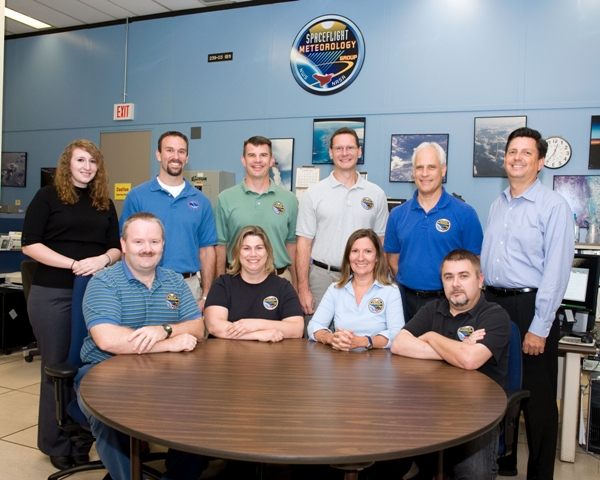
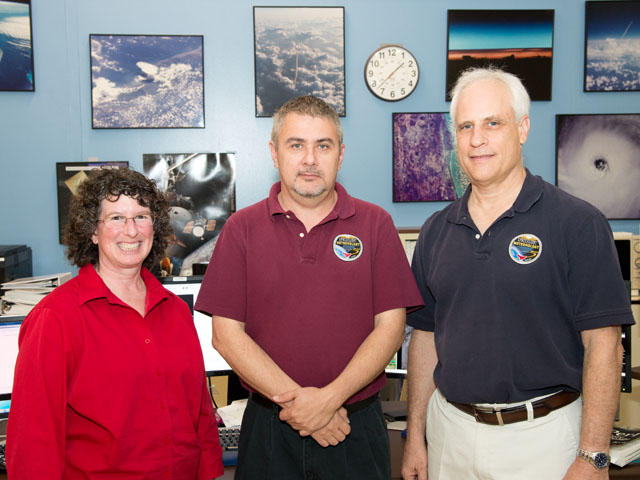
Current SMG Staff
Adjunct Staff
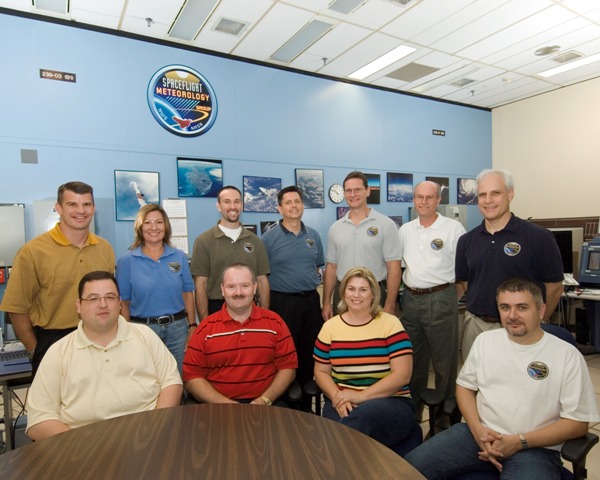
Past SMG Staff and Staff Photos (links create popup window)
Incomplete List of Former SMGers
SMG Chiefs
Lead Forecasters (Senior Meteorologists)
Techniques Development Meteorologists
Administrative Assistants, Coops and Students
Non-JSC SMG (SMB) Personnel



.jpg)