National Weather Service United States Department of Commerce

Winter Returns Across the Northern Tier; Record Warmth for the Southwest

A large high pressure system will usher in cold air for this first day of March across the northern Plains, Great Lakes, Northeast and mid-Atlantic. Some wintry precipitation may evolve across the mid-Mississippi Valley, Ohio Valley and mid-Atlantic through Monday. Meanwhile, record warmth will spread across the Southwest, southern Plains through early this week. Read More >


International Satellite Communications System

The World Area Forecast System (WAFS)
and the
The Regional Main Telecommunication Network (RMTN-IV)

ICAO LOGOWMO LOGO

The ISCS has two parts. The two systems are for meteorological data delivery. They use the same satellites and communication protocols. The first service is the World Area Forecast System (WAFS) in support of the International Civil Aviation Organization (ICAO) program for aviation data distribution. The second service is a Global Telecommunication System (GTS) satellite data exchange system for WMO Region IV (North America) data exchange.

The ISCS Program Manager provides additional details and a modernization project that will use new telecommunication technology.


  1. The purpose of the WAFS broadcast is to make globally available the centrally produced aviation model forecast products of a World Area Forecast Center (WAFC) in standard gridded form (WMO GRIB code) as well as other supporting data for flight operations to as many aviation users as possible.
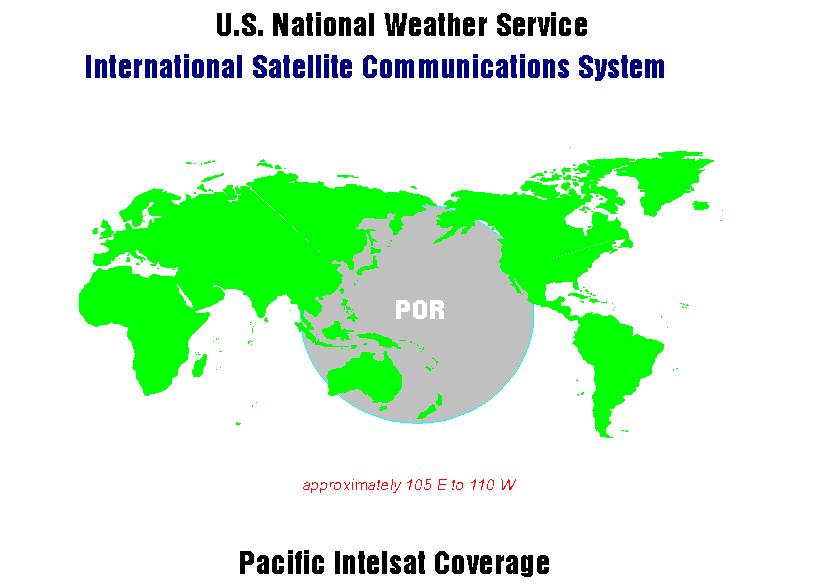
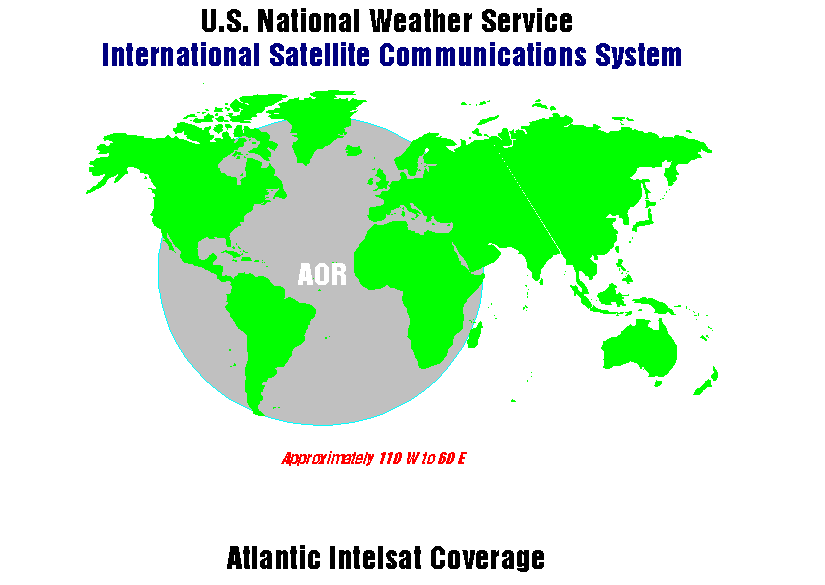
    1. The United States supports this requirement (as a servicing WAFC) with a delivery system called the ISCS/WAFS. The global coverage is approximately from 105 E° eastward to 65 E° , covering the Pacific Ocean , Atlantic Ocean , North America, and South America. The remainder of the world coverage is supported by the WAFC located in the United Kingdom through their satellite broadcast system called SADIS. SADIS covers the European, Asian, African continents and the Indian Ocean.
    2. These are point-to-multi-point delivery system which is an additive component to the Aeronautical Fixed Telecommunication Network (AFTN). This system does not, therefore, replace the data acquisition/distribution functions of the ICAO/AFTN.
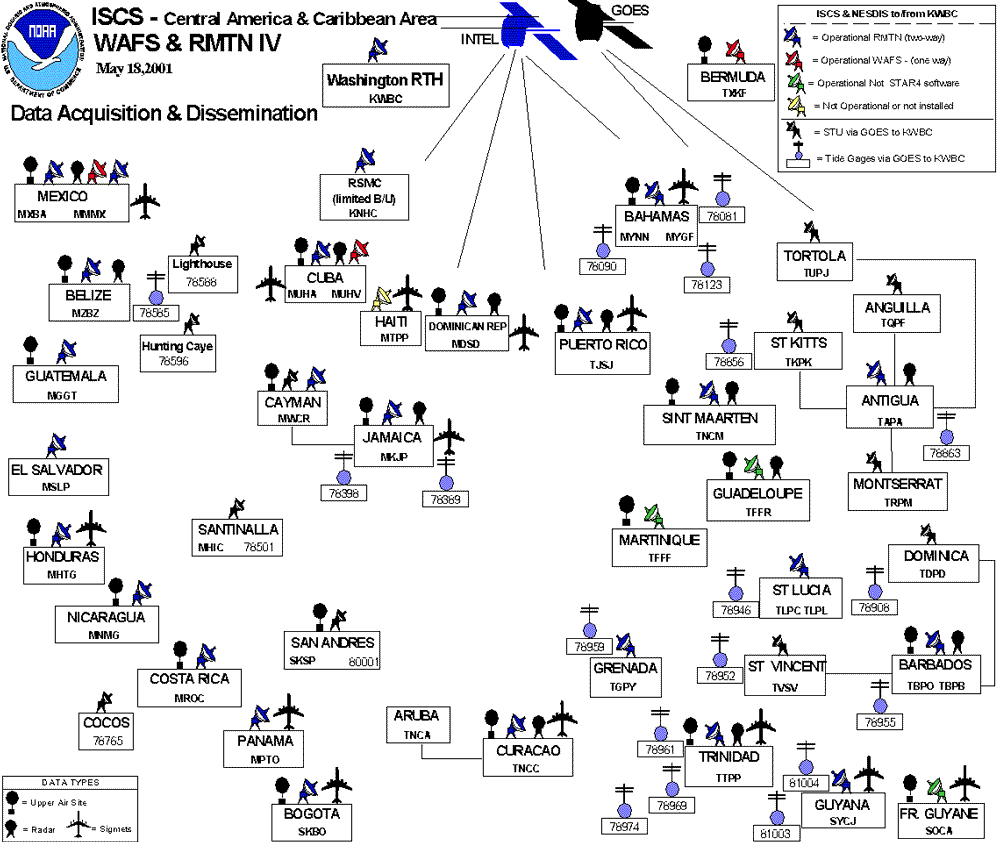
  2. The purpose of the GTS broadcast dissemination and data acquisition system (a two-way system), called the ISCS/RMTN-IV (see graphic depiction of area of two-way coverage), replaces the two WMO Region IV GTS regional communication networks of the Antilles Meteorological (ANMET) and Central America Meteorological (CEMET) circuitry
    1. This communications system increases the success of data delivery and receipt within that part of a WMO Region where past ground communications was difficult to maintain.
    2. This system supports WMO GTS needs for the exchange of all data types among WMO Member countries.