National Weather Service United States Department of Commerce

Snow Squalls May Impact New Year's Eve Travel from the Great Lakes to the Northeast; Heavy Rain Returns to California

An Alberta clipper will bring lake effect snow downwind of the Great Lakes, with the highest snow totals downwind of Lakes Erie and Ontario. Snow squalls may impact New Year's Eve travel during the evening and overnight hours across parts of the Great Lakes, Ohio Valley, and Northeast. Heavy rain will bring a flash flooding threat for southern California on New Year's Eve into New Year's Day. Read More >

 
 A look back at Historic Floods of 1972
 
August 20th, 1972 / Duluth, MN

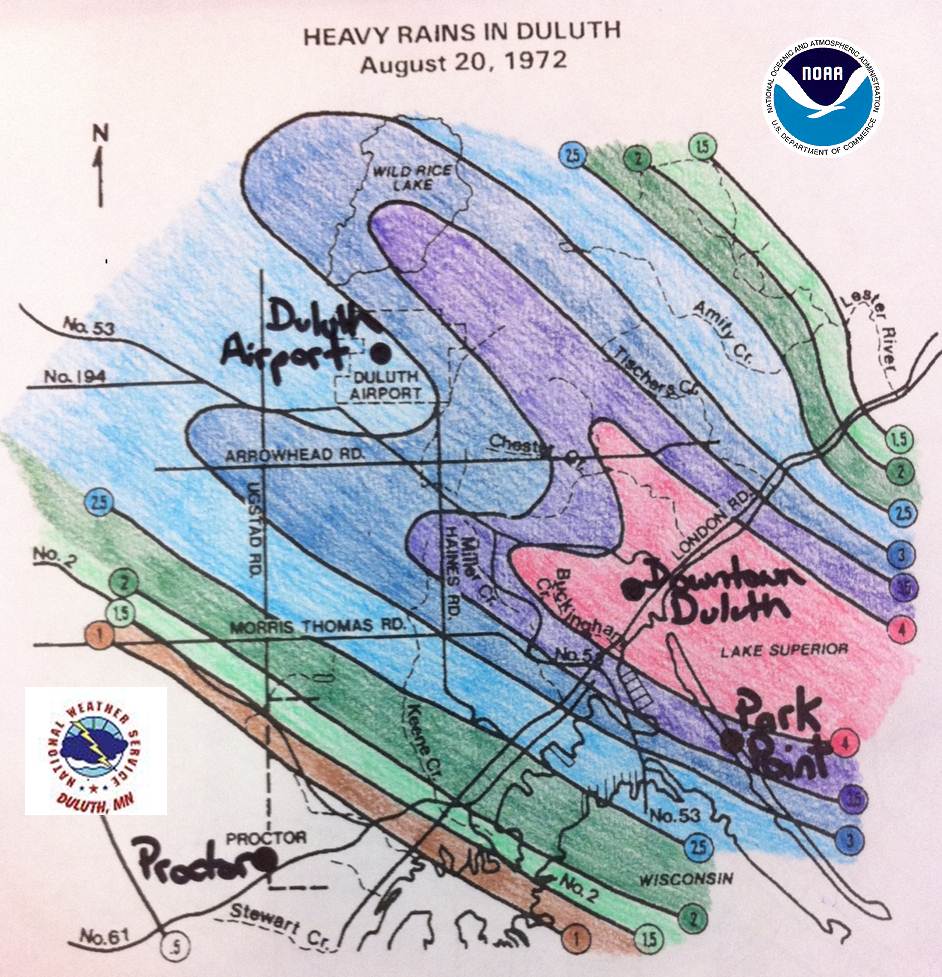
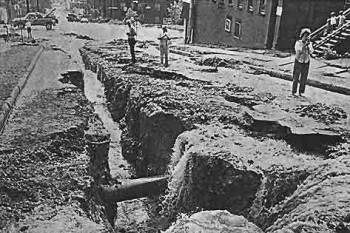
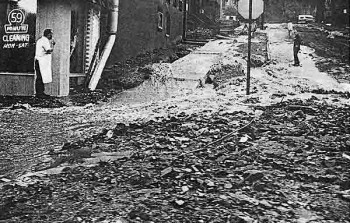
The Central Hillside neighborhood of Duluth, MN received close to three inches of rain fell in just a two hour period between 3:00 am to 4:30 am on August 20th, 1972.  A mass of debris including furniture, bricks, rocks, mud, and telephone poles were washed down the Duluth hill. The severity of the damage was attributed to the steep terrain of the Duluth area; a rise of 800 ft within less than a mile.

An additional factor in this flood event was the 6.04 inches of rain that fell during the previous two weeks of August; with 3.85 inches falling on the 15th and 16th.  These rains saturated and weakened many streets and alleys and left many sewers clogged.

President Richard Nixon declared the area a Federal Disaster. Damages total $18 million.

 
Below is a map of the rainfall over the Duluth area on August 20th, 1972. Values are in inches.
 
   
 Photos from perfectduluthday.com
 
September 20th, 1972 / Duluth, MN
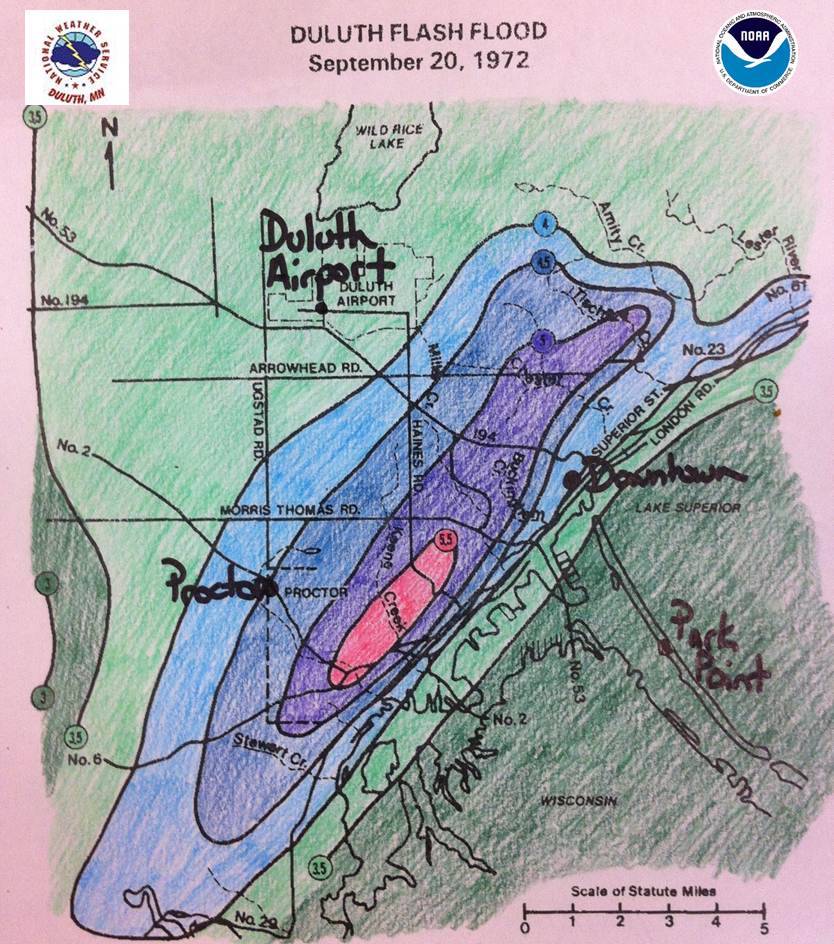
Only a month later, another round of rain brought a swath of 4-5.5 inches of rain to the Duluth community between the hours of 4:00 am and 2:00 pm. The Duluth airport recorded a rainfall amounts of 3.42 inches during this eight hour period. There were two fatalities with this storm and nearly 100 graves were washed up. 
 
Below is a map of the rainfall over the Duluth area on September 20th, 1972. Values are in inches. Although data is widely scattered, it is belived that silimar rainfall amounts extended along the North Shore.
 
 
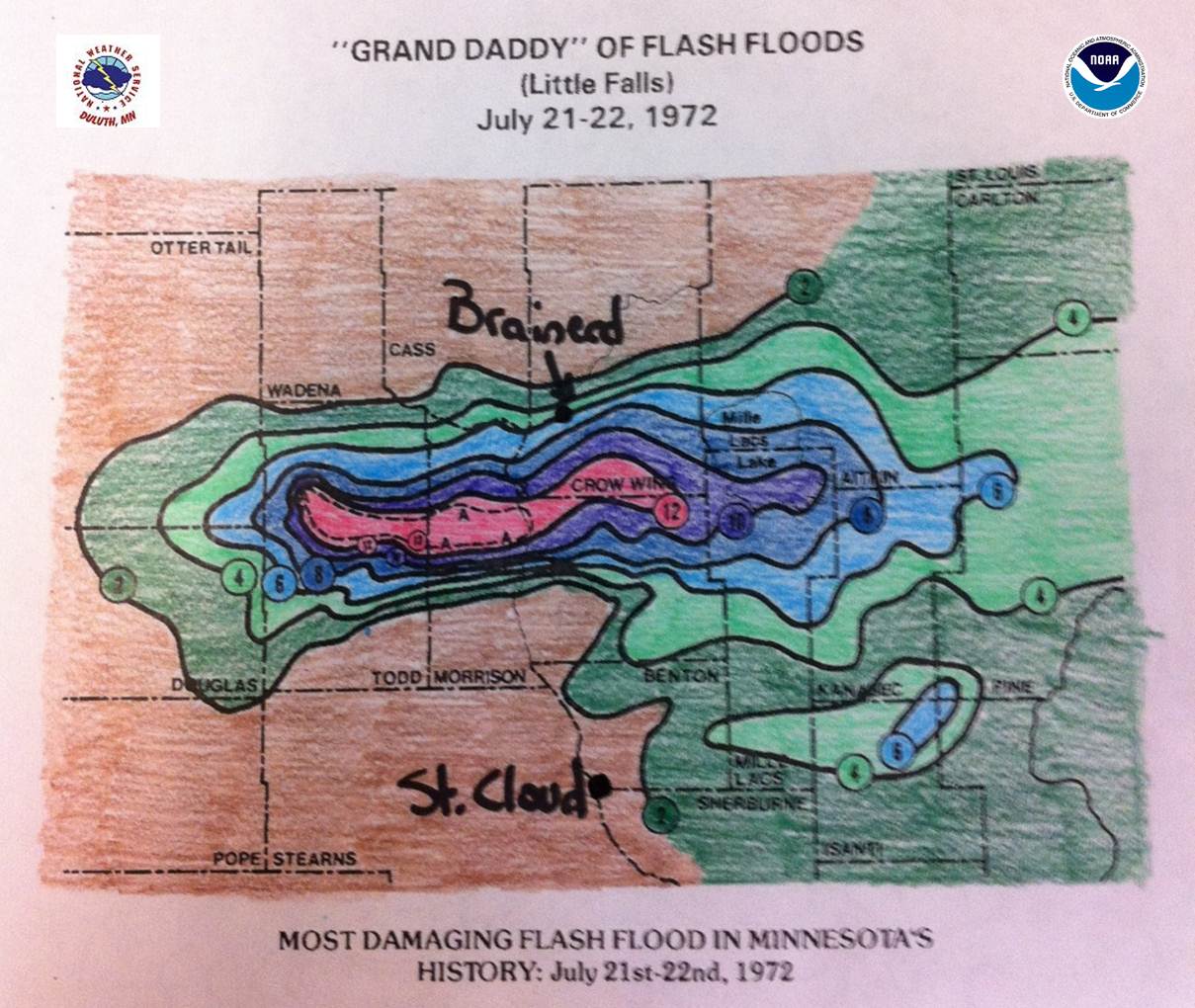
July 21st-22nd, 1972 / Little Falls, MN (Brainerd)
Heavy rains during an 8-10 hour period from the afternoon of July 21st to the early morning of the 22nd brought a devestating flood to the LIttle Falls, MN area. The 24-hour rainfall amount at Fort Ripley was 10.84 inches, setting a new 24 hour rainfall total for the state of Minnesota. Flood damages were estimated at $20 million.
 
Below is a map of the rainfall over the Little Falls, MN area on September 20th, 1972. Values are in inches.