- Don't live in north Alabama or southern middle Tennessee or doing some traveling? Click here for nationwide radio station listings by state, or you may call toll free 1-888-NWRSAME.
Six Ways to Get the Most Out of Your NOAA All-Hazards Weather Radio:
- Huntsville, AL Weather Forecast Office NWR NOAA Weather Radio: Tips Weather.gov > Huntsville, AL > NWR NOAA Weather Radio: Tips Need help getting your NOAA Weather Radio programmed? Click here for help programming some common weather radios, or click here for user's manuals for other common radios. Don't live in north Alabama or southern middle Tennessee or doing some traveling? Click here for nationwide radio station listings by state, or you may call toll free 1-888-NWRSAME.
- Check your weather radio receiver each Wednesday between 11 AM and 12 PM for the routine weekly test to ensure that your receiver is in good working order. (Note: In cases of inclement weather, the weekly test may be postponed till the next good weather day.)
- Make sure you have your weather radio receiver on the correct channel for your area corresponding to the correct frequency. (i.e., 162.400=channel 1, 162.425= channel 2, etc.)
- Place your weather radio near an exterior window facing the direction of the nearest weather radio transmitter. (Transmitters are located on Monte Sano in Huntsville, near Crooked Oak in southern Colbert County, near Henagar in DeKalb County, and in Cullman, Arab, and Winchester.)
- Pull your weather radio antenna all the way out to get the best reception. If you are close to 40 miles from the transmitter, you might have to purchase a small external antenna to ensure that your signal is strong enough to alert your radio.
- Change out your batteries at least twice a year--just like you would do with a smoke detector--to ensure your radio will work if you lose electrical power.
- Double-check that appropriate county FIPS codes have been entered correctly into your weather radio to ensure proper warnings are received. It is recommended that you program in at least a one county buffer zone especially to the west, southwest and south of your county. This could provide extra lead time if a warning is issued for an adjacent county.



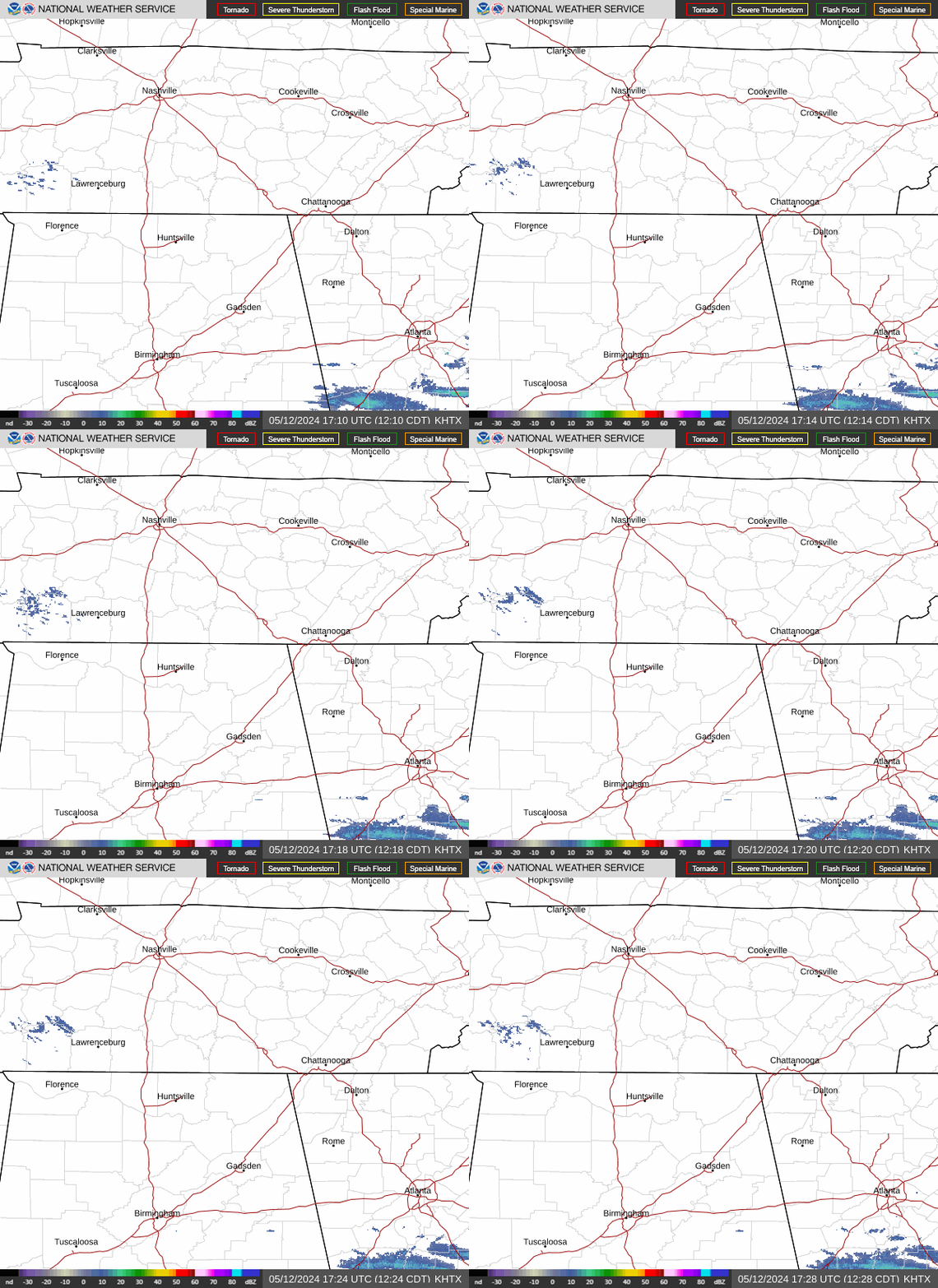 Local Radar
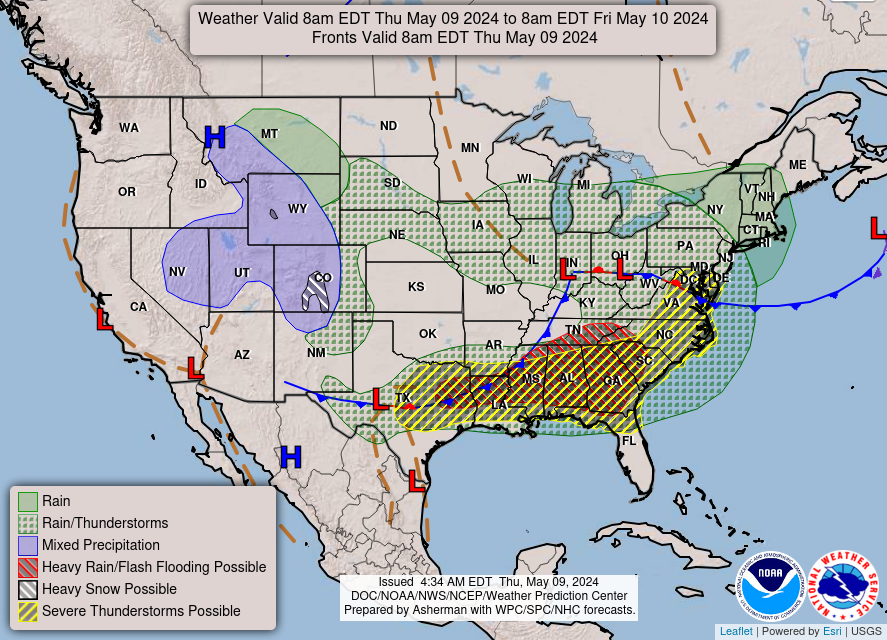 Weather Map
 NWS Huntsville SitRep
 Follow us on X
 Follow us on Facebook
 Follow us on YouTube
 HUN RSS Feed