NOAA Weather Radio All Hazards
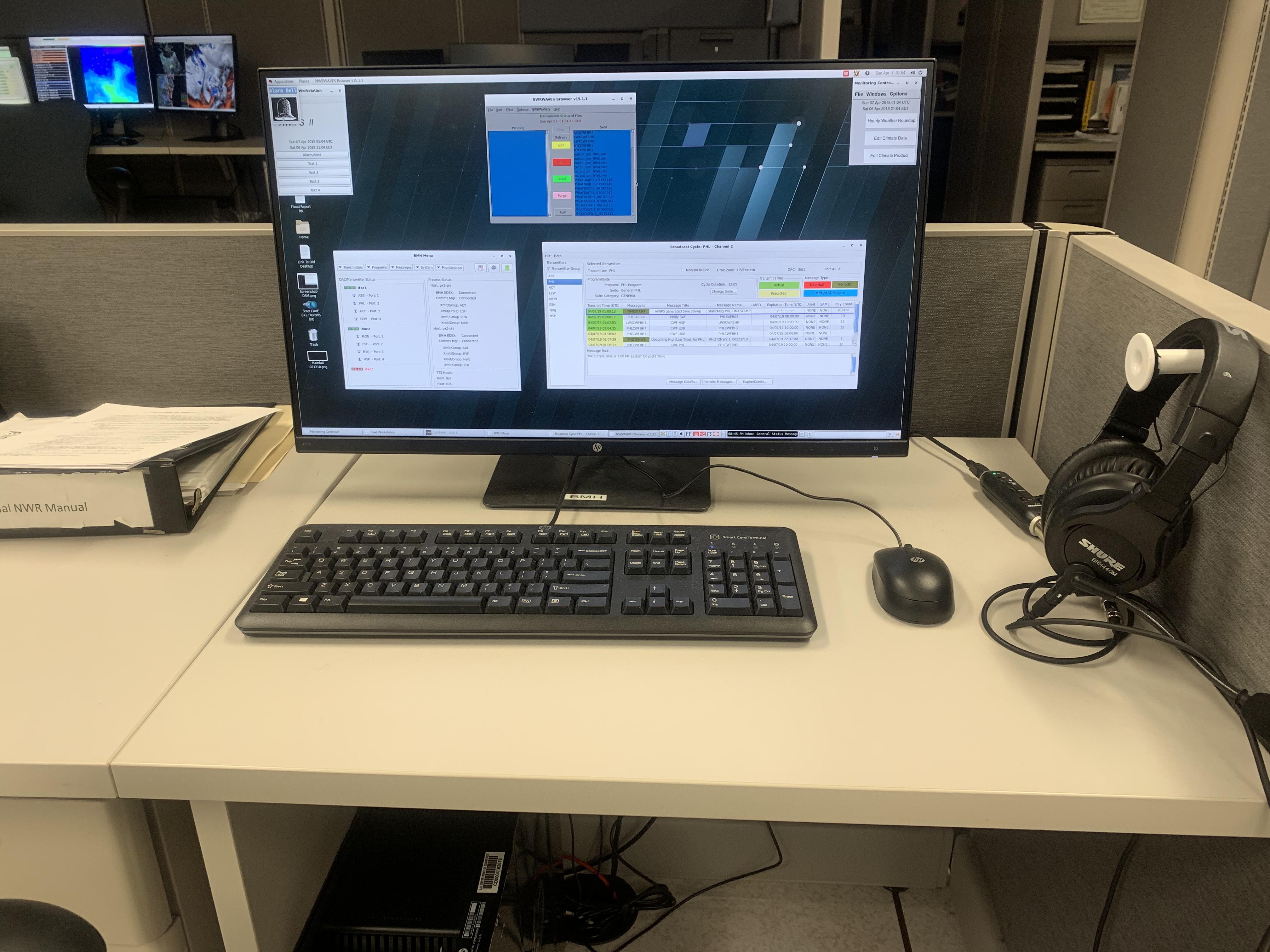
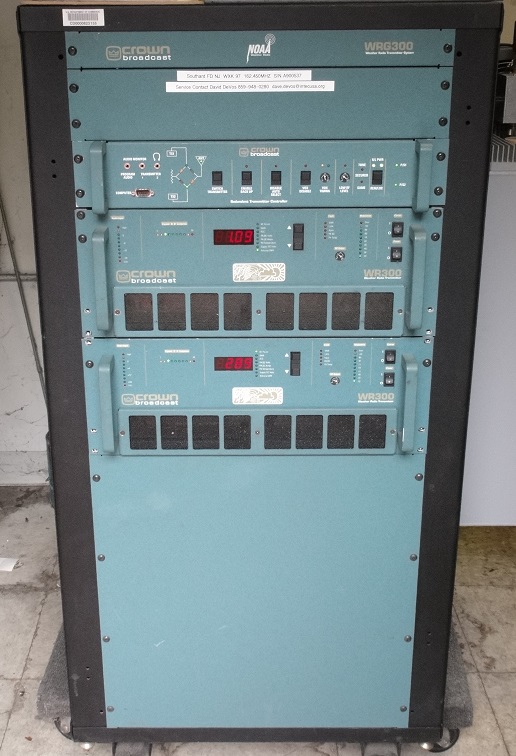
The Broadcast Message Handler (BMH) is the driving force behind NOAA Weather Radio All Hazards, the official voice of the National Weather Service. BMH converts text products to audible broadcasts using synthesized voice technology through AWIPS. This system replaced the older CRS system in 2016, being overall much easier to use and requiring less forecaster attention. It also assigns and transmits these broadcasts to one or more of the eight NOAA Weather Radio All Hazards transmitters distributed across the Mount Holly CWA. NOAA Weather Radio All Hazards receivers, specially designed to capture these broadcasts on seven designated frequencies (162.400 through 162.550 MHz), are needed to hear these transmissions. NOAA Weather Radio All Hazards receivers are available at most electronics store outlets and generally cost between $35 and $75. There are over 940 NOAA Weather Radio All Hazards transmitters across the country.
The following are broadcast on NOAA Weather Radio All Hazards 24 hours a day from the Mount Holly Forecast Office:
- Forecasts of rain and snow, temperatures, clouds, and winds.
- Warnings for severe thunderstorms, winds, tornadoes, floods, and heavy snow.
- Marine forecasts of winds and seas.
- Short term forecasts predict where rain, snow, thunder, fog, etc. are expected to begin or end.
- Current weather at most cities in the region.
- Climatological data including temperatures and precipitation.
- Special information statements for significant or unusual weather.
The benefits of this system include:
- Immediate broadcasting of severe weather warnings.
- The ability to schedule certain products at particular times.
- A greater amount of current observations (24 hours a day).
For more information, you can go to our Weather Radio link or to the NOAA Weather Radio home page.
CLICK HERE to go to the next tour (Coop Observer Program)




 Radar
Radar Current Weather
 Rivers & Lakes
 Satellite
 Forecast Maps
 Hour by Hour Forecast
 Tropical Weather
 Graphical Hazards
 Coastal Flood
 Marine Forecasts
 Text Products
 Climate Information
 Skywarn
 Submit Storm Report
 Weather Event Archives
 Forecast Discussion
 Emergency Managers
 Briefing Page
 Follow us on X
 Follow us on Facebook
 Follow us on YouTube
 PHI RSS Feed