| August 2026 monthly review for Tucson |
| 5th hottest and 26th wettest on record |
| All-time August record warm low temperature set |
| |
| |
|
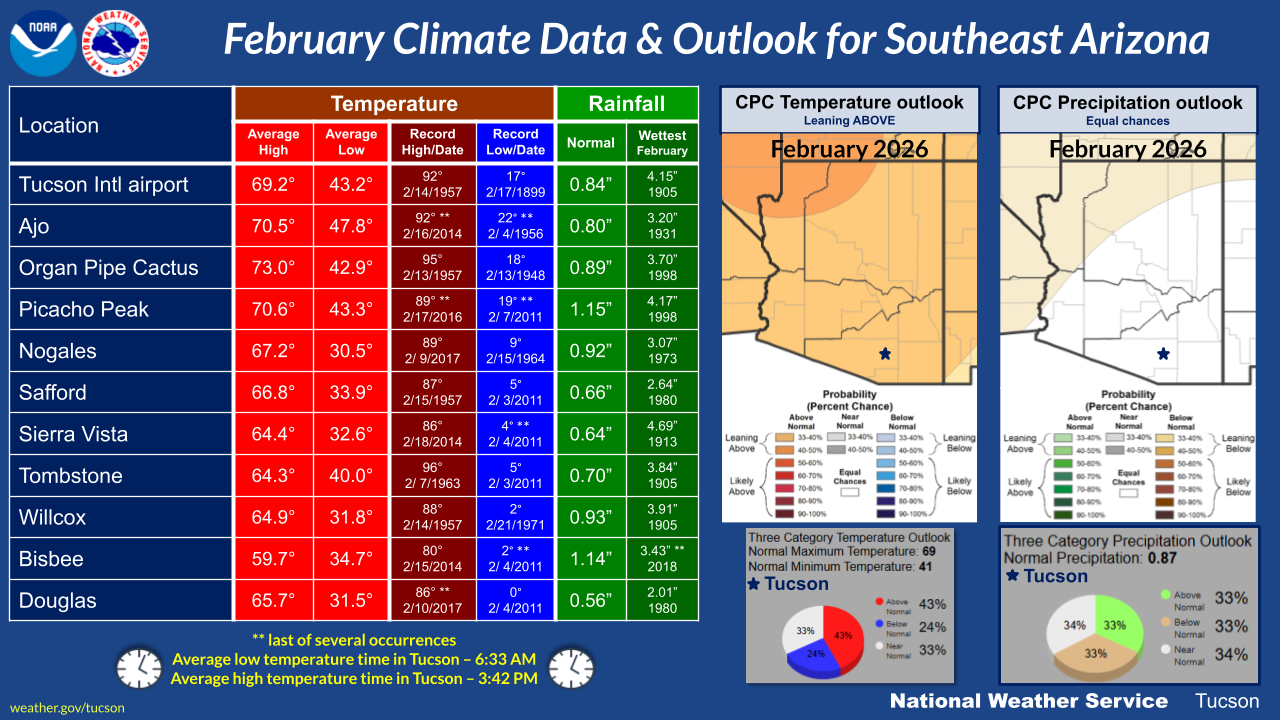
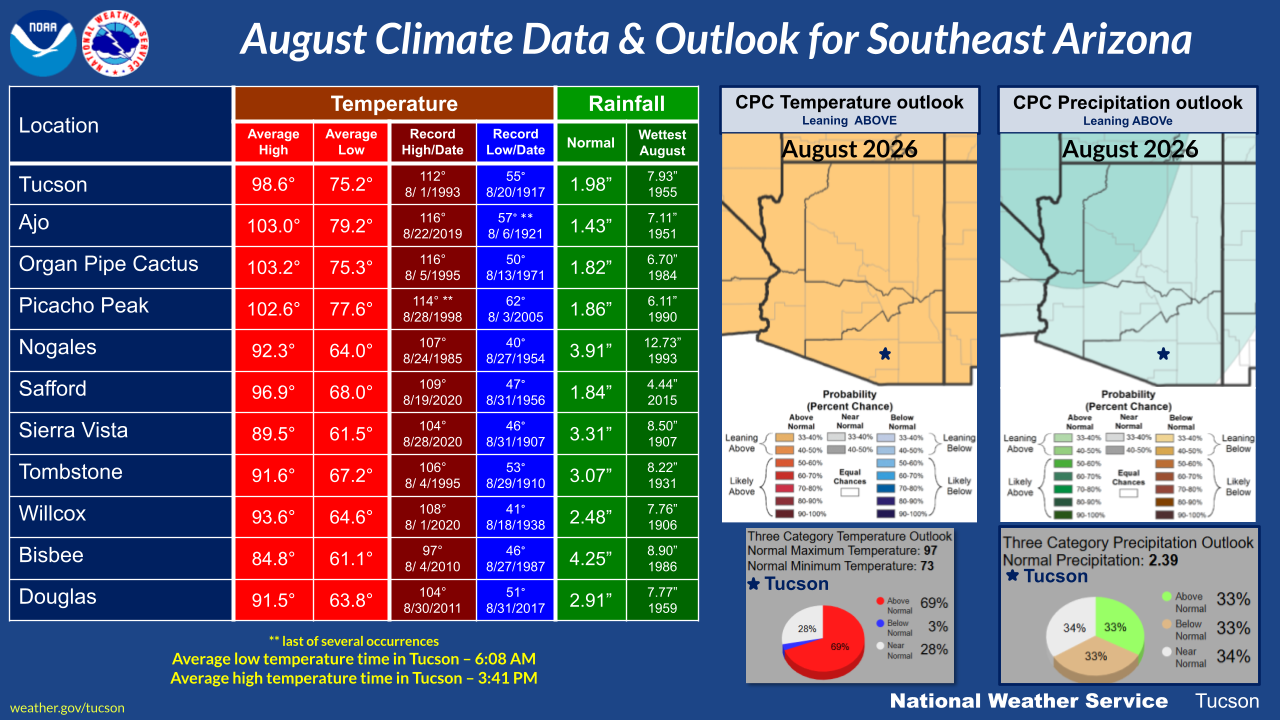
The Climate Prediction Center's official August outlook for Tucson, issued on July 31st, strongly favored a hotter-than-average month, showing a 69% chance of above-normal monthly mean temperatures compared to a 3% chance of below-normal. The precipitation outlook showed equal chances (33%) for below-, near- or above-normal total precipitation amounts.
|
| |
|
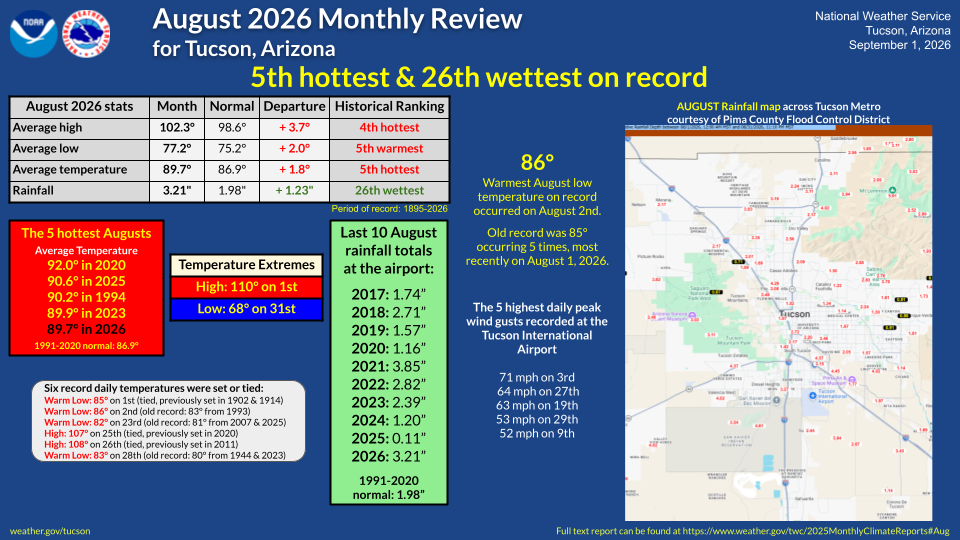
The first day of the month was hot with the first 110° high temperature of 2026 being recorded. For the years that recorded a high temperature of 110° or hotter, this was the 3rd latest calender date on record behind August 2, 1918 & August 19, 1915. On the morning of the 2nd, the low temperature at the airport dropped to only 86°. This established a new record for the warmest low temperature recorded in Tucson during the month of August.
|
| |
|
Severe convection impacted the metro area during the first half of the month. Thunderstorms on the 3rd, 5th, 9th & 10th produced wind gusts between 55 and 75 mph. Subsequently, heavy rainfall during the early morning hours on the 13th caused flash flooding, leading to multiple road closures and several swift water rescues.
|
| |
|
Severe convection persisted during the second half of the month with thunderstorms on the 19th, 21st, 23rd, 27th & 29th producing wind gusts between 55 and 70 mph. The severe thunderstorms on the 19th were particularly impactful with downed power lines, localized heavy rain that caused flash flooding, and half-dollar to ping-pong ball sized hail. On the 21st, a landspout tornado was spotted on the far east side of Tucson.
|
| |
|
August 2026 ranked as the 5th hottest August on record, with a average monthly temperature of 89.7° (+2.8° above normal). Monthly temperature extremes ranged from a high of 110° on the 1st to a low of 68° on the 31st. In total, six daily temperatures records were set or tied during the month, including two daily record highs and four daily record warm lows.
|
| |
|
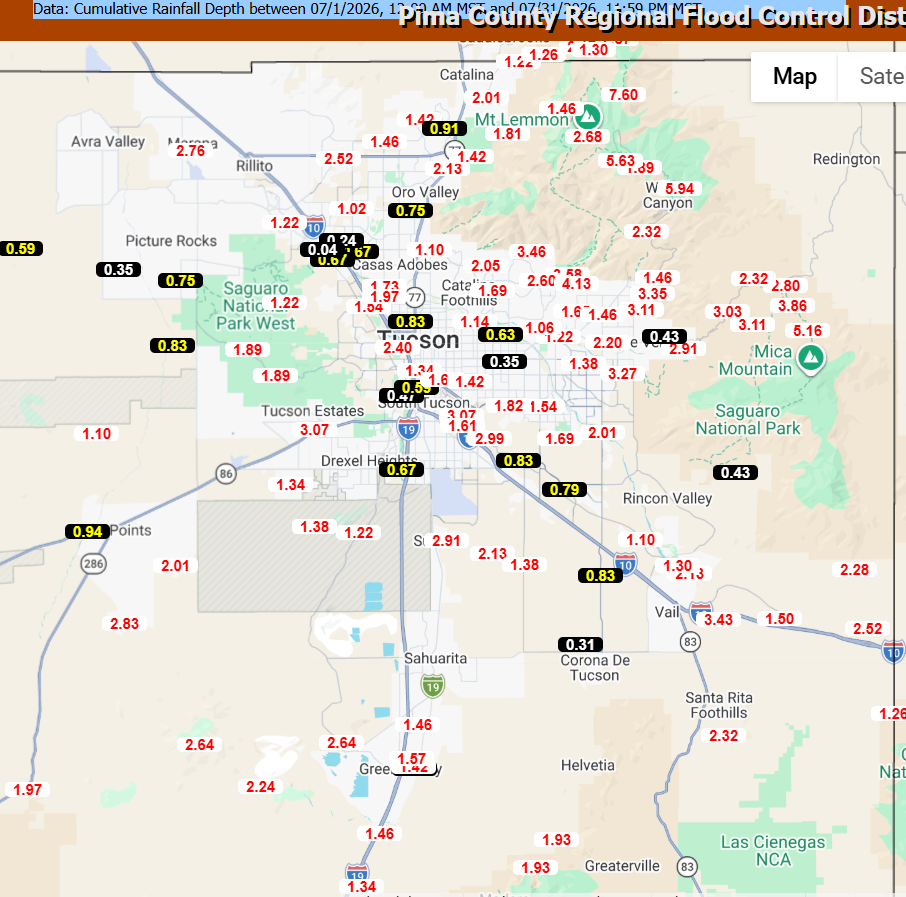
Across the metro area, rainfall totals during August varied widely, as is typical. Utilizing data from rainlog.org, Pima County Regional Flood Control District gages, and CoCoRaHS, amounts ranged from 0.75" to 3.00", with some localized areas recording up to 5.00". The Tucson International Airport, which is the official recording location in Tucson, recorded 3.21", making this August the 26th wettest on record.
|
| |
| August 2026 stats |
Year
|
Normal
|
Departure
|
Historical Ranking
|
| Average high temperature |
102.3°
|
98.6°
|
+ 3.7°
|
4th hottest
|
| Average low temperature |
77.2°
|
75.2°
|
+ 2.0°
|
5th warmest
|
| Average temperature |
89.7°
|
86.9°
|
+ 2.8°
|
5th hottest
|
| Days with highs 100° or hotter |
23
|
15
|
+ 8
|
4th most
|
| Days with highs 105° or hotter |
14
|
5
|
+ 9
|
T-2nd most
|
| Days with highs 110° or hotter |
2
|
<1
|
+ 2
|
T-2nd most
|
| Days with lows 80° or warmer |
14
|
3
|
+ 11
|
2nd most
|
| Days with lows 85° or warmer |
1
|
0
|
+ 1
|
T-most
|
| Rainfall |
3.21"
|
1.98"
|
+ 1.23"
|
26th wettest
|
|
Period of record: 132 years (1895-2026)
|
|
| |
|
| |
| Summer 2026 seasonal review for Tucson |
| 6th hottest and 54th wettest on record |
| |
|
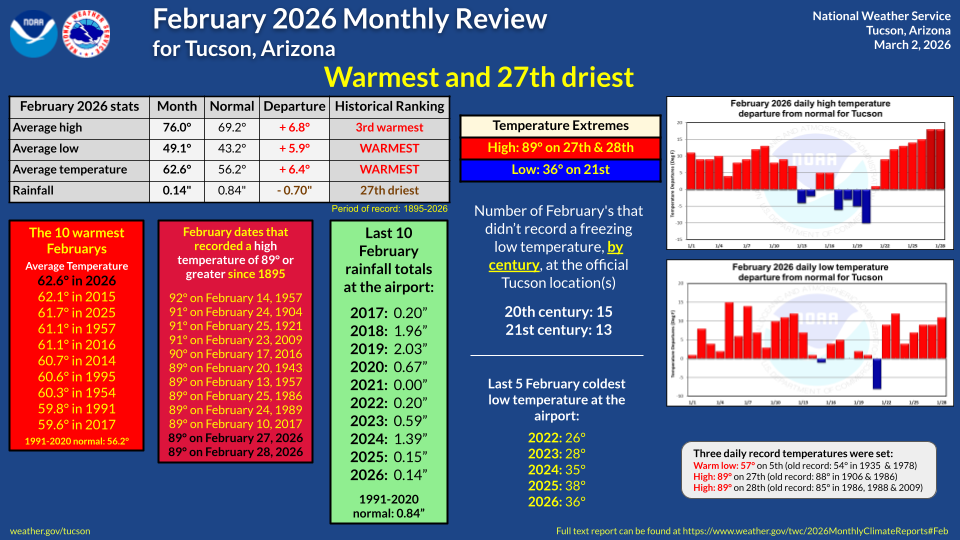
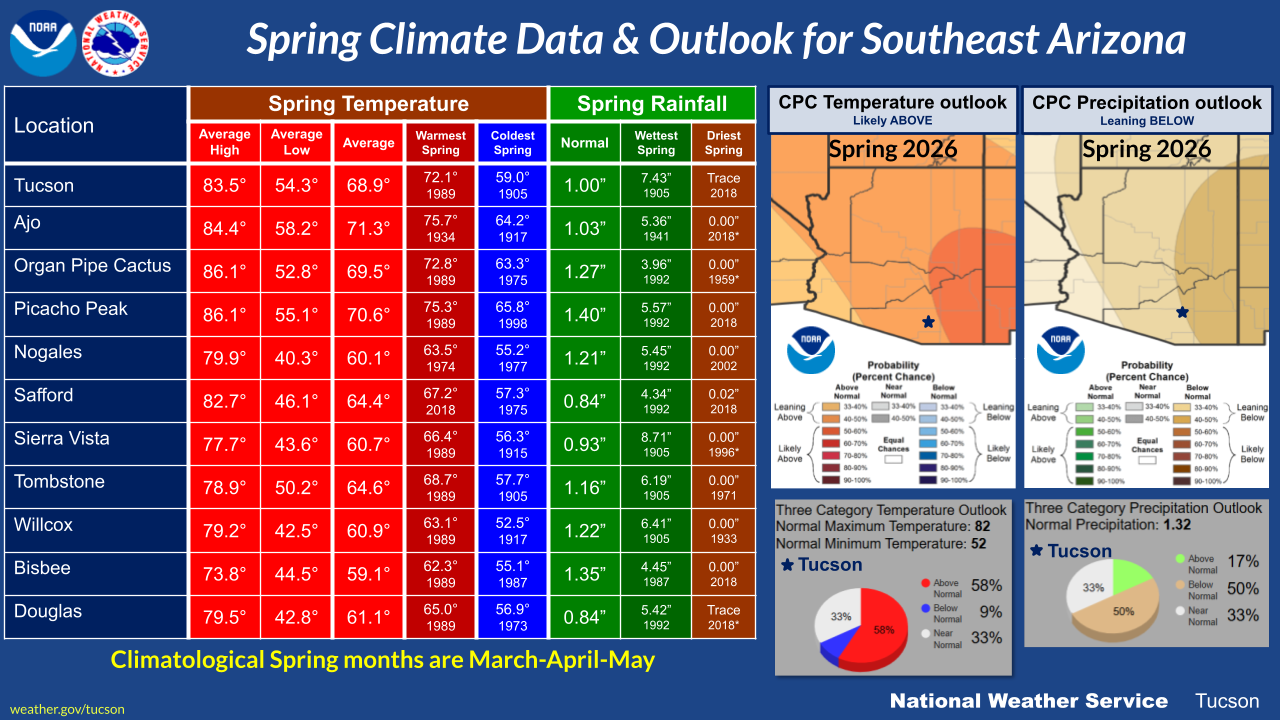
Every summer of the 21st century, excluding 2001, 2008, and 2021, ranked as a top 10 hottest on record at the time of occurrence. Thus summer heat is expected, with the primary uncertainty being how hot will it be. The Climate Prediction Center's May 21 outlook favored a warmer-than-average season, showing a 45% chance of above-normal seasonal mean temperatures versus a 22% chance of below-normal. Driven by the 12th warmest June, the 11th warmest July, and the 5th hottest August on record, Summer 2026 goes into the record books as the 6th hottest Summer on record.
|
| |
|
Seasonal temperature extremes ranged from a high of 110° on August 1st to a low of 67° on June 1st & 2nd. The season recorded 70 days with highs 100° or hotter, 34 days with highs 105° or hotter, and 1 day with highs 110° or hotter. In total, 11 daily temperatures records were set or tied, comprising two record daily highs and nine record-warm daily lows.
|
| |
|
The Climate Prediction Center's Summer precipitation outlook, issued on May 21st, slightly favored above-normal rainfall, assigning a 36% chance probability compared to 33% chance for near-normal and 31% chance for below-normal. As is typical during the summer thunderstorm season, rainfall amounts varied significantly across the metro area, with data from sources like rainlog.org, Pima County Regional Flood Control District gages, and CoCoRaHS showing a range of 2.00" to 6.00" with some localized areas up to 9.00". The International Airport, which is the official recording spot in Tucson, recorded 4.96, which is slightly more than a half-an-inch above normal and ranks as the 54th wettest Summer on record.
|
| |
| Summer 2026 stats |
Season
|
Normal
|
Departure
|
Historical Ranking
|
| Average high temperature |
102.3°
|
100.0°
|
+ 2.3°
|
7th hottest
|
| Average low temperature |
76.3°
|
74.2°
|
+ 2.1°
|
3rd warmest
|
| Average temperature |
89.3°
|
87.1°
|
+ 2.2°
|
6th hottest
|
| Days with highs 100° or hotter |
70
|
55
|
+ 15
|
4th most
|
| Days with highs 105° or hotter |
34
|
24
|
+ 10
|
6th most
|
| Days with highs 110° or hotter |
1
|
2
|
- 1
|
T-29th most
|
| Days with lows 80° or warmer |
27
|
11
|
+ 16
|
4th most
|
| Days with lows 85° or hotter |
42
|
1
|
+ 1
|
T-6th most
|
| Rainfall |
4.96"
|
4.42"
|
+ 0.54"
|
T-54th wettest
|
|
Period of record: 132 years (1895-2026)
|
|
| |
|
| |
| Monsoon 2026 (so far) |
|
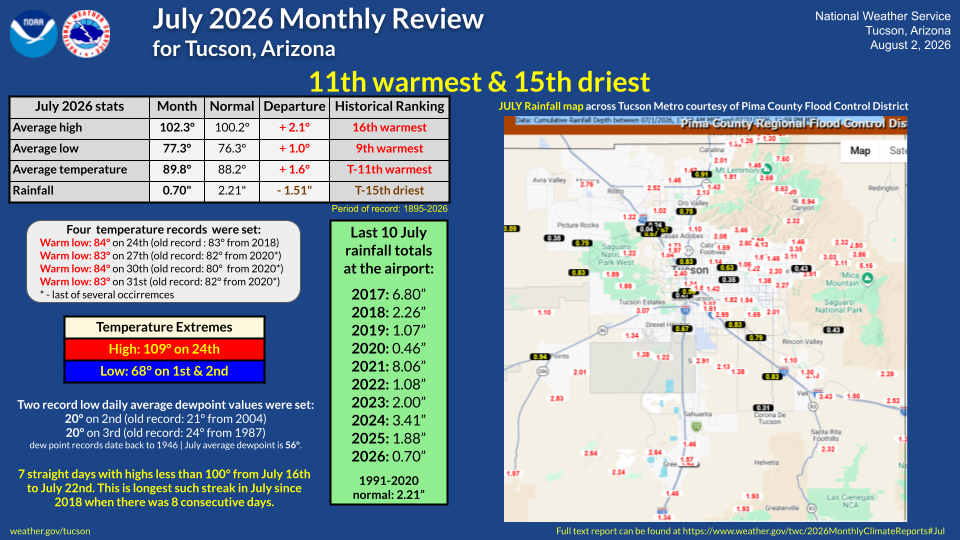
Summer thunderstorm activity has produced highly variable rainfall totals across the metro area, which is typical, with totals between 2.00" and 6.00" and localized amounts up to 9.00". At the Tucson International Airport, the official location in Tucson, rainfall is above normal with just under five inches (4.96") being recorded. This ranks as the 52nd wettest Monsoon on record through the end of August.
|
| |
|
| |
| 2026 |
|
The average yearly temperature of 76.0° through the end of July shatters the previous warmest January to August period by 1.7° (74.3° in 2018).
Thanks to a wetter-than-normal August, yearly rainfall at the Tucson International Airport, the official location in Tucson, ended August slightly above normal. The total of 7.47" is nearly four-tenths of an inch above normal and ranks as the 60th wettest January through August period on record. The water year rainfall since October 1st of 10.95" is 1.66" above normal and ranks as the 48th wettest water year to date with one month left in the water year calendar.
|
| |
| 2026 stats thru August |
Year
|
Normal
|
Departure
|
Historical Ranking
|
| Average high temperature |
89.4°
|
86.0°
|
+ 3.4°
|
Warmest
|
| Average low temperature |
62.5°
|
58.9°
|
+ 3.6°
|
Warmest
|
| Average temperature |
76.0°
|
72.4°
|
+ 3.6°
|
Warmest
|
| Days with highs 100° or hotter |
76
|
59
|
+ 17
|
5th most
|
| Days with highs 105° or hotter |
34
|
25
|
+ 9
|
T-6th most
|
| Days with highs 110° or hotter |
1
|
2
|
- 1
|
T-30th most
|
| Days with lows 80° or warmer |
27
|
11
|
+ 16
|
4th most
|
| Days with lows 85° or hotter |
2
|
1
|
+ 1
|
T-6th most
|
| Rainfall |
7.47"
|
7.10"
|
+ 0.37"
|
60th driest
|
| Water year rainfall (Oct-Aug) |
10.95"
|
9.29"
|
+ 1.66"
|
T-48th wettest
|
|
Period of record: 132 years (1895-2026); Historical ranking is through the end of August
|
|
| |
|
| |
| Looking ahead into September |
|
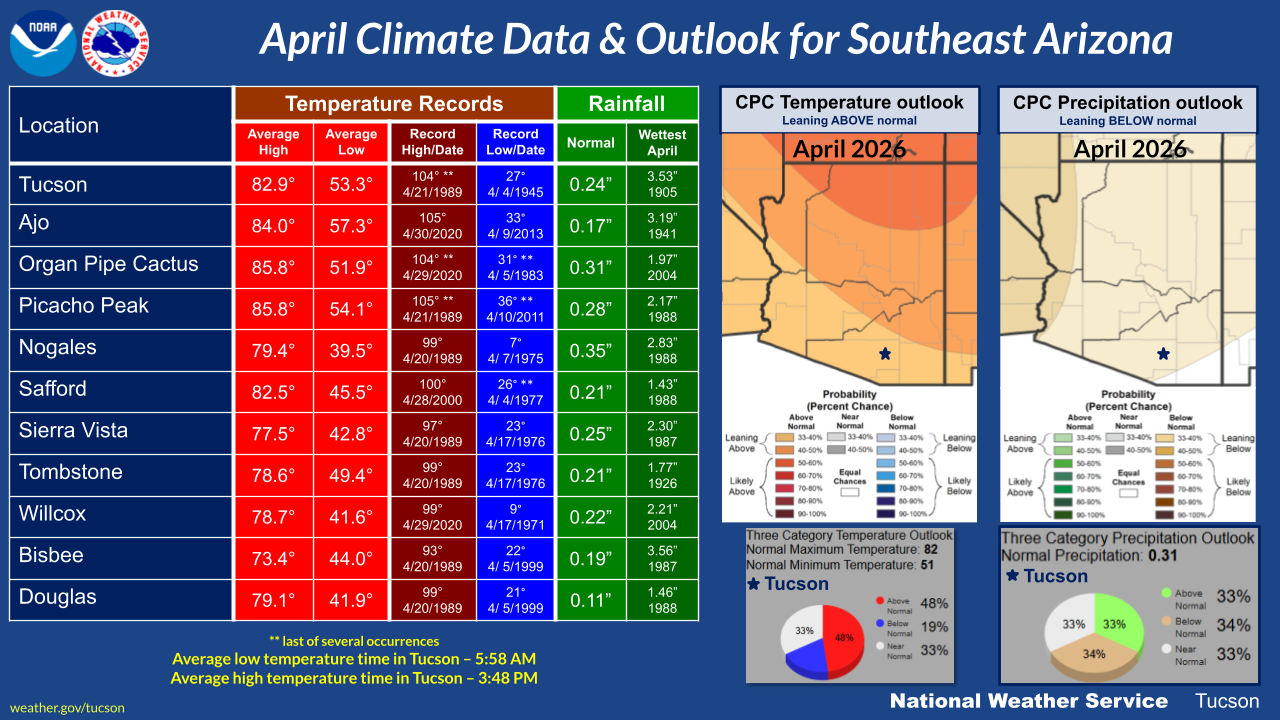
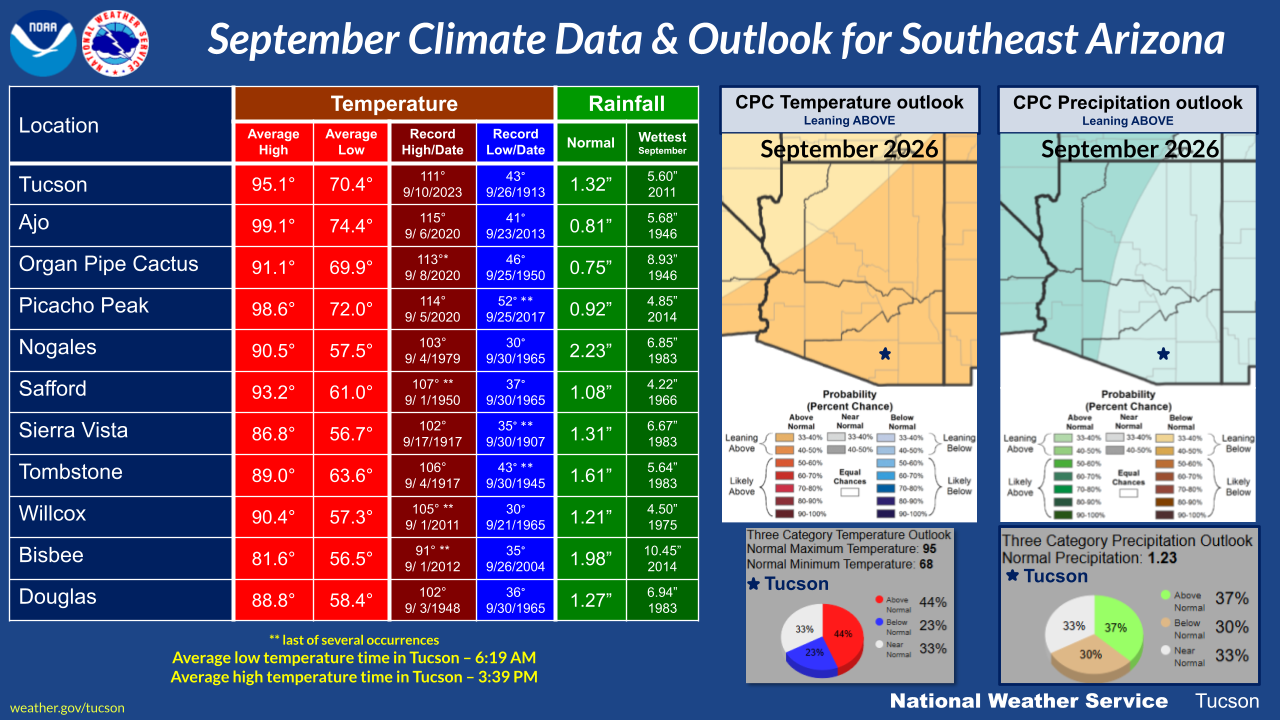
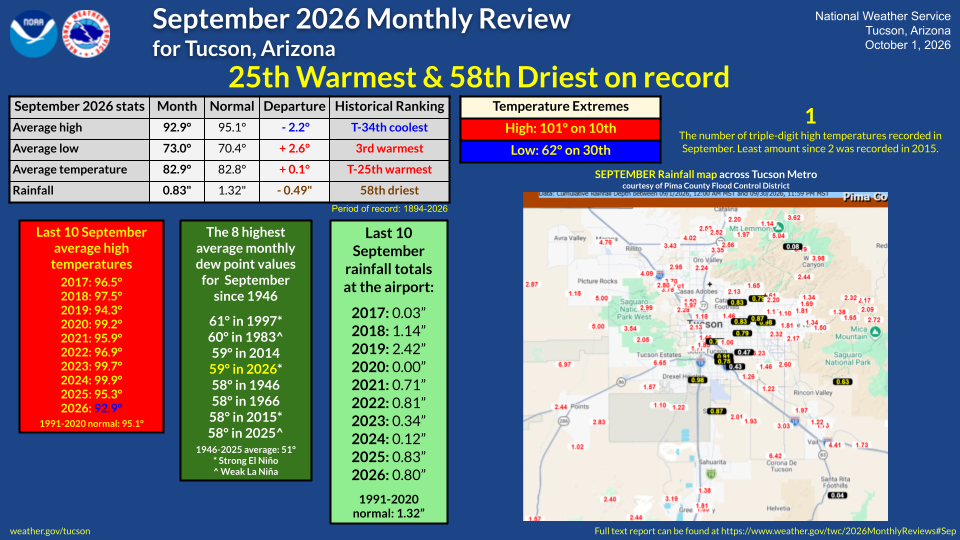
The September outlook from the Climate Prediction Center for Tucson favors a warmer-than-average month, showing a 44% chance of above-normal monthly mean temperatures compared to a 23% chance of below-normal. For precipitation, the outlook slightly favors a wetter-than-average month, showing a 37% chance of above-normal monthly total precipitation amounts compared to a 30% chance of below-normal.
|
| |
| Normal monthly high temperature |
95.1° |
| Normal monthly low temperature |
70.4° |
| Normal monthly temperature |
82.8° |
| Record high temperature |
111° on September 10, 2023 |
| Record low temperature |
43° on September 26, 1913 |
| Warmest September (avg.) |
86.6° in 2024 |
| Coldest September (avg.) |
76.3° in 1964 |
| Normal rainfall |
1.32" |
| Wettest September day |
2.85" on September 10, 1964 |
| Wettest September |
5.60" in 2011 |
| Driest September |
0.00" in 1953 & 2020 |
| Daily normals | Daily records |
|
|
| The number of daylight hours will decrease from 12 hours 48 minutes and 42 seconds on the 1st to 11 hours 52 minutes and 23 seconds on the 30th, a loss of 56 minutes 19 seconds. |
| |
| Looking ahead into Fall |
|
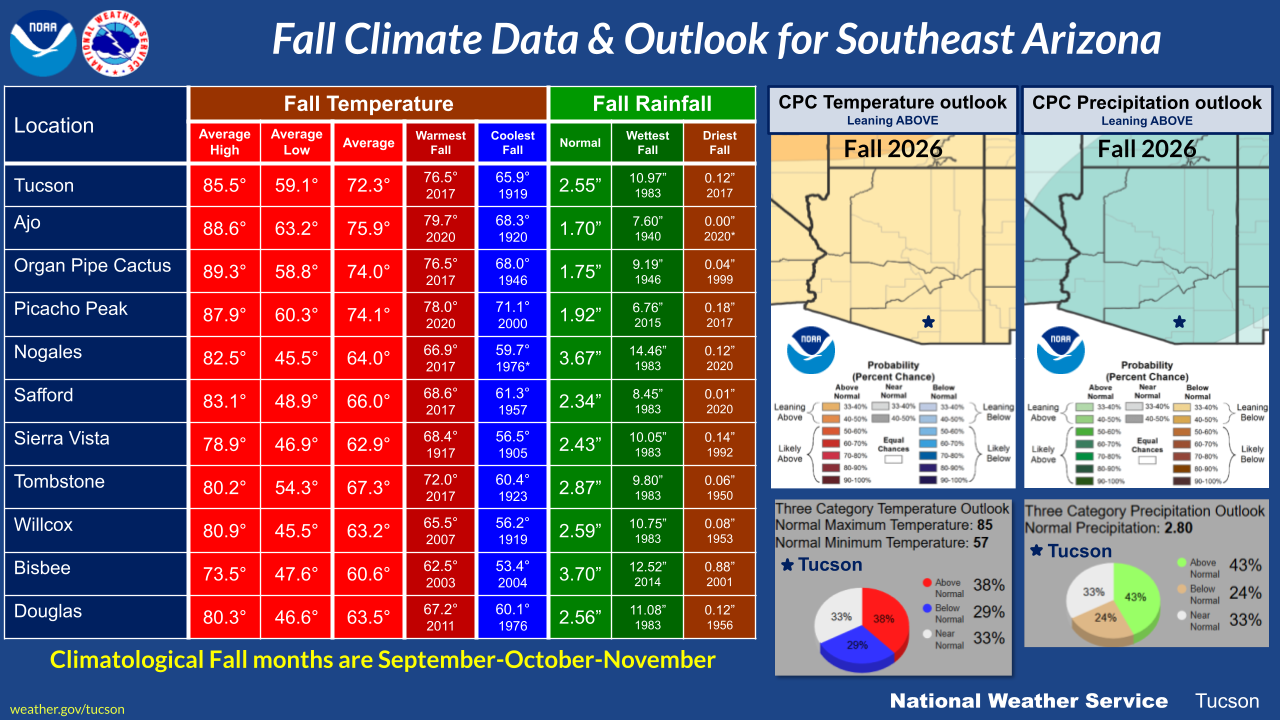
The Fall outlook from the Climate Prediction Center for Tucson favors a warmer-than-average month, showing a 38% chance of above-normal monthly mean temperatures compared to a 29% chance of below-normal. For precipitation, the outlook favors a wetter-than-average month, showing a 43% chance of above-normal monthly total precipitation amounts compared to a 24% chance of below-normal.
|
| |
| Normal seasonal high temperature |
85.5° |
| Normal seasonal low temperature |
59.1° |
| Normal seasonal temperature |
72.3° |
| Warmest Fall (avg.) |
76.5° in 2017 |
| Coldest Fall (avg.) |
65.9° in 1919 |
| Normal Fall rainfall |
2.55" |
| Wettest Fall |
10.97" in 1983 |
| Driest Fall |
0.12" in 2017 |
| |
|
|
| The autumnal equinox, otherwise known as the beginning of fall, will occur on September 22nd at 5:05 PM when the sun begins to cross the equator into the southern hemisphere. |
| |
| Glueck |













 Follow us on X
 Follow us on Facebook
 Follow us on YouTube
 TWC RSS Feed


