
Thunderstorms are common throughout the monsoon, which typically spans from the latter half of June through September. Unfortunately, one of the hazards that is commonly associated with thunderstorms is downburst winds. Downburst winds are strong, localized winds that can develop abruptly during thunderstorms. Downburst wind speeds can reach 50, 60 and 70 mph, and in rare cases even exceed 100 mph! Downburst winds can cause significant damage, create areas of blowing dust, and they can even be deadly.
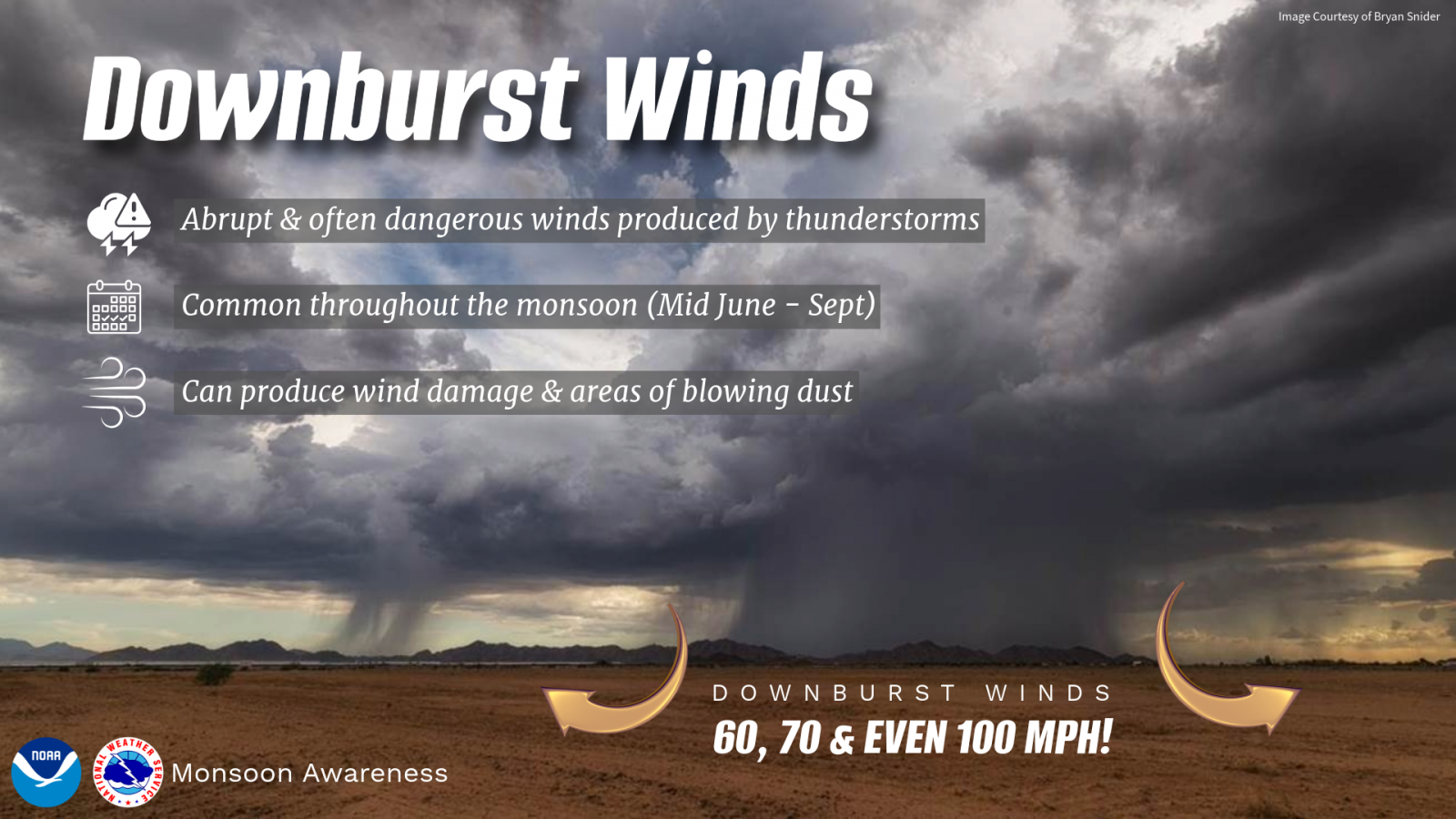
So, how do downbursts develop? As rain falls from a thunderstorm, much of it can evaporate, especially in the very dry southwestern states. The evaporation of rainfall causes the surrounding air to rapidly cool. This cooler air quickly becomes more dense than the surrounding air, causing it to descend and rapidly fall toward the ground. Once this cool, dense air reaches the ground, it has nowhere to go, but outward in all directions. In other words, downburst winds form as rain-cooled air accelerates to the ground and rapidly spreads outward in all directions.
Downburst winds have been known to topple trees, fences, utility poles and lines. Downburst winds can also create significant areas of blowing dust, especially after recent dry spells. This is especially true in and near dust prone areas such as open or recently plowed fields and dry lake beds or playas. Blowing dust can quickly reduce visibility to near zero, and this can quickly turn deadly for motorists, or anyone driving.
Video: An overview of downburst winds given during Monsoon Awareness Week.
Don't drive through dust storms. If you happen to be driving and encounter a dust storm, pull off the road as far as possible. Once stopped, turn off all lights. Set the emergency brake, and then take your foot off the brake to make sure your taillights aren't illuminated. This may seem counterintuitive, but studies have shown that drivers are prone to follow lights when driving in low visibility settings. Once you are pulled off to the side of the road, the last thing you want is for someone traveling behind you to see your taillights, thinking your vehicle is in motion, only to abruptly realize your car is parked and then have a rear-end collision with you. Pull aside, stay alive!

With the chances of thunderstorms increasing throughout the monsoon, it's important to be aware of the dangers of downburst winds. Here are some tips for staying safe during a downburst:
Keep an eye on the weather forecast and be aware of the potential for thunderstorms.
Have a plan in place in case of a downburst. Be ready to take shelter in a sturdy building if you are outside when thunderstorms develop. Once inside, stay away from windows, as downburst winds may loft loose items and small debris, potentially breaking windows.
If you are driving and encounter blowing dust from downburst winds, pull over to the side of the road, turn your lights off, take your foot off of the brake and wait for the storm to pass. This helps reduce the risk of vehicles behind you trying to follow your taillights and accidentally colliding with you!
Be aware of the dangers of flying debris. Flying debris can cause serious injuries or death.
If you encounter any damage to structures or utility poles and lines, do not attempt to walk through or drive through the area, as power lines may still be live and risk electrocution.
Report any downed power lines to your local utility company.
The first step to being prepared for adverse weather is being aware. Stay tuned to the forecast, and note what actions might need to be taken or what plans you need to change when thunderstorms threaten. By being aware of the dangers of downburst winds, you can help to keep yourself and your family safe during the monsoon.



 Follow us on X
 Follow us on Facebook
 Follow us on YouTube
 ABQ RSS Feed