National Weather Service United States Department of Commerce

Critical Fire Weather in the Southern High Plains; Heavy Snow in the Great Lakes and Northeast U.S.

Gusty winds and low relative humidity will bring elevated to critical fire weather conditions to the southern High Plains through the weekend. A winter storm will track across the Great Lakes and Northeast U.S. into Saturday with areas of wintry mix and heavy snow from northern New York through southern Maine. Read More >

Severe Summer Weather Awareness Week: April 20-24, 2020
Monday
Tuesday
Wednesday
Thursday
Friday
 Weather Alerts and Warnings 
 Severe Storms, Lightning, Wind and Hail 
 Tornado Safety Information 
 Flash Floods 
 Extreme Heat 
Beat The Heat!
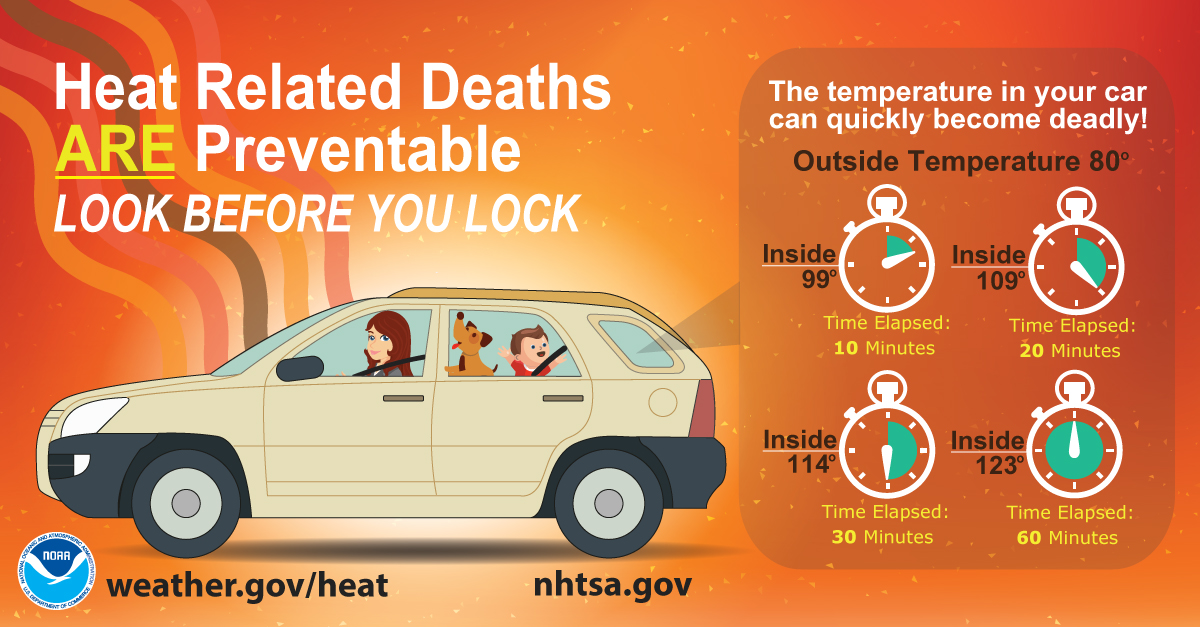
How Fast Can The Sun Heat a Car?
 

North American summers are hot; most summers see heat waves in one or more parts of the United States. Heat is one of the leading weather-related killers in the United States, resulting in hundreds of fatalities each year and even more heat-related illnesses.


Heat Safety


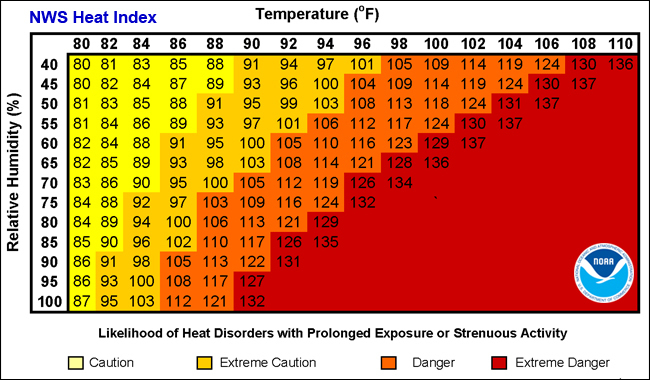
The Heat Index is a measure of how hot it really feels when relative humidity is factored in with the actual air temperature. To find the Heat Index temperature, look at the Heat Index Chart above.
  • Slow down! Strenuous activities should be reduced, eliminated or rescheduled to the coolest time of the day. Individuals at risk should stay in the coolest available place, not necessarily indoors. Dress for summer. Lightweight, light-colored clothing reflects heat and sunlight, and helps your body maintain normal temperatures.
  • Put less fuel on your inner fires! Foods such as proteins that increase metabolic heat production also increase water loss.
  • Drink plenty of water or other non-alcoholic fluids! Your body needs water to keep cool. Drink plenty of fluids even if you do not feel thirsty. However, those who suffer from epilepsy, heart, kidney or liver disease, are on fluid restrictive diets or have a problem with fluid retention, should consult a physician before increasing their consumption of fluids. Do not drink alcoholic beverages or those with high sugar content.
  • Spend more time in air-conditioned places! Air conditioning in homes and other building markedly reduces danger from the heat. If you cannot afford an air conditioner, spending time each day in an air conditioned environment during hot weather affords some protection.
  • Be careful not to get too much sun! Sunburn makes the job of heat dissipation that much more difficult.