National Weather Service United States Department of Commerce

2026 Heat Safety Week - May 18-22, 2026

The National Integrated Heat Health Information System (NIHHIS) and partner agencies, including the National Weather Service, are hosting a national Heat Safety Week from Monday, May 18 to Friday, May 22, 2026.

Most people are familiar with the Heat Index, which measures how hot it actually feels outside, though the values that are considered dangerous can vary by person and region.  The experimental NWS HeatRisk product accounts for the forecast temperatures, humidity, climatology/time of year, duration of heat, and heat casualty data to arrive at a level from 0/green (little to risk from heat) to 4/magenta (rare and/or long duration extreme heat impacting all without routine access to cooling/hydration as well as stressing health systems, industry, and infrastructure).
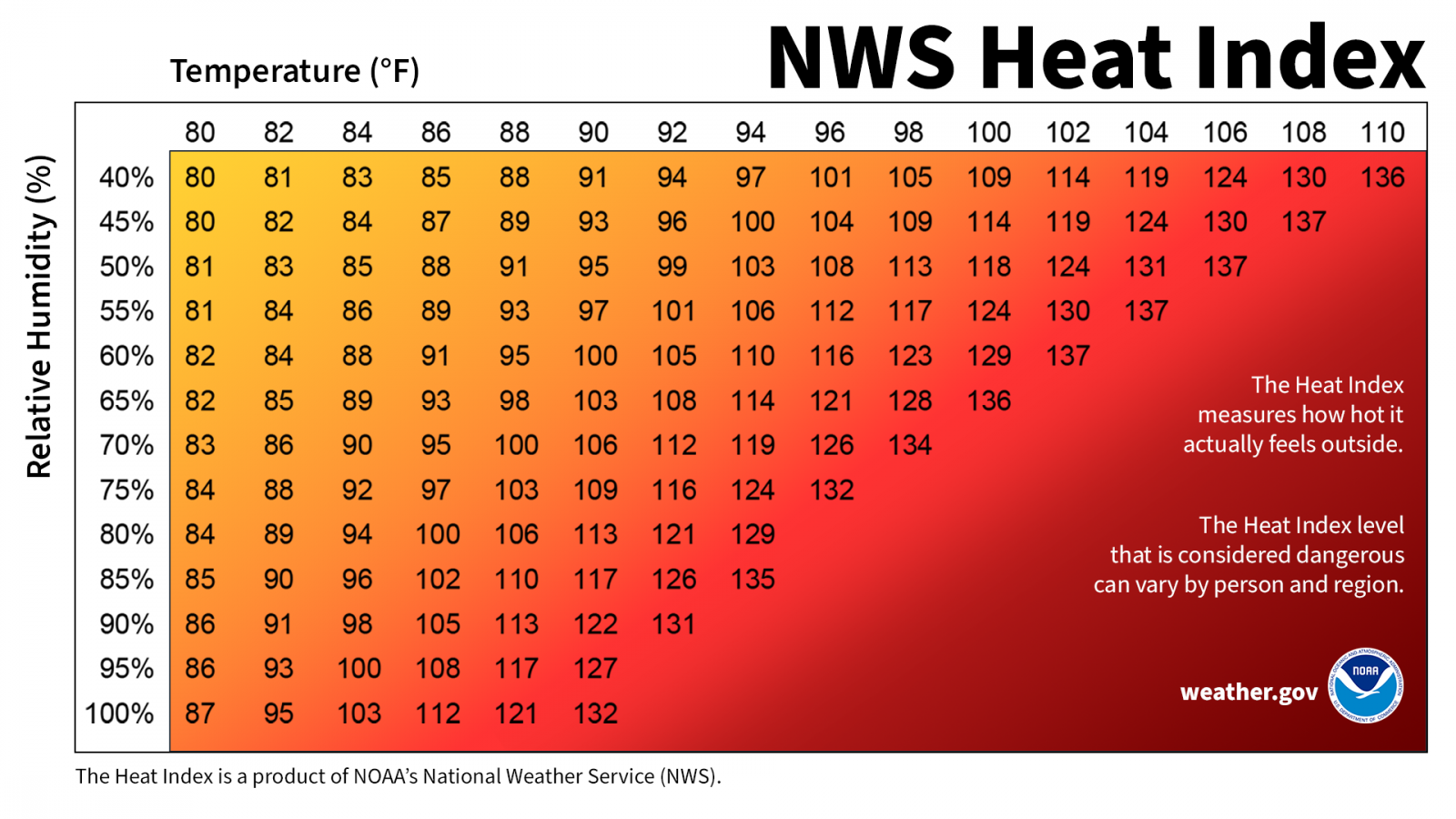
A chart of heat index values. The heat index measures how hot it actually feels outside, though the level that is considered dangerous can vary by person and region.


The following themes will be addressed each day, accompanied by #HeatSafety


Monday, May 18: What is Heat-Related Illness?

Heat is dangerous, and can result in heat-related illnesses, including heat cramps, heat exhaustion, heat stroke, or even death.  Heat is the number one weather-related killer.  Stay Weather Ready by learning the symptoms of heat exposure and the appropriate responses here.

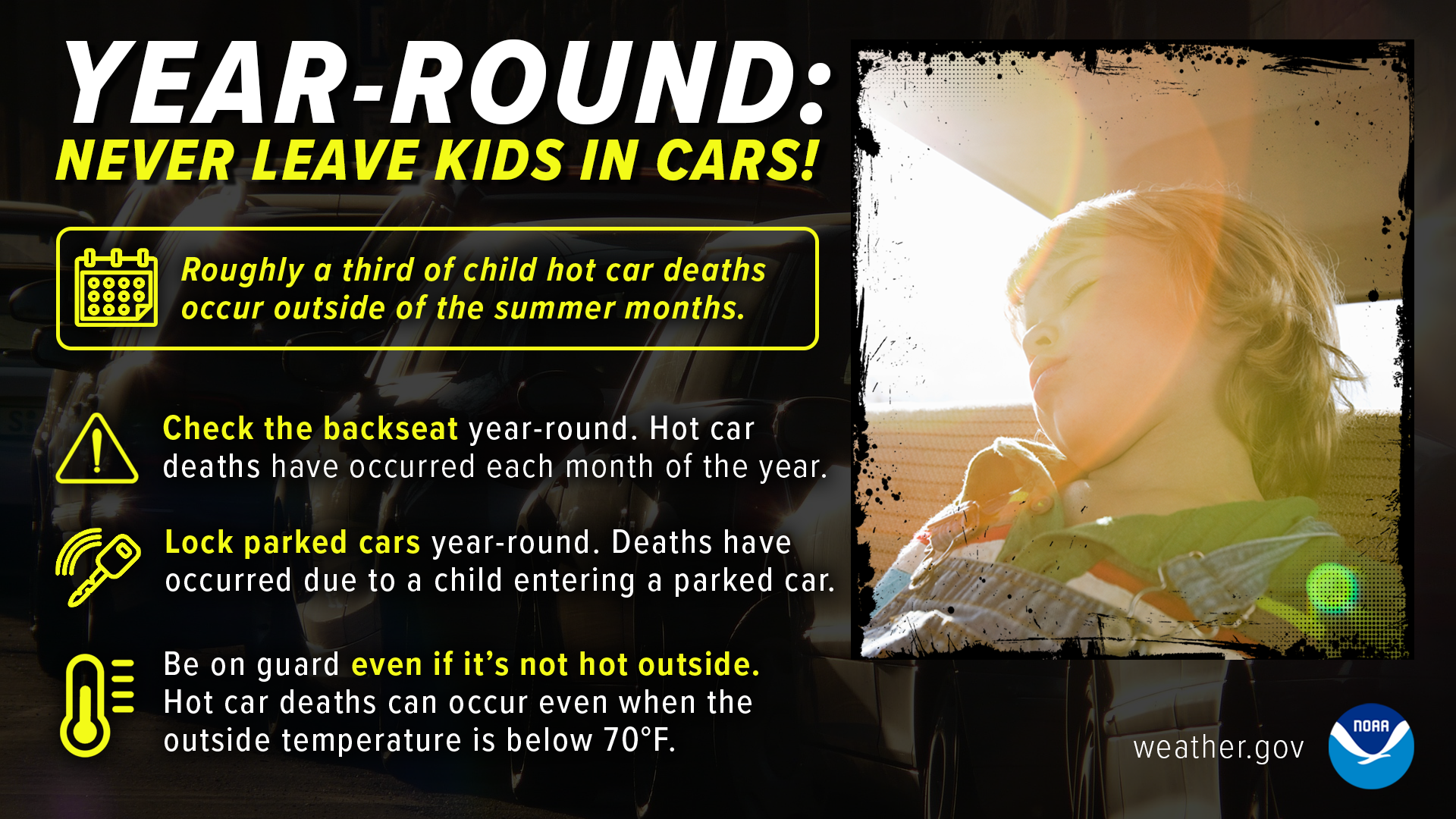
More than 1,000 children have died of heat stroke because they were left or became trapped in a hot car over the past 25 years. These tragedies can happen to anyone — but are always preventable. Always lock parked cars, even if you are not a caregiver. www.weather.gov/safety/heat-children-pets
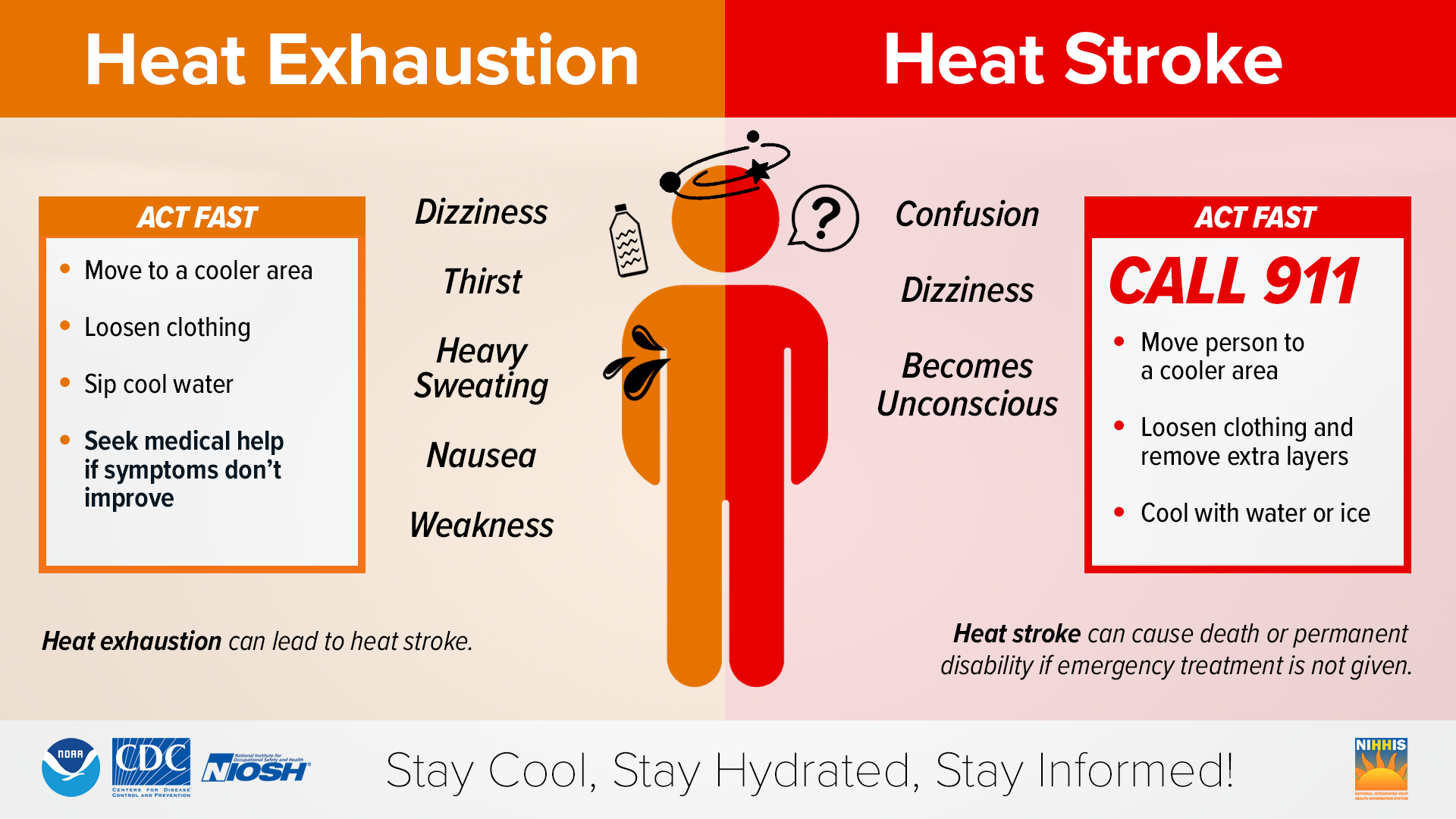
Heat Exhaustion vs Heat Stroke. Symptoms of heat exhaustion include dizziness, thirst, heavy sweating, nausea, and weakness. Act fast by moving to a cooler area, loosening clothing, sipping cool water. Seek medical help if symptoms don't improve. Heat exhaustion can lead to heat stroke. Symptoms of heat stroke include confusion, dizziness, and becoming unconscious. Act fast by calling 911, moving the person to a cooler area, loosening clothing and removing extra layers, and cooling with water or ice. Heat stroke can cause death or permanent disability if emergency treatment is not given.


Tuesday, May 19: Heat Safety Tips

Heat deaths are preventable - take action to protect yourself and your loved ones. Learn more at weather.gov/safety/heat

1) Stay cool
2) Stay hydrated
3) Check on your neighbors
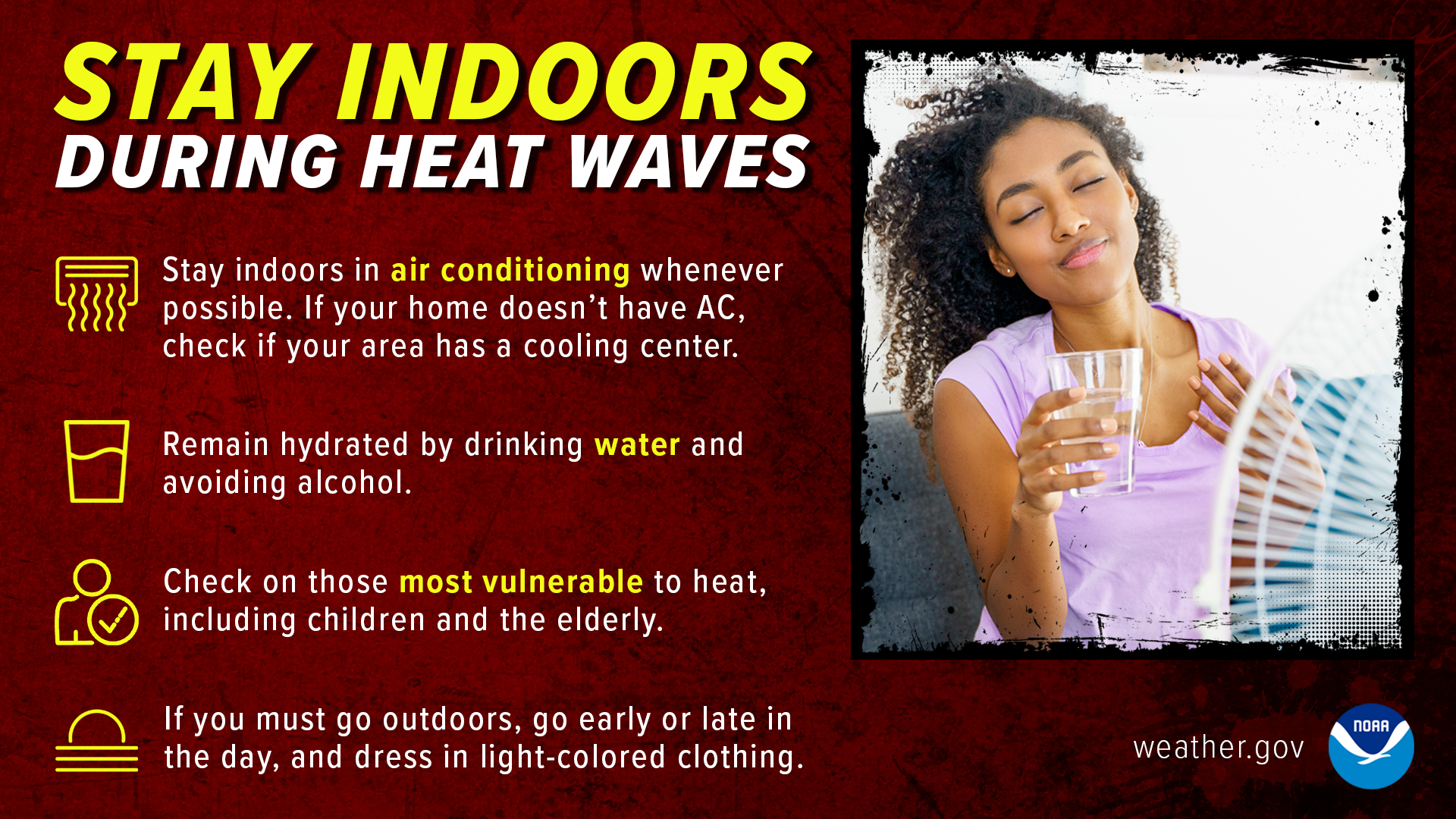
Stay indoors during heat waves. Stay indoors in air conditioning whenever possible. If your home doesn't have AC, check if your area has a cooling center. Remain hydrated by drinking water and avoiding alcohol. Check on those most vulnerable to heat, including children and the elderly. If you must go outdoors, go early or late in the day, and dress in light-colored clothing.

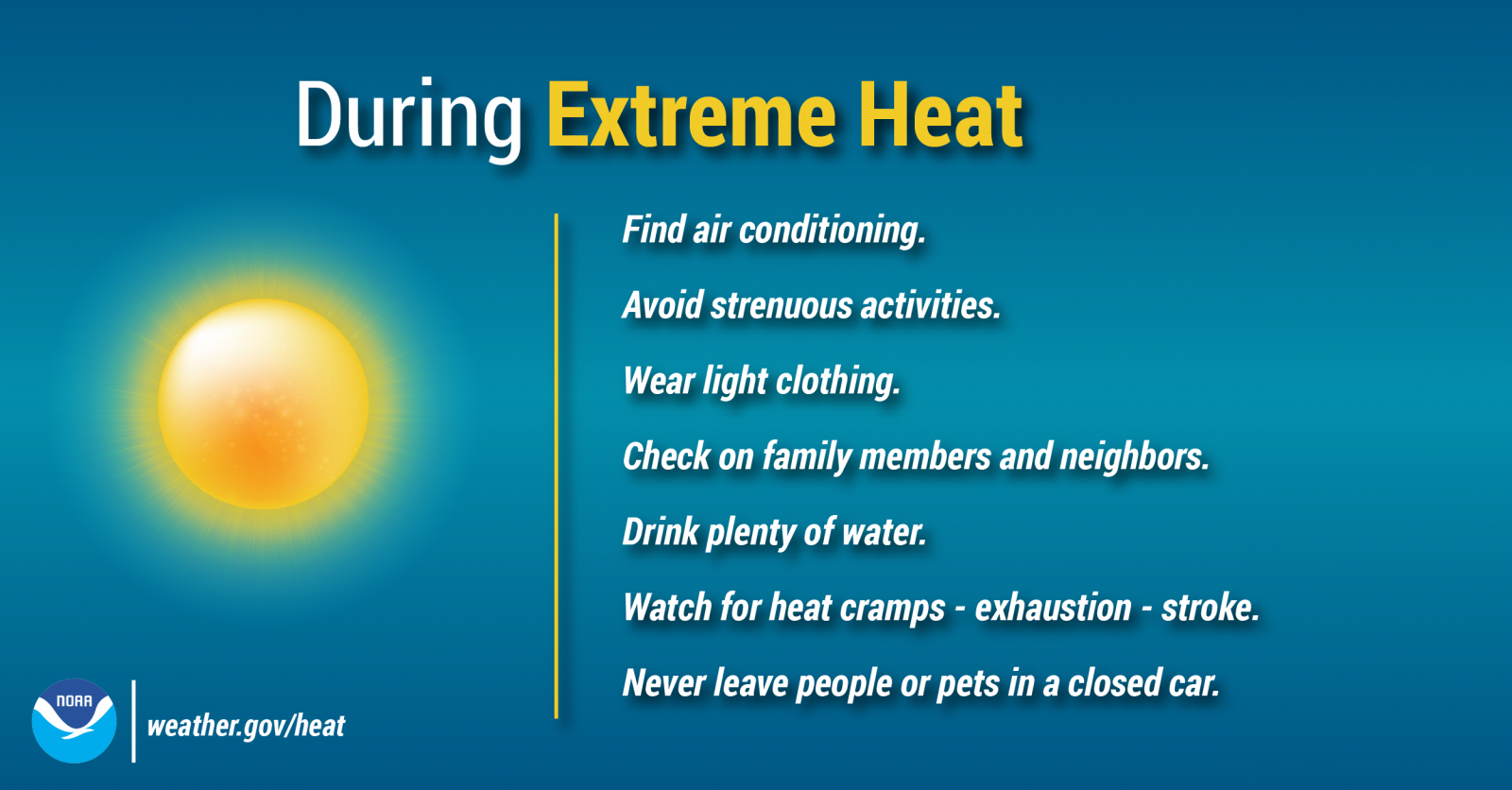
During Extreme Heat: Find air conditioning. Avoid strenuous activities. Wear light clothing. Check on family members and neighbors. Drink plenty of water. Watch for heat cramps, exhaustion, and stroke. Never leave people or pets in a closed car.


Wednesday, May 20: Check on Your Family, Friends, Teammates, and Neighbors

Do you have a Heat Safety plan?  Check in with your friends and family to make sure they know what to do during extreme heat.  Children, the elderly, and those with chronic illnesses are especially vulnerable to heat exposure. 

Learn more at weather.gov/safety/heat
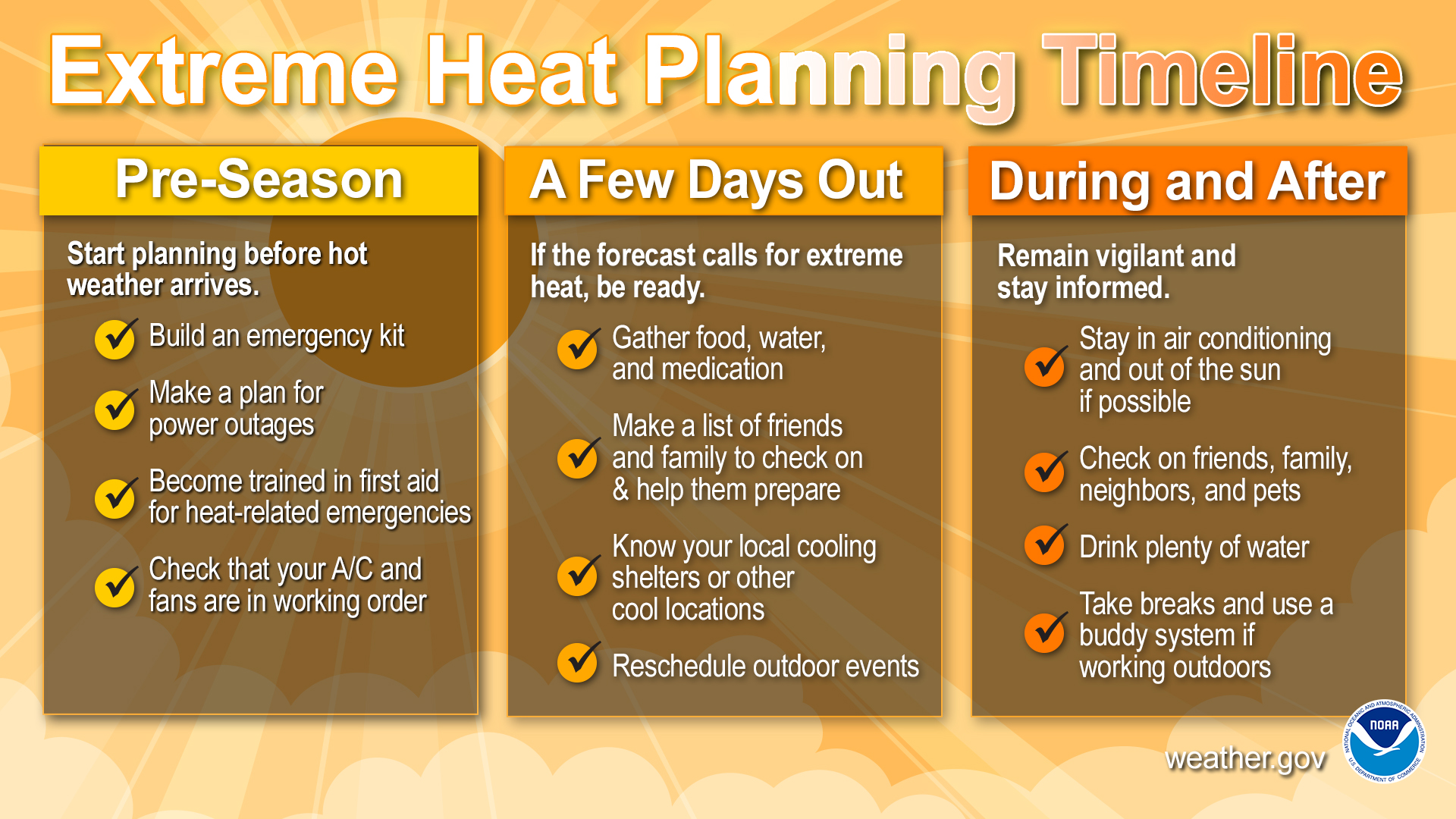
Extreme Heat Planning Timeline. Pre-Season - Start Planning before hot weather arrives: build an emergency kit, make a plan for power outages, become trained in first aid for heat-related emergencies and check that your air conditioner and fans are in working order. A few days out - If the forecast calls for extreme heat, be ready: gather food, water & medication; make a list of friends and family to check on and help prepare; know your local cooling stations or other cool locations; reschedule outdoor events. During and After - Remain vigilant and stay informed: stay in A/C and out of the sun if possible, check on friends, family, neighbors and pets, drink plenty of water, take breaks and use a buddy system if working outdoors.

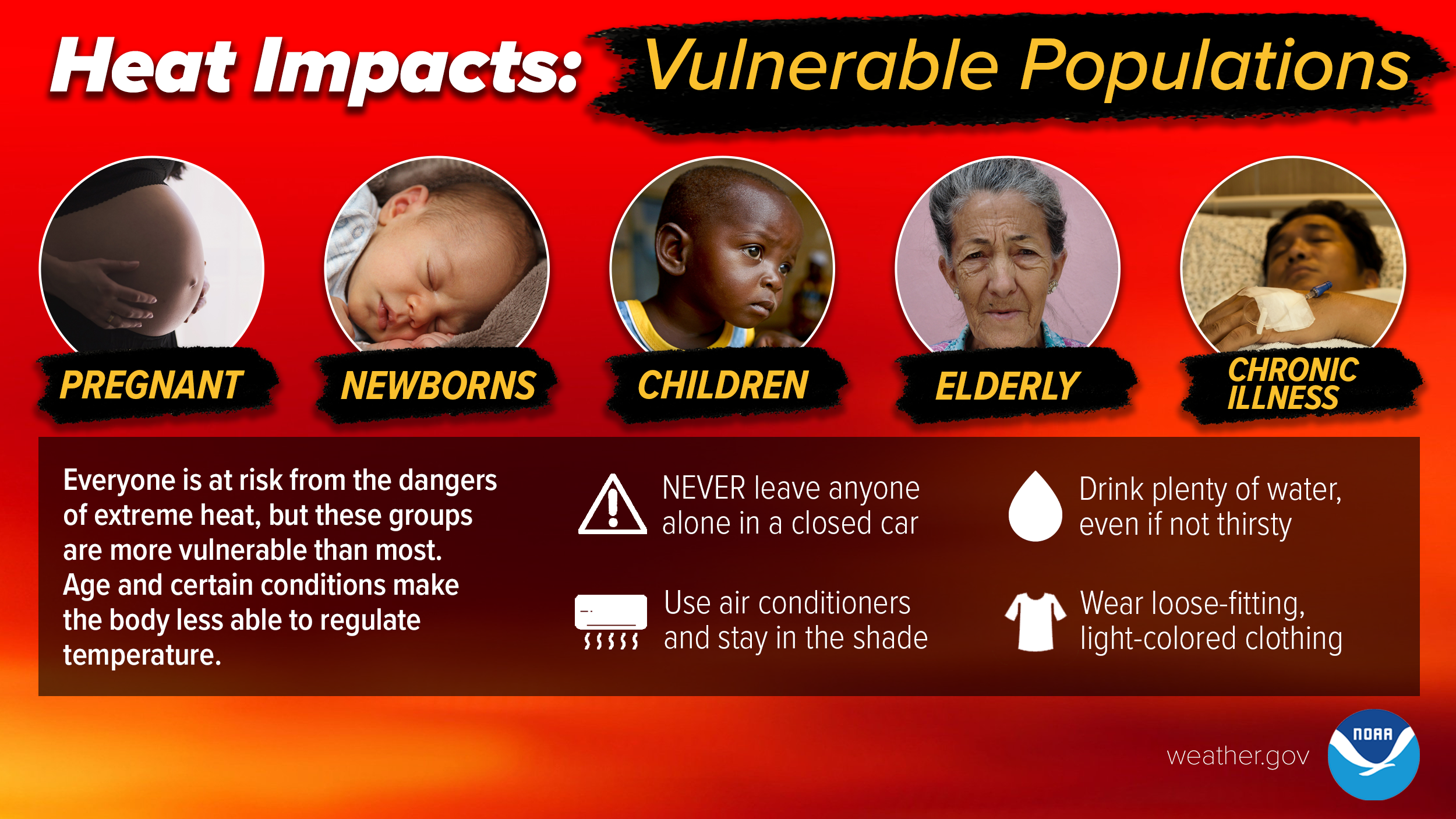
Heat Impacts on Vulnerable Populations. Everyone is at risk from the dangers of extreme heat, but these groups are more vulnerable than most: pregnant, newborns, children, elderly, chronic illness. Age and certain conditions make the body less able to regulate temperature. Never leave anyone alone in a closed car. Use air conditioners and stay in the shade. Drink plenty of water, even if not thirsty. Wear loose-fitting, light-colored clothing.


Thursday, May 21: Outdoor Recreation and Heat Safety

Keep your cool when temperatures climb!  Hydrate, wear light clothing, and don't skip the sunscreen.  If you start feeling dizzy, don't "tough it out" - seek medical help immediately.  For more heat safety tips, visit: weather.gov/safety/heat

Beat the Heat during outdoor events. Drink plenty of water and encourage those with you to do the same. Wear a hat and lightweight, loose-fitting, and light-colored clothing. Apply sunscreen. Use an electric or handheld fan, cooling towels, or other cooling technology. Take breaks under shade, in cooling tents, or misting stations. At the first signs of dizziness or weakness, look for medical assistance.

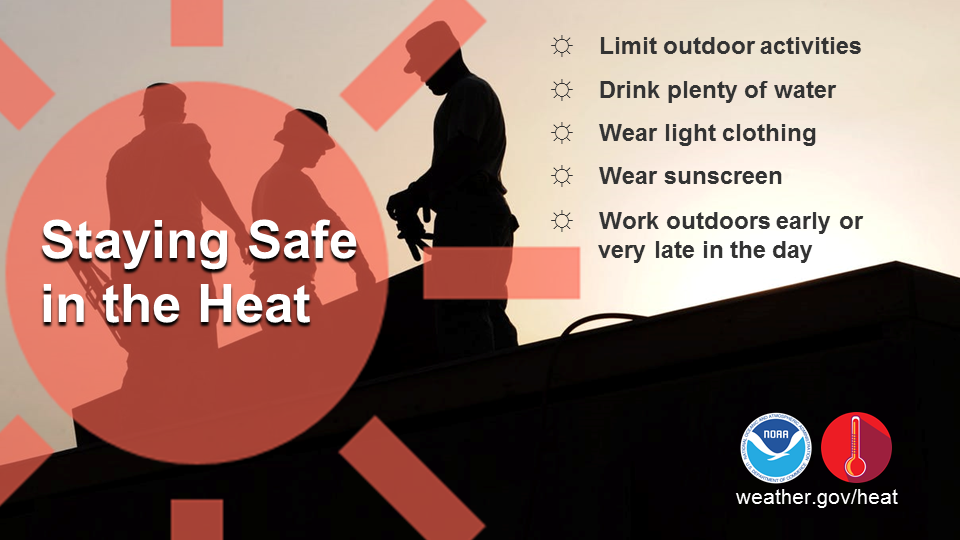
Staying Safe in the Heat: Limit outdoor activities. Drink plenty of water. Wear light clothing. Wear sunscreen. Work outdoors early or very late in the day.


Friday, May 22: Don't Fry Day!

Friends don't let friends get a sunburn.  #DontFryDay! Here's your summer safe checklist:

  • Sunscreen

  • Sunglasses

  • Hat

  • Protective clothing

  • Shade

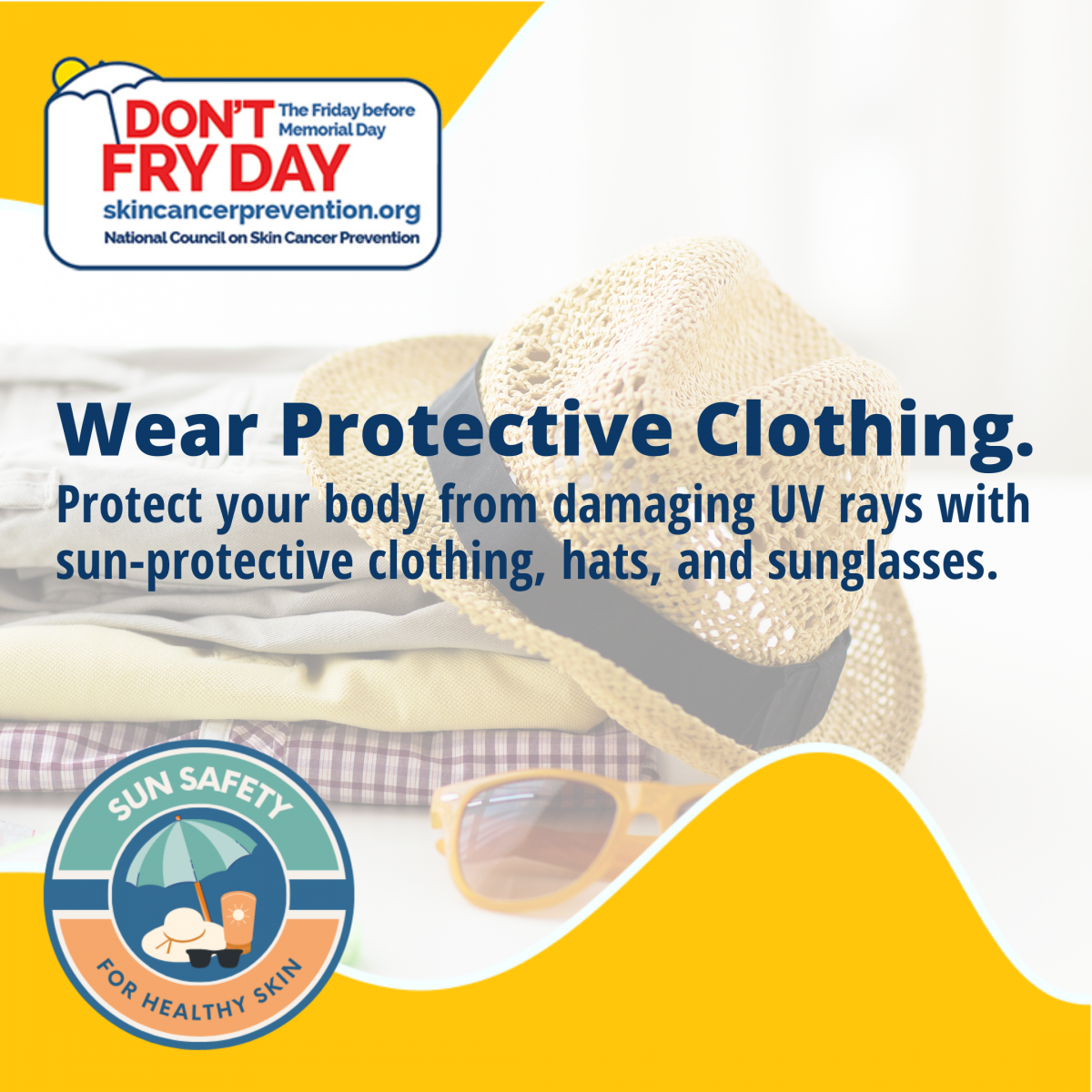
Wear protective clothing. Protect your body from damaging UV rays with sun-protective clothing, hats, and sunglasses.

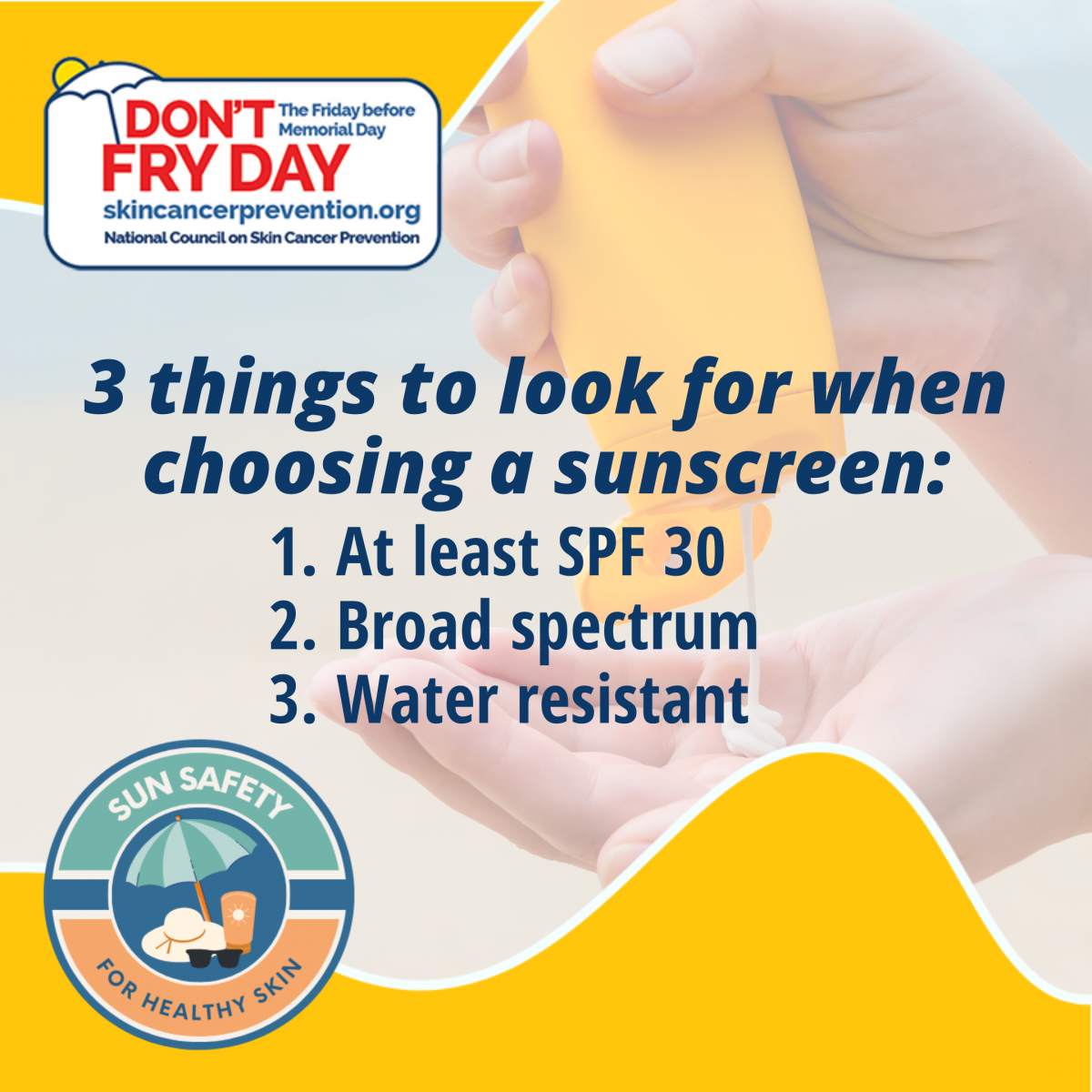
Don’t Fry Day. Three things to look for when choosing a sunscreen: (1) at least SPF 30, (2) broad spectrum, (3) water resistant.