
A Nor'easter will create hazardous marine and coastal conditions along the Mid-Atlantic coast through mid-week, with significant coastal flooding and beach erosion possible. Meanwhile, another strong storm system is forecast to bring high winds and heavy precipitation to portions of southern Alaska. Elsewhere, relatively benign weather is expected through the first half of the work week. Read More >
Lake Charles, LA
Weather Forecast Office
|
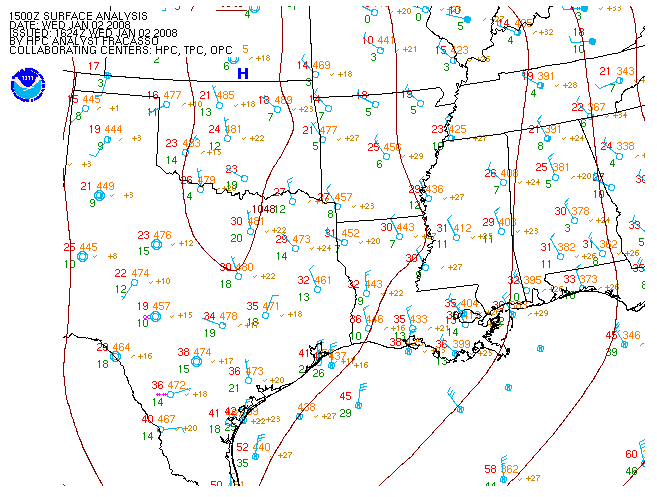
A very strong 1056mb surface high pressure system moved south across Western Canada into the Northern Rockies on New Year's Eve into New Year's Day. Only weakening slightly to 1049mb, the high dominated most of the Midwest into Texas on the 2nd. At 9:53 am on January 2nd, Lake Charles, LA broke the January sea level pressure with 1045.3 millibars, or 30.87 inches of mercury (see map below). This pressure ranks as the third highest ever measured in Lake Charles, LA (see table below). While morning temperatures were cold, only the lower to mid 20s (except 18 degrees at Alexandria Esler Field, LA) were noted for the mornings of the 2nd and 3rd. During the other notable record high pressure events listed in the table below, morning lows reached the lower to mid teens. |
||||||||||||||||||||
 |
||||||||||||||||||||
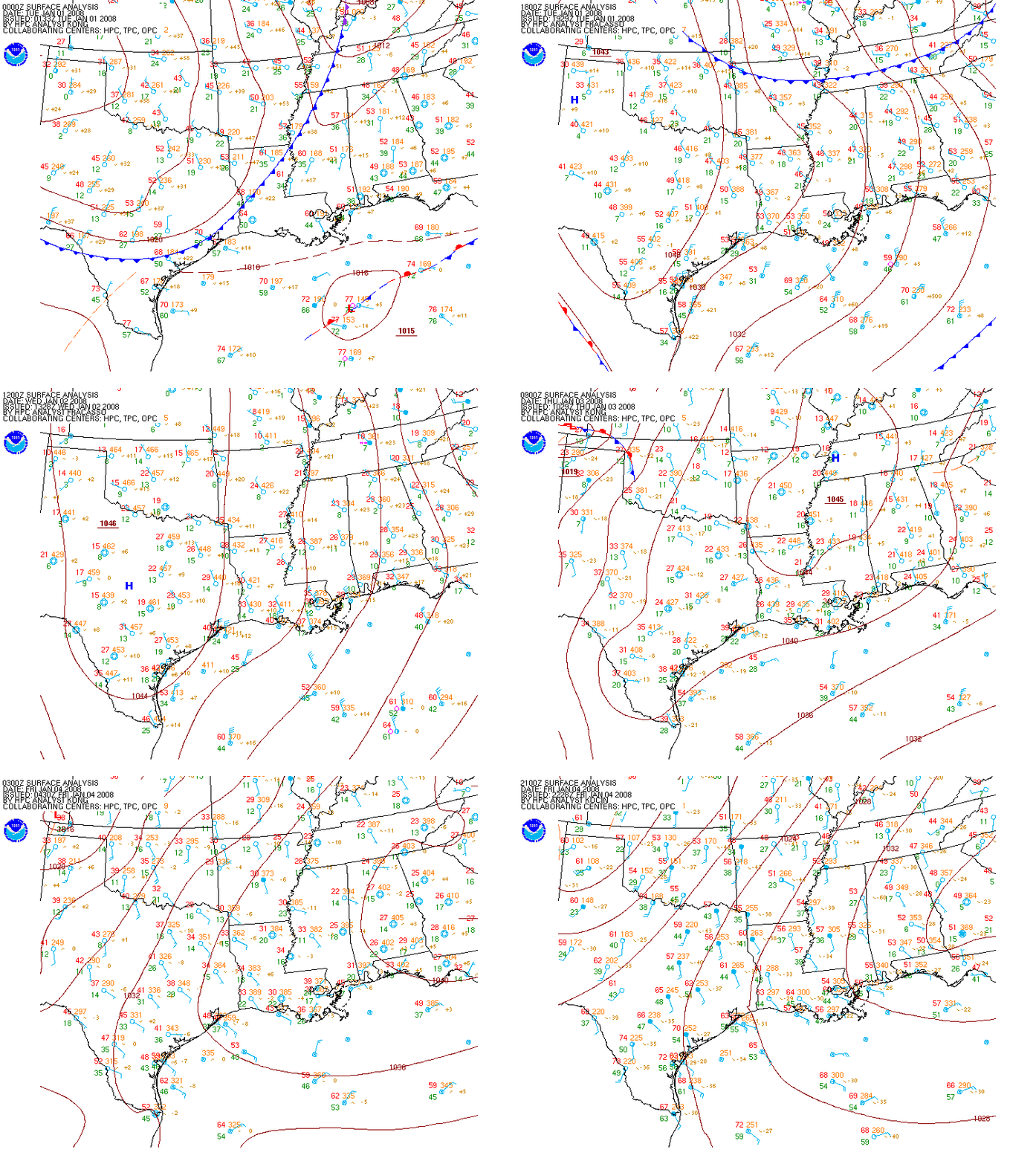
| Surface analysis of record high pressure January 2, 2008 at 15z (9 AM CST). Click here for an animation of this chart from January 1-4, 2008. |
||||||||||||||||||||
|
||||||||||||||||||||
|
|
||||||||||||||||||||
|
Also noteworthy was the cold air stratocumulus clouds that formed over the Gulf and Eastern Atlantic Ocean (see image below). Cold air stratocumulus clouds are formed when very cold air moves over much warmer water. In this case, most of the Southern United States had much above normal temperatures for December. Without many cold air intrusions over the Gulf and Eastern Atlantic, sea surface temperatures were around 1-2 degrees above normal for this region.
|
||||||||||||||||||||
.jpg) |
||||||||||||||||||||
| 4km visible image | 1km visible image | Satellite animation | ||||||||||||||||||
Forecasts
Graphical Forecasts
Wet Bulb Globe Temps
Aviation Weather
Activity Planner
Mardi Gras Decision Support
Marine Forecasts
Local Products
Model Data
Forecaster's Discussion
Fire Weather
Other Links
National Hurricane Ctr
Storm Prediction Ctr
Weather Prediction Ctr
Other Links
Office History
LCH StoryMap
Hazards
Severe Weather
Tropical Weather
National Outlooks
Local Storm Reports
Tropical Cyclone Reports
Current
Satellite Data
Observations
Tide Data
Hydrology
Calcasieu Par. Network
Jefferson Co. DD6 Network
River/Lake Forecasts
Radar
Shreveport (SHV)
New Orleans (LIX)
Fort Polk (POE)
Houston/Galveston (HGX)
Lake Charles (LCH)
Probabilistic Pages
Probabilistic DSS
Probabilistic Snowfall
Probabilistic Rainfall

US Dept of Commerce
National Oceanic and Atmospheric Administration
National Weather Service
Lake Charles, LA
500 Airport Boulevard
Lake Charles, LA 70607
(337) 477-5285 M-F 8a to 4p only
Comments? Questions? Please Contact Us.


 Follow us on X
 Follow us on Facebook
 Follow us on YouTube
 LCH RSS Feed

.jpg)
.jpg)