Severe weather brings with it a variety of hazards including tornadoes, damaging wind, hail, and flash flooding. Do you know what to do in the event of severe weather? By knowing a few basic severe weather safety rules, you can reduce your risk of death or injury from hazardous weather conditions. Below are some safety precautions to take when severe weather strikes.
Tornadoes
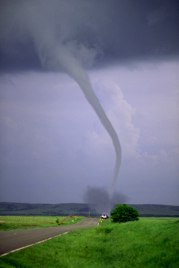
Tornadoes can develop rapidly so be prepared to act quickly! The preparedness guide for thunderstorms, tornadoes and lightning suggests the following safety rules for tornadoes:
Move to an underground shelter, basement or safe room.
If the above is not available, more to a small, windowless interior room or hallway on the lowest level.
Abandon mobile homes and go to the nearest sturdy building or shelter immediately.
If you are caught outdoors and a basement or sturdy building is unavailable:
Immediately get into a vehicle, buckle your seat belt and try to drive to the closest sturdy shelter.
If flying debris occurs while you are driving, pull over and park. Now you have the following options as a last resort:
Stay in your vehicle with the seat belt on. Put your head down below the windows, covering it with your hands and a blanket if possible.
If you can safely get noticeably lower than the level of the roadway, exit your car, and lie in that area, covering your head with your hands.
Severe Thunderstorms (Damaging Wind and Hail)
For damaging wind, follow procedures similar to tornado safety rules. Get into a sturdy building. Go to a basement or an interior room (lowest level). If caught outside, get to a low-lying area.
Large hail can shatter car windows. If you cannot get inside safely, cover yourself with a blanket to minimize injuries from broken glass.
Although lightning does not meet severe thunderstorm criteria, it is associated with thunderstorms. See the lightning section below for safety information.
Lightning
Get into a building - remember, When Thunder Roars, Go Indoors!
If you cannot get into a sturdy building, get into a hard-topped vehicle and close all the windows.
Do not stand near a tall object such as a tree, tower, or utility pole. Lightning tends to strike the tallest objects in the area.
Do not use a corded phone.
Keep away from electrical equipment, wiring and water pipes. Don't take a bath, shower or use other plumbing during a thunderstorm.
Avoid driving, walking or swimming in flood waters.
Stay away from high water, storm drains, ditches, ravines or culverts. Even moving water only six inches deep can knock you off your feet. Move to higher ground.
Do not let children play near storm drains.
If you come upon a flooded roadway never drive through it. Remember, Turn Around, Don't Drown!





 Follow us on X
 Follow us on Facebook
 Follow us on YouTube
 FFC RSS Feed