National Weather Service United States Department of Commerce

Severe Thunderstorms in the Central Plains and Lower Missouri Valley; Heat Continues in the Southeast and Southwest

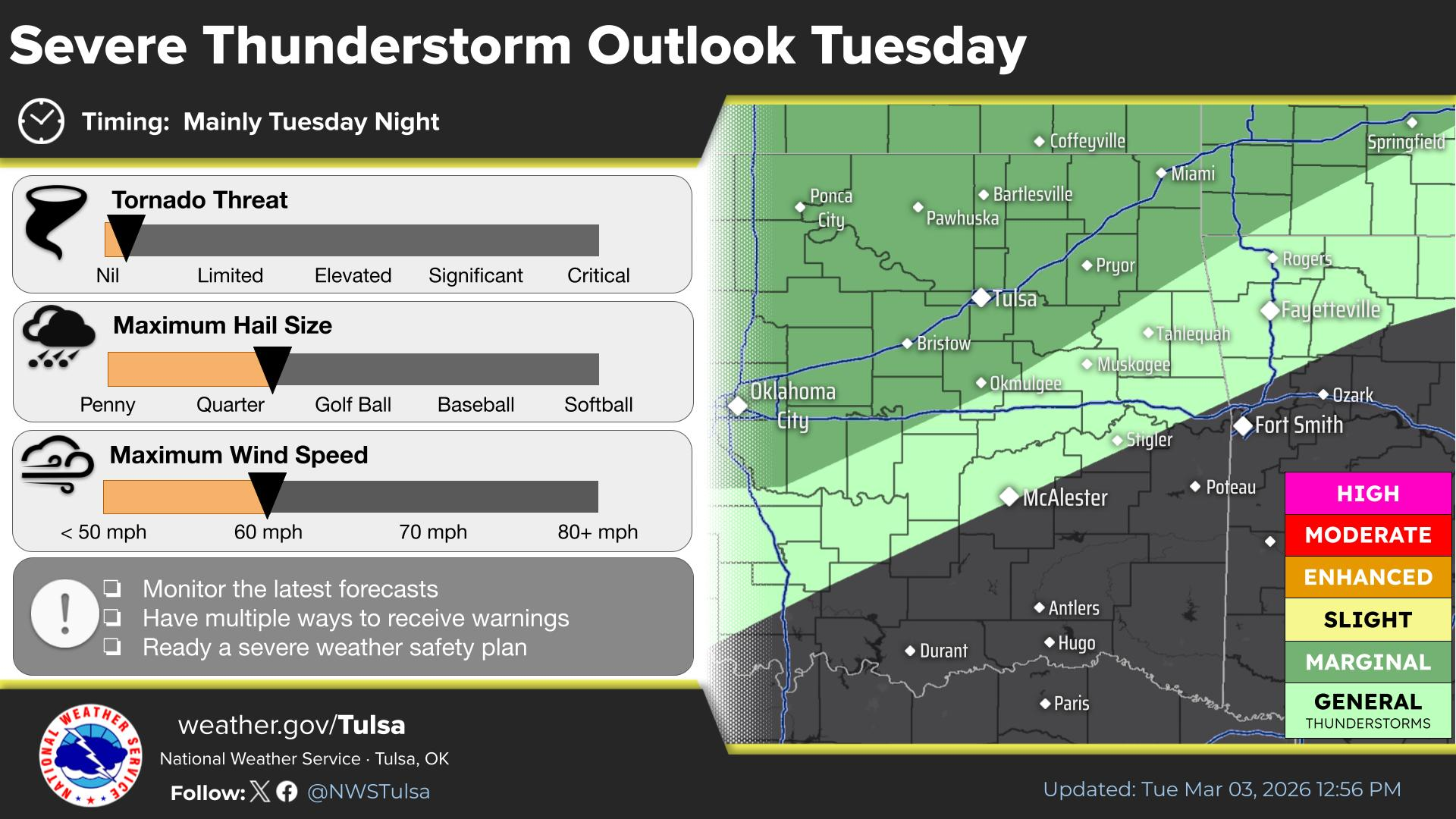
Severe thunderstorms capable of large hail and damaging wind gusts are forecast to impact the central Plains into the Lower Missouri Valley through this afternoon. Dangerous heat persists across the southern Plains, Southeast U.S. and Puerto Rico this week, and will return to the Southwest today. Read More >

Click a location below for detailed forecast.

Last Map Update: Tue, Aug 18, 2026 at 12:12:37 pm CDT

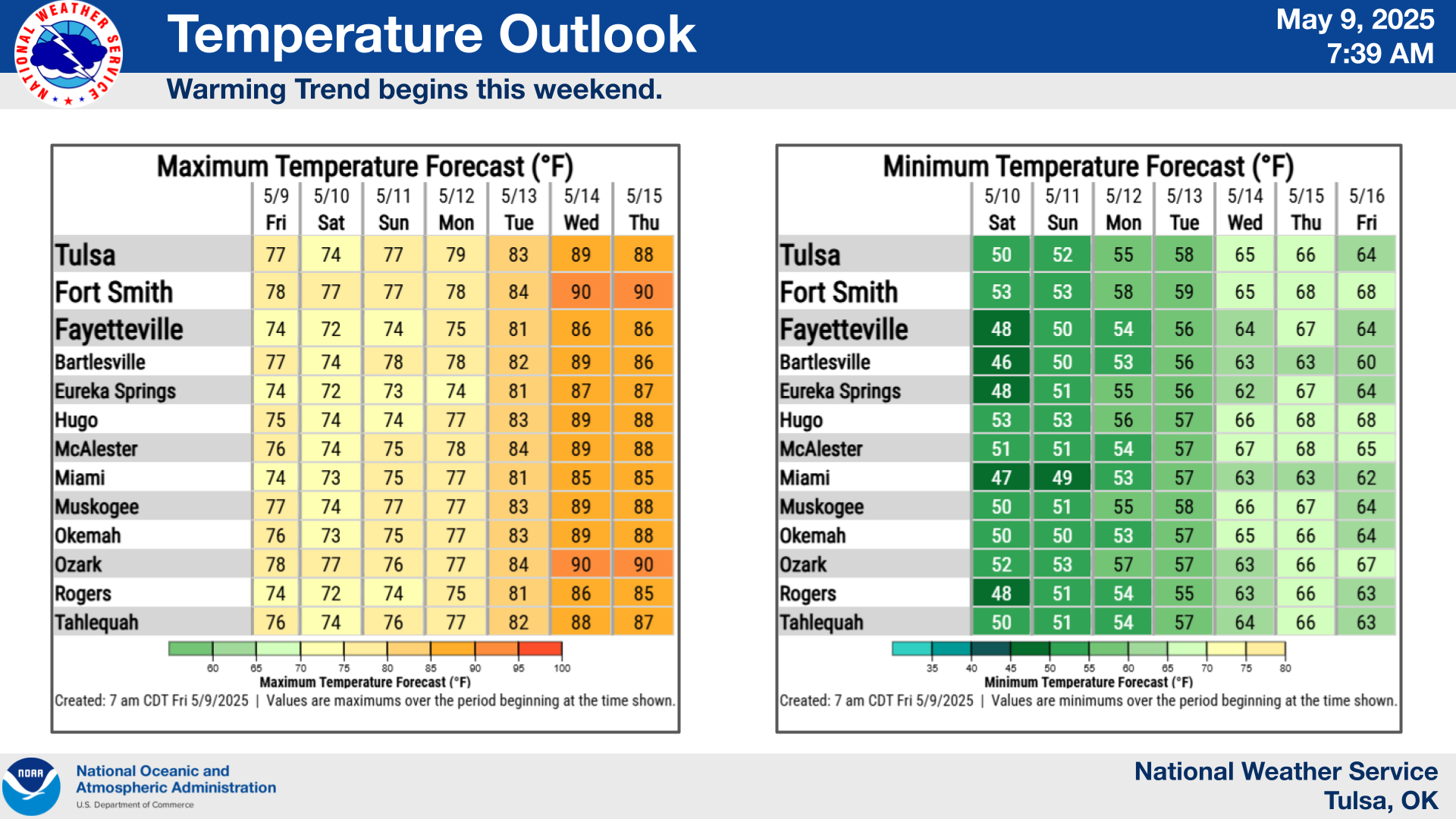
Dangerous heat will spread back into all of eastern Oklahoma and western Arkansas for Tuesday and Wednesday, with heat index values in excess of 110 expected across most of eastern Oklahoma and west central Arkansas both days. Little nighttime relief is expected either. Heat stress will remain high during this period.
High heat stress conditions will persist through at least the middle of the week and will continue to impact outdoor activities. Some minor heat relief is forecast on Thursday and Friday.
Fort Smith is still in the midst of a multi-day stretch featuring triple digit high temperatures with more forecast, while the streak has ended at Tulsa and Fayetteville. How does the current stretch of 100's stack up all-time? Fayetteville officially cracked the Top 5 and Fort Smith is within striking distance.
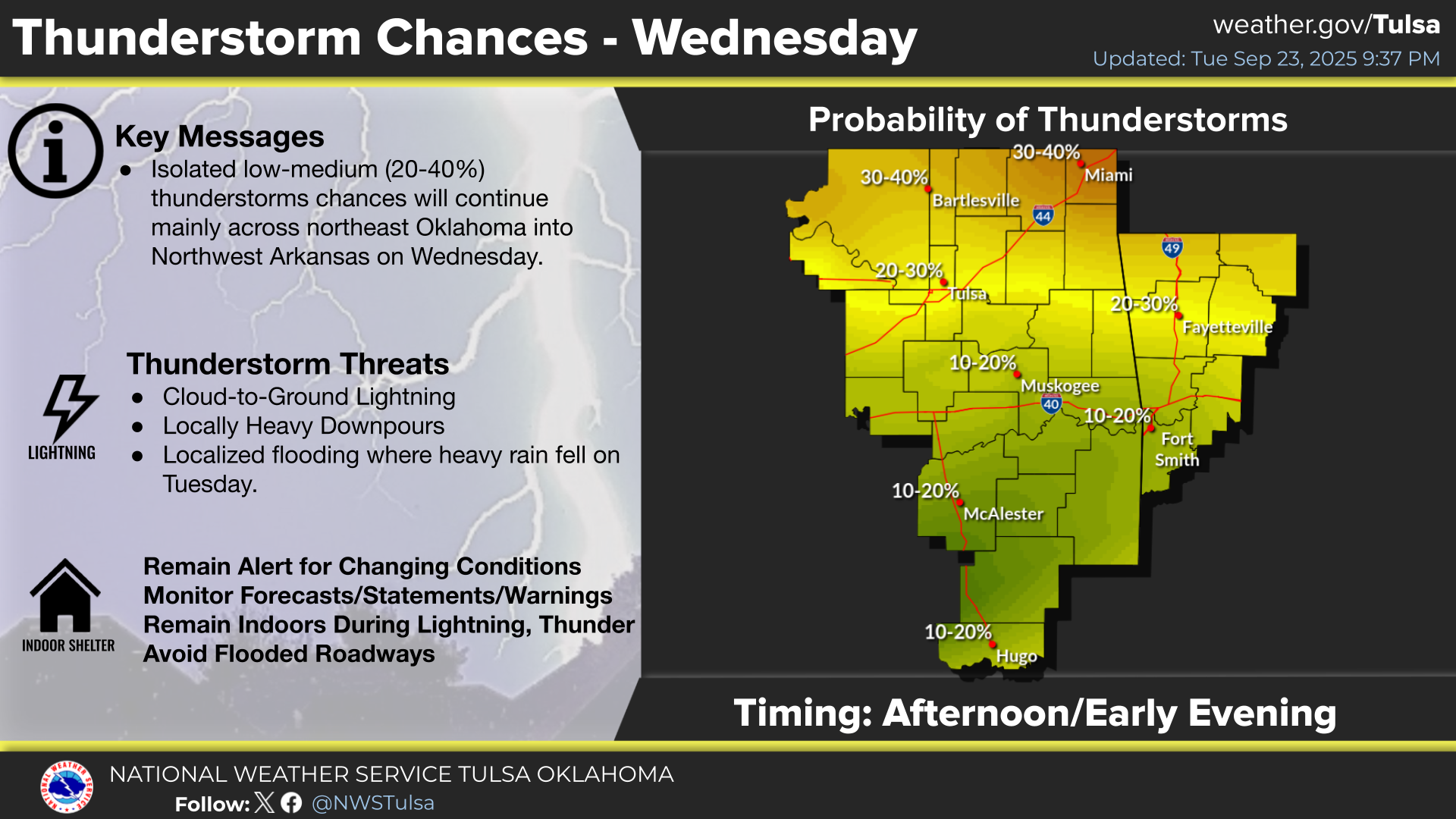
Isolated to scattered thunderstorms are expected to develop by late afternoon or early evening Wednesday across far northeast Oklahoma and far northwest Arkansas. Locally strong to severe downburst winds and large hail up to half-dollar size will be the main threats with storms that develop.
Hot temperatures continue through midweek, with isolated to scattered thunderstorm potential late Wednesday afternoon into Thursday morning. Slightly cooler for some on Thursday and into Friday, but back to the hot weather by this upcoming weekend.
Latest Text Product Selector (Selected product opens in a new window)

Decision Support Winter Hazards Observations Climate Hydrology
 
 
Social Media Satellite Fire Weather Weather Radio Spotter Training Text Products
 
 
Models