
A Nor'easter well off the East Coast will slowly track north this week and may gain some subtropical characteristics. Strong onshore winds will bring flooding, dangerous marine conditions, and beach erosion along the Mid-Atlantic coast. A Pacific storm will bring gusty winds, showers and thunderstorms, and mountain snow to portions of California and the Southwest U.S. Wednesday and Thursday. Read More >
|
COMPUTER ROOM
|
BEHIND THE SCENES
|
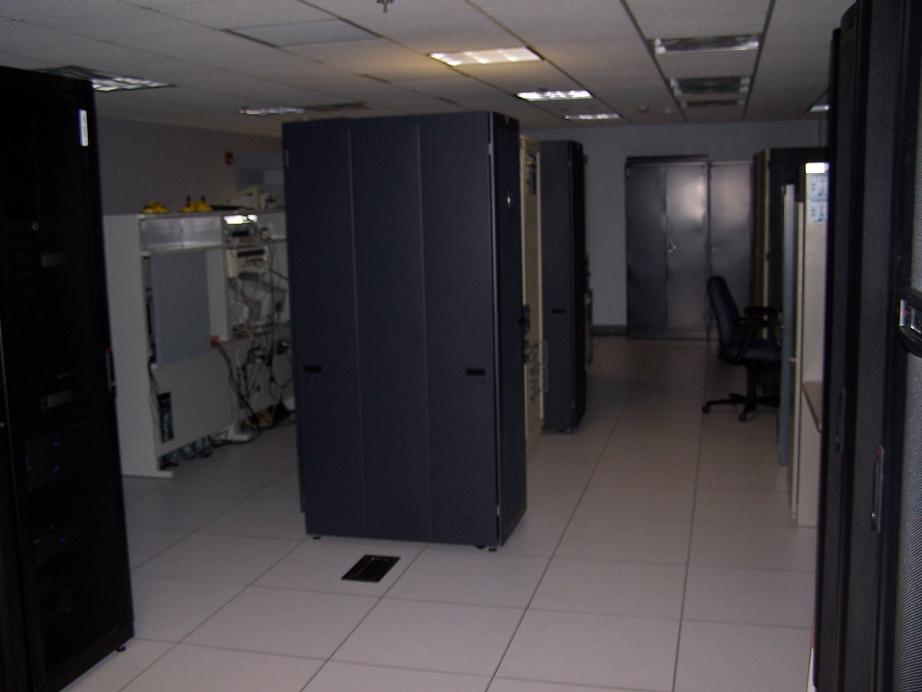
This may look like nothing more than a room full of mainframe computers, and you'd be right! Hidden in a room located behind the operations floor are the "brains" behind the computers. There are two such rows. The mainframe computers powering AWIPS can be seen here. The other row contains the computing power for the WSR-88D radar.
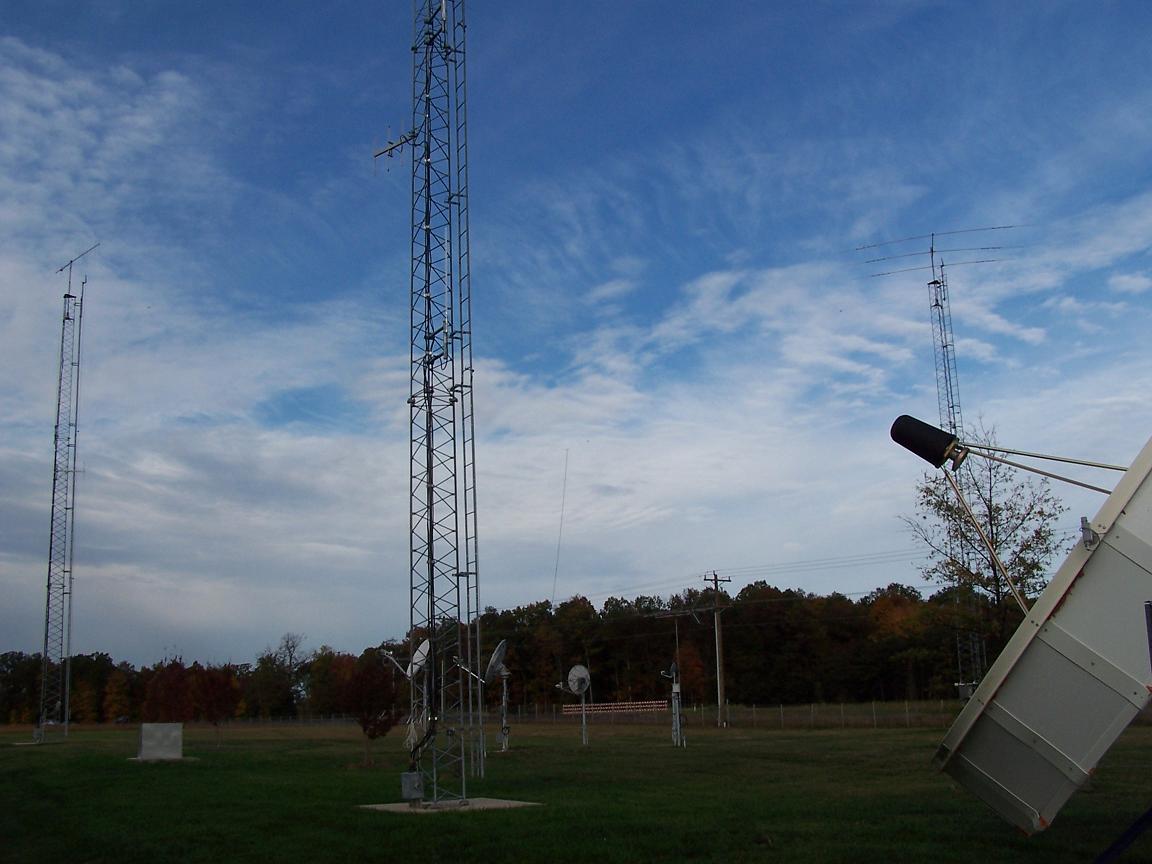
You may wonder how we receive data or transmit the items we produce. The secret lies in the satellite dish seen below, on the right. This dish lives in our "backyard" and is our data connection to the world. All data entering or leaving the Weather Service travels by satellite through the Control Facility in Silver Spring, MD. The path the item takes varies slightly for outgoing and incoming items. For products we issue, after we compose and send it, it travels to the local River Forecast Center (RFC; for us, State College, PA or its backup site in Taunton, MA), through the Network Control Facility (NCF), and then through Telecommunications Gateway in Suitland, MD. Most incoming data comes straight from the NCF to all local Forecast Offices. Radar data and some local observations are exceptions; they too get funneled through the servicing RFC. In all cases, the data is bounced off satellites high above Earth each step of the way. Yet, data makes it between us and its destination in a couple of minutes. Our close proximity to the national transmittal source doesn't significantly reduce transmission time-- it might take a few seconds less for us. It truly is quite remarkable to think of how far and how fast the data travels. |
|
 |
| <<< Back to Hydrology |



 Radar
Radar Current Weather
 Rivers & Lakes
 Satellite
 Forecast Maps
 Hour by Hour Forecast
 Tropical Weather
 Graphical Hazards
 Marine Forecasts
 Forecaster's Discussion
 Text Bulletins
 Fire Weather
 Weather Hazard Briefing
 Climate Plots
 Coastal Flood
 Skywarn
 Submit Storm Report
 FAQ
FAQ Follow us on X
 Follow us on Facebook
 Follow us on YouTube
 LWX RSS Feed