
Heavy rain and widely scattered severe storms capable of large hail, damaging winds, and possibly a tornado are expected over portions of the central and southern Plains into the Lower Missouri Valley. Unseasonable warmth will continue for a few more days across the Midwest and Southeast where several daily record highs could fall. Read More >
These pages were created from tips provided by meteorologists at the National Weather Service in Norman, OK and Kansas City, MO
| Tips to empower you if you have specific concerns about... | ||||
| Storm Anxiety Main Page | Sheltering from Storms | Getting/Using Weather Info | Getting Storm Warnings | Family Communication |
Sirens are intended to be heard ONLY by people who are outside. They are NOT designed to be heard inside your home or vehicle. They are not designed to be able to wake you up. It's important to not rely so much on sirens. They should not be your primary or only warning source. You need other ways to get warning information.
Don't wait for a siren to take shelter.
In Missouri and Kansas, about 75% of all tornadoes are preceded by a tornado warning. And almost all of the tornadoes that have happened without a warning have been the weaker, shorter-lived tornadoes that don't cause a lot of damage. National Weather Service statistics indicate that 97% of the most dangerous types of tornadoes (EF3, EF4 and EF5) are preceded by a tornado warning, giving you an average of 16 minutes advance notice.
You should be alert anytime there are severe thunderstorms in the area, especially if you are in a tornado watch. Most of these will never produce a tornado, but in a few cases a quick weaker tornado can form quickly in some severe thunderstorms.
If there are storms nearby and you feel like you don't want to risk not being in your shelter, you can take shelter whenever you want to. You don't need to wait for a tornado or a tornado warning to go to your safe place if it makes you feel better.



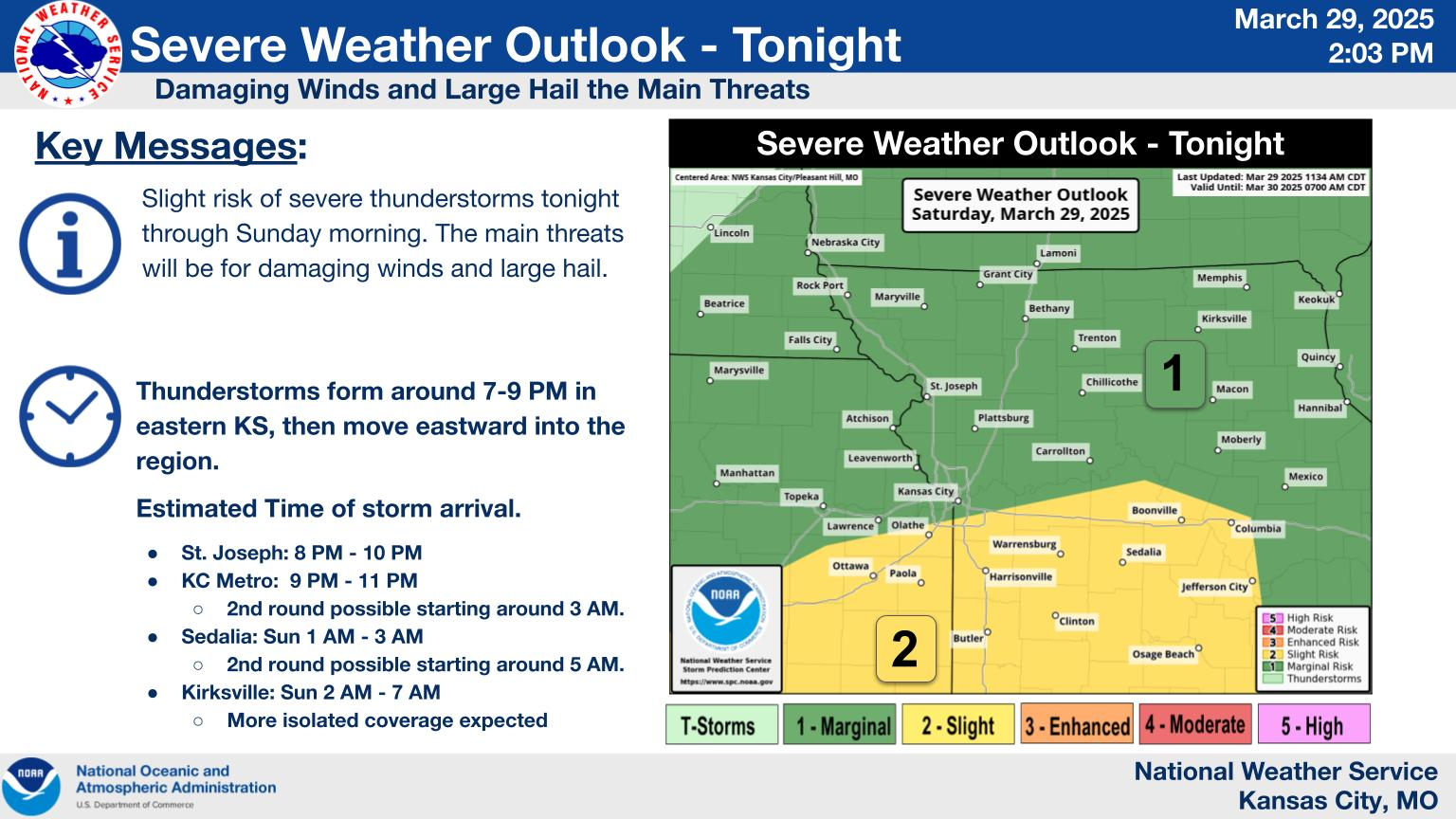 Weather Story
 Weather Map
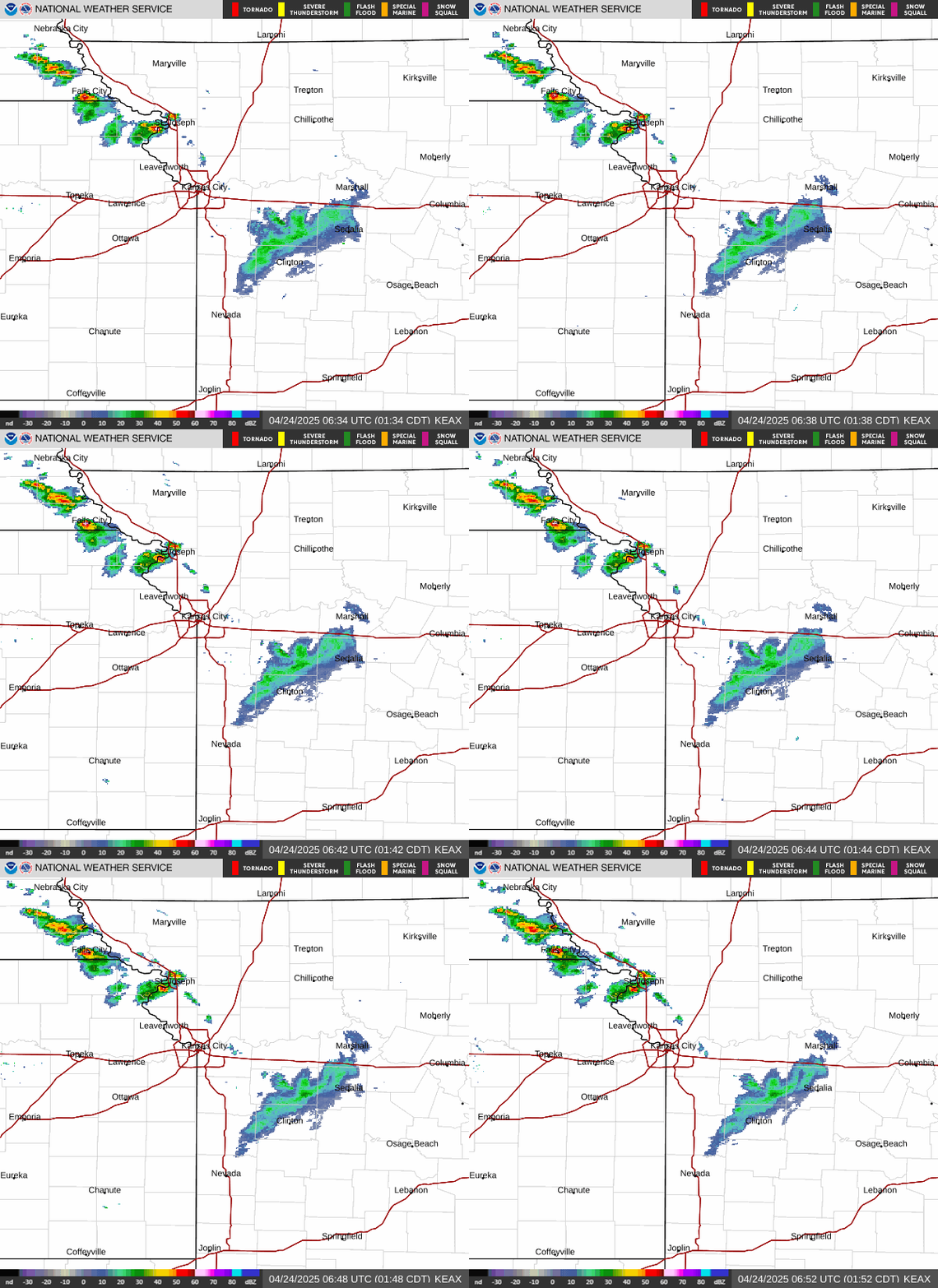 Local Radar
 Follow us on X
 Follow us on Facebook
 Follow us on YouTube
 EAX RSS Feed