
A cold front will sweep eastward today accompanied by strong to severe thunderstorms for the mid-Atlantic and Northeast today. In the wake of this cold front, autumn like temperatures and gusty winds from the Plains, Mississippi Valley, Great Lakes to most of the eastern seaboard. Fire weather conditions for lower Mississippi Valley into portions of California. For Guam, a typhoon is approaching. Read More >
These pages were created from tips provided by meteorologists at the National Weather Service in Norman, OK and Kansas City, MO
| Tips to empower you if you have specific concerns about... | ||||
| Storm Anxiety Main Page | Sheltering from Storms | Getting/Using Weather Info | Getting Storm Warnings | Family Communication |
Television is one of the best ways to get weather information, but it's not the only way. You should have multiple ways to get warnings and weather information.
You can get warnings and other weather information through a variety of ways.
Grab a state highway map (Missouri and Kansas) and use it to help you track storms. Be sure to get one that has county outlines and names, since warnings and other information use counties to describe the locations.. Be sure you know what county you're in, and also those around you, especially to the northwest, west and southwest (the directions storms usually come from.)
Meteorologists also refer to cities and towns, interstates and state highways when describing storm locations and movement, so it's a good idea to know a little bit about the highways and towns near you.
Knowing more about your local geography can help reduce stress during severe weather. If you know a storm is not going to affect you, that's one less storm to worry about.
Remember that maps on your phone probably won't have the county lines or county names, and warnings and watches are described by county.
Think about getting a radar app for your phone. Many of them allow you to plot your exact location on the radar screen so you can always see where you are in relation to the storms.
Making decisions based on a weather forecast can be a little tricky, and for severe weather it's usually best to lean toward the "better safe than sorry" approach.
Whether the weather could be bad enough to cause you to need to change your plans depends on many different of factors - what time of day the storms are expected, will you be near a shelter, will you have a way to hear warnings, will you be driving, etc. It also depends on what kind of bad weather is expected and how that would impact you - tornadoes, hail, wind, lightning, flooding, etc.
Take a free National Weather Service storm spotter training course. These are usually offered in the early spring and provide great information about the storms in our area. In January and February of each year, check our homepage for the spring training schedule.
Get advice from friends or family who have lived here for a while.
Find good reliable sources of local weather information.
Find a reliable local source of weather information you trust. Obviously storms with tornado warnings always deserve special attention and action if you're in the path. You should also be paying attention to severe thunderstorm warnings, since they will be used to tell you about storms capable of producing dangerous winds and damaging hail.
There's a lot of detailed information available in the actual full text version of a National Weather Service warning that you may not see on a TV crawl or an app. Each warning will provide details on whether we're expecting hail or wind, and, if so, how bad will it be. The warning details why the warning was issued, where the storm is, which way it's moving and who's in the path.



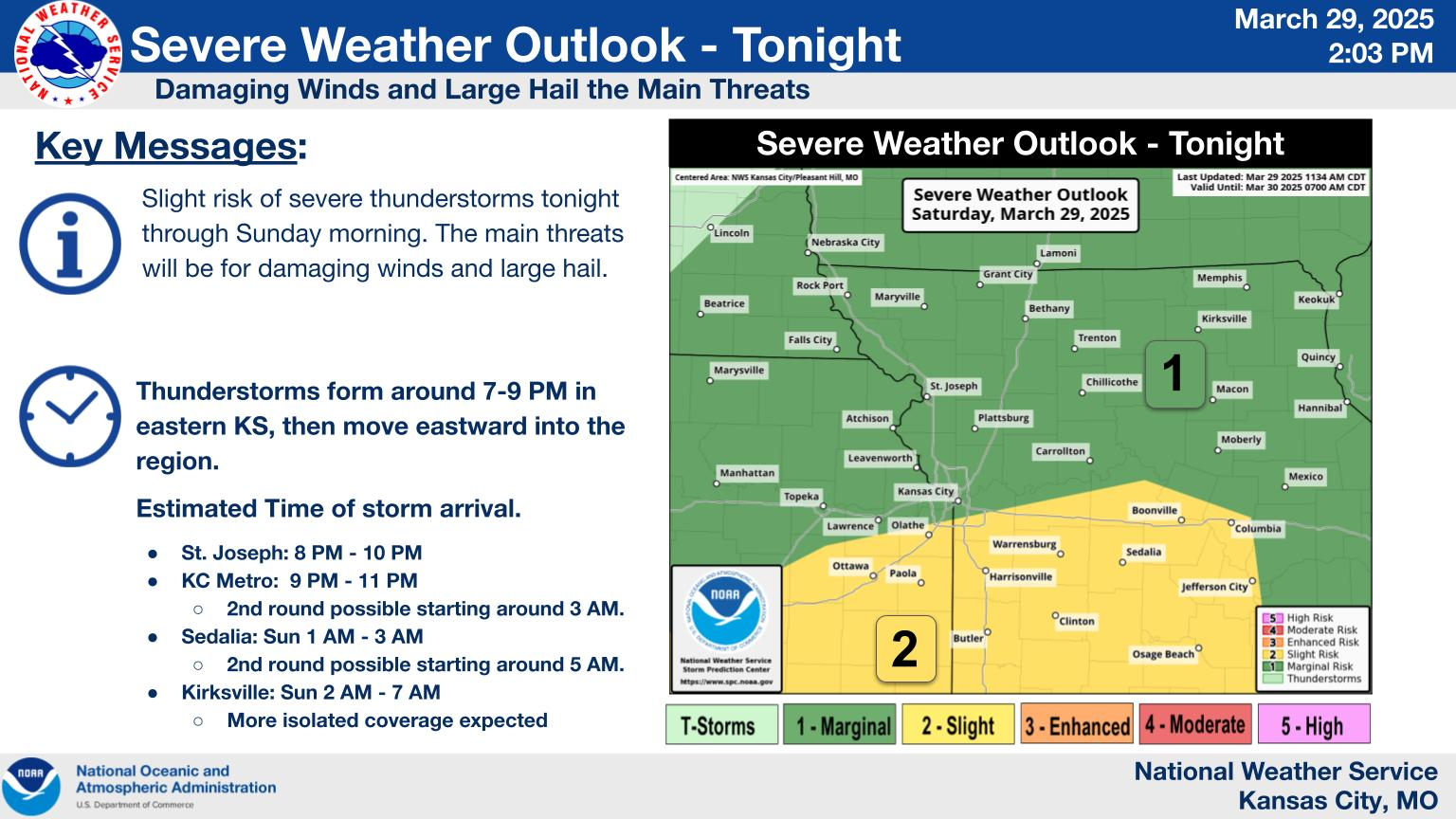 Weather Story
 Weather Map
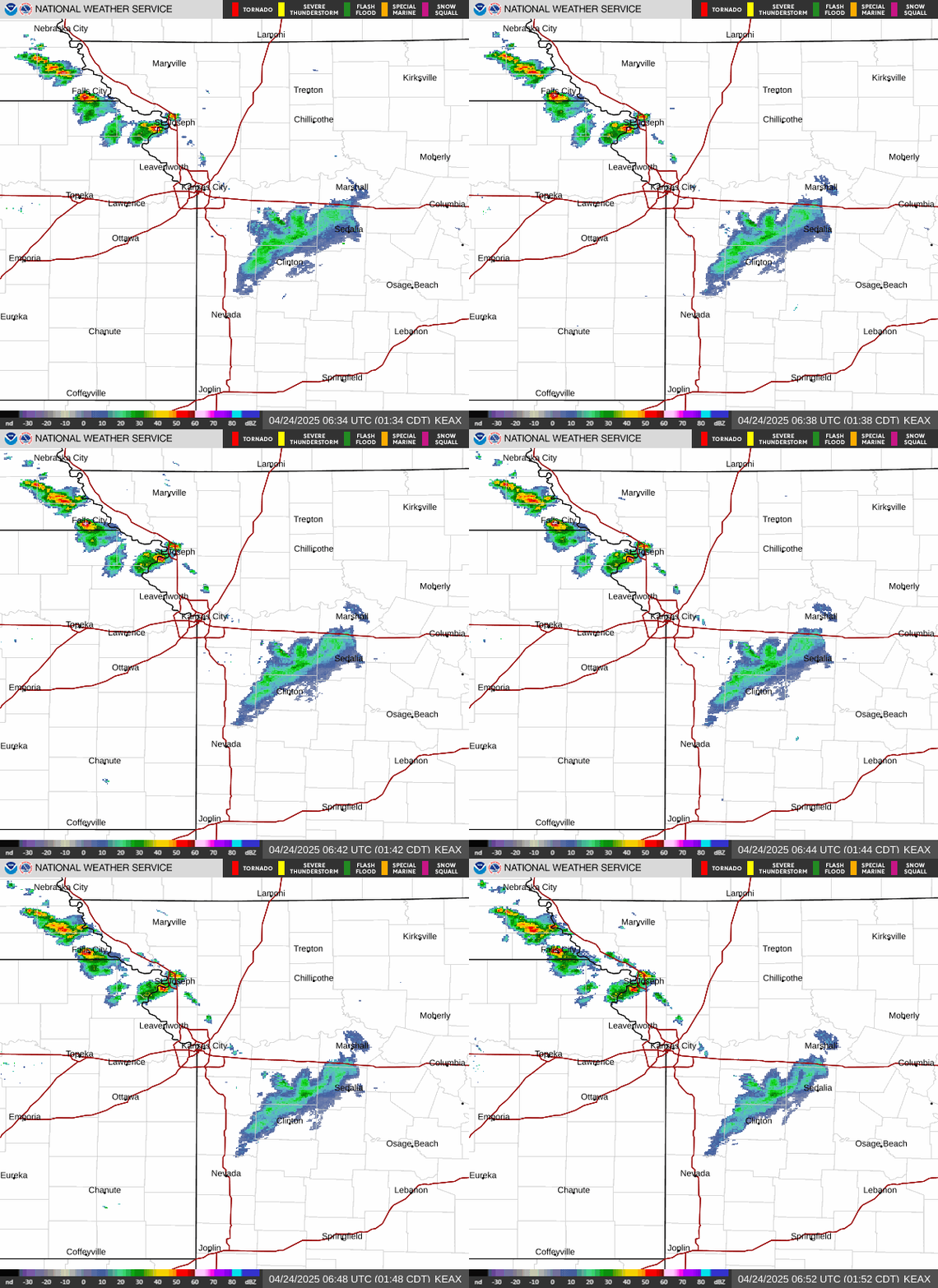 Local Radar
 Follow us on X
 Follow us on Facebook
 Follow us on YouTube
 EAX RSS Feed