Good Monday Morning,
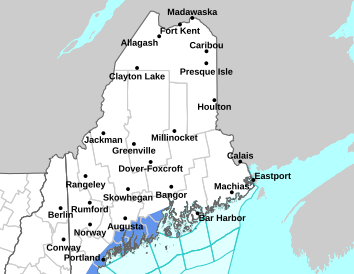
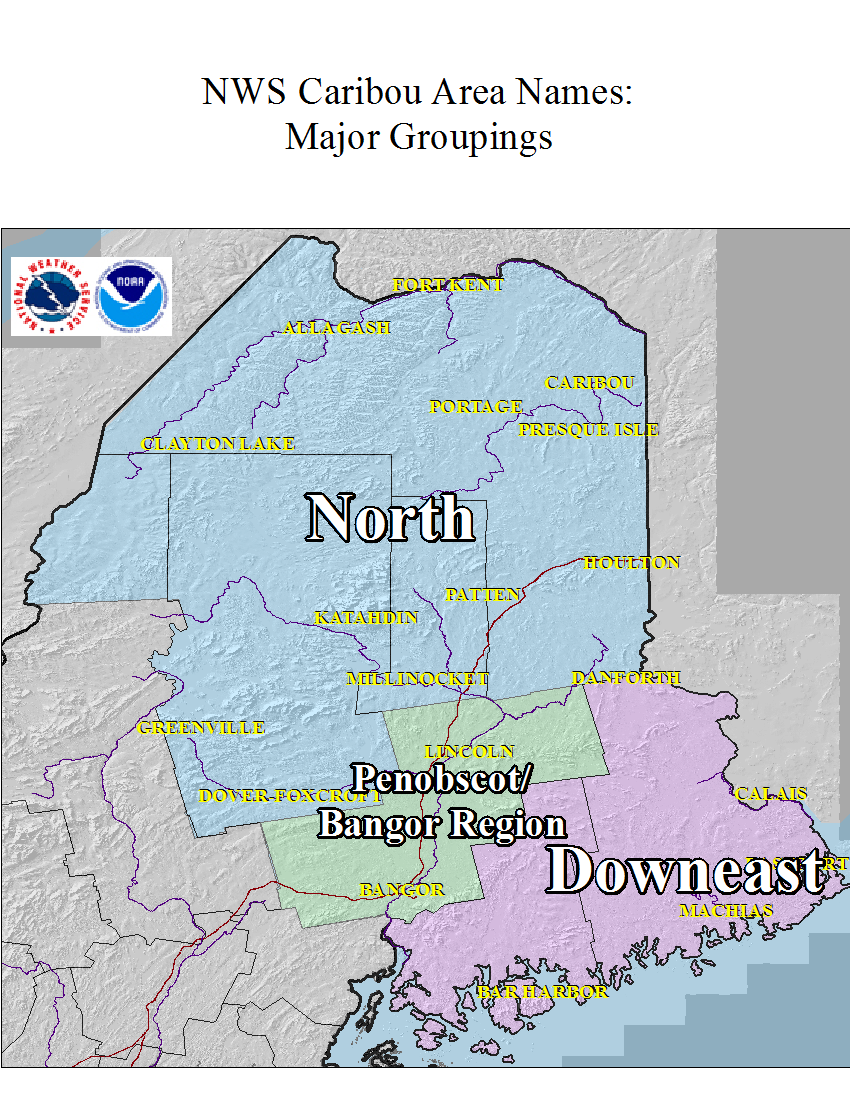
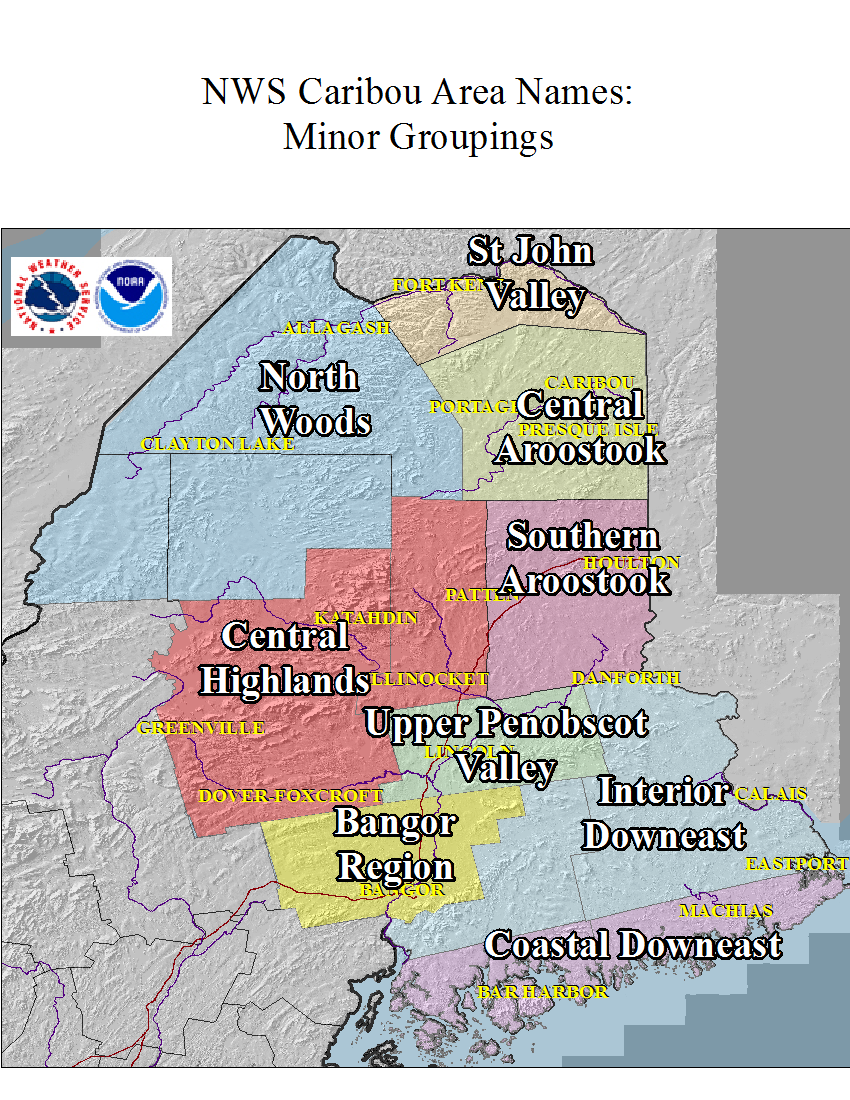
It's a soggy start for central and northern areas this morning. Rain will be steady through the mid-morning hours before becoming more showery in nature. Rainfall amounts will be highest north of Bangor with around 0.50 inches of rain expected through this evening.
Fog will form overnight tonight across the vast majority of the area with showers once again developing Tuesday afternoon. Tuesday will feature warmer temperatures climbing into the 70s.
For the latest forecast details, please visit www.weather.gov/car.
This general weather briefing slide is updated daily in the early AM hours before 7am (slide update time at bottom right of slide). It may not be updated as conditions change.For high-impact events, more detailed information will be provided via traditional decision support services.
This is the home page for emergency managers to do a self briefing. For information on a particular hazard, just click on the appropriate orange link above.




 Radar
Radar Current Weather
 Rivers & Lakes
 Satellite
 Forecast Maps
 Hour by Hour Forecast
 Tropical Weather
 Graphical Hazards
 Marine Forecasts
 Coastal Flood
 Submit a Spot Request
 Weather Hazard Briefing
 Recreational Forecast
 Climate Plots
 NOAA Weather Radio
 Skywarn
 Submit Storm Report
 Text Products
 Follow us on X
 Follow us on Facebook
 Follow us on YouTube
 CAR RSS Feed