What is the Heat Index? Also known as the apparent temperature, the heat index is what the temperature feels like to the human body when relative humidity is combined with the air temperature.
The Role of Humidity: Evaporation is a cooling process. When you sweat, the evaporation of that moisture cools your body. When the relative humidity is high, the rate of evaporation decreases, meaning your body cannot regulate its temperature as efficiently, making it feel warmer. Conversely, in arid conditions with low humidity, perspiration evaporates rapidly, making it feel cooler than the actual air temperature.
Shade vs. Sun: It is important to note that heat index values are calculated for shady locations. If you are exposed to direct sunlight, the heat index value can increase by up to 15°F.
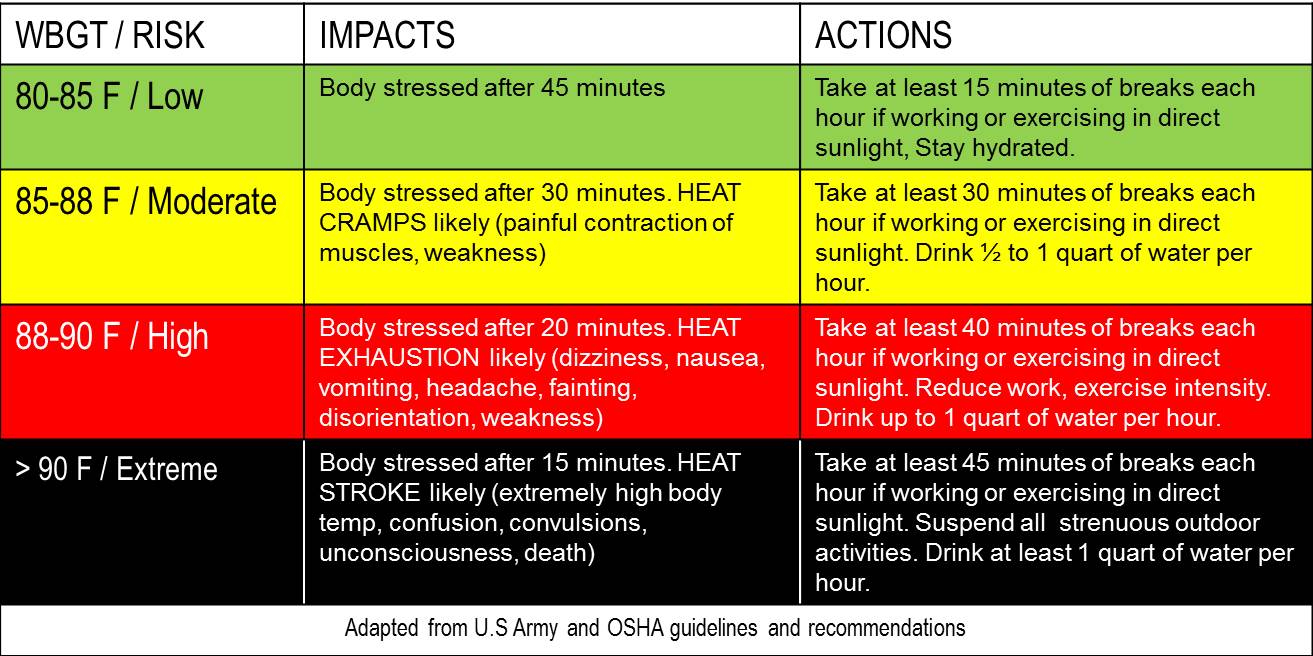
Heat Index Danger Classifications
| Classification |
Heat Index |
Effect on the Body |
| Caution |
80°F - 90°F |
Fatigue possible with prolonged exposure and/or physical activity. |
| Extreme Caution |
90°F - 103°F |
Heat stroke, heat cramps, or heat exhaustion possible with prolonged exposure and/or physical activity. |
| Danger |
103°F - 124°F |
Heat cramps or heat exhaustion likely, and heat stroke possible with prolonged exposure and/or physical activity. |
| Extreme Danger |
125°F or higher |
Heat stroke highly likely. |




 Follow us on X
 Follow us on Facebook
 Follow us on YouTube
 HGX RSS Feed