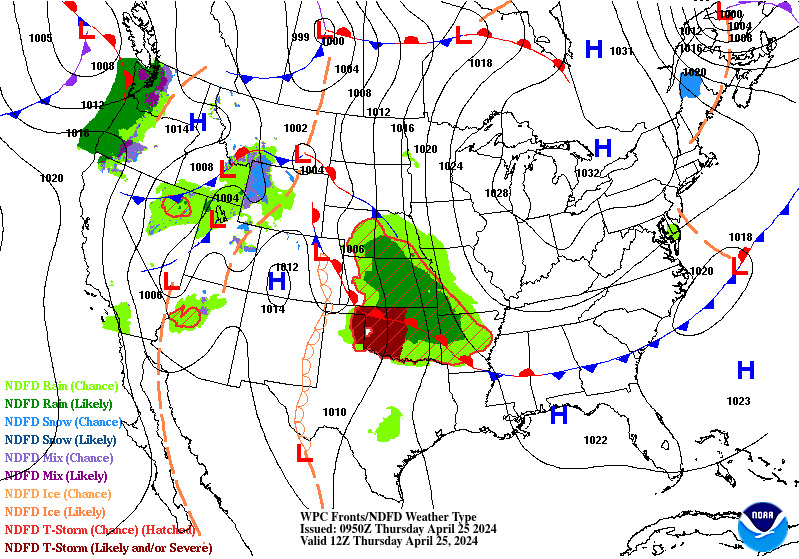
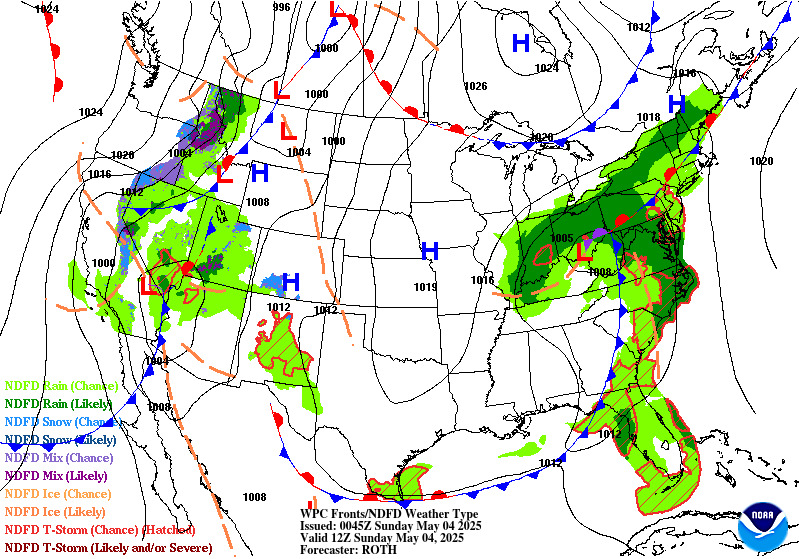
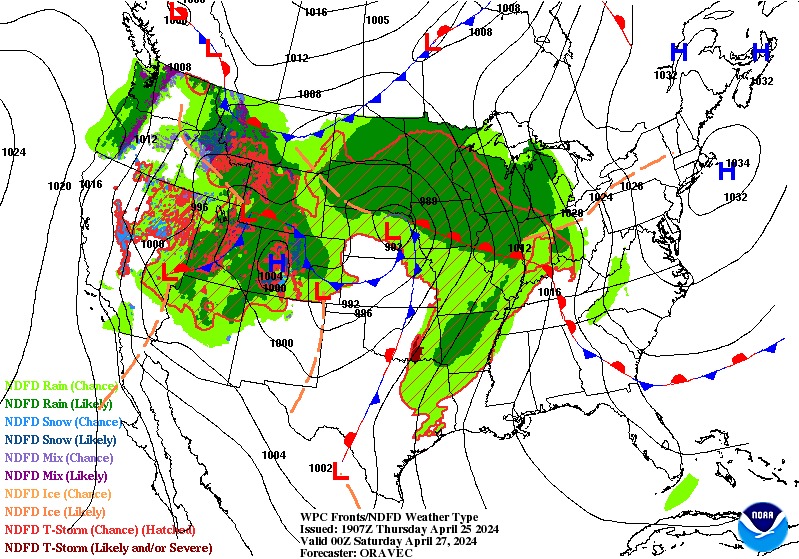
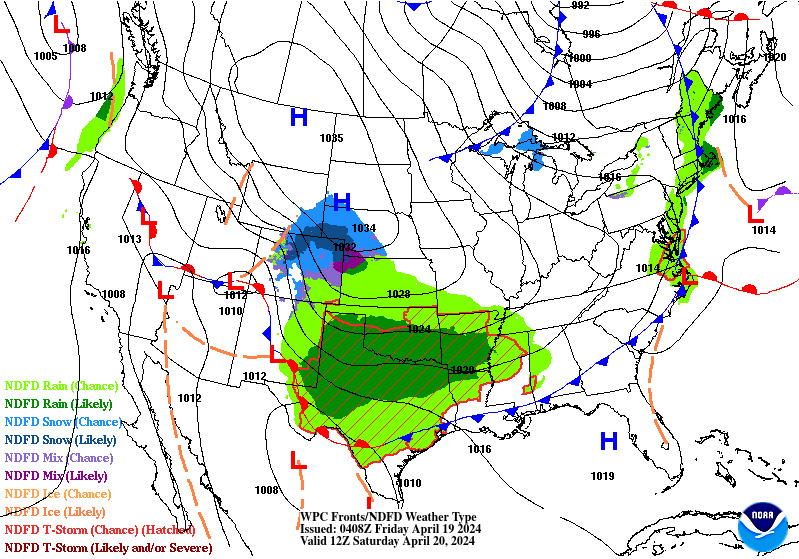
Heavy rain and widely scattered severe storms are expected over portions of the central and southern Plains into the Ohio Valley. Unseasonable warmth will continue for a few more days across the Midwest, Southeast, and Mid-Atlantic where several daily record highs could fall. Read More >
Forecasts and DiscussionsArea Forecast Discussions:[List of abbreviations used in AFD's]
Greenville-Spartanburg Forecast Product Suite:
Regional Forecast Products:
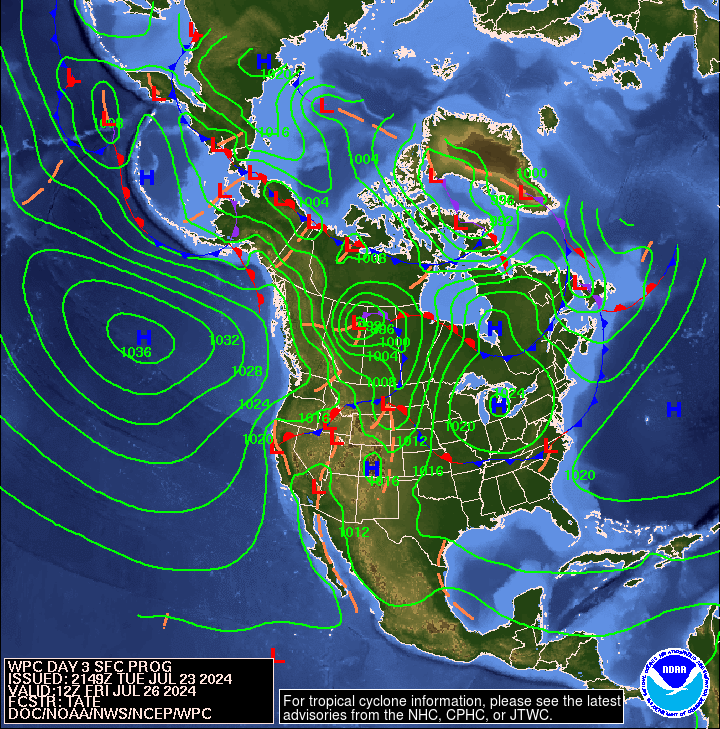
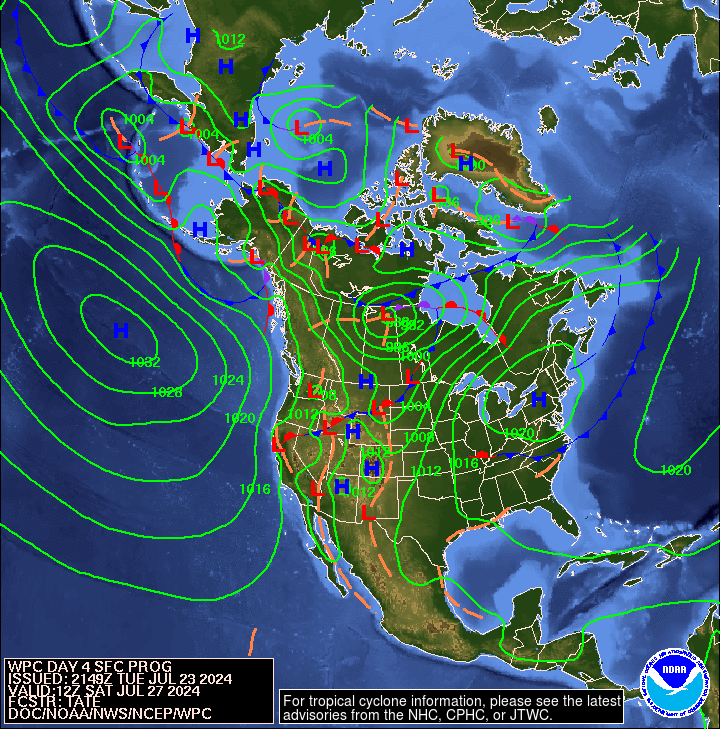
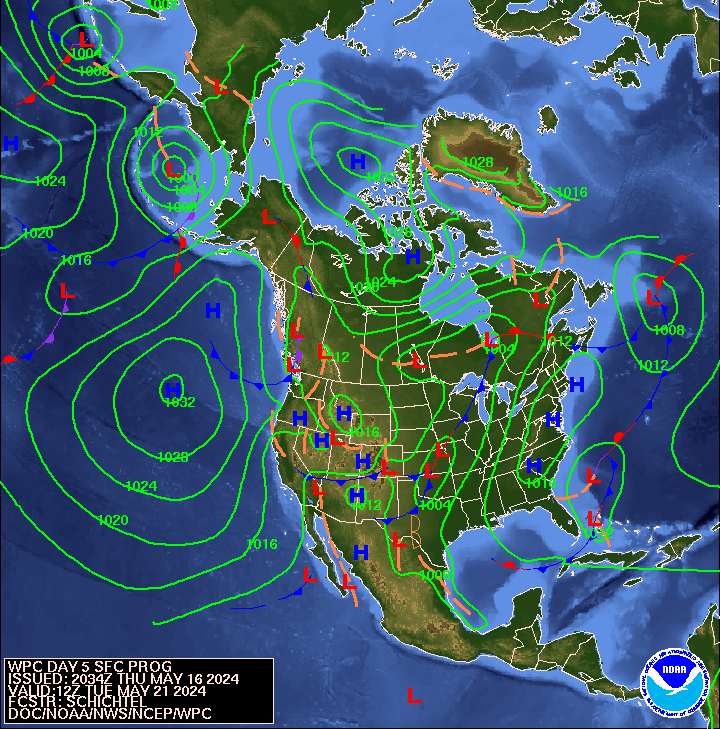
Loop of sea-level pressures and fronts through day 7 National Short Range Forecast Products:
National Extended Forecast Products:
National Forecast Products: Beyond 14 days
Greenville-Spartanburg Forecast Program NotesZone ForecastsThe NWS office in Greenville-Spartanburg issues a 7 day forecast for each of 46 counties in our county warning and forecast area (abbreviated CWA or, sometimes, CWFA), which includes upstate South Carolina, western North Carolina and extreme northeast Georgia. This product is entitled "Zone Forecast Product" and issued four times daily at approximately 4 am, 10:30 am, 3:30 pm, and 10:00 pm, but more frequently during active or changeable weather. Here is a map that displays the zone codes assigned to counties across our forecast area.Long fused watches, warnings and advisoriesThe NWS office in Greenville-Spartanburg issues Watches for Floods, Flash Floods and Winter Storms. We issue Warnings for Freezes & Frosts (during the growing season), High Wind, Wind Chill and Excessive Heat. We also issue advisories for Dense Fog, Winter Weather, High Wind, Wind Chill and Excessive Heat.Short fused weather warningsThe NWS office in Greenville-Spartanburg issues short fused warnings for tornadoes, severe thunderstorms, flooding and flash flooding for our CWA in Upstate South Carolina, western North Carolina, and northeast Georgia.Area Forecast DiscussionThe NWS office in Greenville-Spartanburg issues an Area Forecast Discussion (AFD) several times a day. The primary function of the AFD is to explain the technical and scientific basis for forecast decisions and accounts for coordination among adjacent field offices and national centers. This product also informs other government agencies, private sector meteorologists, the media and the public about the short and medium range forecast concerns. |



 Radar
Radar Current Weather
 Rivers & Lakes
 Satellite
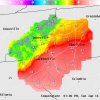
 Forecast Maps
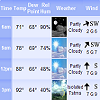
 Hour by Hour Forecast
 Tropical Weather
 Graphical Hazards
 Weather Hazard Briefing
 Report Severe Weather
 Fire Weather
 Drought
 Recreation Forecasts
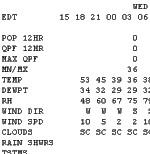
 Obs & Text Products
 Forecaster's Discussion
 Climate Data
 Hourly Weather
 NOAA Weather Radio
 Follow us on X
 Follow us on Facebook
 Follow us on YouTube
 GSP RSS Feed