NWS Wilmington, NC
Weather Forecast Office
|
|
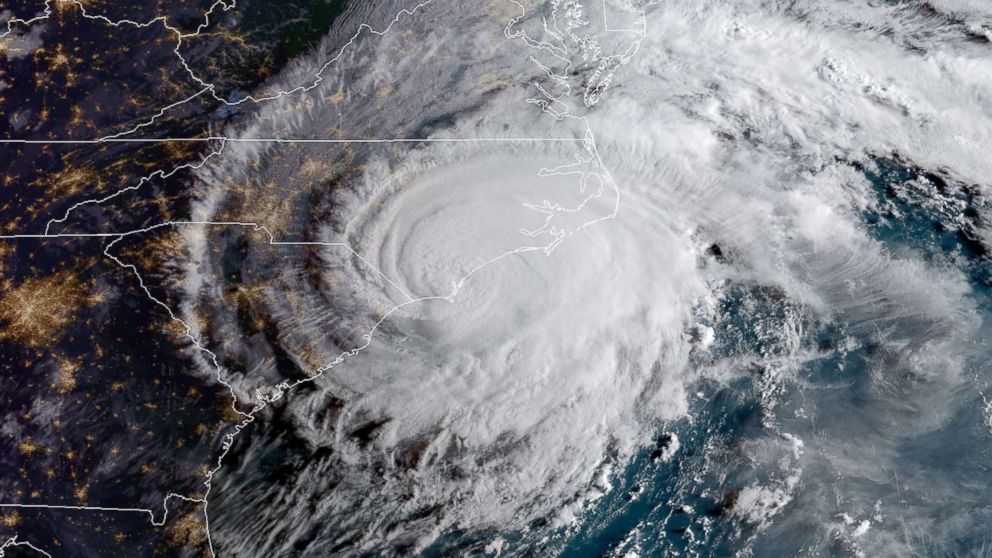
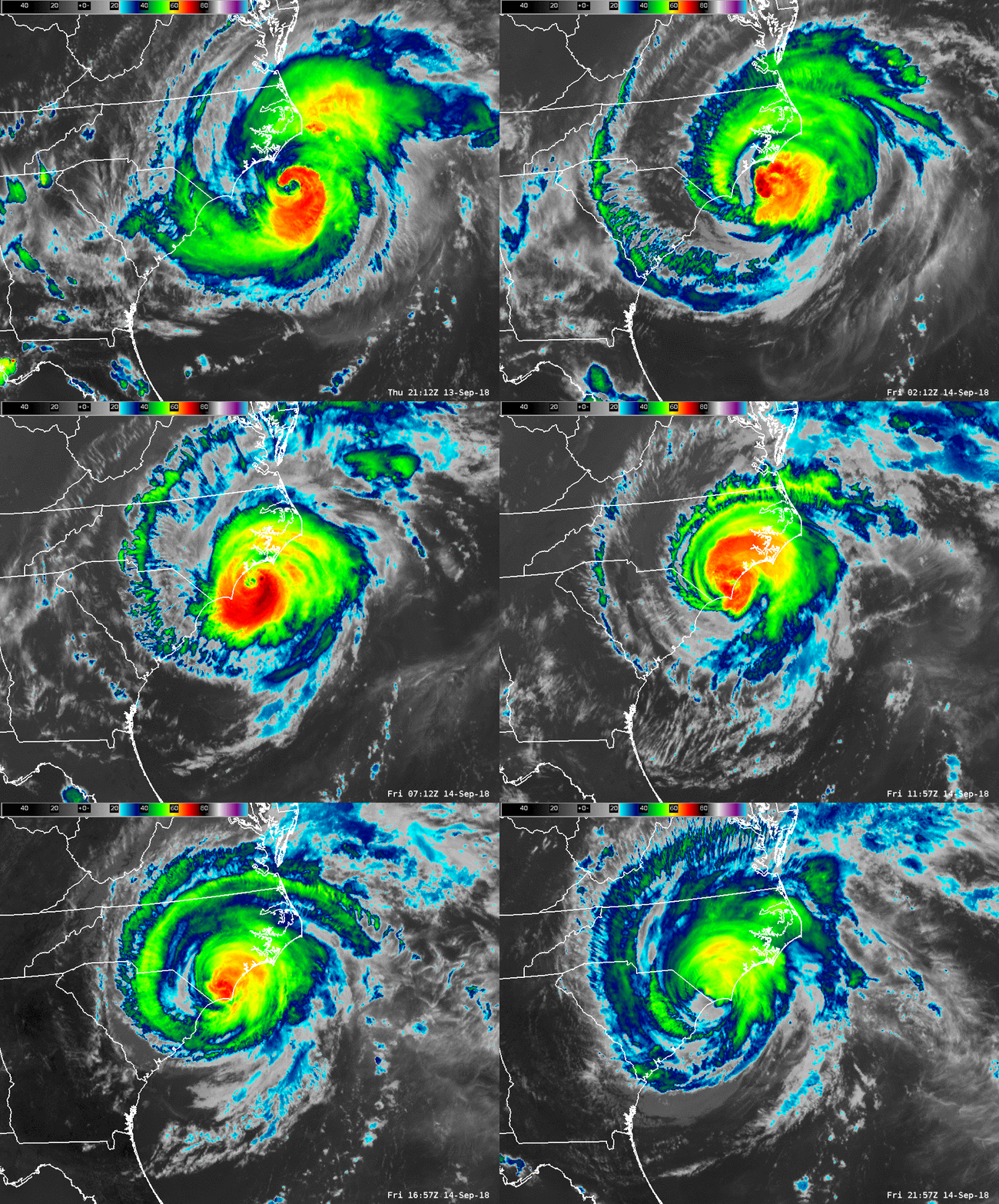
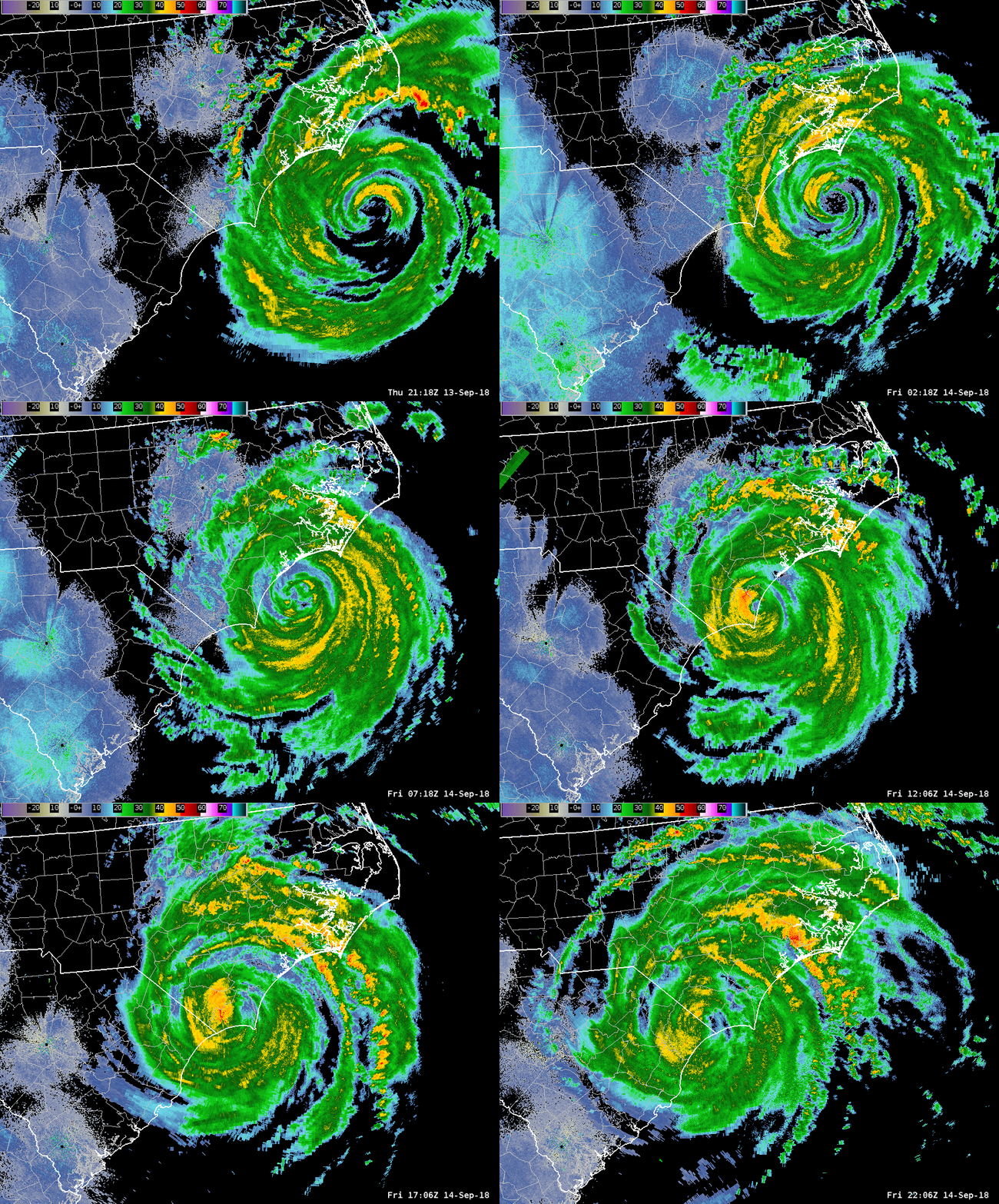
Satellite loop of Hurricane Florence making landfall in southeast NC on September 14, 2018
During National Hurricane Preparedness Week and SC Hurricane Preparedness Month the National Weather Service, NC Department of Public Safety (NCDPS), and SC Emergency Management Division (SCEMD) are teaming up to bring this hurricane preparedness campaign to all of North and South Carolina to encourage everyone to prepare BEFORE the official start of the hurricane season on June 1. The NWS asks emergency management and public safety officials, local media and Weather-Ready Nation Ambassadors to help join forces in improving the nation's readiness, responsiveness, and overall resilience against not only hurricanes but tropical storms and tropical depressions as well. Remember, you should prepare EACH and EVERY YEAR as it only takes ONE storm in your area to make it a bad year!
Check out our Local Hurricane Guide for Southeast NC and Northeast SC and "Hurricanes 101" presentation for additional information on tropical cyclone hazards, forecasts, climatology, safety/preparedness and more, with a focus on southeast NC and northeast SC. You can also check out a video series on hurricane hazards from all of the NWS offices serving SC.
We also encourage you to review the SCEMD SC Hurricane Guide for localized info, evacuation routes, resources, etc. specific for residents and visitors of SC and the NC DPS Hurricane Guide for similar information if you are in NC.
NOAA also offers Hurricane Webinars on a variety of tropical weather-related topics and NWS Forecast Offices across FL offer several Tropical Training Webinars as well.
| Day | Topic |
|---|---|
| Sunday | Know Your Risk: Water & Wind |
| Monday | Prepare Before Hurricane Season/Know Your Zone/Storm Surge |
| Tuesday | Understand Forecast Info/High Winds |
| Wednesday | Get Moving When a Storm Threatens/Inland Flooding |
| Thursday | Stay Protected During Storms/Tornadoes |
| Friday | Use Caution After Storms/Rip Currents |
| Saturday | Take Action Today |
Sunday
Know Your Risk: Water & Wind
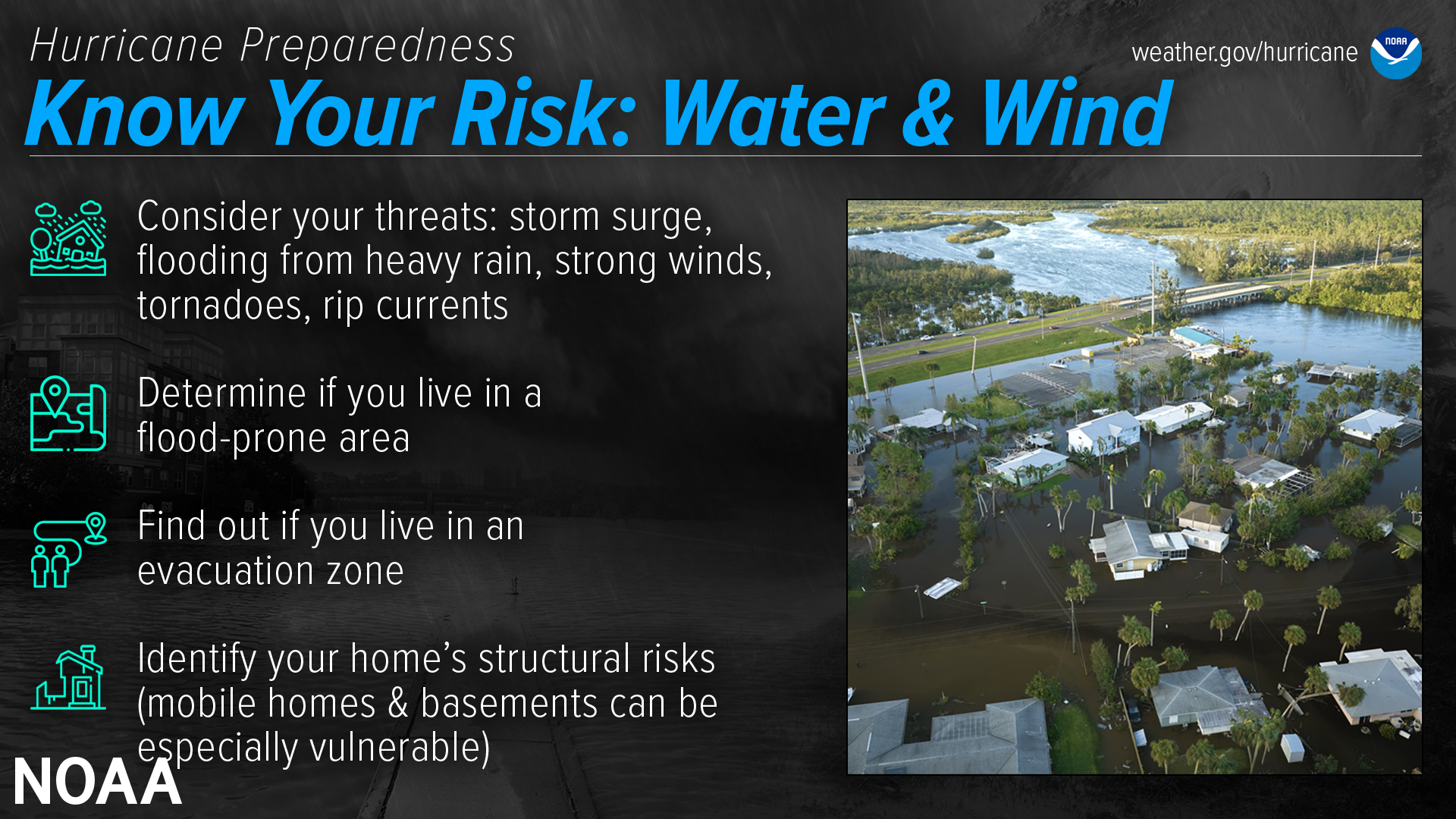
Determine Your Local Risks
Find out today what types of wind and water hazards could happen where you live. Hurricanes are not just a coastal problem. Impacts from wind and water can be felt hundreds of miles inland, and significant impacts can occur regardless of the storm’s strength. Know if you live in an area prone to flooding, if you live in an evacuation zone, and identify any structural weaknesses in your home.
Consider Potential Hazards
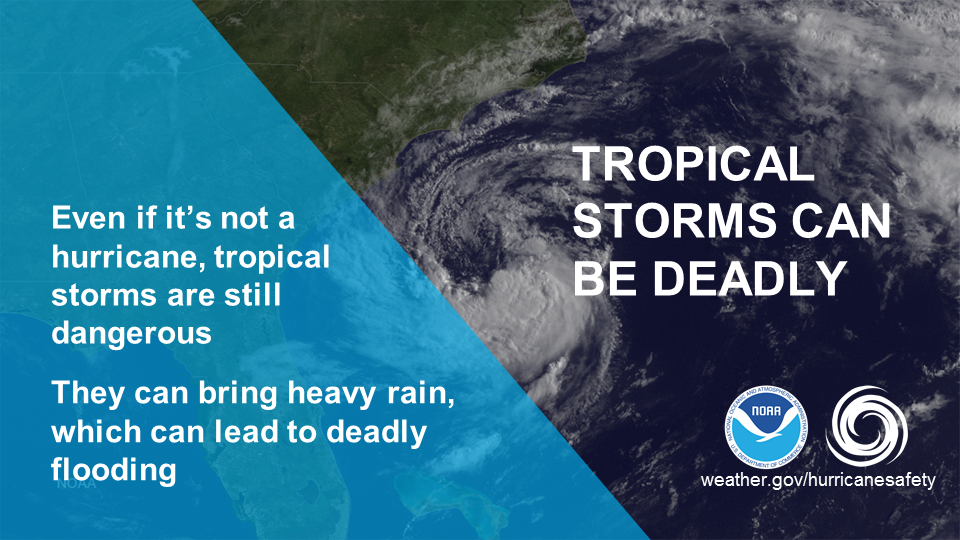
While hurricanes typically pose the greatest threat to life and property, tropical storms and tropical depressions can also be devastating. The primary hazards from tropical cyclones (which include tropical depressions, tropical storms, and hurricanes) are flooding from storm surge in tidal areas, flooding from heavy rainfall, strong winds, tornadoes, and high surf and life-threatening rip currents.
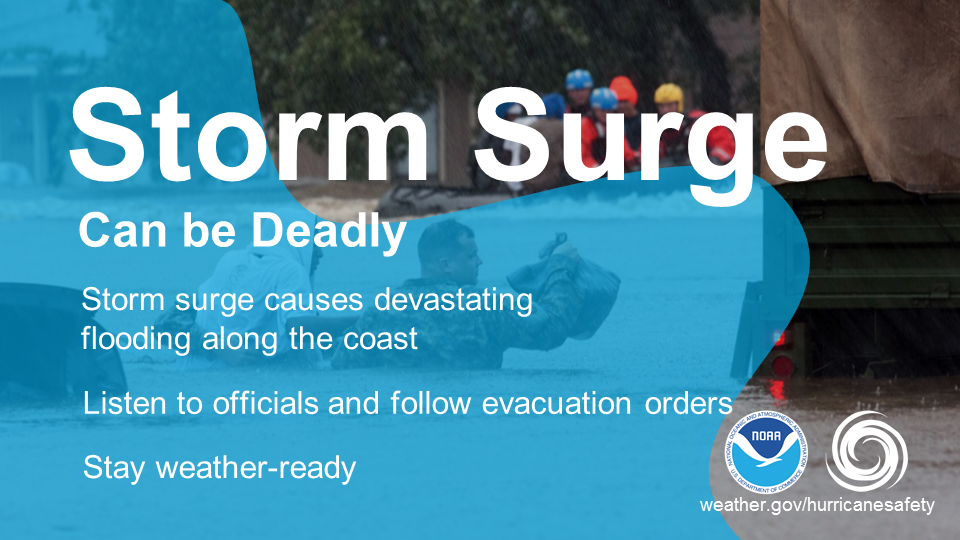
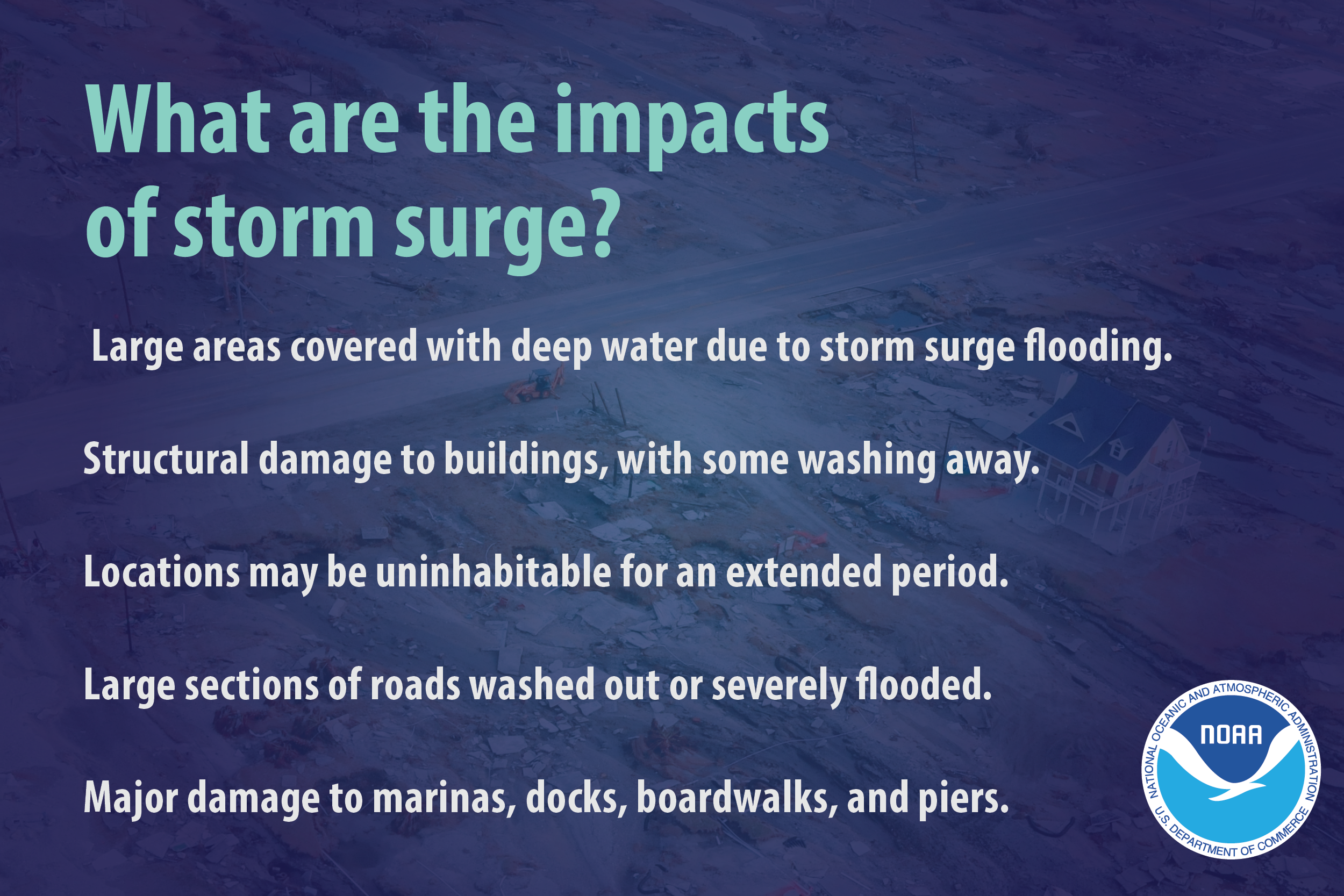
Storm Surge Flooding is water that is pushed onshore by a storm's winds, and historically has caused the largest loss of life in hurricanes. The rise in water level can cause severe flooding in coastal/tidal areas, which can submerge entire areas, cause structural damage to buildings, and wash out roads. Storm surge can travel several miles inland along tidal waterways.
Rainfall Flooding from extreme rainfall amounts/rates can be quite deadly, even in areas well away from the coast, and can last for many days after a storm. Homes and businesses can become flooded, as well as roads which can make travel and evacuations difficult. Floodwaters can also contain harmful bacteria, chemicals, wildlife and other dangerous objects. Extreme rainfall can even lead to flooding of areas not normally prone to flooding, particularly where tidal/river flooding also occur.
Strong Winds can cause damage to homes and other buildings, especially less well-built structures. Signs, roofing material, and other items left outside can become flying missiles during high winds. Wind damage can lead to large areas with power and communications outages and can make travel difficult due to debris on roads.
Tornadoes/Waterspouts can also be spawned from tropical systems, mainly in the rain bands well away from the center of the storm, although can also occur near the center in the eyewall.
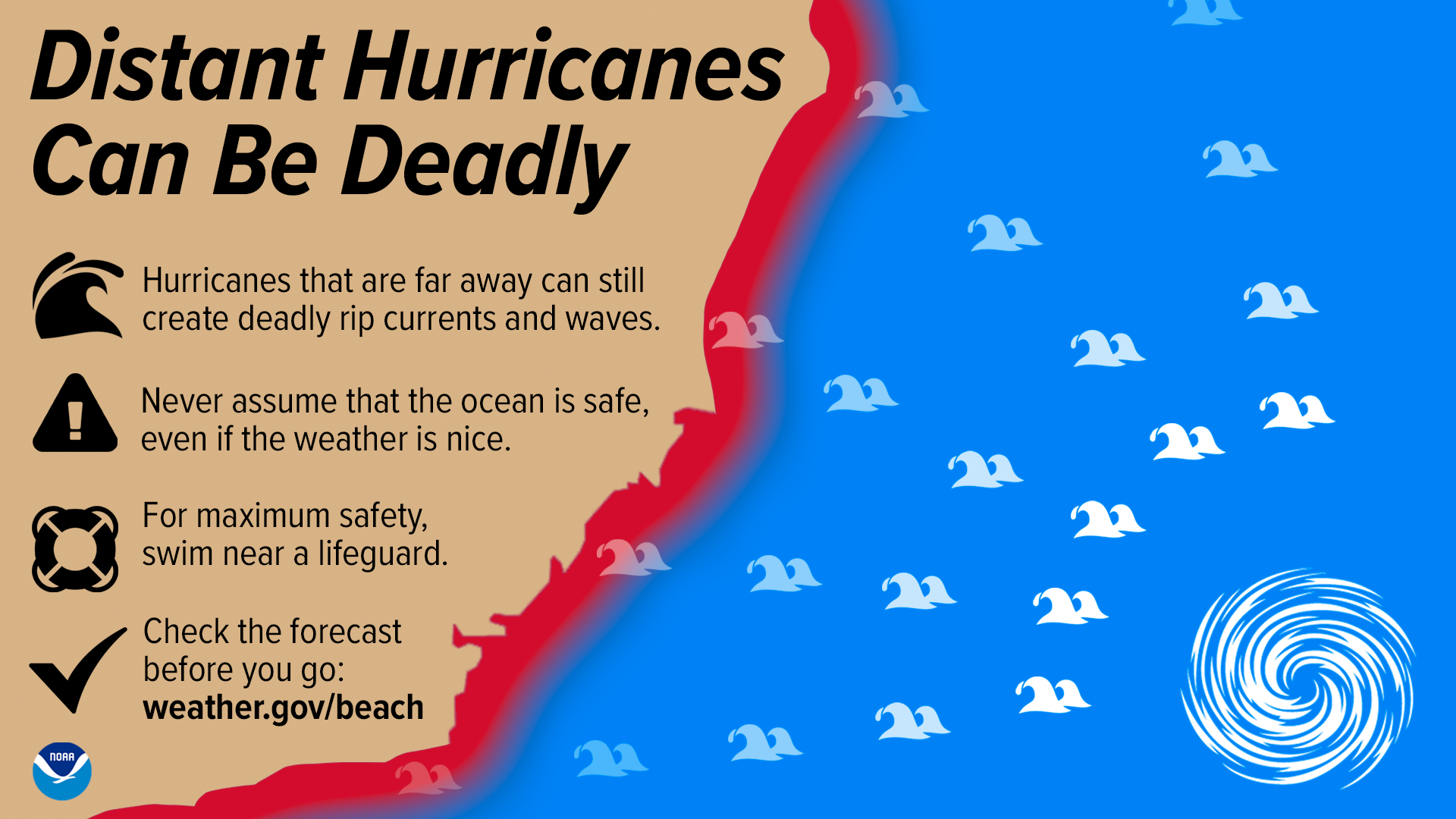
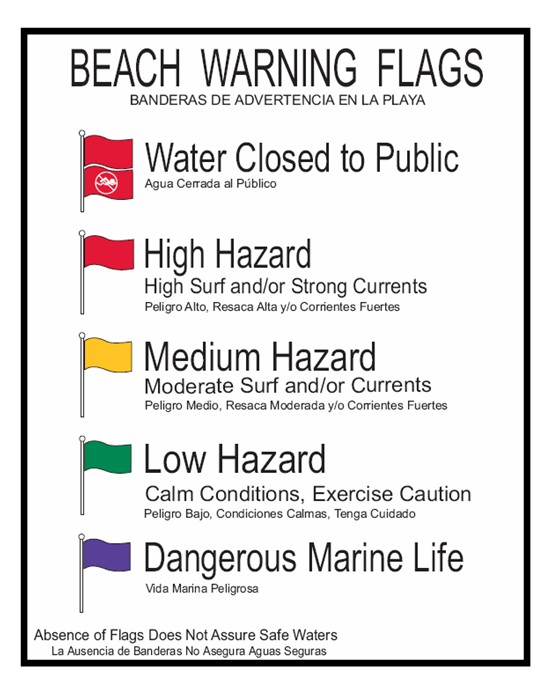
Rip Currents and Rough Surf can occur along the coast due to powerful waves even from distant storms far out into the Atlantic. It's important to remember that good weather on the beach does NOT mean the ocean is safe so it's important to always heed rip current alerts and advice from lifeguards.
Why Should I Not Focus On The Category Alone?
The Saffir-Simpson Hurricane Wind Scale only uses WIND to estimate potential damage. Unfortunately this scale does not tell you about ALL of the impacts that a hurricane can produce. It does not tell you how much rain will fall or how high the storm surge may be. It does not tell you anything about potential impacts from tornadoes or rip currents. It also does not give you information on how large the storm may be, or anything about the storm's movement. In fact, water historically accounts for 90% of direct deaths from tropical systems, mainly due to flooding from storm surge and heavy rain. Please keep this in mind this upcoming season. Pay attention TO ALL of the impacts from a storm and not just the category. Remember that Hurricane Florence was "just" a category 1 when it made landfall along our coast.
Determine if You Live in a Flood-Prone Area
Anyone living in a flood-prone area is especially vulnerable to hurricane impacts. Find out today the flood risk for your area and plan accordingly. If you don’t live in a flood zone, that doesn’t necessarily mean you’re safe - extreme rain from hurricanes can bring floods even to areas that aren’t prone to flooding.
Floodsmart.gov: Understanding Flood Zones
NOAA's Coastal Flood Exposure Mapper
Identify Your Home's Structural Risks
Find out if your home has any weaknesses that could prove deadly in a hurricane. Are your exterior doors and garage door hurricane proof? Do you have storm shutters? Some aspects of your home can be strengthened to help withstand hurricane impacts, and some can not. Mobile homes are especially vulnerable to hurricane-force winds, and basements are especially vulnerable to storm surge and flooding.
Monday
Prepare Before Hurricane Season/Storm Surge/Know Your Zone
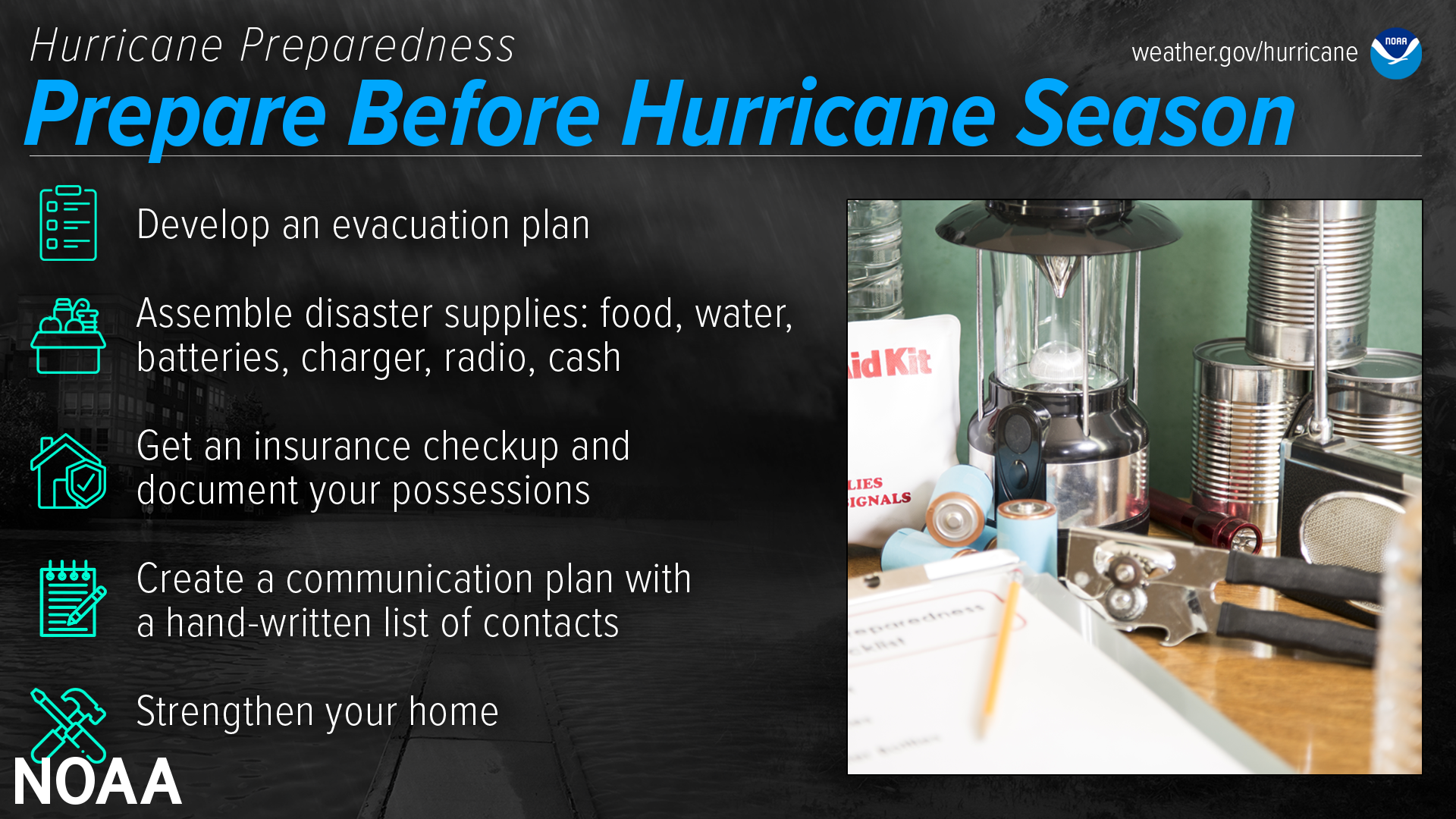
The best time to prepare is before hurricane season begins! Avoid having to rush through potentially life-saving preparations by not waiting until it’s too late. Get your disaster supplies while the shelves are still stocked and get an insurance checkup early since there is a 30-day waiting period for obtaining flood insurance.
When Is Hurricane Season?
The most active months for tropical systems in North Carolina are August, September and October. However, hurricanes have impacted our state as early as May and as late as November! The peak tropical activity usually occurs in a six week period from mid-August to late September, during which time our state can experience multiple hurricanes or tropical storms within weeks of each other.
Develop An Evacuation Plan
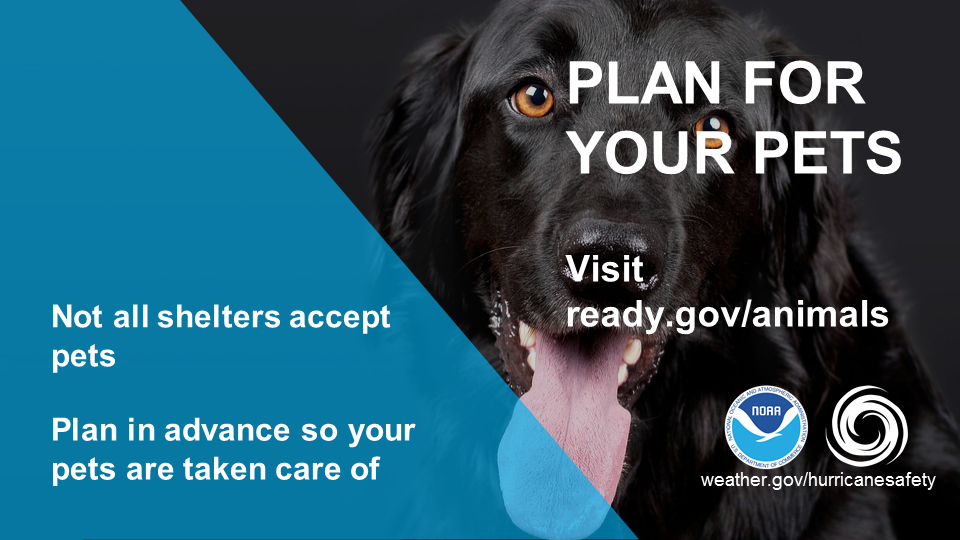
If you are at risk from hurricane impacts, you need an evacuation plan. Now is the time to begin planning where you would go and how you would get there. You do not need to travel hundreds of miles. Your destination could be a friend or relative who lives in a well built home outside flood prone areas. Plan several routes. Be sure to account for your pets. If you don’t have a vehicle, check with local officials to see what transportation options they may have available.
Assemble Disaster Supplies
Whether you’re evacuating or sheltering-in-place, you’re going to need supplies not just to get through the storm but for the potentially lengthy and unpleasant aftermath. Have enough non-perishable food, water and medicine to last each person in your family a minimum of 3 days (store a longer than 3-day supply of water, if possible). Electricity and water could be out for weeks. You’ll need extra cash, a battery-powered radio and flashlights. You may need a portable crank or solar-powered USB charger for your cell phones. And lastly, don’t forget your pets!
Get an Insurance Checkup & Document Your Possessions
Call your insurance company or agent and ask for an insurance check-up to make sure you have enough insurance to repair or even replace your home and/or belongings. Remember, home and renters insurance doesn’t cover flooding, so you’ll need a separate policy for it. Flood insurance is available through your company, agent, or the National Flood Insurance Program at floodsmart.gov. Act now, as flood insurance requires a 30-day waiting period. Take the time before hurricane season begins to document your possessions: photos, serial numbers, or anything else that you may need to provide your insurance company when filing a claim.
Create a Communication Plan
Take the time now to write down your hurricane plan, and share it with your family. Determine family meeting places, and make sure to include an out-of-town location in case of evacuation. Write down on paper a list of emergency contacts, and make sure to include utilities and other critical services — remember, the internet may not be accessible during or after a storm.
Strengthen Your Home
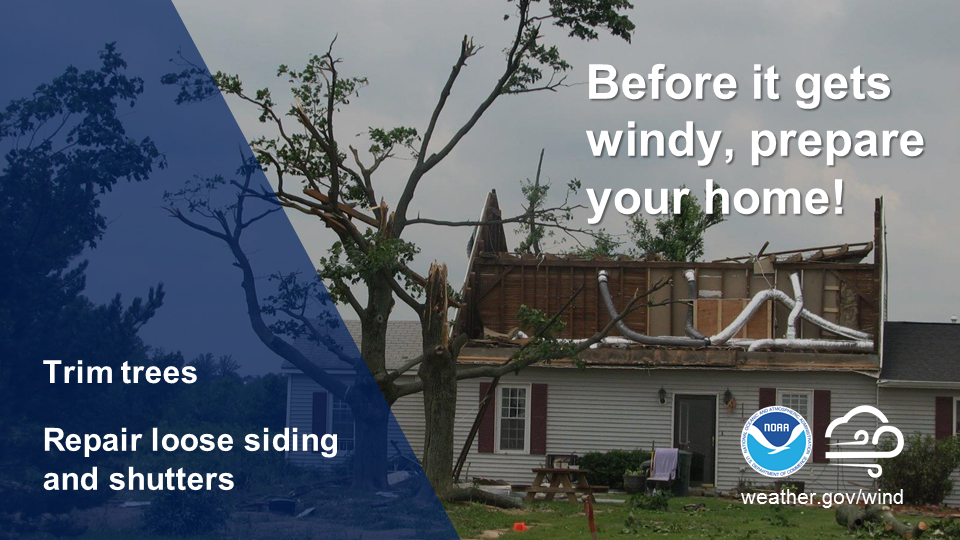
Now is the time to improve your home’s ability to withstand hurricane impacts. Trim trees. Install storm shutters, accordion shutters, and/or impact glass. Seal outside wall openings. Remember, the garage door is the most vulnerable part of the home, so it must be able to withstand hurricane-force winds. Many retrofits are not as costly or time consuming as you may think. If you’re a renter, work with your landlord now to prepare for a storm. And remember - now is the time to purchase the proper plywood, steel or aluminum panels to have on hand if you need to board up the windows and doors ahead of an approaching storm.
FEMA: Tips to Prepare Your Home for Hurricane Season
Storm Surge
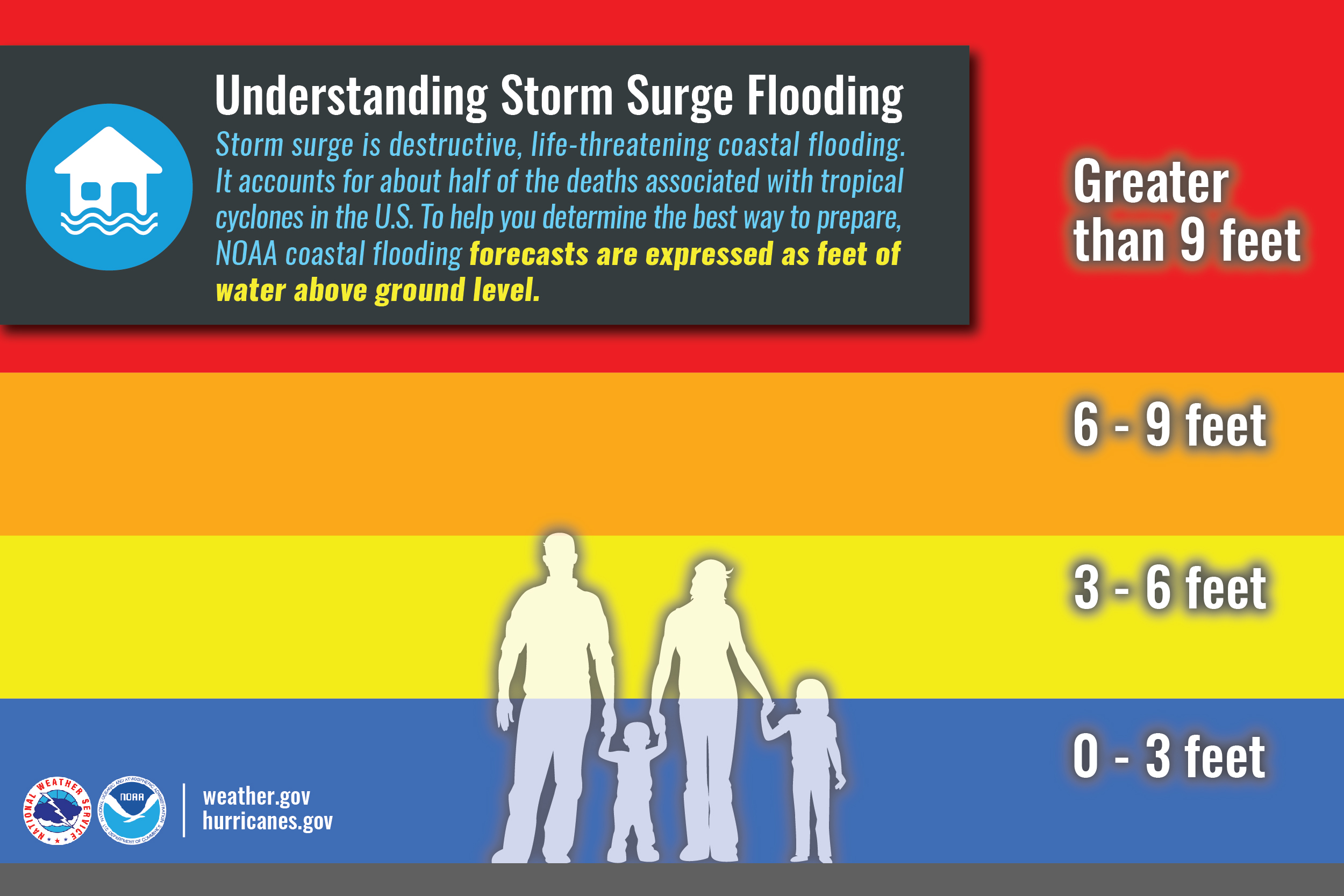
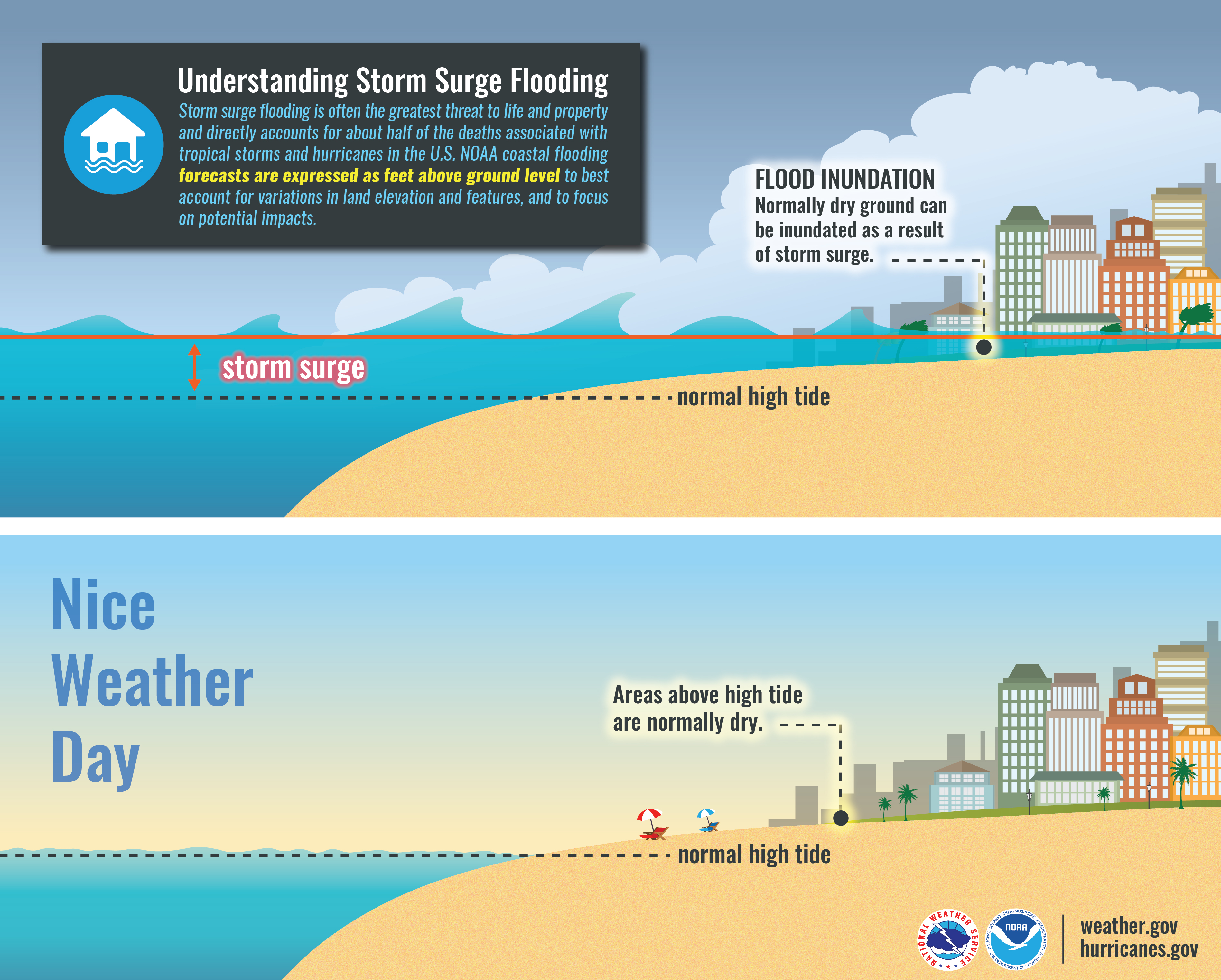
One of the greatest potentials for loss of life related to a hurricane is from the storm surge. Storm surge is simply water that is pushed toward the shore by the force of winds swirling around the storm. This advancing surge combines with the normal astronomical tides to create a storm tide, which can increase water levels to heights impacting roads, homes and other critical infrastructure. The shape of our coastline as well as the gentle slope of the ocean bottom offshore puts us at significant risk for storm surge flooding. Most recently we saw devastating storm surge from both hurricanes Florence and Dorian.
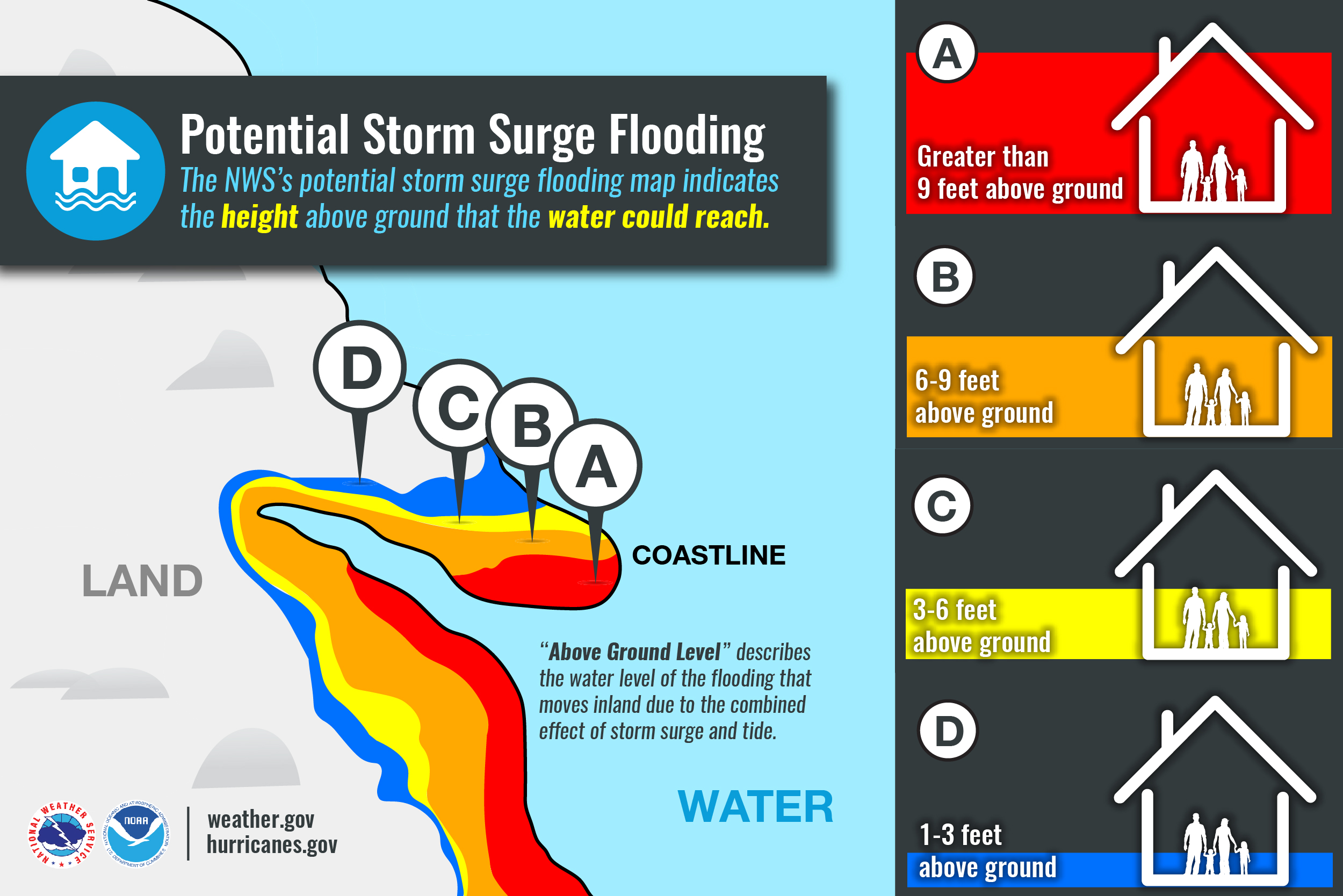
It's important to note that the NWS forecasts storm surge relative to normally dry ground (i.e., inundation) so a storm surge forecast of 4 to 7 feet means that saltwater can reach up to 4 to 7 feet above the ground your standing on. You do NOT need to know how high your location is above tidal datums such as Mean Sea Level (MSL) or Mean Lower Low Water (MLLW)!
If you want to see if your location is vulnerable to storm surge flooding during a real-time storm, check out the National Hurricane Center's Potential Storm Surge Flooding Map. Note that this map ALWAYS represents a "reasonable worst case" amount of storm surge inundation for any given location and should only be used for planning purposes. Check out the video below explaining how to use the map.
Know Your Zone - South Carolina
The Know Your Zone campaign was developed by the Horry County Emergency Management Department as a result of the information contained in the South Carolina Hurricane Evacuation Study (HES) that was released by the Federal Emergency Management Agency (FEMA) and the US Army Corps of Engineers (USACE) in 2012. Since it's creation, all coastal counties in South Carolina have adopted the Know Your Zone campaign as a way to let citizens know the best ways to prepare for the landfall of a major hurricane.
Evacuation zones highlight areas most at risk to storm surge and flooding. Local officials will determine which areas should be evacuated. Areas in Zone A will typically be evacuated first, followed by areas in Zone B, etc. While all zones won’t be evacuated in every event, emergency managers will work with local media and use other outreach tools to notify residents and visitors of impacted zones and evacuation instructions.
Please take some time to figure out which pre-determined zone you are located in. To access the lookup tool and other resources, please visit the website at https://www.scemd.org/prepare/know-your-zone/
Know Your Zone - North Carolina
Know Your Zone is a cooperative effort of North Carolina Emergency Management and county emergency management partners in coastal counties. After being piloted during the 2019 hurricane season, state and county emergency emergency management has partnered to officially launch the initiative for the 2020 hurricane season.
North Carolina Know Your Zone is a tiered evacuation system that highlights areas most vulnerable to impacts from hurricanes, tropical storms, and other hazards. If it becomes necessary, local officials will order evacuations using pre-determined zones created by coastal counties. The Know Your Zone lookup tool is a new color-coded interactive map you can use to determine the evacuation zone where you live, work, or are visiting based upon your street address.
Evacuation zones highlight areas most at risk to storm surge and flooding. Local officials will determine which areas should be evacuated. Areas in Zone A will typically be evacuated first, followed by areas in Zone B, etc. While all zones won’t be evacuated in every event, emergency managers will work with local media and use other outreach tools to notify residents and visitors of impacted zones and evacuation instructions.
Please take some time find out which pre-determined zone you are located in. To access the lookup tool and other resources, please visit the website at https://www.ncdps.gov/our-organization/emergency-management/emergency-preparedness/know-your-zone
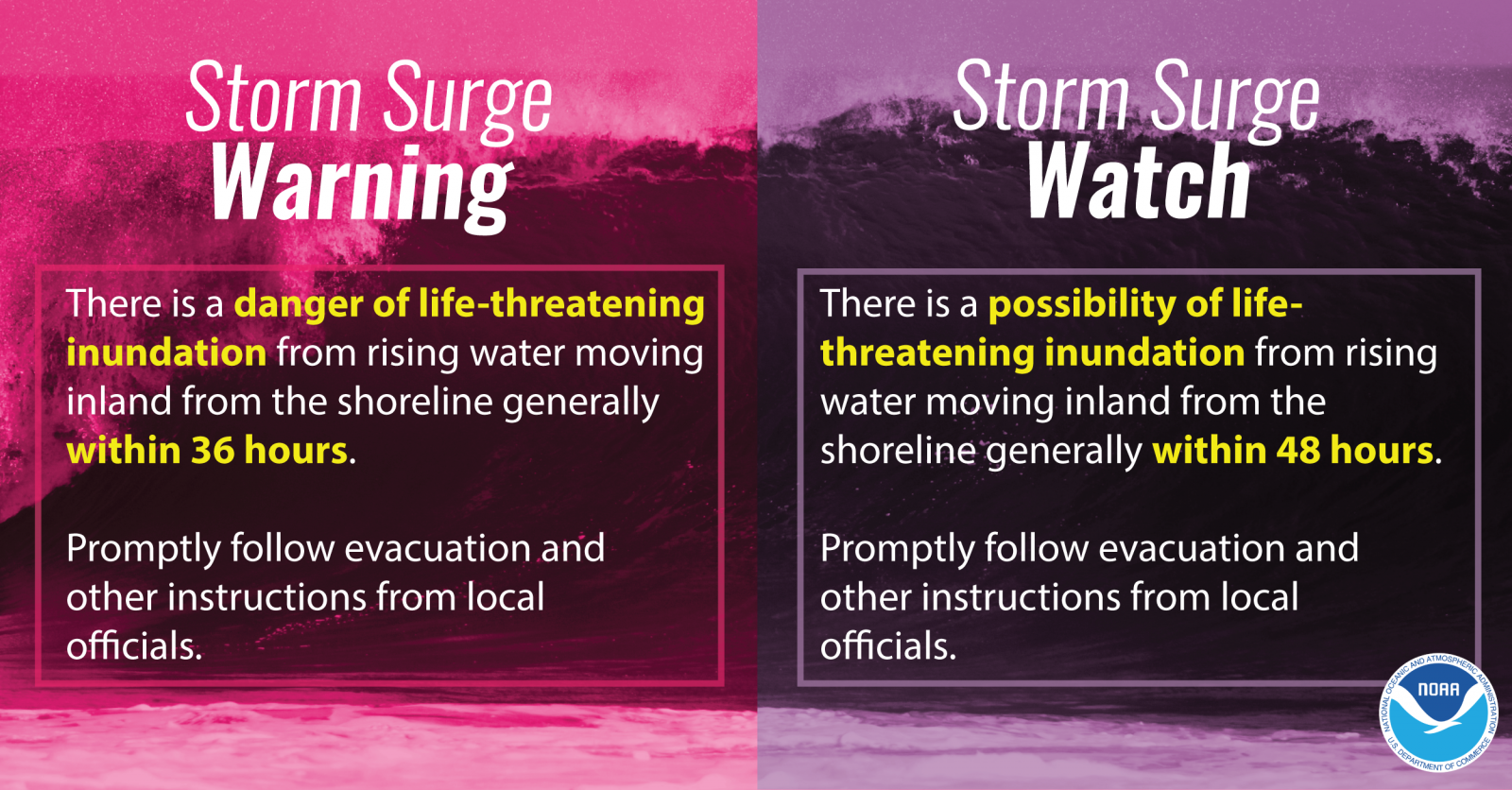
Storm Surge Infographics
 |
 |
 |
 |
 |
 |
Tuesday
Understand Forecast Information/High Winds
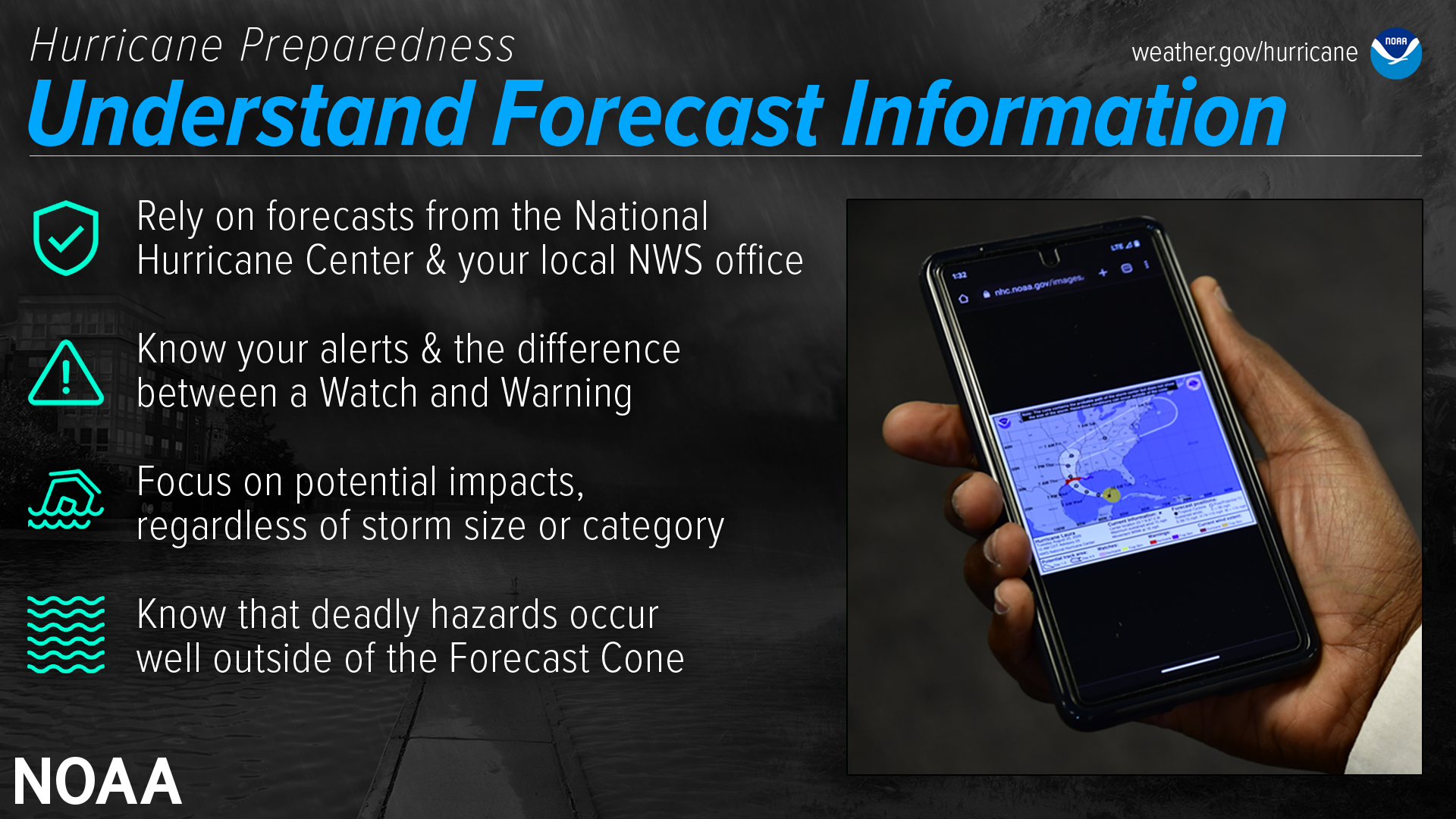
National Weather Service forecast products can tell you a lot about what is expected to happen with a storm, including the storm’s paths, rainfall amounts, wind speeds, and more. There is a lot of information available days ahead of a storm, and it is important to understand what it means.
Have Trusted Sources for Storm Information
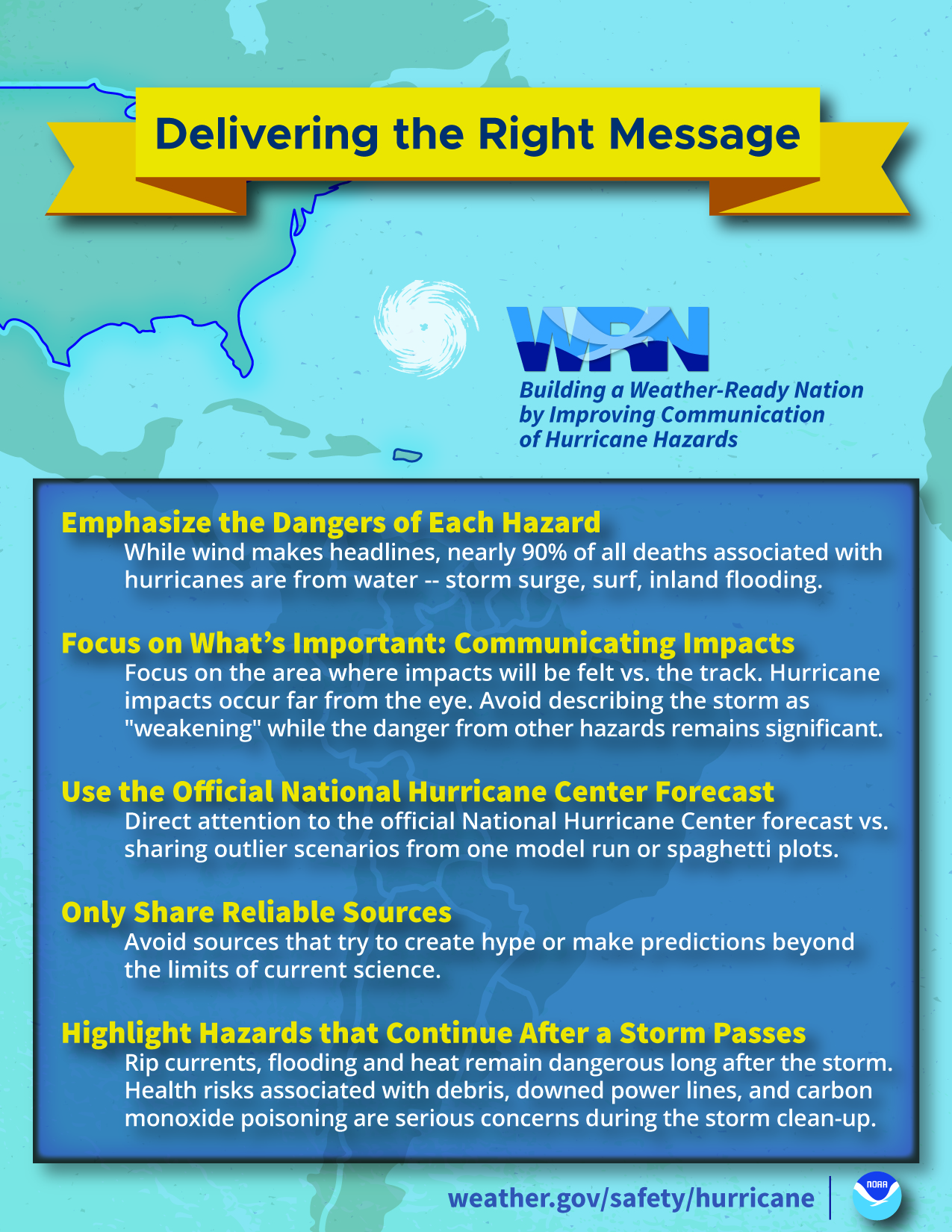
Rely on official forecasts and well-established media partners in the Weather Enterprise. Be cautious of sensational headlines and instead look for reliable sources to determine a storm's potential impacts. Use the official National Hurricane Center Forecast — their hurricane specialists access a variety of data (models, aircraft, satellite) to make the most accurate forecasts possible. Meteorologists at local NWS offices understand which locations in your area are most vulnerable to storm surge, flooding, and wind. Always check to make sure you have the latest forecast information. Make sure to have Wireless Emergency Alerts enabled on your phone to receive Warnings.
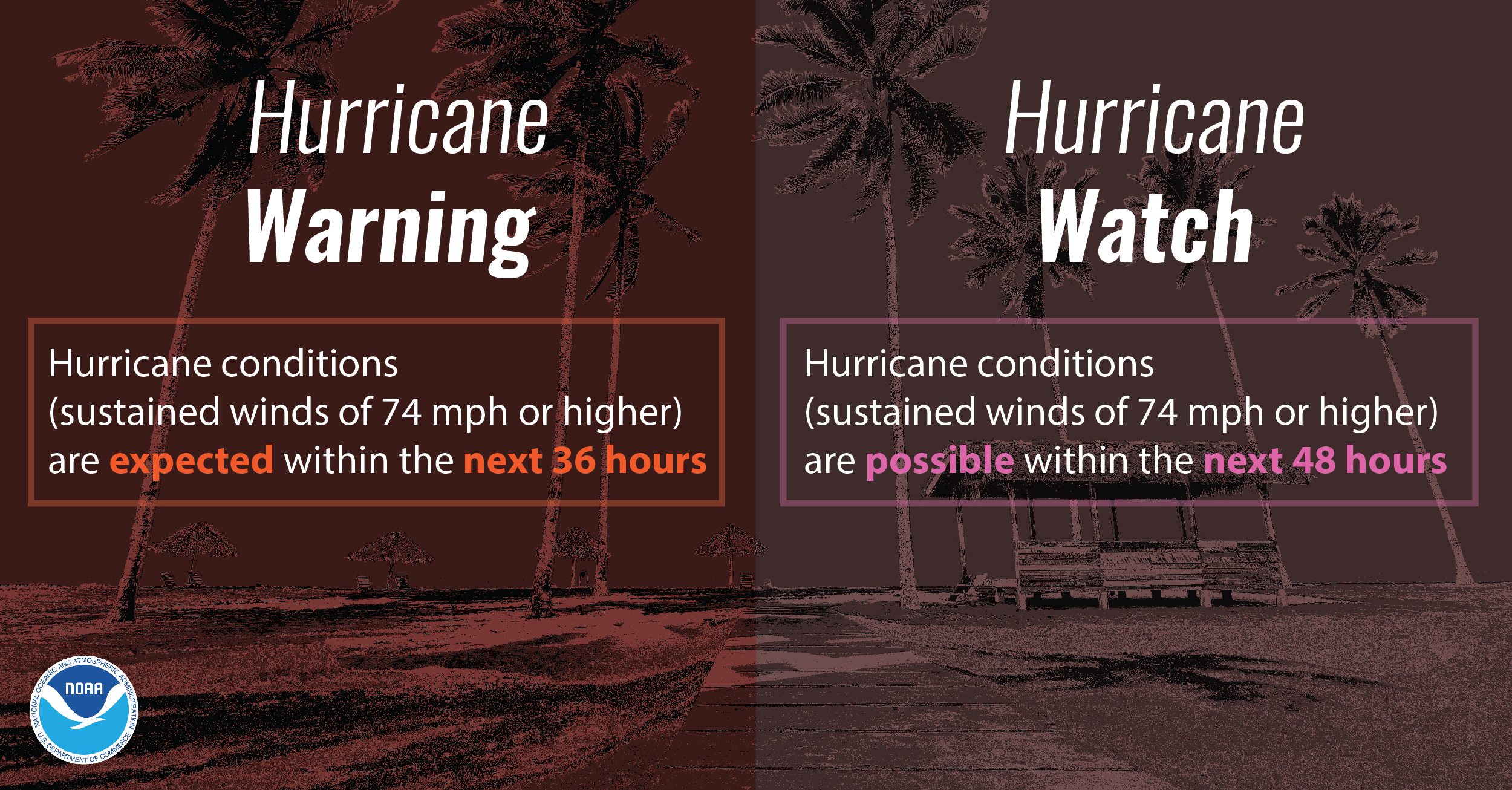
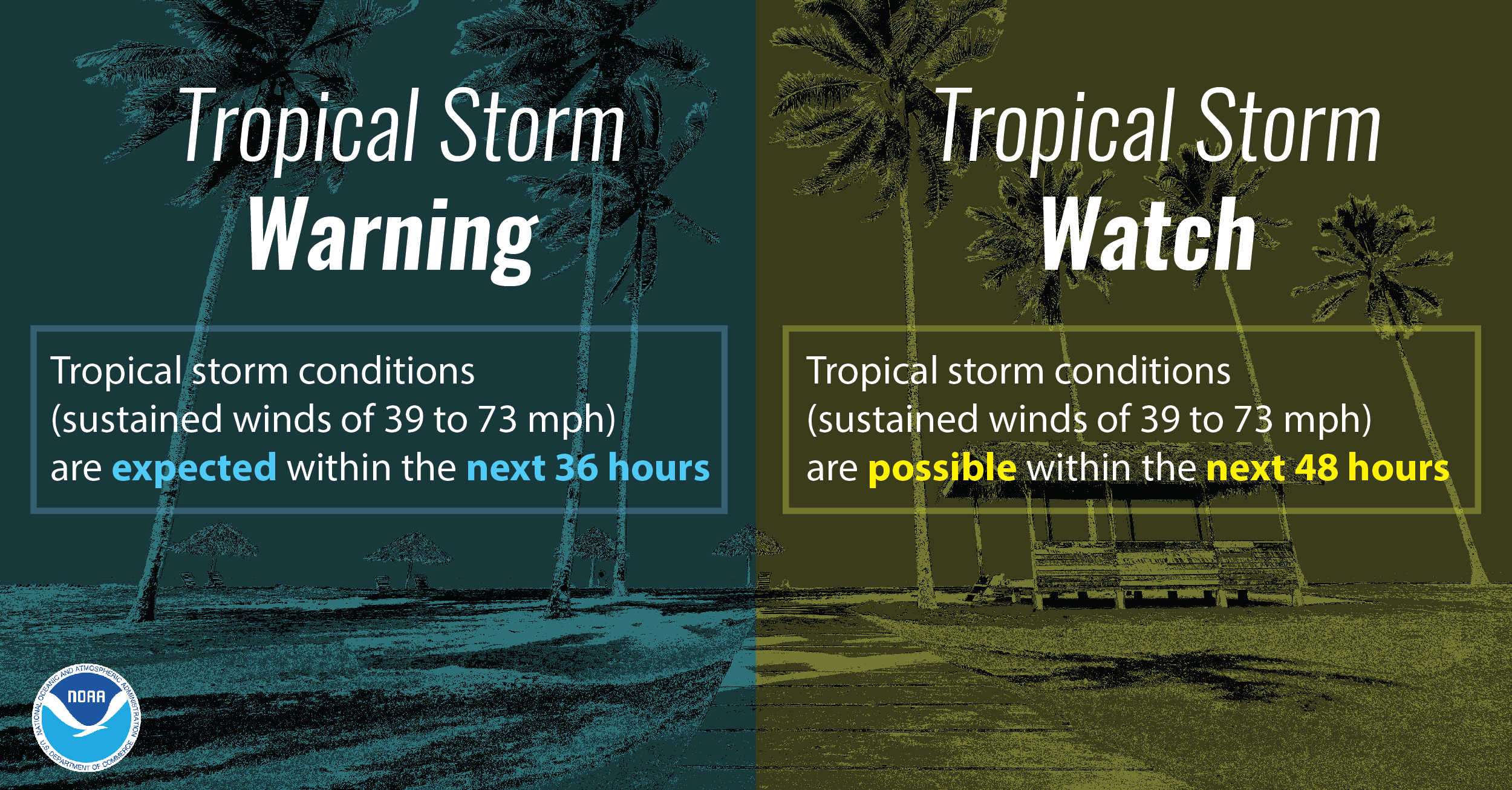
Know Your Alerts & the Difference Between a Watch & Warning
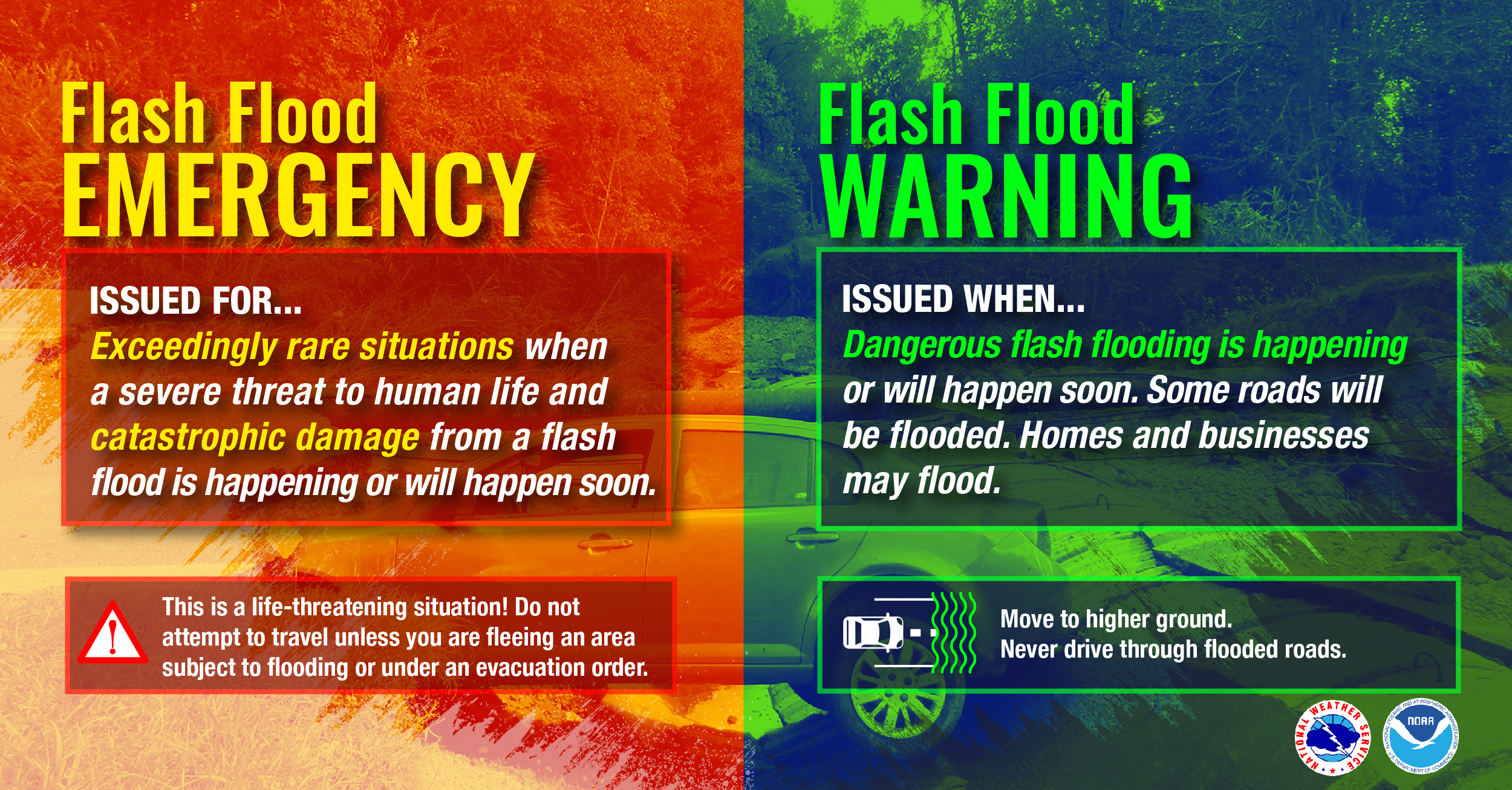
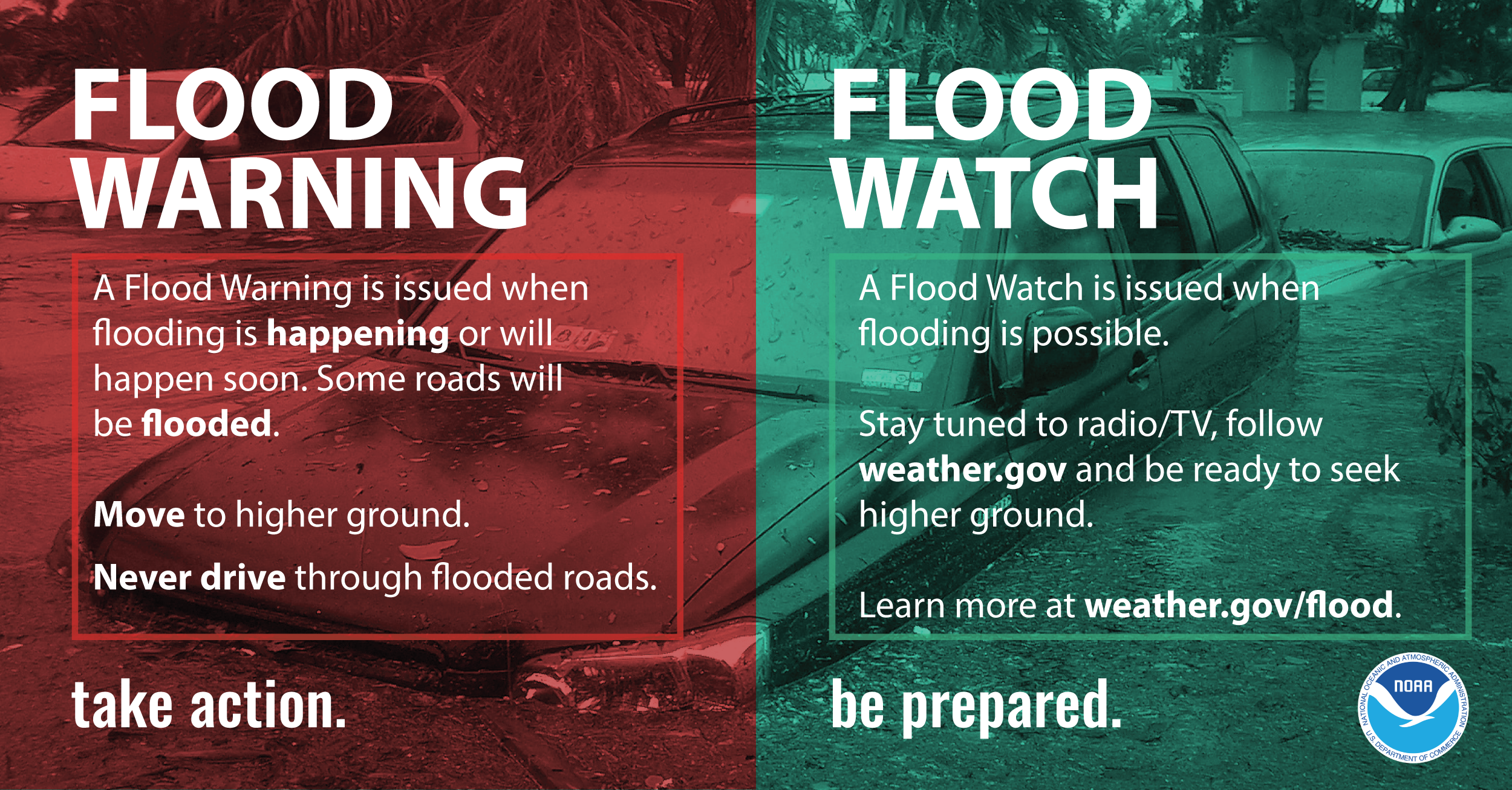
In general, a Watch means impacts are possible; a Warning means impacts are expected or happening. Different hazards and alerts require different responses:
Deadly Hazards Occur Well Outside of the Cone
Impacts can be felt far from the storm's center, even well inland and outside the Forecast Cone. Remember: the storm itself can stretch well beyond the Forecast Cone, and so can the impacts. The National Hurricane Center Forecast Cone shows the probable forecast track of the center of the storm. This means that the storm’s center will probably travel somewhere within the cone’s boundaries. (Historically, the storm’s center has remained within the forecasted cone roughly two-thirds of the time.) The cone does NOT represent the size of the storm in any way.
NHC Video: How to use the cone graphic
Hurricane Information Infographics
 |
 |
 |
|
 |
 |
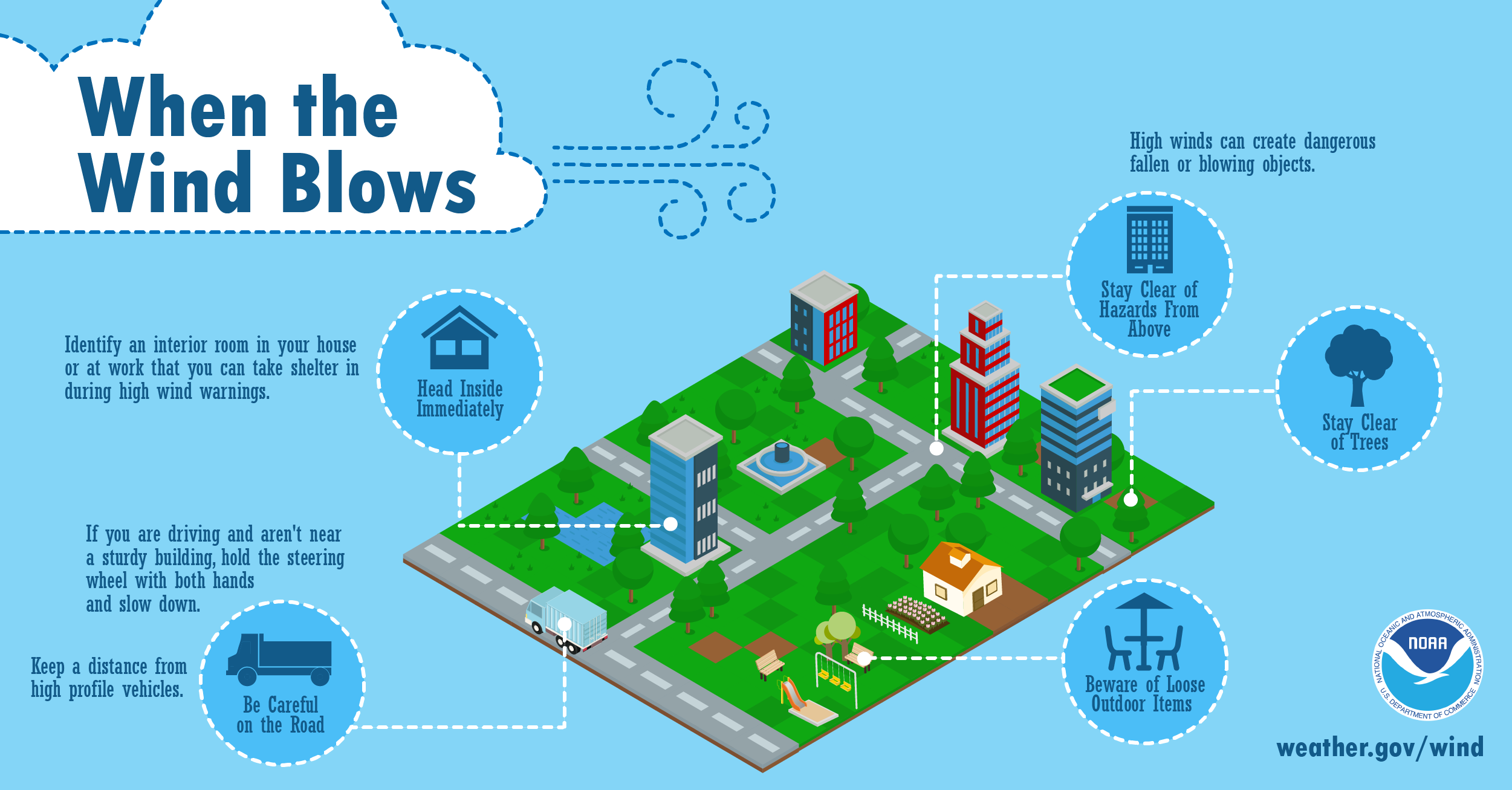
High Winds
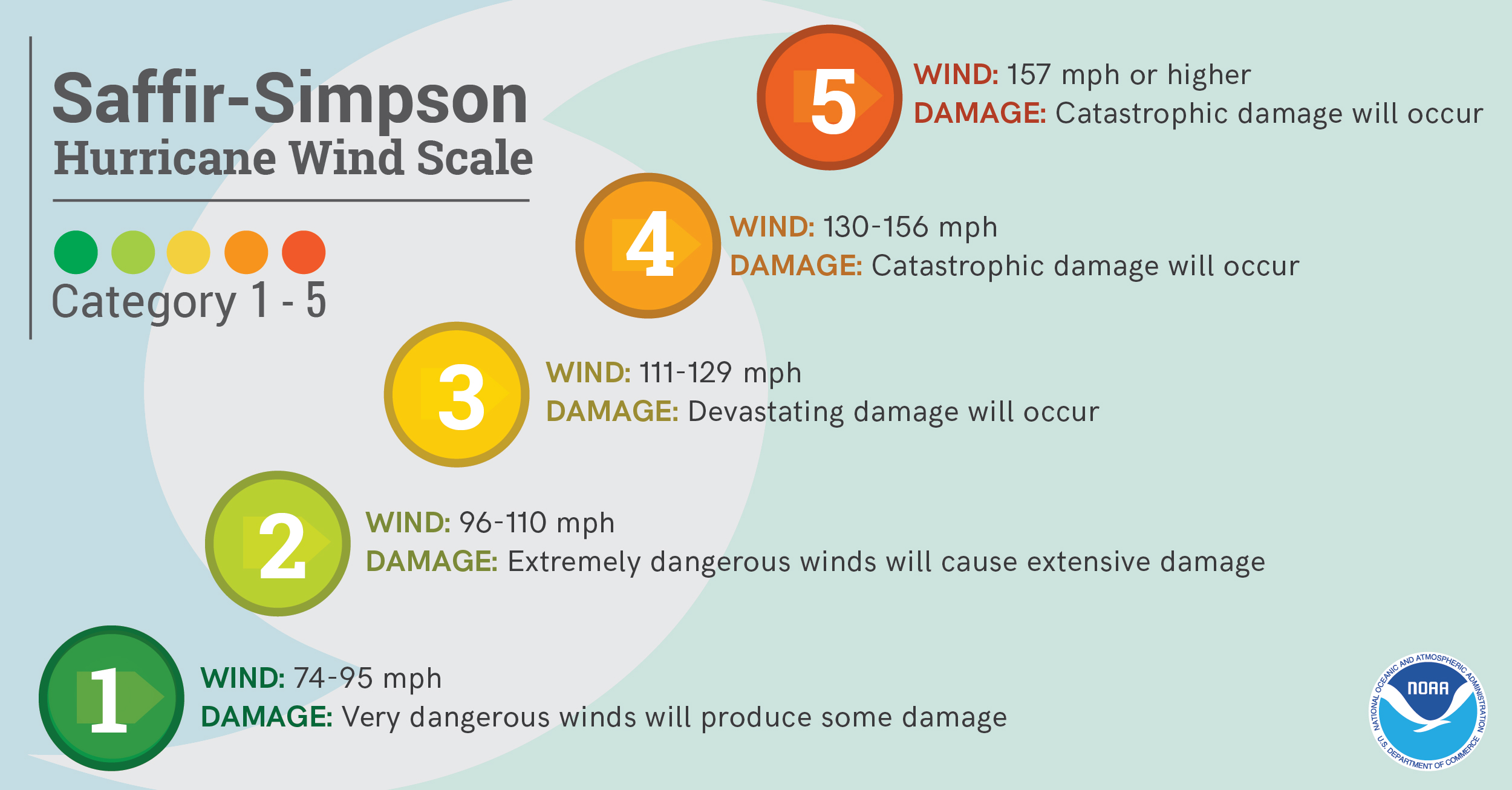
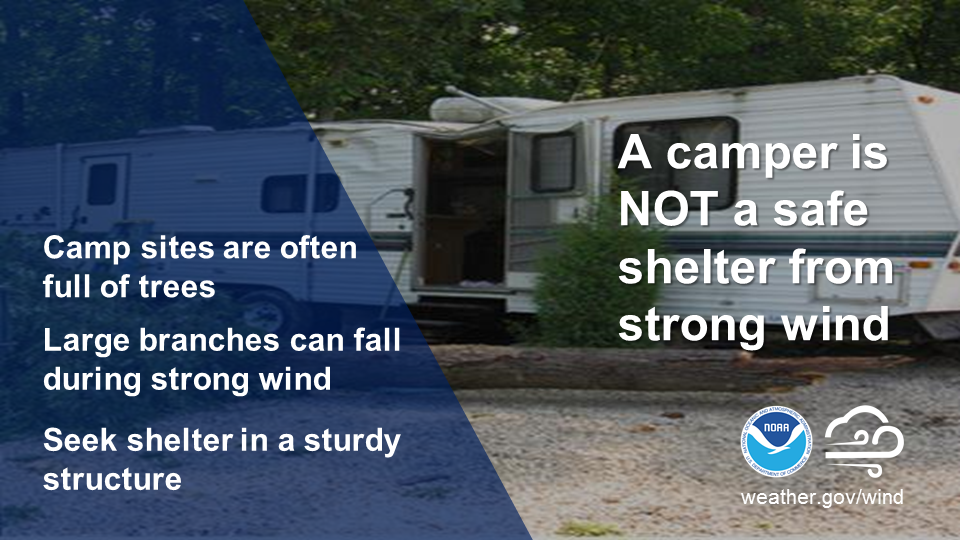
Keep in mind that even tropical storm force winds (39 to 73 mph) are capable of tossing around debris and causing damage. For this reason, you should seek shelter from the wind in a sturdy building as the hurricane moves inland and before the onset of tropical storm force winds. Tropical storm force winds usually strike hours ahead of the actual hurricane’s eye. For this reason many emergency officials typically have evacuations completed and personnel sheltered before the onset of tropical storm force winds.
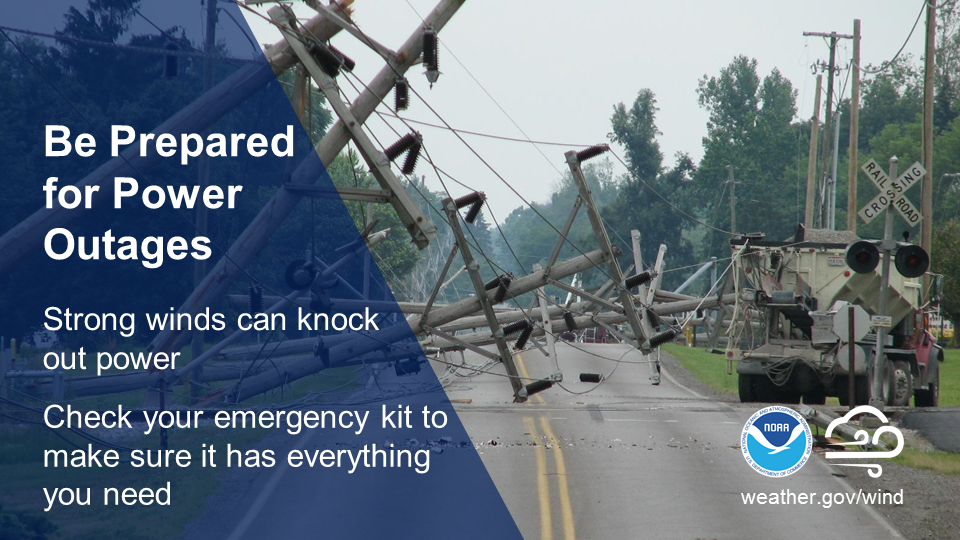
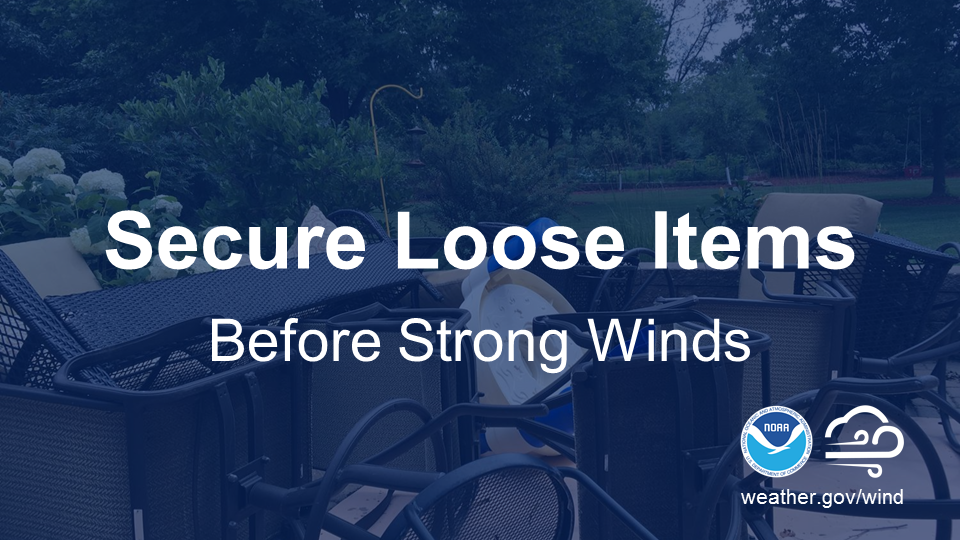
Hurricane force winds can easily destroy poorly constructed buildings and mobile homes. Debris such as signs, roofing material, and items left outside become flying missiles in high wind. Falling trees cause extensive damage to power lines, towers and underground water lines. This can cause extended disruptions of utility services. Damaging hurricane force winds can be just as devastating as tornadoes.
High Wind Infographics
 |
 |
 |
 |
 |
 |
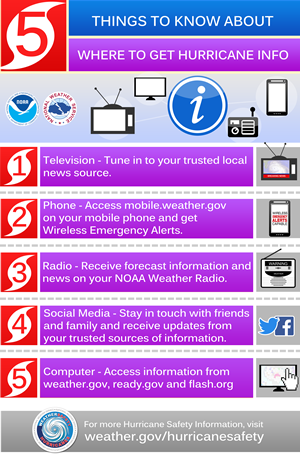
Identify Your Trusted Sources of Information
NOAA's National Hurricane Center is your official source for hurricane forecasts and the issuance of hurricane watches and warnings. Your local NOAA National Weather Service forecast office provides information regarding the expected impacts from the storm for your area. Emergency managers will make the decisions regarding evacuations.
Organizations such as FLASH make disaster safety recommendations. And the media outlets will broadcast this information to you. All work together to be your trusted sources, especially for those less able to take care of themselves.
Here are some additional suggestions regarding where to get trusted tropical storm and hurricane information:
 |
 |
 |
Wednesday
Get Moving When a Storm Threatens/Inland Flooding
|
|
|
|
|
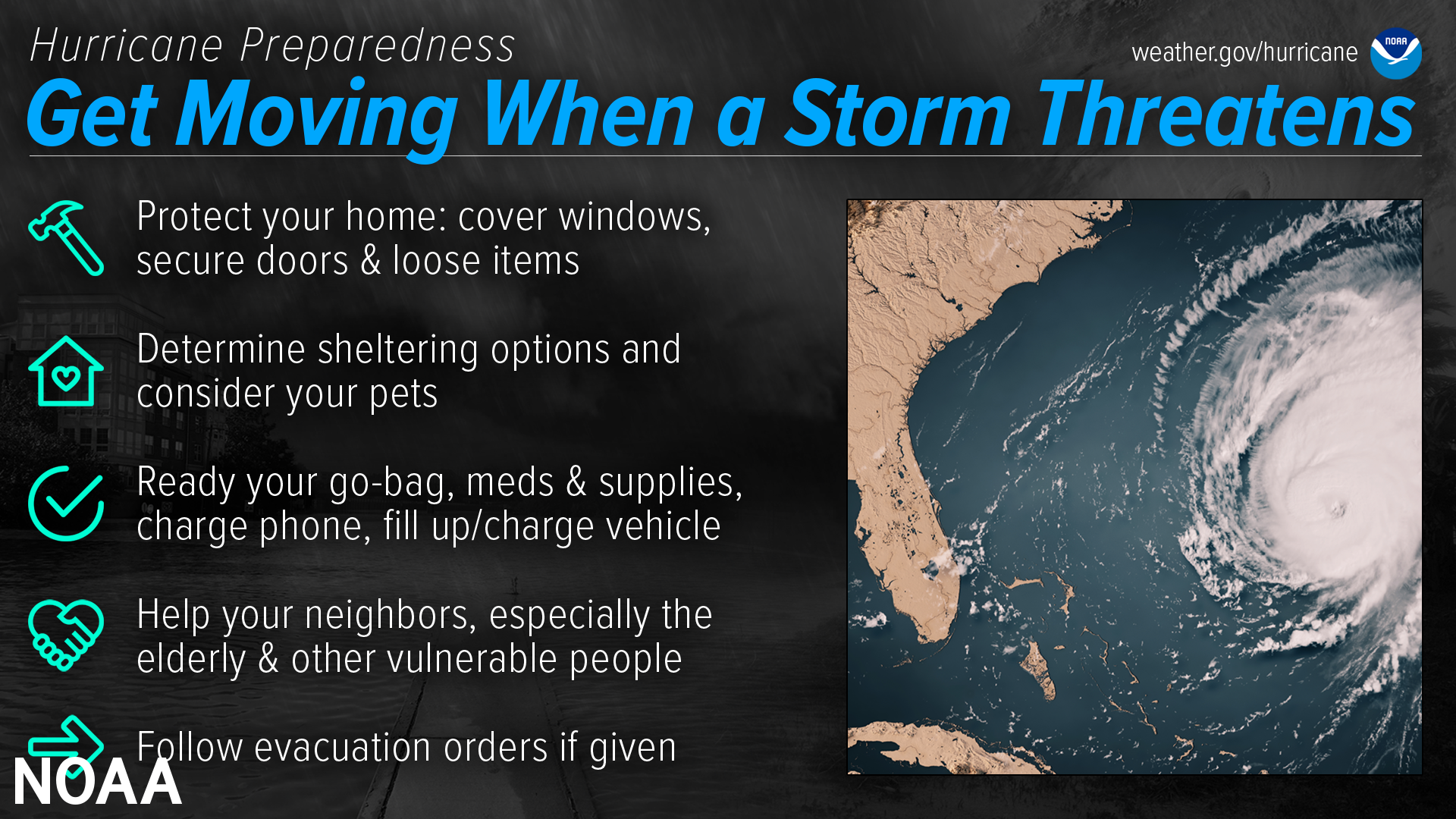
When a storm is forecast to impact your area, take action immediately to be ready. Ideally, longer-term preparedness actions such as having disaster supplies and an evacuation plan will have already been done before hurricane season, when the stores are stocked and time is on your side. When a storm threatens, there’s a lot more to do..
Protect Your Home
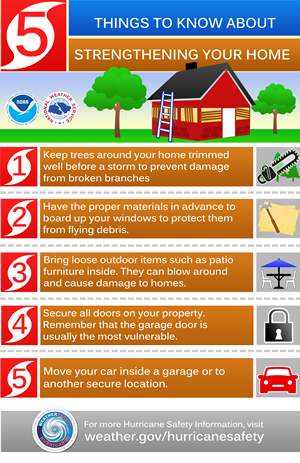
While longer-term home improvement needs to be done well ahead of time, when a storm threatens there are short-term actions to help protect your property. Board up windows, secure loose outdoor items, and secure all exterior doors. Move your vehicle to a safe location if you’re not using it to evacuate. If you are evacuating, unplug electrical equipment such as radios, televisions and small appliances (freezers and refrigerators also need to be unplugged if there is a risk of flooding). If you are instructed to do so, shut off water, gas and electricity before leaving.
Here are some tips for preparing and strengthening your home for tropical storms and hurricanes:
How-To: Protect Your Home in a FLASH
Determine Sheltering Options & Consider Your Pets
While longer-term home improvement needs to be done well ahead of time, when a storm threatens there are short-term actions to help protect your property. Board up windows, secure loose outdoor items, and secure all exterior doors. Move your vehicle to a safe location if you’re not using it to evacuate. If you are evacuating, unplug electrical equipment such as radios, televisions and small appliances (freezers and refrigerators also need to be unplugged if there is a risk of flooding). If you are instructed to do so, shut off water, gas and electricity before leaving.
Download the FEMA App to find local shelters
Ready Your Go-Bag, Meds & Supplies, Charge Phone, Fill Up/Charge Vehicle
Have a go bag ready to take things with you if you need to leave in a hurry. In addition to basic survival needs, don’t forget other supplies such as chargers and hygiene products. Plan to have enough for at least three days, and don’t forget about your pets. While preparing these basic needs, don't forget to keep your phone charged, and make sure to fill up/charge your vehicle as well. Your go-bag should also contain important personal and property documents, including your written communication plan.
Help Your Neighbors - Especially the Elderly & Other Vulnerable People
Many people rely on their neighbors before and after a disaster, and there are many ways you can help them. Help them prepare for a storm, and help them evacuate if needed. Share the latest forecast information with your community so that they know what to expect.
Follow Evacuation Orders If Given
Always follow evacuation orders from local authorities — don’t wait for a hurricane to intensify before deciding to follow the order. You want to leave early enough to avoid being trapped by severe weather. If time allows, unplug electrical equipment, leave a note detailing your whereabouts, and check to see if any neighbors need a ride.
Inland Flooding
Hurricane Florence Makes Landfall In 2018
|
|
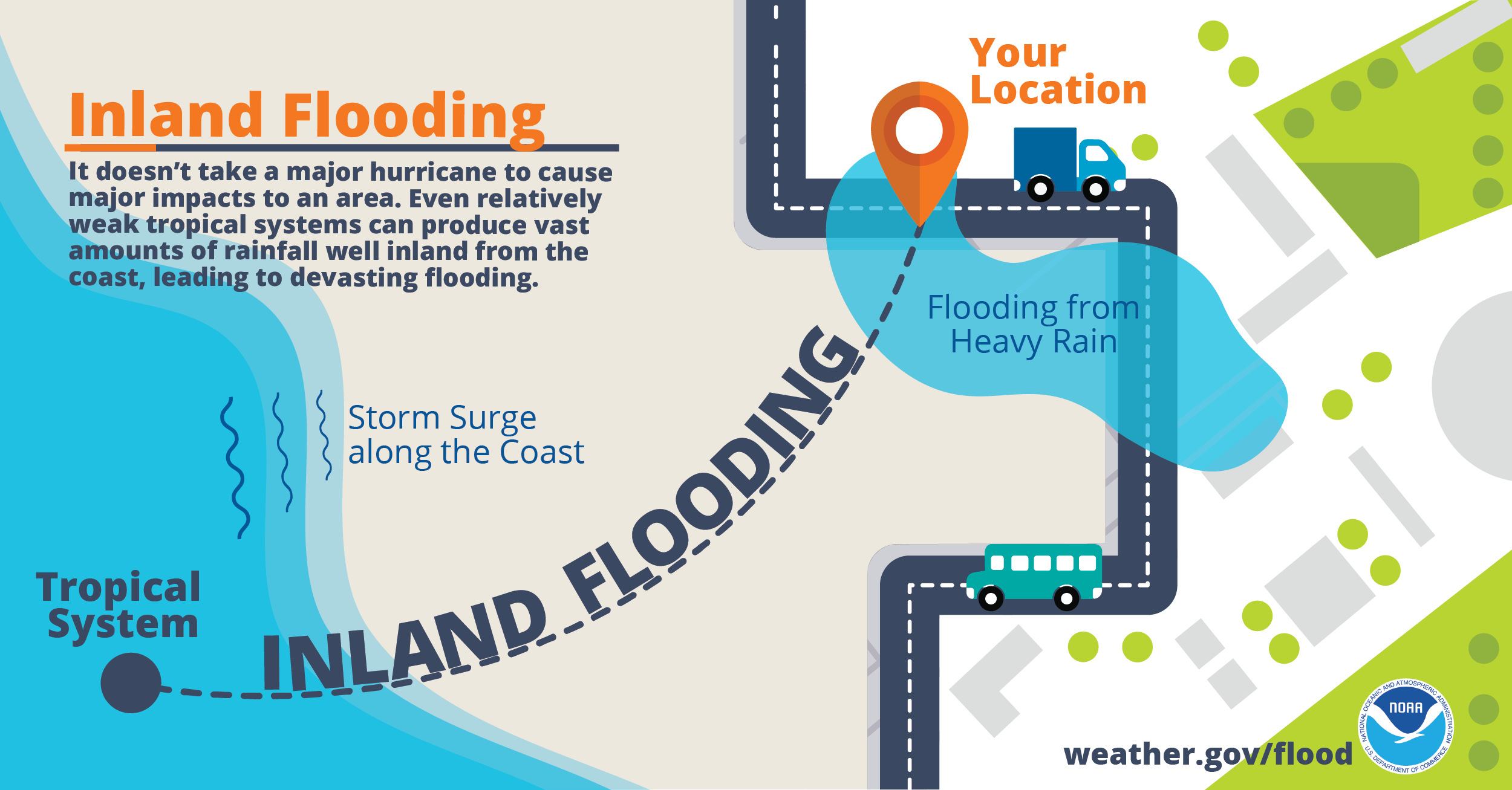
Inland flooding is the most deadly and serious threat hurricanes bring to inland areas of North Carolina. Hurricane Matthew in October 2016 generated record flooding across much of the coastal plain of North Carolina, claimed 28 lives, and left thousands homeless and entire towns under water. More recently, Hurricane Florence once again produced devastating inland flooding, and resulted in 11 flood-related deaths in North Carolina. Overall, most hurricane deaths over the past 30 years have been the result of flooding, many of which have occurred in automobiles as people attempt to drive through flooded areas where water covers the road. It is important to realize the amount of rain a tropical system produces is not related to the intensity of the wind. Weak hurricanes and even tropical storms have caused disastrous floods throughout history.
So what can you do? Anytime a hurricane or tropical storm threatens, think flooding. It is very important to determine if you live in an area at risk of flooding. If your yard or nearby roads around your home flood during ordinary thunderstorms, then you are at serious risk of flooding from torrential tropical rainfall. Those living near creeks, streams and drainage ditches should also closely watch water levels. Remember, extreme rainfall events bring extreme flooding typically not experienced in the past. During extreme events even those area which normally do not flood are at risk.
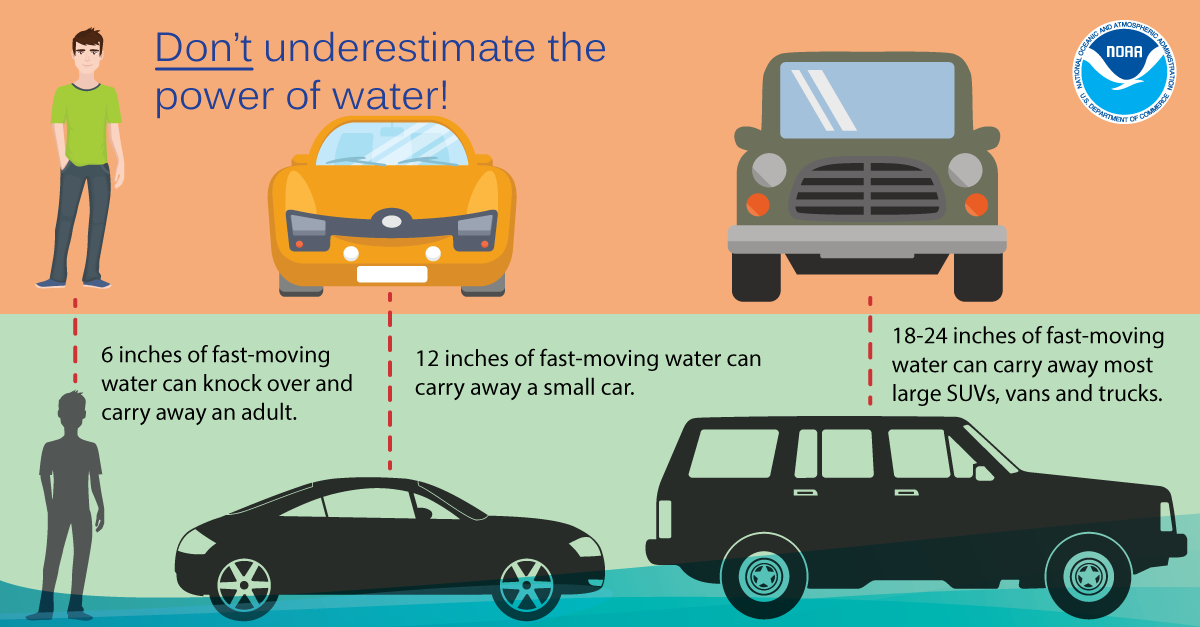
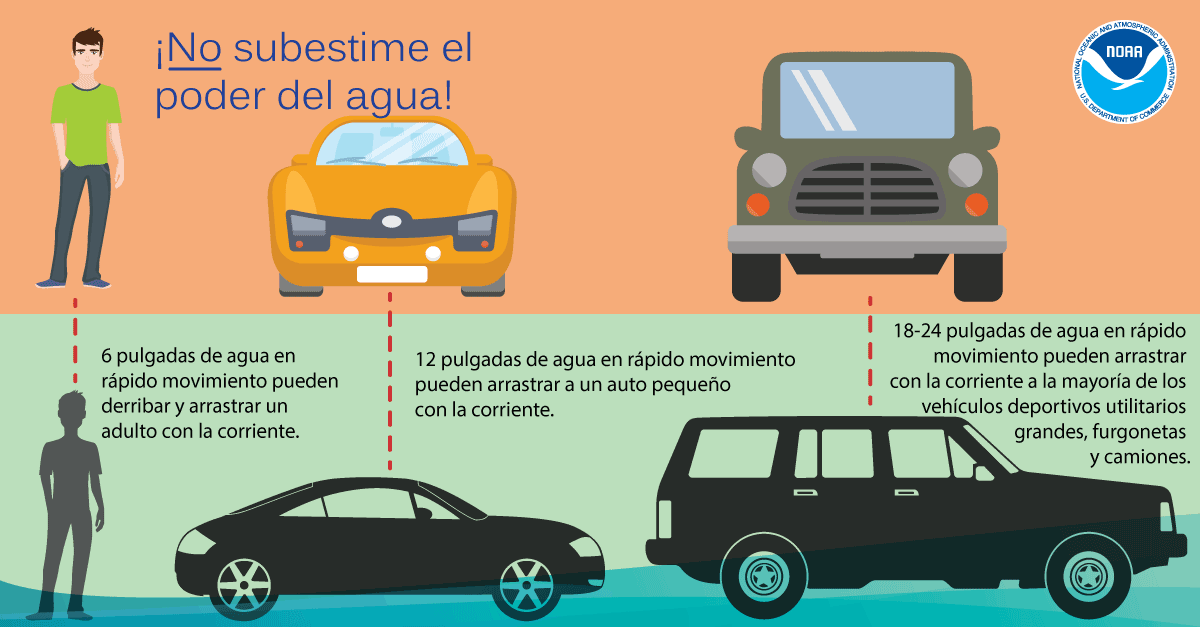
Always stay aware of road conditions and make sure your escape route is not becoming flooded by heavy rain. Never attempt to cross flowing water; instead, remember to turn around, don't drown. The reason that so many people drown during flooding is because few of them realize the incredible power of water. A mere six inches of fast-moving flood water can knock over an adult. It takes only two feet of rushing water to carry away most vehicles. This includes pickups and SUVs. Never allow children to play near streams, creeks or drainage ditches. As rain water runs off, streams, creeks, and ditches fill with running water that can easily sweep a child away.
Inland Flooding Infographics
 |
 |
 |
 |
 |
 |
Thursday
Stay Protected During Storms/Tornadoes
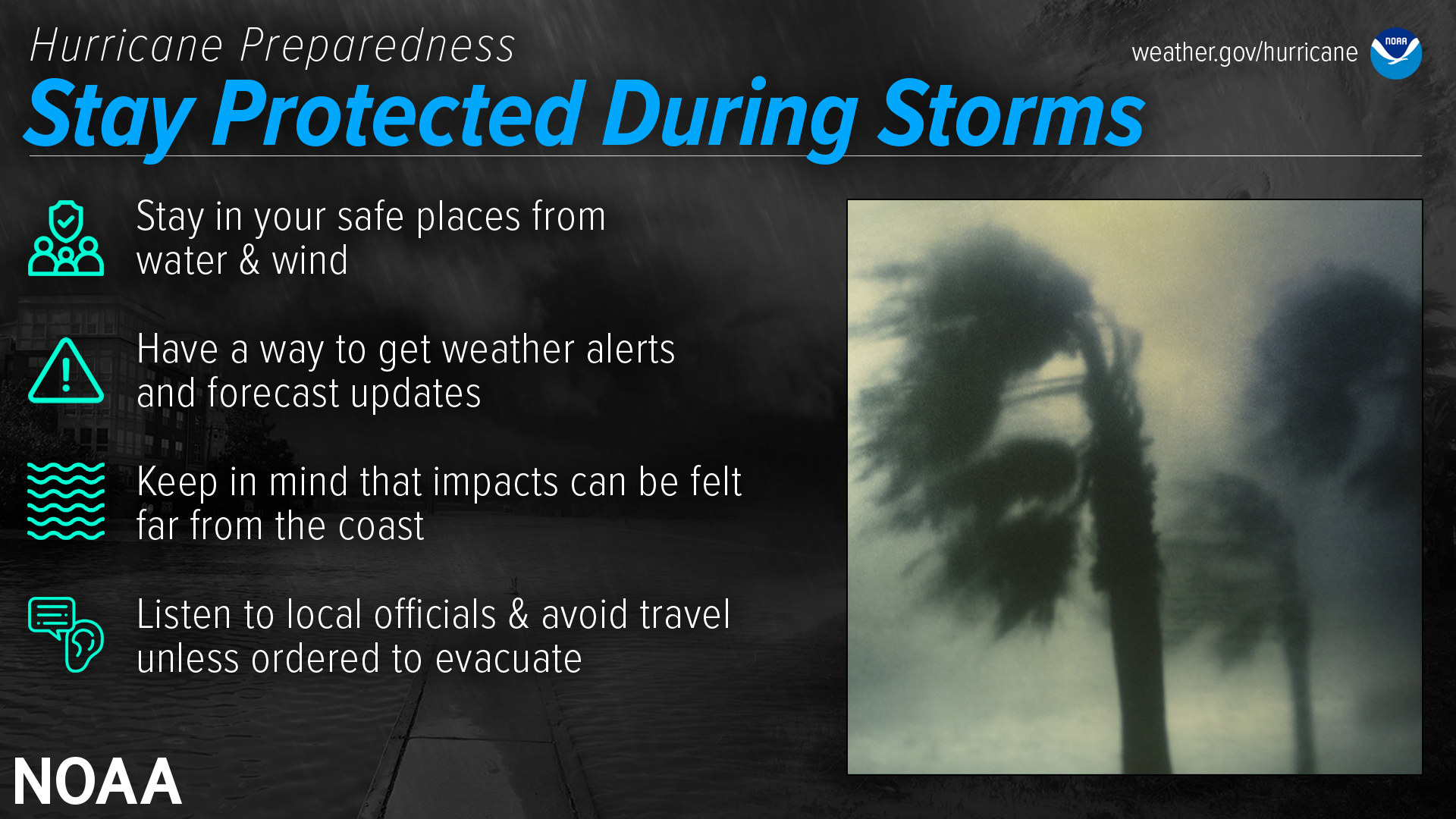
During a storm, whether you’ve evacuated or are sheltering in place, know what to expect from the hazards you may face. Remain vigilant, stay up-to-date with the latest forecasts and alerts, and continue to listen to local officials.
Stay in Your Safe Places From Water & Wind
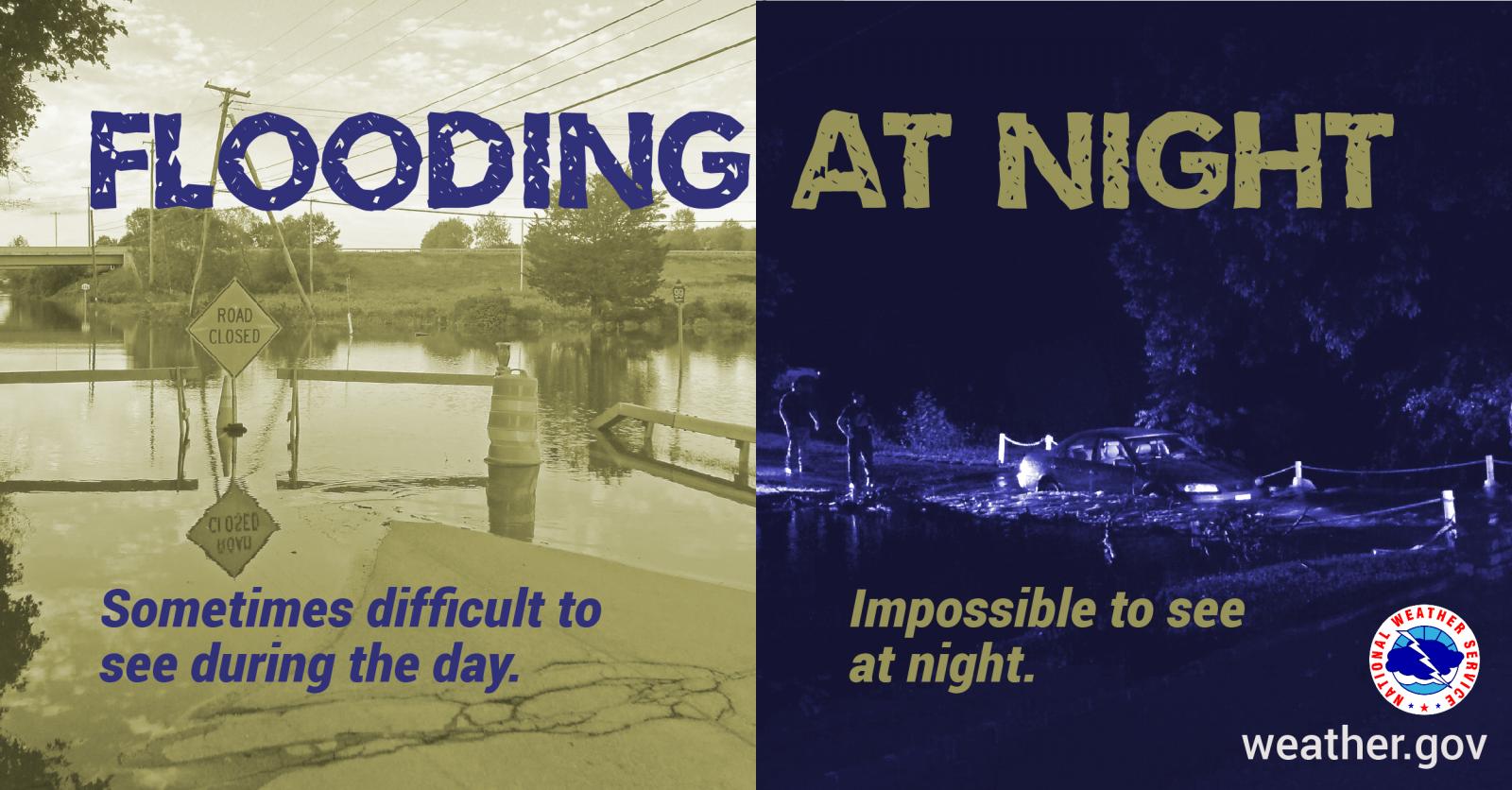
Always keep a safe distance from flooded and damaged areas. When you’re at risk from storm surge or flooding, it’s important to get to high ground away from bodies of water and any flood-prone areas. Evacuate if told to do so. Never drive through floodwaters or compromised bridges. Always pay attention to barriers and signage.
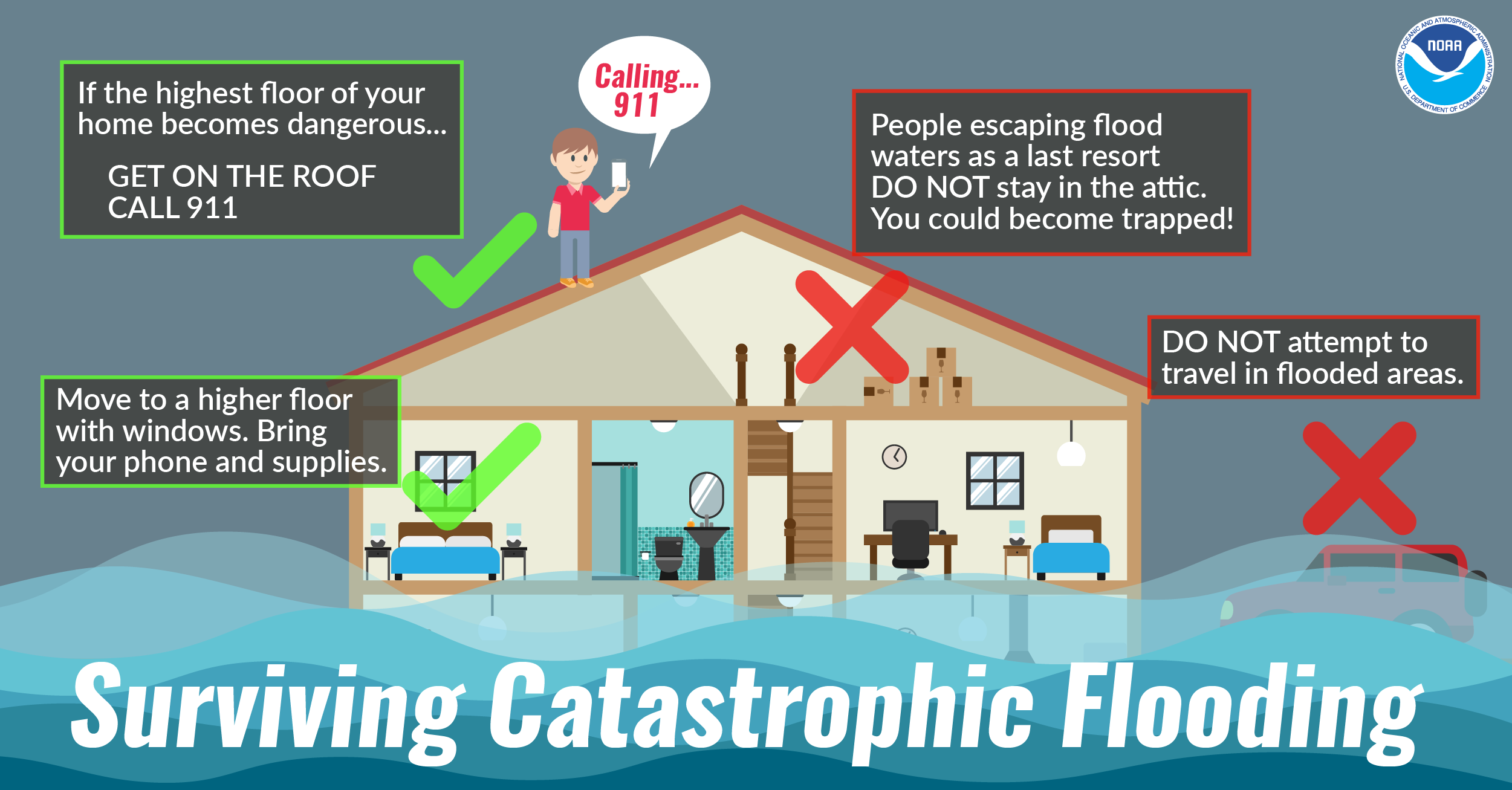
If your house becomes flooded and you’re still there, get higher in your house to escape the flood waters. If the highest floor of your home becomes dangerous, get on the roof and call 911.
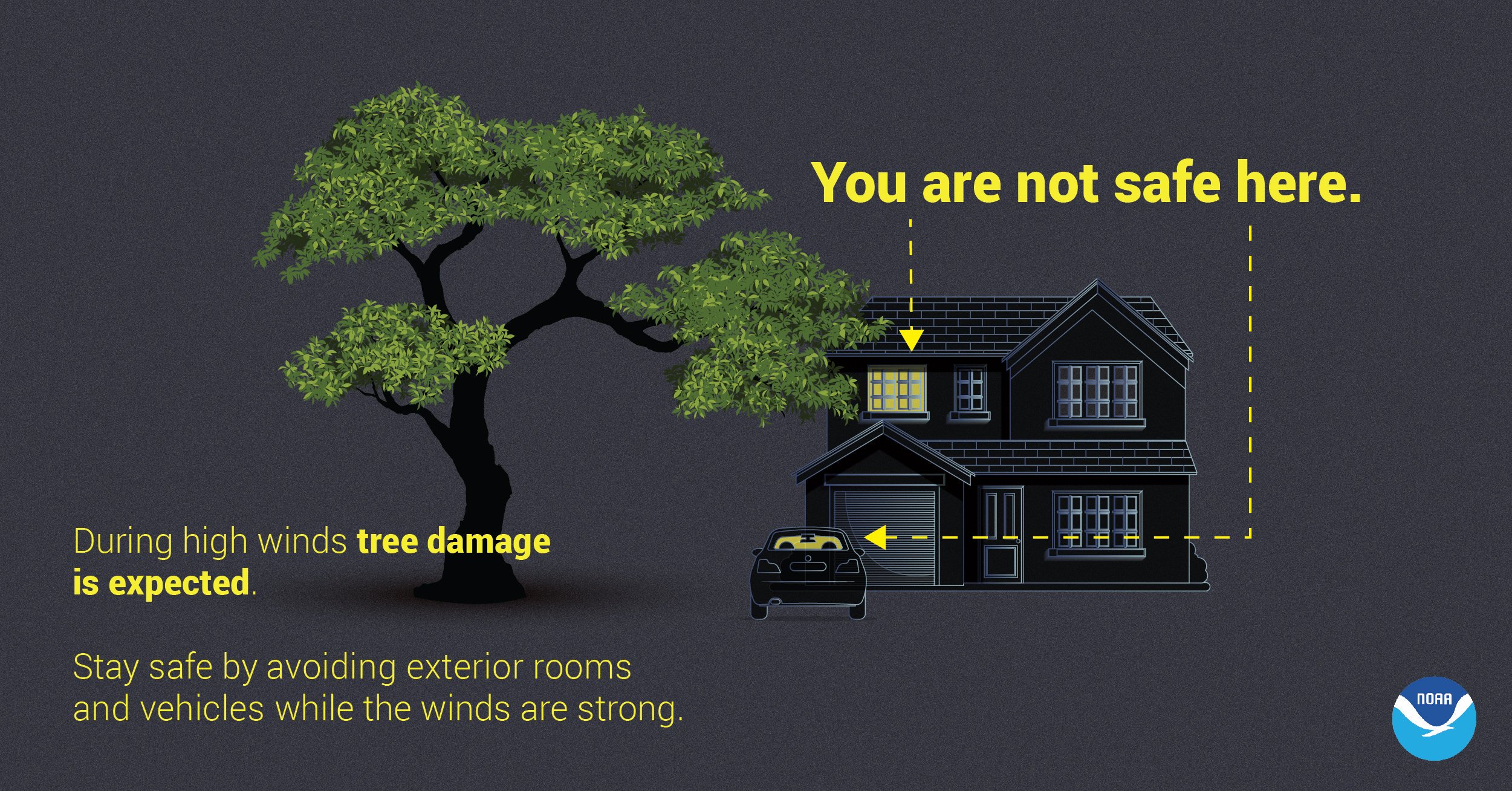
Though rain and storm surge cause more direct deaths, wind can also be very destructive and deadly in hurricanes. Winds can be stronger higher above ground level. This can put high-rise buildings at a greater risk. To protect yourself from wind, the best thing you can do is put as many walls as possible between you and the outside. An interior room without windows is the safest place you can be in a building. You can cover yourself with a mattress and wear a helmet for added protection. If your area is under an Extreme Wind Warning, take shelter immediately. Make sure to stay sheltered until the threat is gone.
Have a Way to Get Weather Alerts & Forecast Updates
Make sure to have Wireless Emergency Alerts enabled on your phone to receive Warnings and other alerts. Always pay attention to the latest forecast as conditions can change quickly and storms can rapidly intensify from a tropical storm to a major hurricane. Even small changes in the storm’s track can make a big difference.
Keep in Mind That Impacts Can Be Felt Far From the Coast
Remain vigilant even if you’re far from the most damaging winds. Inland flooding can be felt hundreds of miles from the coast. Never drive through floodwaters! A car can be swept away with only a foot of water, and there’s no way to know if the road itself has collapsed when hidden by water.
Listen to Local Officials & Avoid Travel Unless Ordered to Evacuate
Local officials can provide you with up-to-date information as the situation changes in your area. Evacuation orders may still be given at this late stage — leave immediately if ordered! Follow recommended evacuation routes — do not take shortcuts, as they may be blocked. Be alert for road hazards such as washed-out roads or bridges and downed power lines. Never drive through floodwaters.
Tornadoes
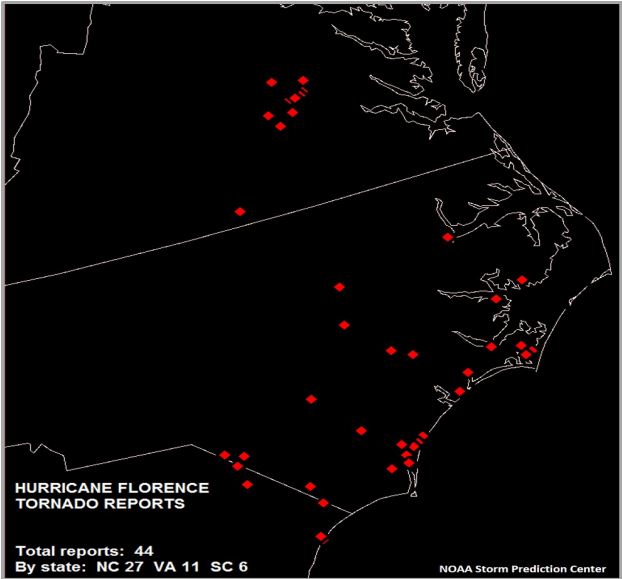
ANY tropical system is capable of producing tornadoes! Tropical tornadoes are often short lived but they can produced enhanced areas of damage. Sometimes these tornadoes can occur in the outer rain bands, well ahead of the center of the storm. In 2019 Hurricane Dorian produced an EF-2 tornado in Emerald Isle, NC with estimated winds of 115 MPH. In 2018, Hurricane Florence produced 27 tornadoes in North Carolina! To prepare for the possibility of tornadoes it's important to have multiple ways to receive warnings, so you can seek shelter quickly if a warning is issued for your area.
Hurricane Florence Tornado Reports
Friday
Use Caution After Storms/Rip Currents
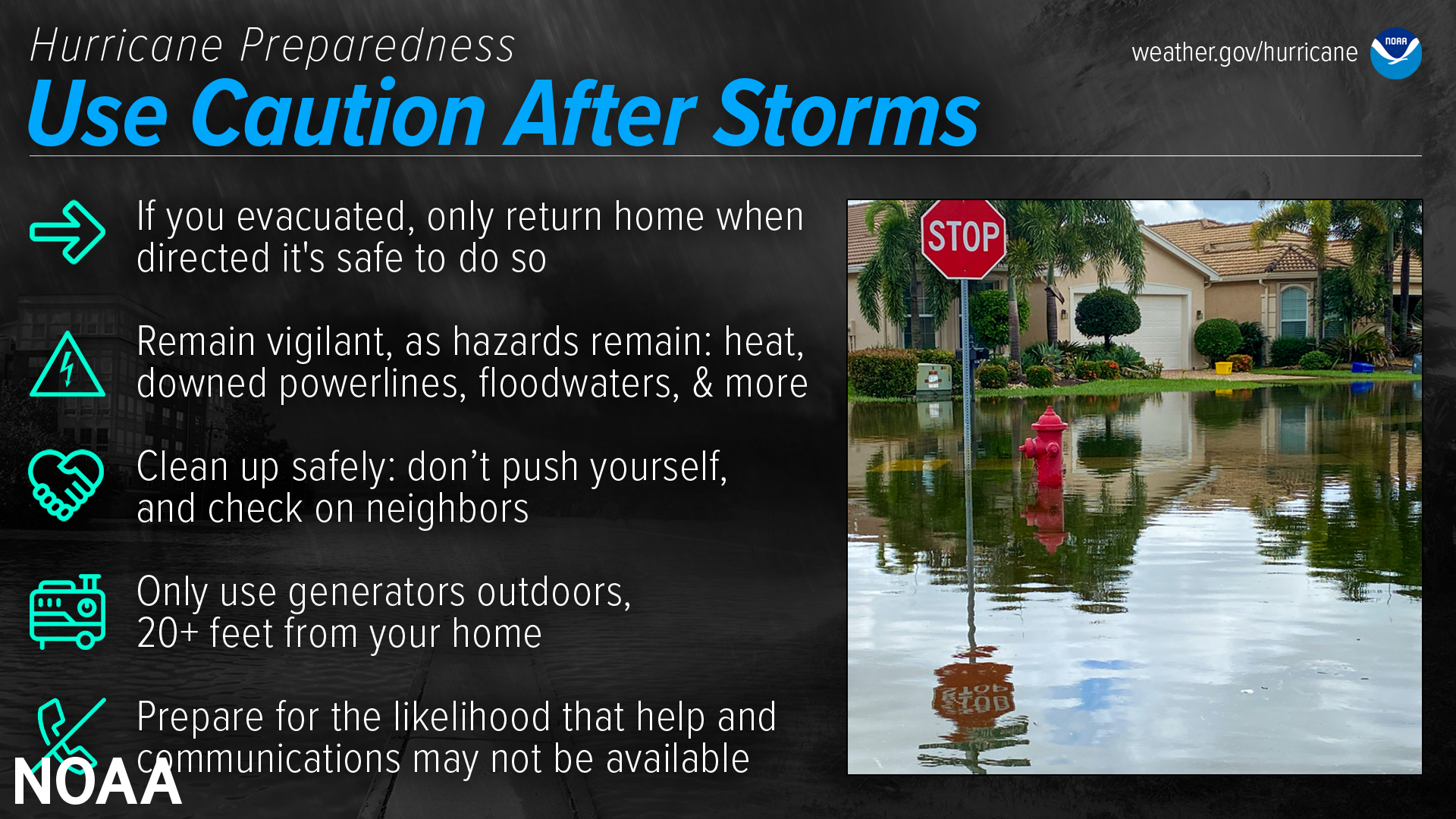
Dangers remain even after the skies turn blue. This is NOT the time to put your guard down. Nearly half of hurricane fatalities occur after the storm.
If You Evacuated, Only Return Home Only When Told to Do So
Return home ONLY when officials say it is safe. Check with local officials both where you’re staying and back home before you travel.
Remain Vigilant for Continuing Hazards
Clean Up Safely: Don't Push Yourself and Check On Neighbors
Stay hydrated, wear light, loose-fitting clothing, and clean up during cooler hours if possible. Don’t push yourself: straining the body can lead to heart attacks, heat strokes, and other serious issues. Perform cleanups slowly, taking lots of breaks. Make sure to check on your elderly neighbors and other vulnerable people in your community. If your area is under a Heat Advisory, use extreme caution and consider cleaning up when the heat has subsided.
Practice Portable Generator Safety
Be very careful with portable generators: carbon monoxide poisoning is one of the leading causes of death in areas dealing with power outages. Never use a generator inside your home or garage, even if doors and windows are open. Only use generators outside, more than 20 feet away from your home, doors, and windows.
Help and Communications May Not Be Readily Available
After a hurricane, emergency responders may be overwhelmed. Be aware that it could take hours or days for them to reach your area. Communication systems may be impacted, and making phone or video calls might be difficult due to network congestion. If possible, communicate via text, email, or social media.
Rip Currents
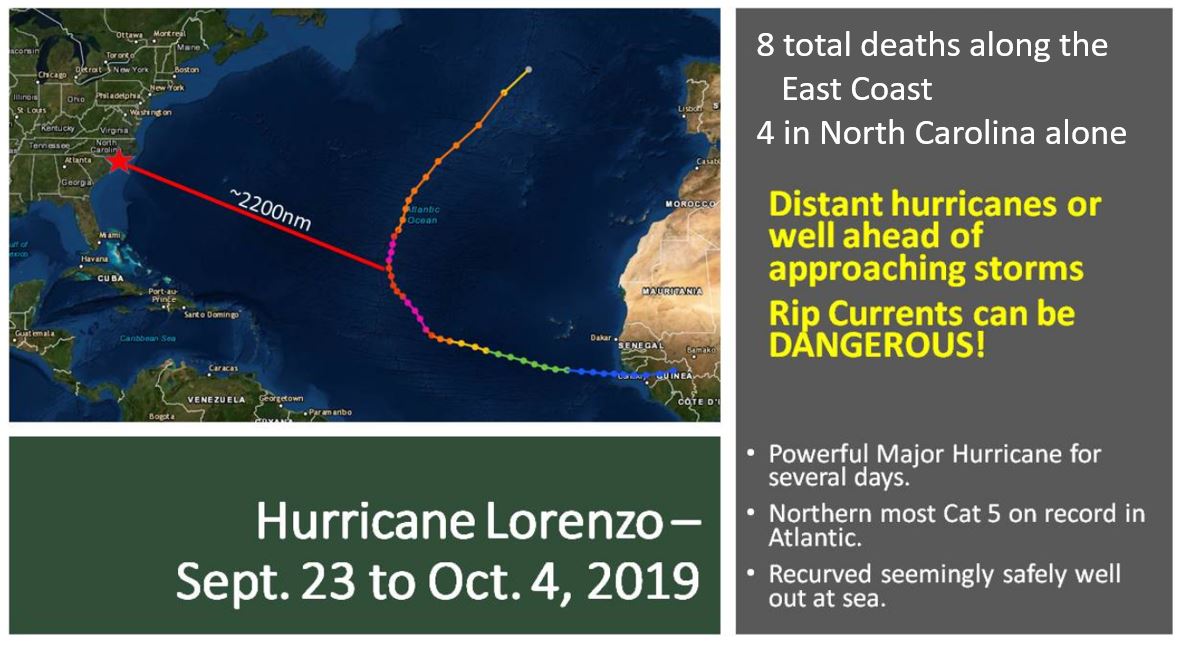
Even when hurricanes stay out at sea, the North Carolina coast can still be impacted by large swells and deadly rip currents, thus making it important to stay aware of the tropics and weather forecasts all throughout the hurricane season. Rip currents are channelized currents of water flowing away from shore at surf beaches. Rip currents are quite common and can be found on many surf beaches every day. They typically form at breaks in sandbars, and also near structures such as jetties and piers. While the risk of rip currents occurring along the North Carolina beaches increases when a tropical cyclone is out in the Atlantic, the risk increases even more so when a tropical cyclone is moving toward the North Carolina coast, especially when the storm is a day or two away from making landfall along the Carolina coast.
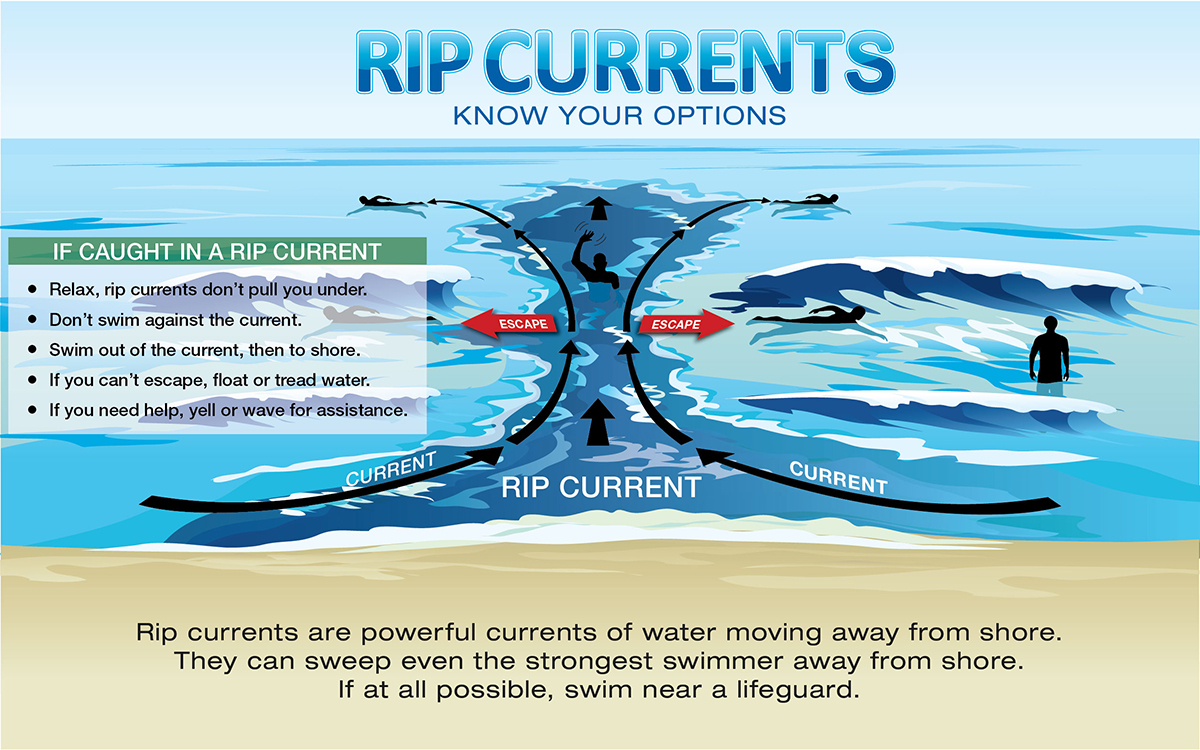
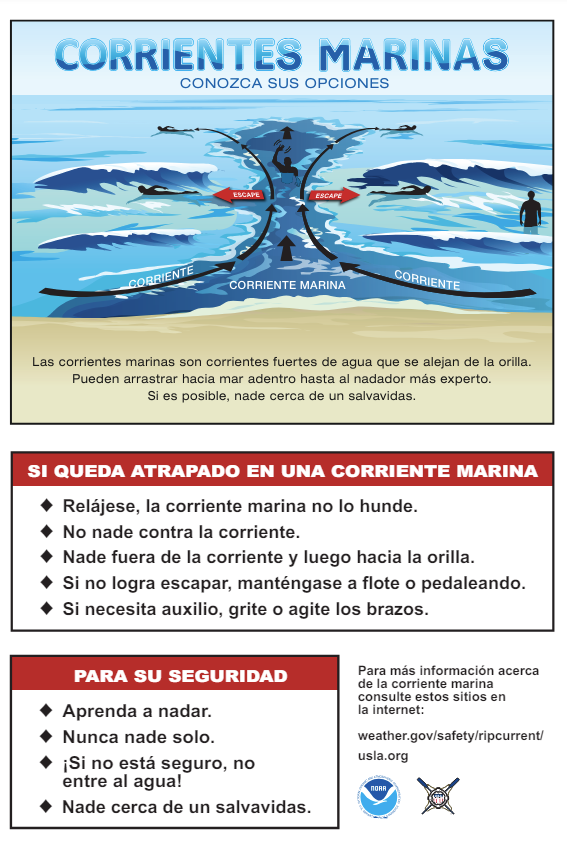
Rip currents are dangerous because they can pull people away from shore. Rip current speeds can vary from moment to moment and can quickly increase to become dangerous to anyone entering the surf. Rip currents can sweep even the strongest swimmer out to sea. Some clues that a rip current may be present include a channel of churning, choppy water, a difference in water color, a break in the incoming wave pattern, and a line of foam, seaweed or debris moving seaward.
If you find yourself caught in a rip current, stay calm and don’t fight the current. Escape the current by swimming in a direction following the shoreline. When free of the current, swim at an angle—away from the current—toward shore. If you are unable to escape by swimming, float or tread water. When the current weakens, swim at an angle away from the current toward shore. If at any time you feel you will be unable to reach shore, draw attention to yourself: face the shore, call or wave for help. Also, don’t become a victim while trying to help someone else! Many people have died in efforts to rescue rip current victims. Instead, get help from a lifeguard. If a lifeguard is not present, yell instructions on how to escape. If possible, throw the rip current victim something that floats. Call 9-1-1 for further assistance.
Rip Current Safety
Beach Flags
Saturday
Take Action Today
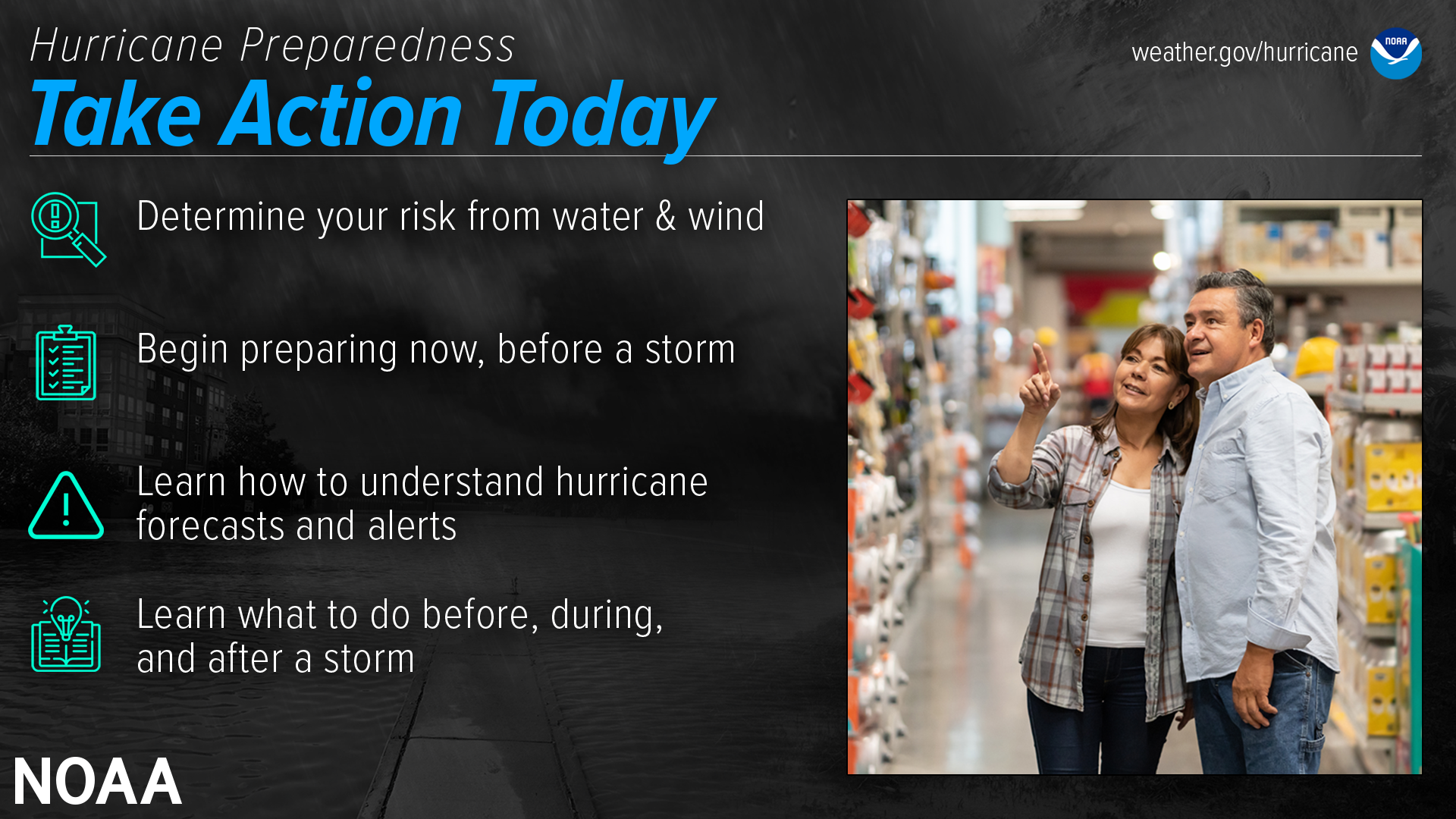
Take Action Today
Are you ready for hurricane season? Take action TODAY to be better prepared for when the worst happens. Understand your risk from hurricanes, and begin pre-season preparations now. Make sure you understand how to interpret forecasts and alerts, and know what to do before, during, and after a storm. Even if you are already well-prepared and knowledgeable there may be additional things you could do or learn to be even more prepared!
Deaf & Hard of Hearing
#WeatherReady #SeeAFlashDashInside
Hurricane Awareness (ASL Video)
Hurricane awareness in American Sign Language.
Check out this video that covers National Weather Service information, safety, preparedness, and more. Also captioned in English! youtu.be/xKdkYi9VAxY
Flood Safety (ASL Video)
Did you know flooding is the leading cause of death due to storms? Learn more about Flood Safety with this video in American Sign Language and captioned in English! youtu.be/RUf3ErtEbG4
Rip Current Safety (ASL Video)
Did you know that 100 people die each year due to rip currents at the beach?
Learn what rip currents are and how to spot the clues with this video in American Sign Language and captioned in English! youtu.be/kgmqTAe6mUU
Tornado Safety (ASL Video)
You may only have seconds to get to your safe place when the next tornado occurs!
Learn where to shelter and how to get warning information from the National Weather Service with this video in American Sign Language!
youtu.be/aEPC5F4Zios
See a Flash, Dash Inside (ASL Video)
If you are outdoors and see a flash of lightning or feel the rumble of thunder, dash inside immediately! Check out our Lightning Safety video in American Sign Language and captioned in English!
NOAA Weather Radio (ASL Video)
NOAA Weather Radios receive warnings, watches, forecasts, and other hazard information 24 hours a day. Why would Deaf people want a radio? They can be used as a way to alert you or wake you up at night! Some come with flashing lights, vibrating alarm attachments, and color displays with text readouts for use by those with hearing loss. youtu.be/A4izxOnKnug
General Safety and Preparedness Tips (ASL Video)
Having a plan is important in times of emergency, and this includes building an emergency preparedness kit before a disaster. Learn how with this video in American Sign Language.
youtu.be/XWEvqy0e9-0
Hurricane Preparedness (Español)
Estar listo para los desastres requiere preparación, no la suerte. Conozca su riesgo, haga un plan y tenga un kit. www.listo.gov Haga clic aquí para obtener una colección de infografías sobre seguridad contra huracanes en español: www.weather.gov/translate/infographics.html?type=tropical&lan=SPA
Conozca Su Riesgo: Agua y Viento (Know Your Risk: Wind & Water)
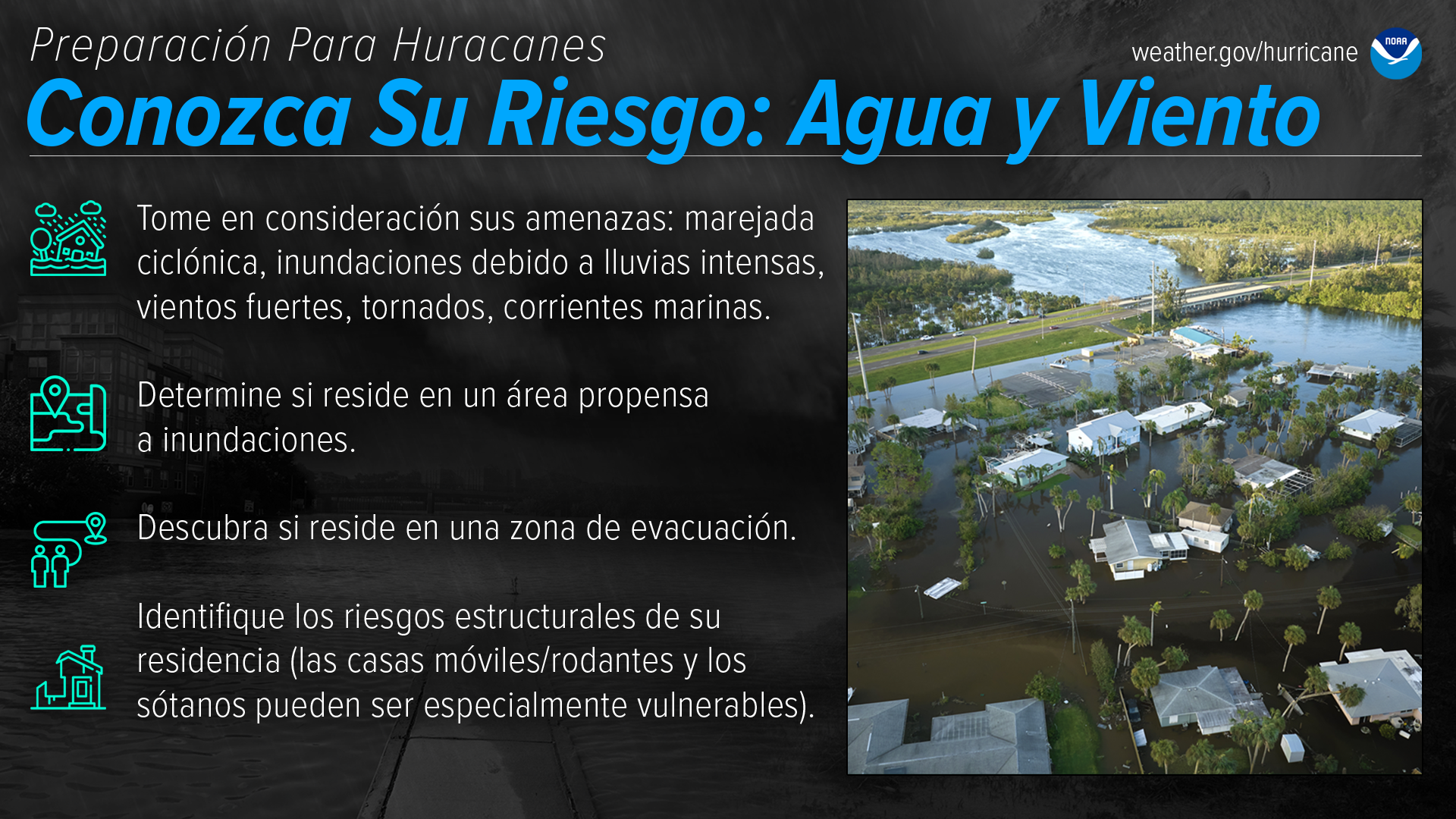
El primer paso para prepararse para los huracanes es conocer su riesgo. Averigüe hoy qué tipos de peligros del agua o viento podrían ocurrir donde reside. Los huracanes no son solo un problema costero. Los impactos del viento y el agua se pueden sentir a cientos de millas tierra adentro, e impactos significativos pueden ocurrir independientemente de la fuerza de la tormenta. Conozca si reside en un área propensa a inundaciones o en una zona de evacuación, e identifique las vulnerabilidades estructurales de su residencia. noaa.gov/conozca-su-riesgo-agua-y-viento
Prepárese Antes de la Temporada de Huracanes (Prepare Before Hurricane Season)
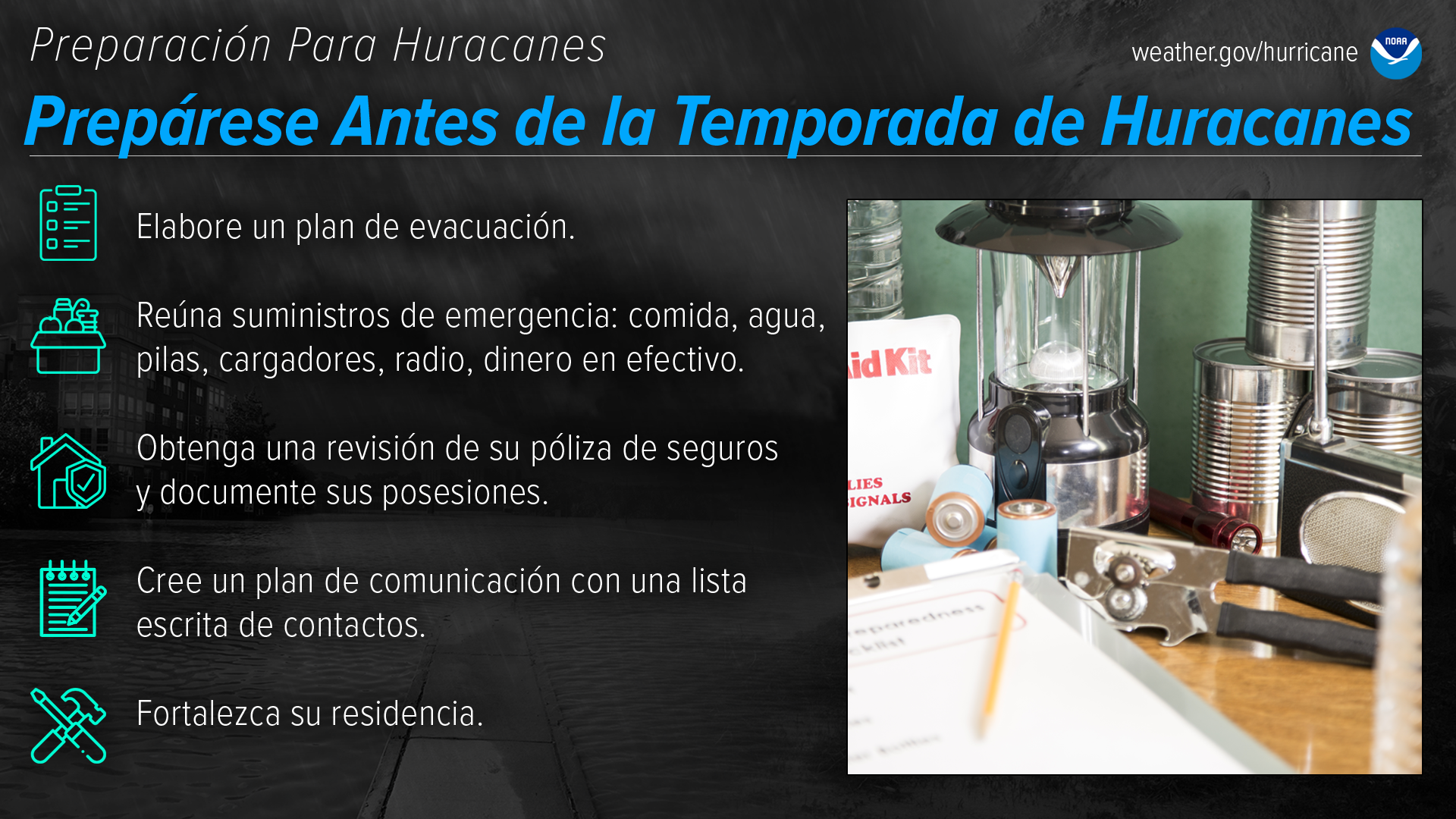
El mejor momento para prepararse es ANTES del comienzo de la temporada de huracanes. Evite tener que apresurarse con los preparativos que pueden salvarle la vida esperando hasta que sea demasiado tarde. Obtenga sus suministros de emergencia mientras las estanterías están aún llenas y obtenga una revisión de su póliza de seguros con anticipación, ya que el seguro contra inundaciones requiere un período de espera de 30 días. noaa.gov/prep-rese-antes-de-la-temporada-de-huracanes
Comprenda el Pronóstico (Understand Forecast Information)
Prepárese para la temporada de huracanes aprendiendo cómo entender los pronósticos. Estos le pueden brindar mucha información sobre lo que se espera, incluyendo las trayectorias de la tormenta, las cantidades de lluvia, la velocidad del viento y más. Hay mucha información disponible en los días previos a una tormenta y es importante comprender lo que significa. noaa.gov/comprenda-el-pron-stico
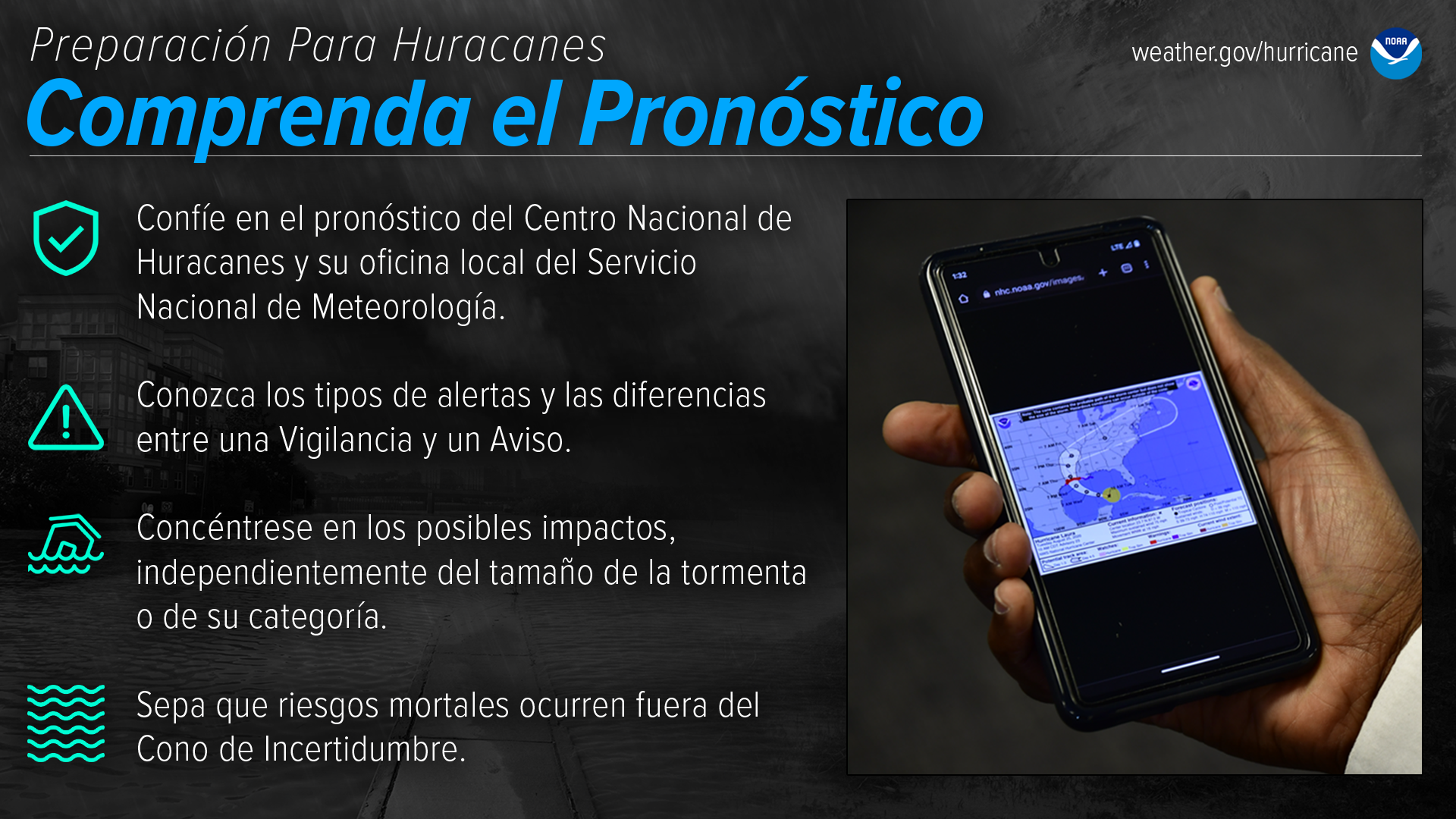
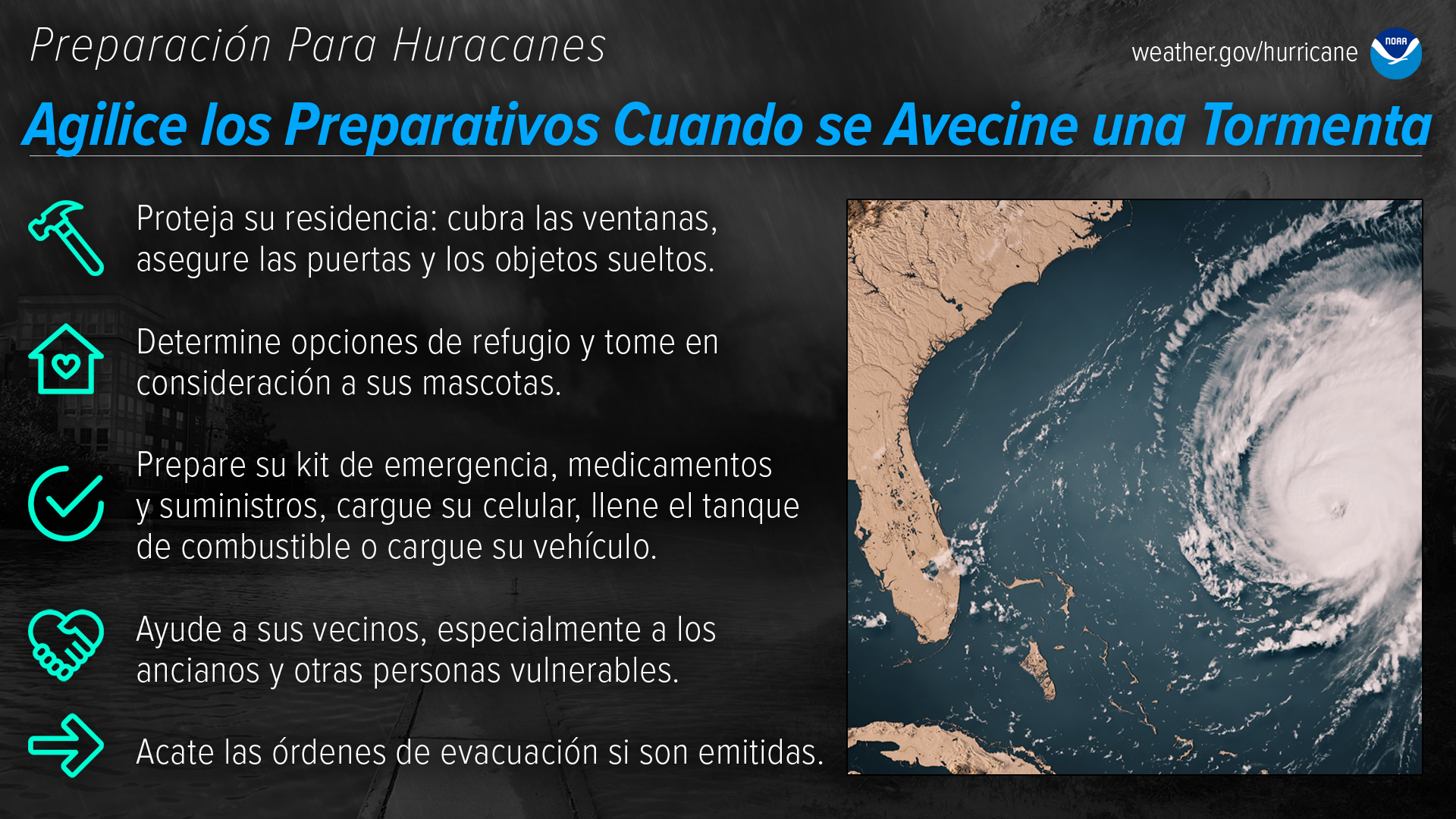
Agilice los Preparativos Cuando se Avecine una Tormenta (Get Moving When a Storm Threatens)
¿Sabe qué debe hacer cuando se avecina una tormenta? Prepárese para la temporada de huracanes tomándose el tiempo ahora para comprender las acciones necesarias cuando el tiempo es esencial. noaa.gov/agilice-los-preparativos-cuando-se-avecine-una-tormenta
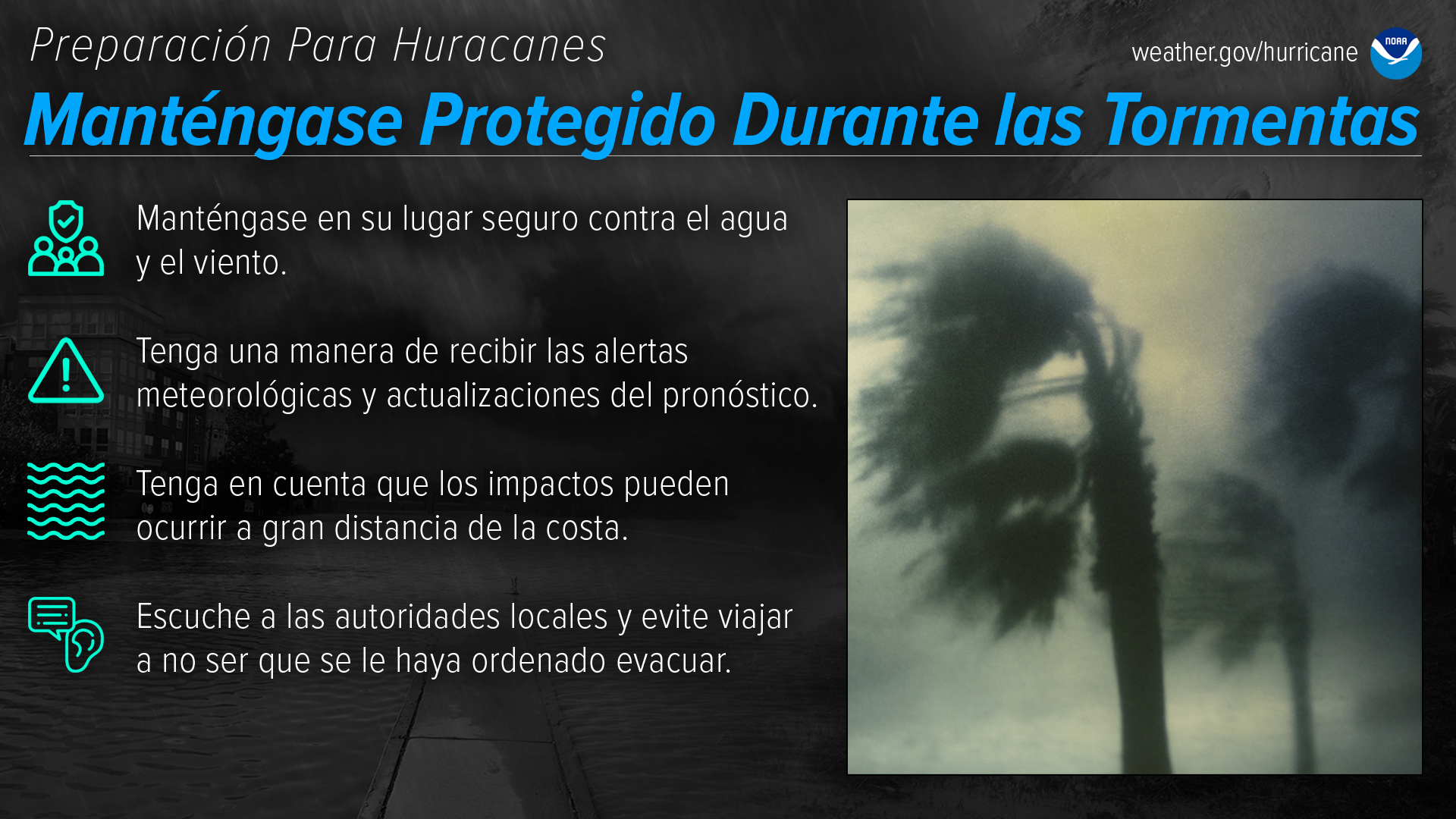
Manténgase Protegido Durante las Tormentas (Stay Protected During Storms)
Esté preparado para la temporada de huracanes conociendo qué debe hacer durante una tormenta. Ya sea que haya evacuado o que se esté refugiando en casa, sepa qué esperar de los peligros que podría enfrentar. Permanezca vigilante, manténgase actualizado con los últimos pronósticos y alertas, y continúe escuchando a las autoridades locales. noaa.gov/mant-ngase-protegido-durante-las-tormentas
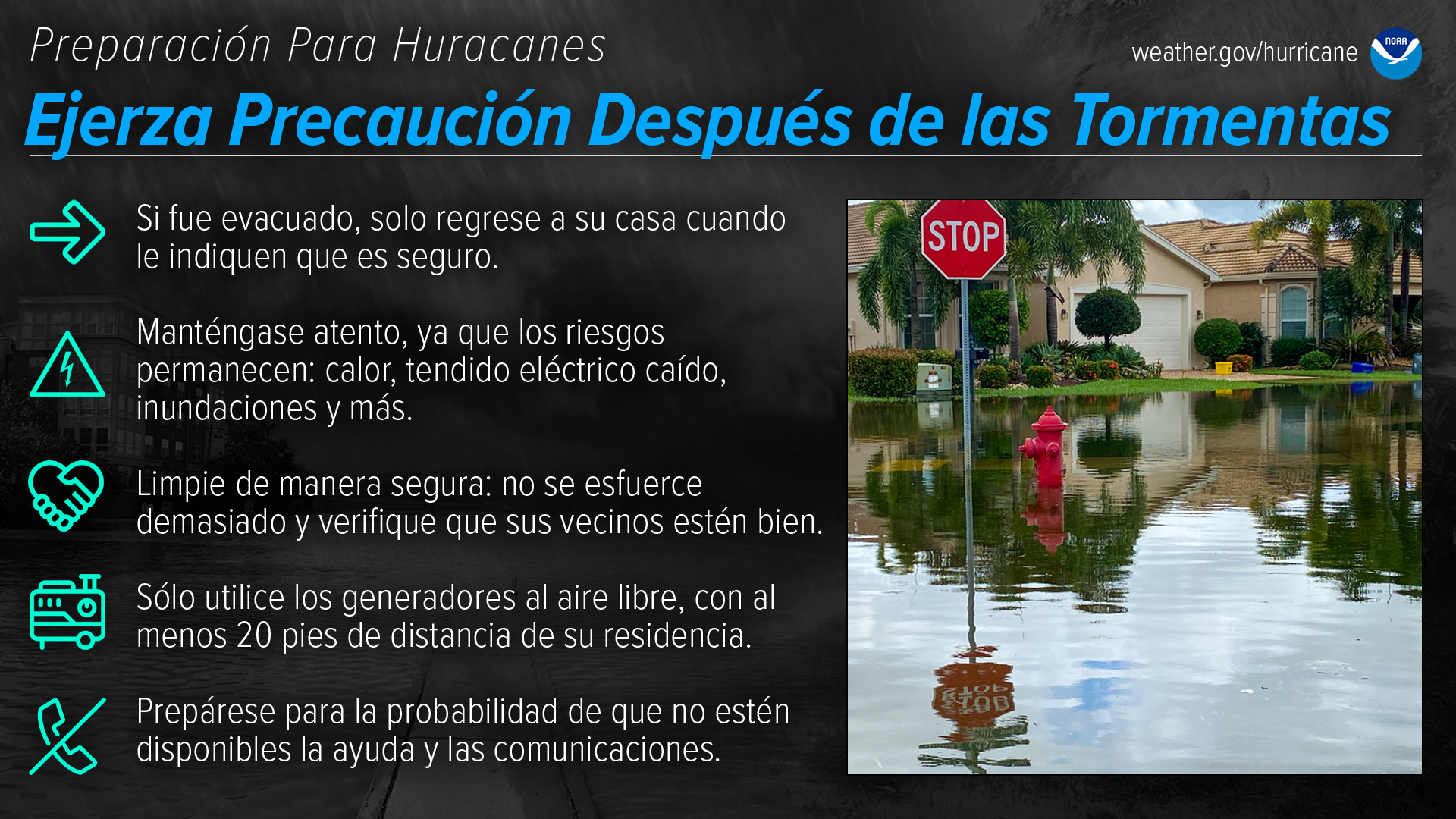
Ejerza Precaución Después de las Tormentas (Use Caution After Storms)
Comprender los peligros que persisten luego de una tormenta es parte clave de las preparaciones para los huracanes. Este NO es momento para bajar la guardia. Casi la mitad de las muertes por huracanes ocurren después de la tormenta. noaa.gov/ejerza-precauci-n-despu-s-de-las-tormentas
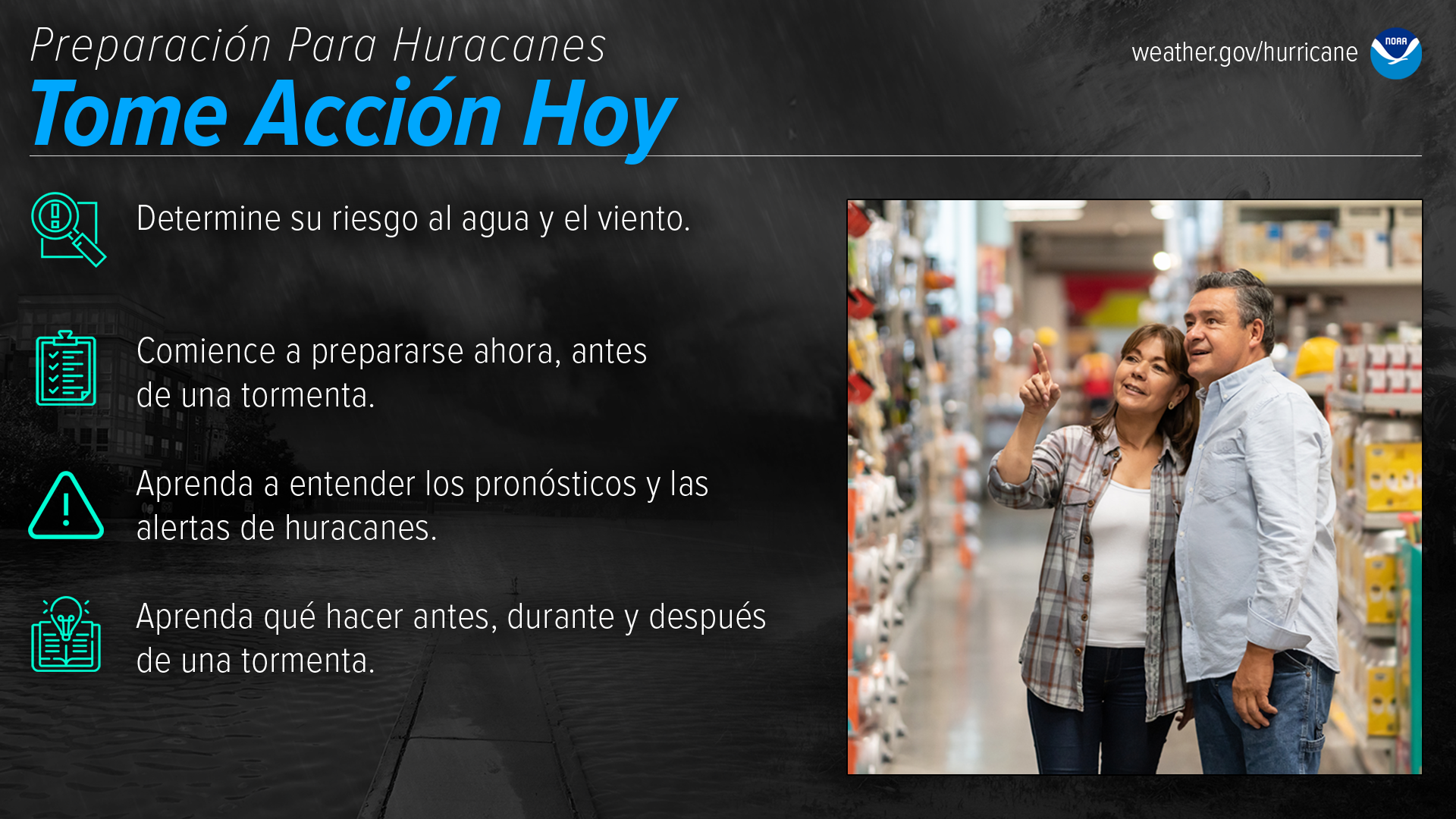
Tome Acción Hoy (Take Action Today)
¿Está listo para la temporada de huracanes? Tome acción HOY para estar mejor preparado para cuando lo peor ocurra. Comprenda su riesgo de los huracanes y comience los preparativos de pretemporada ahora. Asegúrese de entender cómo interpretar los pronósticos y las alertas, y saber qué hacer antes, durante y después de una tormenta. Incluso si se siente listo, pueden haber cosas adicionales que podría hacer o aprender. noaa.gov/tome-acci-n-hoy
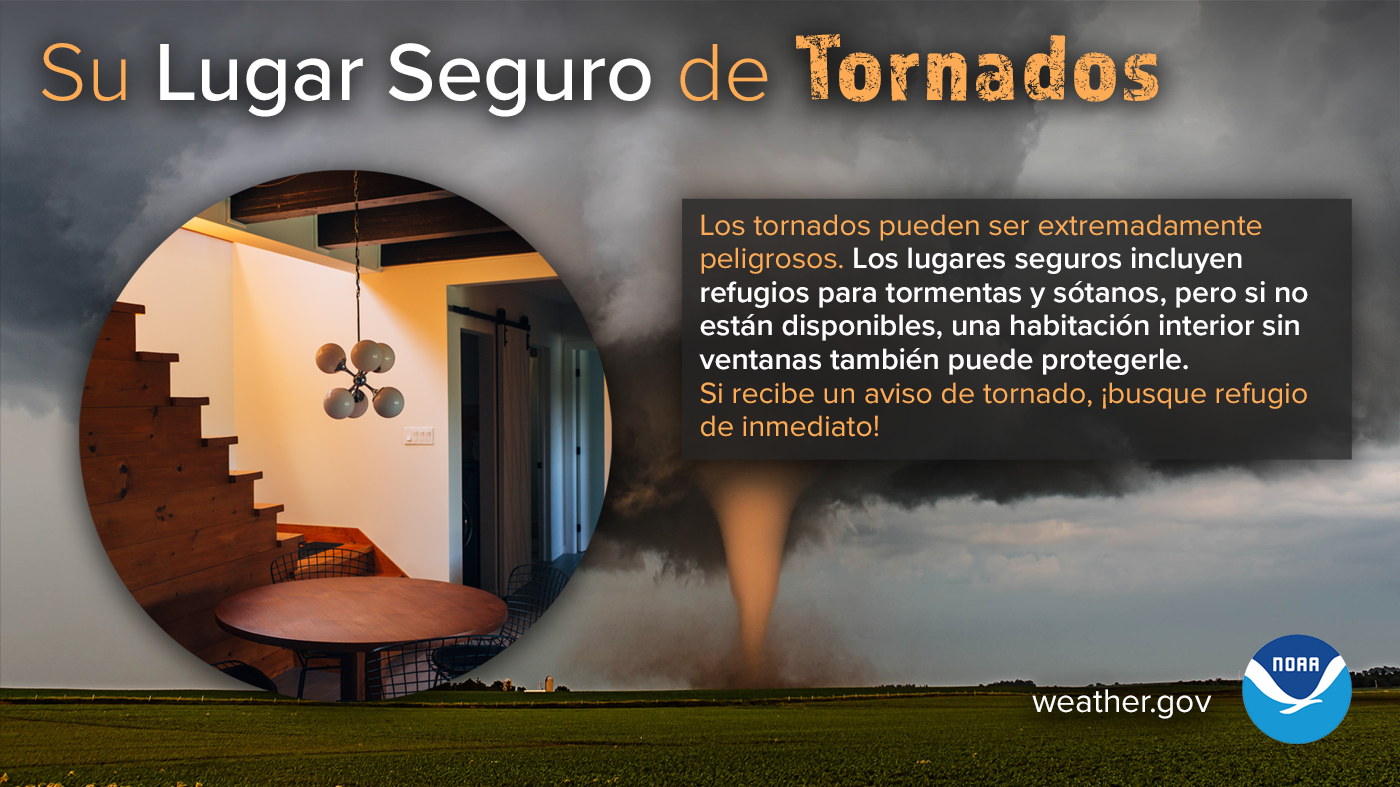
Su Lugar Seguro de Tornados (Your Safe Place from Tornadoes)
Los tornados pueden ser extremadamente peligrosos. Los lugares seguros incluyen refugios para tormentas y sótanos, pero si no están disponibles, una habitación interior sin ventanas también puede protegerle. Si recibe un aviso de tornado, ¡busque refugio de inmediato! weather.gov/safety/tornado
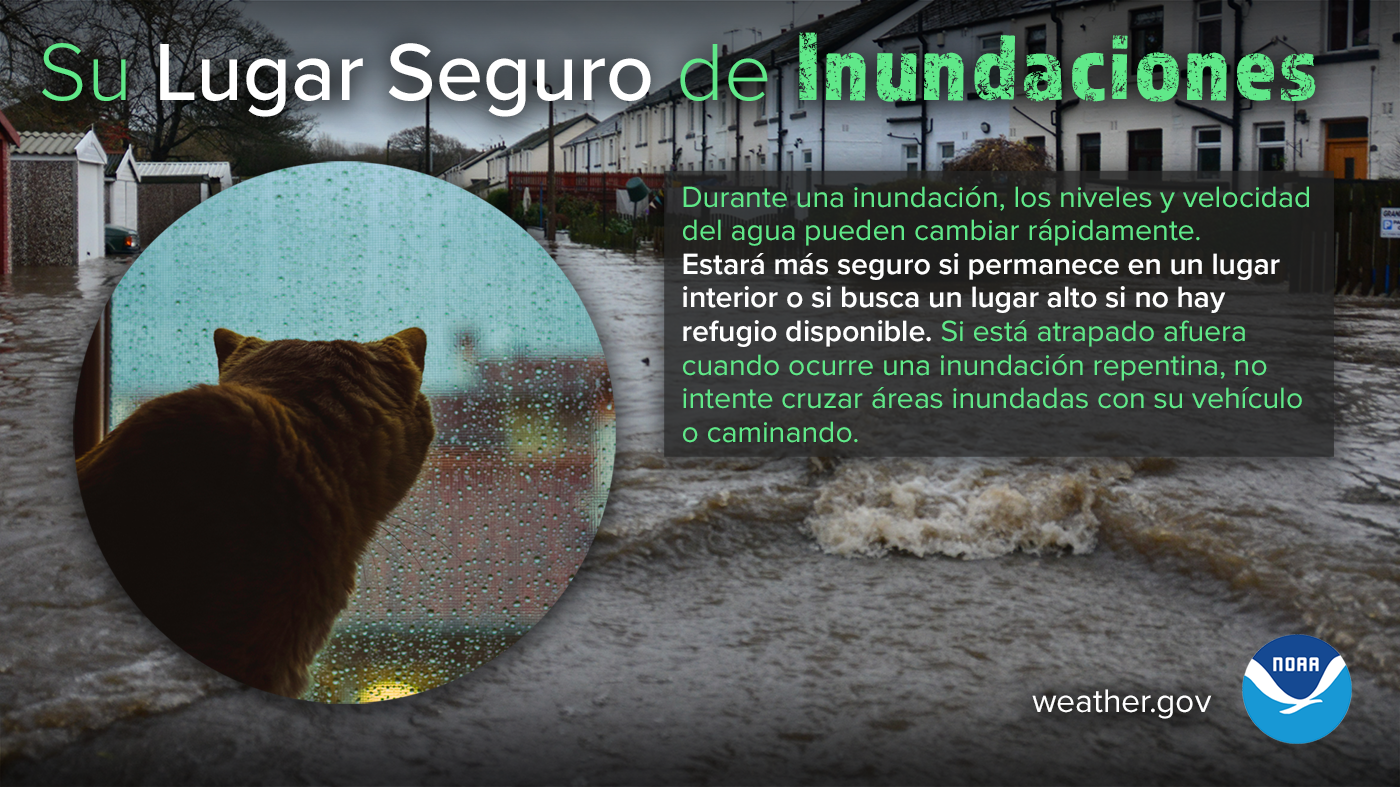
Su Lugar Seguro de Inundaciones (Your Safe Place from Flooding)
Durante una inundación, los niveles y velocidad del agua pueden cambiar rápidamente. Estará más seguro si permanece en un lugar interior o si busca un lugar alto si no hay refugio disponible. Si está atrapado afuera cuando ocurre una inundación repentina, no intente cruzar áreas inundadas con su vehículo o caminando. Obtenga más información sobre la seguridad contra inundaciones en weather.gov/safety/flood
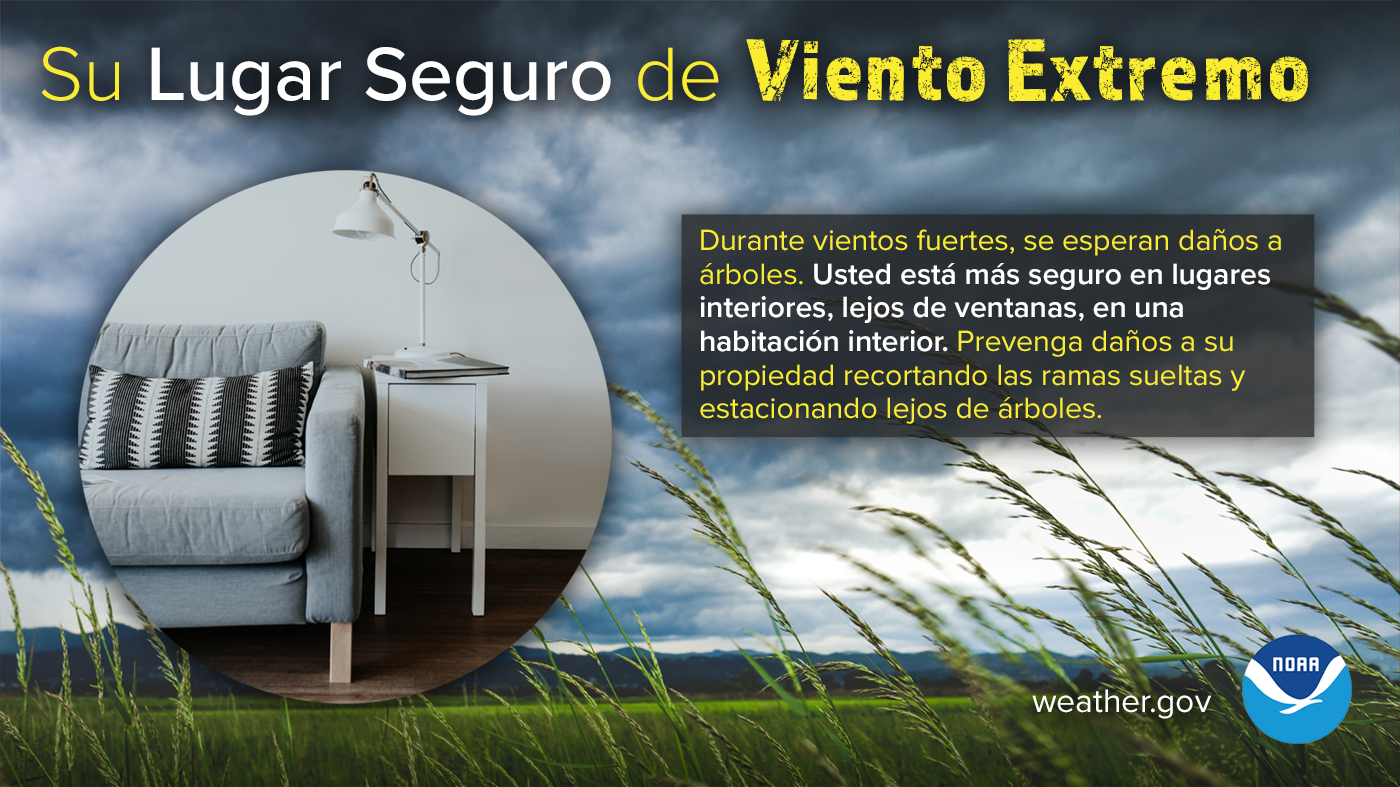
Su Lugar Seguro de Viento Extremo (Your Safe Place from Extreme Wind)
Durante vientos fuertes, se esperan daños a árboles y los objetos sueltos podrían volar por el aire y ser peligrosos. Usted está más seguro en lugares interiores, lejos de ventanas, en una habitación interior. Manténgase preparado para las condiciones del tiempo y obtenga más información sobre la seguridad de vientos fuertes: weather.gov/safety/wind
Graifica - El Ponder del Agua (Infographic - Power of Water)
No subestime el poder del agua. Sólo se necesitan 6 pulgadas de agua en rápido movimiento para derribar y arrastrar a un adulto, y 12 pulgadas de agua para arrastrar a un automóvil pequeño. ¡Dé la Vuelta, No Se Ahogue! weather.gov/safety/flood-turn-around-dont-drown
Past Local Storms
Below is a list of some of the more impactful tropical cyclones across northeast South Carolina and southeast North Carolina. Check out our significant event archive for information on other storms.
Follow us on social media:
You can also contact our Warning Coordination Meteorologist (WCM) for more information on hurricane preparedness:
Brandon Locklear (Clyde.Locklear@noaa.gov)
Forecasts
Discussion/Key Messages
Products
Enhanced Graphics
Graph/Table/Text
Graphical
Weather Activity Planner
Aviation
Marine
Hydrology
Rivers/Tides
Tidal Flooding
Beach
Surf
Tropical
Fire
Heat
Winter
Mobile
Weather Models
Hazards
One-stop Briefing
Graphical Hazard Outlook
Latest Briefing
Social Media Feeds
County EM Briefing
Submit Storm Report
Current Conditions
Observations Map
Observations Listing
Marine Observations
Regional Weather Roundup
Satellite

US Dept of Commerce
National Oceanic and Atmospheric Administration
National Weather Service
NWS Wilmington, NC
2015 Gardner Drive
Wilmington, NC 28405
(910) 762-4289
Comments? Questions? Please Contact Us.


 X
X Facebook
 Instagram
 YouTube
 Radar
Radar Current Weather
 Rivers & Lakes
 Satellite
 Forecast Maps
 Hour by Hour Forecast
 Tropical Weather
 Graphical Hazards
 Weather Hazard Briefing
 Forecaster's Discussion
 Text Bulletins
 Climate
 Skywarn
 NOAA Weather Radio
 Sunrise/Sunset
 Marine Forecasts
 Beach & Surf
 Coastal Flood
  Follow us on X
 Follow us on Facebook
 Follow us on YouTube
 ILM RSS Feed